
Mold Removal Experts in Lumberville, PA

Your Home Stays Safe When Mold Gets Removed Right

Complete mold elimination with testing, EPA-approved removal, and prevention plans that stop it from coming back.

Hear from Our Customers

Black Mold Experts Serving Lumberville

What Happens When the Mold Is Actually Gone

You stop waking up congested. The musty smell that’s been lingering in your basement or bathroom finally disappears. The air feels lighter, cleaner.

Your home value stays protected because the problem got handled before it spread behind walls or into structural areas. You’re not wondering if it’s growing somewhere you can’t see, because the testing showed exactly where it was and the removal took care of all of it.

You get documentation that proves the work was done right. Air quality results. Photos. A written plan for keeping moisture under control so you’re not dealing with this again next summer when humidity spikes. That’s what complete mold remediation looks like, and it’s what you should expect from any mold removal specialist working in Lumberville.

Best Mold Remediation Company in Lumberville

We Work Where You Live, Not From a Call Center

Mack’s Mold Removal operates right here in Bucks County. We’re not a franchise sending different crews every time. We know what Lumberville homes deal with: older construction, humid summers near the Delaware River, basements that hold moisture, and HVAC systems that can spread spores if mold gets into the ductwork.

We’ve been handling mold situations in this area long enough to know that every home is different. Some need crawlspace work. Others have attic ventilation issues or water intrusion from stone foundations. We test first, remove what’s actually there, and give you a real prevention plan based on your specific property.

Mold Removal Specialist Process in Lumberville

Here's What Happens From Call to Clear Air

First, we inspect and test. That means thermal imaging to find moisture you can’t see, air quality samples to identify mold types, and a full assessment of where it’s growing and why. You get a written report with photos and lab results from a certified microbiologist.

Next comes containment and removal. We seal off the affected area with plastic sheeting and negative air pressure so spores don’t spread to clean parts of your home. Then we remove contaminated materials, HEPA-vacuum all surfaces, and treat the area with EPA-approved antimicrobials. Everything we take out gets bagged and disposed of properly.

Finally, we verify the work and address the source. Post-remediation air testing confirms the mold is gone and levels are back to normal. Then we walk you through exactly what caused it—whether that’s a roof leak, poor ventilation, foundation moisture, or humidity control—and what needs to happen so it doesn’t come back. You’re not guessing. You have a plan.

Ready to get started?

Explore More Services

About Mack's Mold Removal

Mold and Mildew Experts in Lumberville

What's Included When You Hire Mold Experts

You get a full inspection with moisture mapping and thermal imaging to locate hidden growth behind walls, under floors, or in ceiling cavities. Air quality testing identifies the exact mold species present and measures spore counts so we know what we’re dealing with.

Removal includes proper containment with HEPA filtration, safe disposal of affected materials, antimicrobial treatment, and thorough cleaning of all surfaces. We follow IICRC S520 standards and EPA guidelines because that’s what actually works. You also get post-remediation testing to confirm the air is clean and a detailed report documenting everything we found and fixed.

In Lumberville, where homes average over $1.8 million and many were built decades ago, mold often hides in stone foundations, crawlspaces, or older HVAC systems. We address those specific issues. If your basement stays damp because of groundwater near the river, we’ll tell you. If your attic needs better ventilation to handle summer humidity, you’ll know. The goal is to fix the problem once, not have you call us back next year.

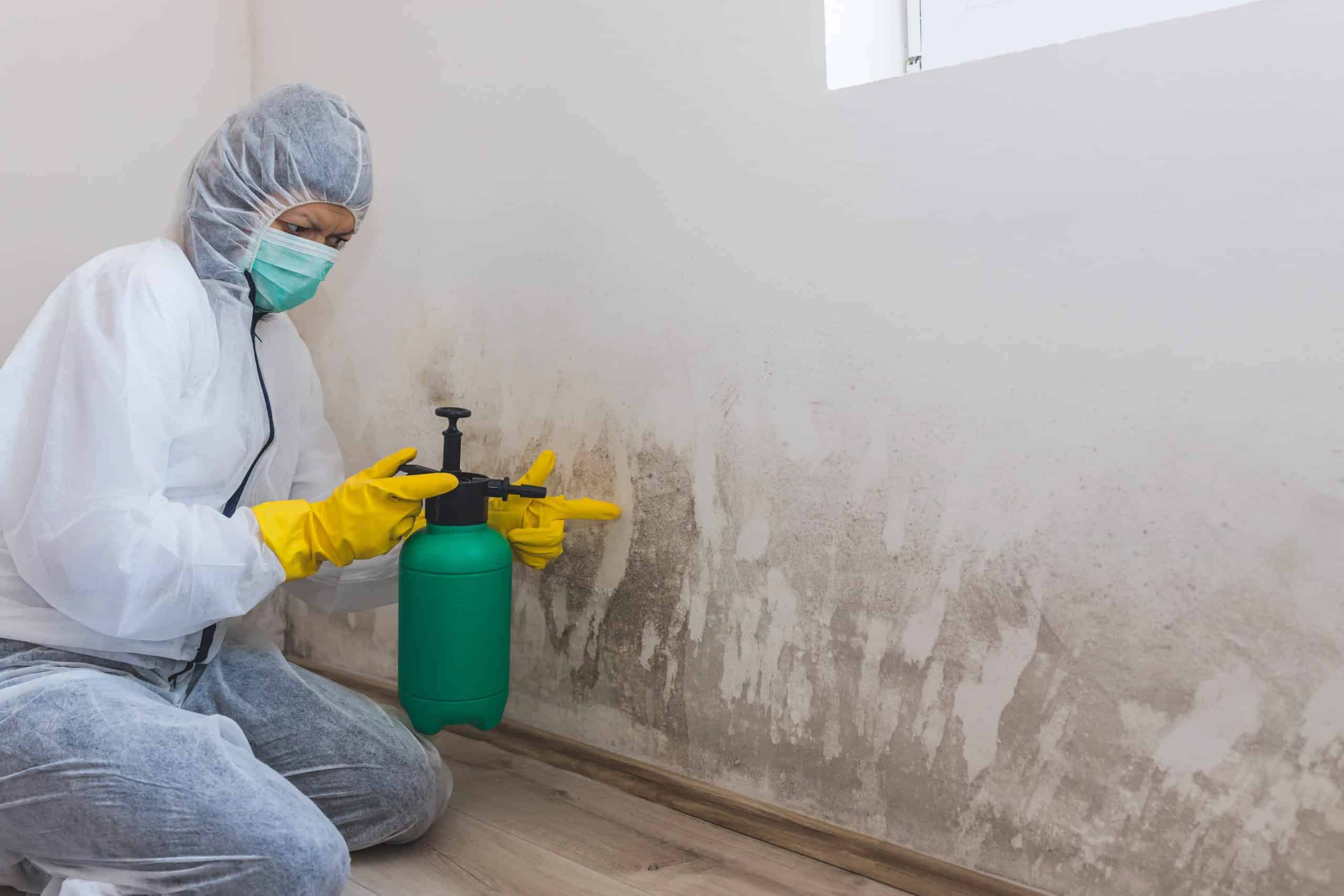
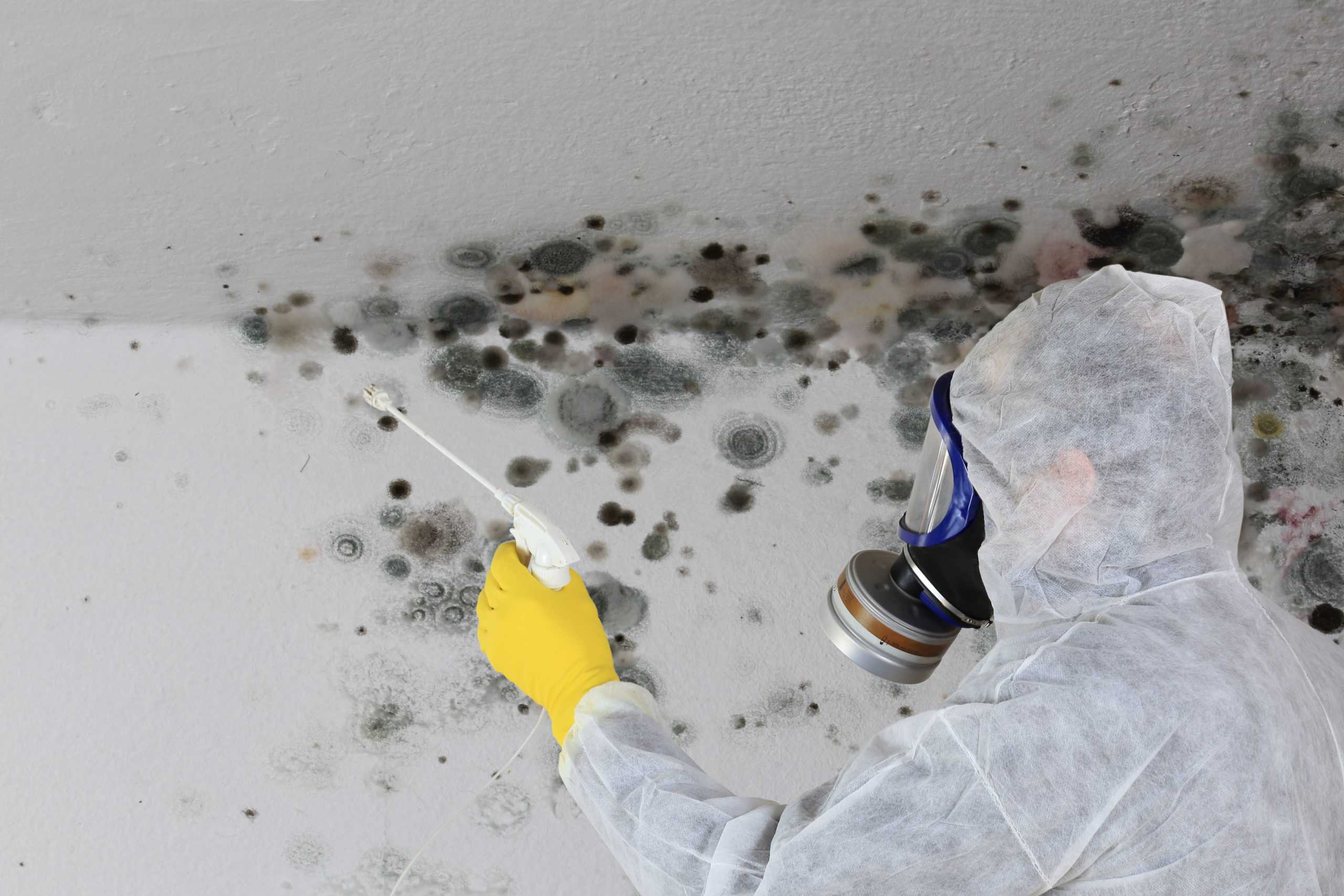
A person wearing a mask and gloves scrubs mold from a wall in a damaged room. Similar to how paving contractors expertly renew outdoor spaces, this cleanup revives the room's integrity. The floor is wooden with scattered debris, and a trash bag sits nearby, ready to contain the mess.

How do I know if I actually have mold or just mildew?

Mildew is surface-level. It shows up on shower tiles, window sills, or damp fabrics and wipes off pretty easily with basic cleaning products. It’s usually white or gray and stays flat.

Mold grows deeper. It penetrates porous materials like drywall, wood, and insulation. It can be black, green, brown, or even orange, and it often has a fuzzy or slimy texture. The smell is stronger—musty and persistent, not just a damp odor that goes away when you open a window.

If you’re seeing dark spots spreading on walls, ceilings, or around baseboards, or if you’re dealing with ongoing respiratory issues like coughing and sneezing that get worse at home, you’re likely dealing with mold. The only way to know for sure is testing. We take air samples and surface samples, send them to a certified lab, and get you results that show exactly what’s growing and how much. That tells us whether you need full remediation or just better ventilation and cleaning.

It depends on how much mold there is, where it’s growing, and what caused it. A small bathroom mold issue might run $1,500 to $3,000. A larger basement or attic problem with structural damage can go $5,000 to $10,000 or more.

In Bucks County, the average mold remediation job costs around $2,400, but that’s just an average. If mold spread into your HVAC system or behind finished walls, the cost goes up because there’s more labor, more materials to remove, and more area to treat. If there’s a water intrusion problem that needs fixing first—like a foundation crack or roof leak—that adds to the total.

We give you a written estimate after the inspection so there are no surprises. We also work with insurance companies if your policy covers mold remediation, which it sometimes does if the mold resulted from a covered event like a burst pipe. The key is catching it early. Mold spreads fast, and the longer it grows, the more expensive removal becomes.

Most residential mold remediation jobs take two to five days, depending on the size of the affected area and how extensive the damage is. A single-room job might be done in two days. A whole basement or multiple areas could take a week.

Day one is usually inspection, testing, and setup. We identify all the mold, contain the area, and get equipment in place. Days two through four are removal, treatment, and cleaning. We take out contaminated materials, treat surfaces, run HEPA filtration, and make sure spores aren’t spreading. The final day is post-testing and verification to confirm the air quality is back to safe levels.

You can usually stay in your home during the process as long as the affected area is properly contained. We seal it off with plastic barriers and negative air pressure so spores don’t reach the rest of your house. If the mold is extensive or in your HVAC system, we might recommend staying elsewhere for a few days. We’ll let you know upfront based on what we find during the inspection.

Not if the moisture problem gets fixed. Mold needs water to grow. If the source of moisture is still there—whether that’s a leak, condensation, high humidity, or poor ventilation—mold will eventually return.

That’s why remediation isn’t just about removing what’s visible. We find out why the mold grew in the first place. Maybe your basement has groundwater seeping through the foundation. Maybe your bathroom exhaust fan isn’t vented outside. Maybe your crawlspace has standing water after heavy rain. Whatever it is, we identify it and give you a plan to fix it.

In Lumberville, humidity is a big factor. Summers get humid, and if your home doesn’t have good airflow or a dehumidifier in the basement, conditions stay perfect for mold growth. We’ll recommend specific changes based on your property—better ventilation, moisture barriers, dehumidification, gutter improvements, whatever actually addresses the root cause. If you handle those issues, the mold won’t come back.

Black mold—specifically Stachybotrys chartarum—can produce mycotoxins that cause serious health problems, especially with prolonged exposure. Symptoms include respiratory issues, chronic coughing, headaches, fatigue, and skin irritation. People with asthma, allergies, or weakened immune systems are at higher risk.

That said, not all black-colored mold is Stachybotrys. Some molds just look black but aren’t the toxic variety. The only way to know what you’re dealing with is lab testing. We take samples and send them to a certified microbiologist who identifies the species and measures spore concentration.

Regardless of the type, mold doesn’t belong in your home. Even non-toxic molds cause allergic reactions and respiratory irritation. They damage building materials. They smell bad. And they spread quickly if moisture stays present. If you’re seeing black mold—or any mold—growing on walls, ceilings, or around windows, get it tested and removed. The health risks aren’t worth ignoring, and the longer it grows, the more expensive and complicated removal becomes.

Usually not, as long as the work area is properly contained. We use plastic sheeting and negative air machines to seal off the affected space and prevent spores from spreading to other parts of your home. You can stay in unaffected areas without exposure risk.

There are exceptions. If mold is in your HVAC system and we need to shut down heating or cooling for several days, you might be more comfortable staying elsewhere. If the contamination is extensive—covering multiple rooms or an entire floor—we might recommend leaving during active removal to avoid any exposure.

We’ll tell you upfront based on what we find during the inspection. Most single-room jobs like bathrooms, basements, or attics don’t require you to leave. Larger jobs or situations involving vulnerable household members—young children, elderly family, anyone with respiratory conditions—might be safer with temporary relocation. It’s your call, but we’ll give you an honest assessment of what makes sense for your situation.

Other Services we provide in Lumberville