
Hear from Our Customers

Mold doesn’t just look bad. It makes people sick. Headaches that won’t quit, breathing problems that keep getting worse, kids with constant coughs. You shouldn’t have to wonder if your own home is making your family ill.
When mold is gone—really gone, not just scrubbed over with bleach—you stop smelling that musty basement odor. You stop worrying every time someone sneezes. Your home feels like yours again, not like something you’re constantly battling.
We don’t just kill mold on the surface. We remove it from inside walls, under floors, and in crawl spaces where it actually grows. Then we dry out the moisture that caused it in the first place. That’s how you get a home that stays clean, not one that looks fine for a few weeks before the spots come back.
We’ve been handling mold problems in Elderberry Pond and throughout Bucks County for years. We know what Pennsylvania humidity does to basements, crawl spaces, and older homes in this area.
Your neighbor three houses down probably has the same moisture issues you do. We’ve seen it. Elderberry Pond sits in a part of Bucks County where summer humidity regularly tops 70%, and basements stay damp from spring through fall. That’s not your fault—it’s the climate.
We use thermal imaging to find hidden moisture behind your walls. We test air quality so you know exactly what you’re breathing. And we explain everything in plain terms, because you deserve to understand what’s happening in your own home.
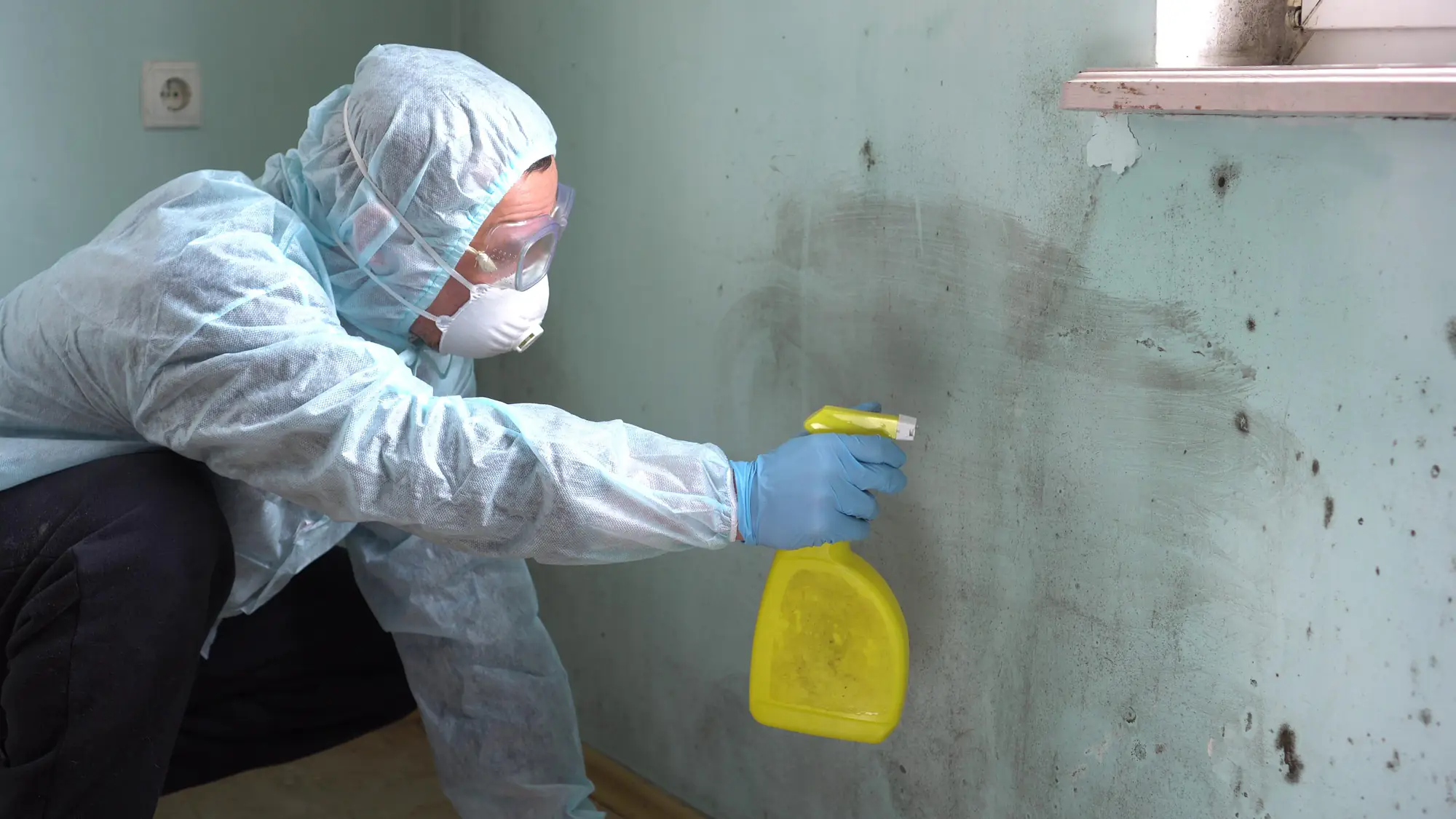
First, we inspect your home with moisture meters and infrared cameras. We’re looking for the water source, not just the mold you can see. Most mold problems start somewhere you can’t easily access—inside a wall cavity, under flooring, or in a crawl space.
Next, we contain the affected area so mold spores don’t spread to clean parts of your home during removal. Then we remove contaminated materials—drywall, insulation, whatever can’t be saved. We don’t just spray chemicals and hope for the best. Dead mold can still make you sick, so it has to come out.
After removal, we dry everything thoroughly and treat surfaces to prevent regrowth. You get a detailed report showing moisture readings, what we found, and what we removed. We also tell you what caused the problem—a leaky pipe, poor ventilation, groundwater seepage—so you can fix it permanently.
The whole process usually takes two to five days depending on how far the mold spread. We’re available 24/7 if you’ve got an emergency situation after a flood or major leak.
Ready to get started?
Every job starts with a free inspection. We test air quality, check moisture levels, and use thermal imaging to find hidden problems. You get lab results that identify the specific type of mold and how much of it you’re dealing with.
Elderberry Pond homes—especially older ones near the pond itself—tend to have basement moisture issues. We pay extra attention to foundation walls, window wells, and areas where Bucks County’s clay soil pushes water toward your foundation. We’ve worked in this neighborhood enough to know where problems usually hide.
You also get help with insurance claims if your mold problem started with water damage. We document everything, take photos, and provide the paperwork your insurance company needs. And we give you upfront pricing before we start, so there’s no surprise bill at the end.
We don’t leave until moisture levels are back to normal and air quality tests come back clean. That’s not us being nice—that’s the only way to actually solve a mold problem instead of just covering it up.

If your basement smells musty, you have mold. That smell is mold releasing spores into the air. It’s not “just how basements smell”—it’s a sign of active mold growth somewhere, even if you can’t see it yet.
Normal basements in Elderberry Pond might feel a little damp during humid months, but they shouldn’t smell like mildew or make you cough when you go downstairs. If you’re noticing the smell more after it rains, or if it’s getting stronger over time, that’s mold feeding on moisture and spreading.
The tricky part is that mold often grows behind finished walls, inside HVAC ducts, or under stored boxes where you won’t spot it during a casual look around. We use moisture meters to find elevated readings in walls and thermal cameras to spot temperature differences that indicate hidden dampness. A proper inspection catches problems before you see black spots creeping across your drywall.
Bleach kills mold on hard surfaces like tile, but it doesn’t work on porous materials like drywall, wood, or insulation. Mold grows roots deep into porous surfaces, and bleach only kills what’s on top. The mold comes back within weeks because the roots are still alive underneath.
Even worse, bleach doesn’t remove dead mold—it just kills it. Dead mold spores still trigger allergic reactions and respiratory problems. The proteins and mycotoxins that make people sick don’t disappear just because the mold isn’t actively growing anymore. You have to physically remove contaminated materials to actually solve the problem.
If you’ve got mold on a small patch of bathroom tile, sure, bleach works fine. But if you’re dealing with mold in your Elderberry Pond basement or crawl space—places that stay damp because of Pennsylvania’s humidity—you need to remove the source, dry out the space, and fix whatever’s letting moisture in. Otherwise you’re just cleaning the same spot over and over while the problem spreads behind your walls.
Most mold removal jobs in Elderberry Pond run between $1,500 and $6,000 depending on how much mold there is and where it’s growing. A small area in a bathroom might cost $1,500. A finished basement with mold behind drywall could run $5,000 or more because we have to remove and replace building materials.
The biggest cost factor is how long you waited. A small patch of mold caught early is cheap to fix. That same patch left alone for six months can spread throughout your basement, get into your HVAC system, and require removal of drywall, insulation, and flooring. We’ve seen jobs go from $2,000 estimates to $15,000 projects because the homeowner waited another year hoping it would go away on its own.
Many homeowners insurance policies cover mold remediation if it resulted from a covered event like a burst pipe or storm damage. We help you document everything for your claim. And we give you an exact price before starting work—no surprise charges, no hourly rates that spiral out of control. You know what you’re paying upfront.
Mold comes back because the moisture source never got fixed. You can remove mold all day long, but if water is still getting in, new mold will grow in the same spot within weeks.
In Elderberry Pond and Bucks County generally, the most common moisture sources are basement humidity, poor ventilation, and groundwater seepage through foundation walls. Pennsylvania’s humid summers mean your basement can hit 70%+ humidity even without an obvious leak. That’s enough for mold to grow on any organic material—drywall, wood, cardboard boxes, old furniture.
We find the moisture source during inspection. Sometimes it’s a simple fix like adding a dehumidifier or improving gutter drainage. Other times it’s a bigger issue like foundation cracks or a missing vapor barrier in your crawl space. We tell you exactly what needs to happen to keep mold from returning, and we retest moisture levels after remediation to make sure they’re back in the safe range. If moisture levels are still high, mold will return no matter how thoroughly we cleaned.
Black mold—specifically Stachybotrys chartarum—can cause serious health problems, especially if you’re exposed to it for months or years. It releases mycotoxins that trigger respiratory issues, chronic headaches, fatigue, and cognitive problems in some people. Kids, elderly family members, and anyone with asthma or a weakened immune system are most at risk.
That said, all mold is a problem. It doesn’t have to be the infamous black mold to make you sick. Regular mold species cause allergic reactions, asthma attacks, and lung infections. If you’re breathing in mold spores every day in your Elderberry Pond home, your health will suffer regardless of the specific species.
We test your mold and send samples to a certified lab so you know exactly what you’re dealing with. But honestly, the species doesn’t change our approach much—all mold needs to be removed completely, and the moisture source needs to be eliminated. Trying to determine if it’s “dangerous black mold” or “just regular mold” misses the point. If it’s growing in your home, it needs to go.
Most residential mold removal jobs take two to five days. Small areas like a bathroom or closet might be done in a day or two. Larger jobs—like a finished basement with mold behind walls—can take a full week once you factor in removal, drying time, and reconstruction.
The timeline depends on how wet everything is. If we’re dealing with active water damage, we need to dry out the space completely before we can close it back up. Drywall, insulation, and wood framing have to hit specific moisture levels or mold will just grow again. We use commercial dehumidifiers and air movers to speed up drying, but it still takes time to do it right.
We’re available 24/7 for emergency situations—if your Elderberry Pond home just flooded or you’ve got a major leak, we can start containment and water extraction immediately. Fast response matters because mold can start growing within 24 to 48 hours of water damage. The sooner we get your home dried out, the less damage you’ll deal with and the faster the whole process goes.
Other Services we provide in Elderberry Pond