
Hear from Our Customers

You stop worrying about what’s growing behind your walls. The musty smell disappears. Your family breathes easier, especially if someone’s dealing with asthma or allergies.
Your home value stays protected. Visible mold can drop property values by 23%, and buyers will walk away the moment they see it or smell it. Professional remediation fixes that before it becomes a disclosure problem or a legal headache.
You get documentation that proves the work was done right. That matters when you’re dealing with insurance, when you’re selling, or when you just want peace of mind that the issue won’t come back. Haycock’s humid summers and aging home stock make mold a recurring risk if moisture sources aren’t addressed correctly.
The difference between DIY cleanup and professional mold removal is simple: one treats the surface, the other eliminates the cause. Mold grows because moisture is present. If you don’t control the water intrusion, you’re just cleaning the same problem over and over.
We work throughout Haycock and Bucks County. We’re not a national franchise with a local sticker on the truck. We know the area, the housing stock, and the climate conditions that make mold such a persistent issue here.
Pennsylvania doesn’t require mold contractor certification, which means anyone can claim they do this work. We’re IICRC-certified, insured, and trained in EPA guidelines because that’s what the job requires. You’re not getting a crew that watched a YouTube video.
Haycock’s older homes, combined with humid summers and frequent storms, create ideal conditions for mold growth. We’ve seen it in basements, crawl spaces, attics, and HVAC systems. The work isn’t glamorous, but it’s necessary, and it needs to be done right the first time.
You call, we respond. If it’s an emergency, we’re there within 30 minutes. Mold spreads fast after water damage, so timing matters.
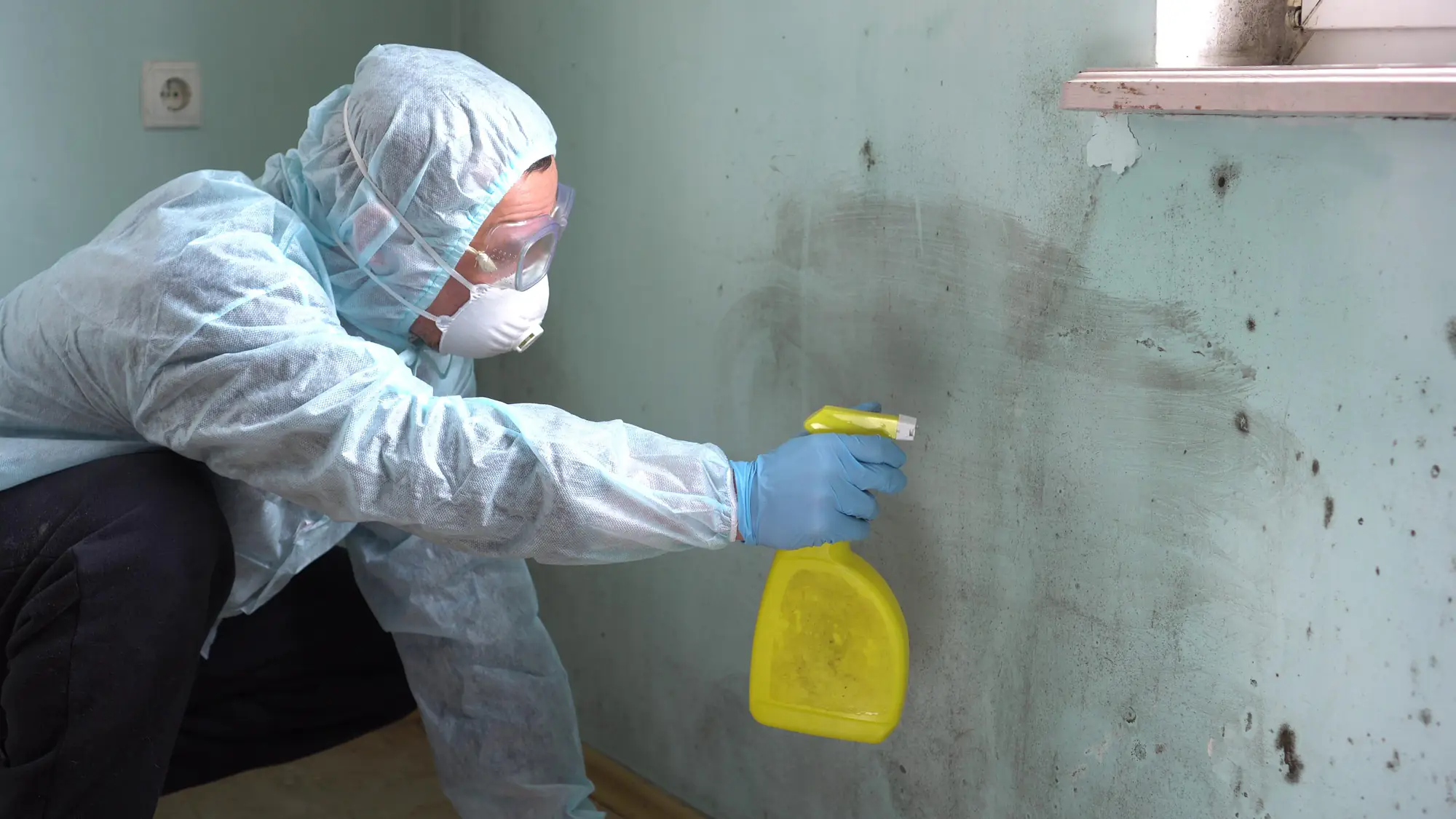
We start with an inspection. That means identifying the mold type, locating moisture sources, and checking areas you can’t see—behind drywall, under flooring, inside HVAC ducts. We’re looking for the root cause, not just the visible growth.
Containment comes next. We seal off affected areas with plastic sheeting and negative air pressure to prevent spores from spreading to clean parts of your home. Then we remove contaminated materials—drywall, insulation, anything porous that can’t be salvaged.
HEPA filtration and air scrubbers run throughout the process. We’re not just cleaning surfaces. We’re pulling mold spores out of the air. After removal, we treat surfaces with antimicrobial solutions and verify the space is clear.
Finally, we address the moisture problem. That might mean fixing a leak, improving ventilation, or recommending dehumidification. If we don’t fix what caused the mold, you’ll be calling someone again in six months.
Ready to get started?
You get a full inspection with moisture mapping and mold identification. We’re not guessing what’s growing or where it’s coming from. You’ll know what you’re dealing with before work starts.
Containment and air filtration are standard. We don’t let mold spores travel through your home while we’re working. Negative air machines and HEPA filters keep the job site isolated.
All contaminated materials get removed and disposed of properly. Porous materials like drywall and insulation can’t be saved once mold takes hold. We pull it out, bag it, and get it out of your house.
You get antimicrobial treatment on all affected surfaces and documentation for insurance or future buyers. In Haycock, where 88% of residents are homeowners and median home values sit above $450,000, that documentation protects your investment.
We also provide a written report that outlines what we found, what we removed, and what moisture issues need attention. Bucks County’s older housing stock and humid climate mean water intrusion is common. Fixing the source is the only way to prevent mold from coming back.

Most whole-home mold remediation projects in Haycock run between $2,500 and $12,500, depending on the size of the affected area and the extent of contamination. Smaller jobs, like a single bathroom or closet, can cost less. Larger projects involving multiple rooms, structural materials, or HVAC systems cost more.
Labor typically runs $75 to $99 per hour, and most companies charge $10 to $25 per square foot. Mold inspections alone cost $300 to $1,000, depending on your home’s size and complexity.
Insurance may cover part or all of the cost if the mold resulted from a covered event like a burst pipe or storm damage. It won’t cover mold caused by long-term neglect or maintenance issues. We provide documentation to help with claims, but you’ll need to check your policy and work with your adjuster to confirm coverage.
Most residential mold remediation projects take two to five days, depending on the size and severity of contamination. Small, contained areas like a bathroom or closet might be done in a day or two. Larger projects involving basements, attics, or multiple rooms take longer.
The timeline includes inspection, containment setup, removal of contaminated materials, HEPA filtration, antimicrobial treatment, and final clearance testing. We don’t rush the process because cutting corners leads to recurring problems.
Drying time also factors in. If we’re dealing with water damage or high moisture levels, we need to bring humidity down before we can close up walls or reinstall materials. Haycock’s humid summers can extend drying time, especially in basements and crawl spaces with poor ventilation.
It depends on the size and location of the affected area. If we’re working in a single bathroom or a contained basement space, you can usually stay in the home as long as the area is properly sealed off and air filtration is running.
If the contamination is widespread or involves your HVAC system, it’s safer to stay elsewhere until the work is complete. Mold spores become airborne during removal, and even with containment, there’s risk of exposure in shared air spaces.
People with asthma, allergies, or compromised immune systems should leave during remediation regardless of the project size. Mold exposure can trigger serious respiratory issues, and it’s not worth the risk. We’ll give you a clear recommendation during the inspection based on what we find and where it’s located.
Moisture is the only controllable factor in mold growth. Haycock’s humid summers, frequent storms, and aging housing stock create ideal conditions for water intrusion and condensation buildup.
Common causes include roof leaks, basement seepage, poor ventilation in bathrooms and attics, plumbing leaks, and HVAC condensation. Many homes in Bucks County were built before modern moisture management practices, which means inadequate vapor barriers, outdated drainage systems, and materials that absorb water easily.
Flooding and storm damage are also major contributors. Pennsylvania’s geography and weather patterns bring heavy rainfall and occasional flooding, especially in low-lying areas. If water sits for more than 24 to 48 hours, mold starts growing. Once it takes hold, it spreads quickly through porous materials like drywall, insulation, and wood framing.
Mold will come back if the moisture source isn’t fixed. Professional remediation removes existing mold and treats surfaces to prevent regrowth, but it doesn’t make your home waterproof.
If you have a leaking roof, a wet basement, or poor ventilation, mold will return. That’s why identifying and addressing moisture problems is part of every remediation job. We don’t just clean up the visible growth—we tell you what’s causing it and what needs to change.
Ongoing maintenance matters too. Dehumidifiers, proper ventilation, gutter maintenance, and prompt repairs after water damage all reduce the risk of recurrence. Haycock’s climate means humidity control is especially important during summer months. If you keep indoor humidity below 50% and fix leaks quickly, mold doesn’t have the conditions it needs to grow.
Yes. Pennsylvania law requires sellers to disclose known material defects, including mold problems. If you’re aware of current or past mold issues and don’t disclose them, buyers can sue you after closing.
Professional remediation and documentation protect you legally. If mold was present, properly remediated, and documented, you’ve acted responsibly. Buyers may still have concerns, but you’ve got proof the problem was handled correctly.
Homes with visible mold or a history of water damage can lose up to 23% of their value, and many buyers will walk away entirely. Addressing mold before listing protects your sale price and reduces the risk of deals falling through during inspection. In Haycock, where median home values exceed $450,000, that’s a significant financial consideration.
Other Services we provide in Haycock