
Hear from Our Customers
Your kids stop coughing at night. That musty smell in the basement disappears. You stop worrying every time it rains whether water’s creeping into places you can’t see.
When mold removal is done correctly, you’re not just cleaning surfaces. You’re eliminating the conditions that let mold grow in the first place. That means identifying moisture sources, removing contaminated materials completely, and treating affected areas with EPA-approved methods that actually work.
Fair Hill homes face specific challenges. Most properties here were built in the late 1950s and 1960s, before modern moisture control standards existed. Bucks County’s humid summers push indoor humidity above 75%, and those clay soils mean basement moisture isn’t a question of if, but when. We know how to address these conditions at the source.
You get documentation that satisfies insurance companies. You get air quality that protects your family’s health. You get a home that holds its value instead of losing 20-30% because of undisclosed mold problems.
We serve Fair Hill and throughout Bucks County with IICRC-certified specialists who understand exactly what local homeowners face. We’ve seen how Pennsylvania’s humid climate creates perfect growing conditions. We know which basements flood during heavy rain and which attics develop condensation problems when temperatures swing.
When other contractors find mold during renovations, they call us. When local insurance companies need reliable documentation, they trust our work. That’s not something you earn overnight.
We use thermal imaging cameras and moisture meters to find problems before they become disasters. We provide free inspections with no pressure and no hidden fees. And we work directly with your insurance company to handle the documentation and claims process, so you’re not stuck playing middleman while mold keeps growing.
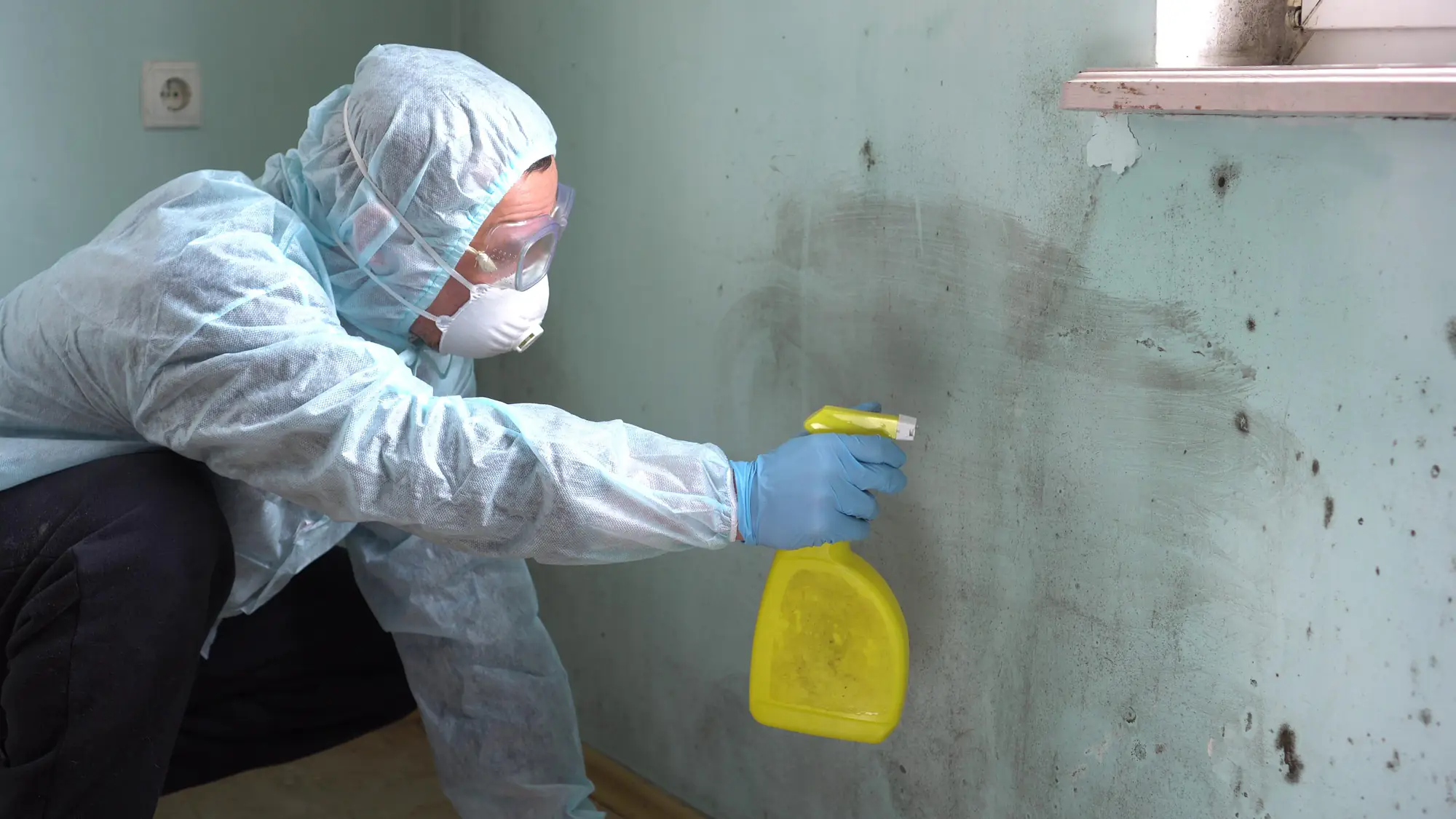
First, we inspect your property completely. Not just the obvious spots, but behind walls, in crawl spaces, inside HVAC systems—anywhere moisture can hide. We use thermal imaging to identify temperature variations that indicate moisture buildup you can’t see. We test samples in certified labs to identify exactly what type of mold we’re dealing with, because different molds require different approaches.
Then we contain the affected area. Mold spreads through spores, so proper containment means the problem doesn’t migrate to clean areas while we’re working. We use negative air pressure and physical barriers to keep spores isolated.
Next comes actual removal. We physically remove contaminated materials—drywall, insulation, whatever’s affected. We don’t just spray something on the surface and hope it works. We treat remaining surfaces with antimicrobial solutions, using EPA-approved methods that eliminate mold at the source.
Finally, we fix the moisture problem that caused the mold in the first place. Maybe that’s improving ventilation, addressing drainage issues, or fixing a leak that’s been slowly damaging your home. Without fixing the source, any cleanup is temporary.
You get complete documentation throughout—photos, moisture readings, lab results, detailed reports. Everything your insurance company needs, everything a future buyer might ask for, everything that proves your home is safe.
Ready to get started?
You get a free comprehensive inspection with no obligation. We identify all affected areas, test samples, and provide upfront pricing before any work begins. No surprise charges.
You get 24/7 emergency response, because water damage doesn’t wait for business hours. In Fair Hill’s humid climate, mold can start growing within 24-48 hours of moisture exposure. Fast response is the difference between a small cleanup and a major remediation project.
You get advanced detection technology that finds hidden problems. Our thermal imaging cameras and moisture meters identify issues behind walls and under floors before they cause structural damage. We check your HVAC system, because that’s how mold spreads throughout your entire home if it gets into ductwork.
You get insurance claims assistance. We work directly with insurance companies, providing the detailed documentation they require. Many homeowners insurance policies cover mold removal when it’s related to covered water damage events. We handle the paperwork so you don’t have to fight with adjusters while your home stays contaminated.
You get root cause resolution. We don’t just clean what you can see. We eliminate the moisture source so mold can’t come back. That might mean addressing drainage problems around your foundation, improving bathroom ventilation, or fixing condensation issues in your attic—whatever’s causing the problem in your specific home.

If you smell it, you probably have it. Mold produces volatile organic compounds that create that distinctive musty odor. It’s not just “normal basement smell”—it’s a sign of active mold growth.
Look for visible signs: discoloration on walls or ceilings, water stains, peeling paint, or warping materials. Pay attention to health symptoms that get worse at home but improve when you’re away—persistent coughing, throat irritation, nasal congestion, or worsening asthma. These symptoms often indicate mold exposure.
Check problem areas in Fair Hill homes specifically. Basements are the most common culprit because they’re naturally cooler and more humid, especially with the clay soil and high groundwater tables common in Bucks County. Bathrooms with poor ventilation, attics with condensation problems, and anywhere you’ve had water damage or leaks are all high-risk areas.
A professional inspection with moisture meters and thermal imaging can detect problems you can’t see. We find mold growing behind walls, under flooring, and inside HVAC systems—places that won’t show visible signs until the problem is extensive.
Most residential mold remediation projects in Fair Hill run between $500 and $6,000, depending on the extent of contamination and the size of the affected area. Small, contained problems cost less. Extensive growth that’s spread through multiple rooms or into your HVAC system costs more.
Several factors affect pricing. The type of mold matters—black mold requires more intensive remediation than surface mildew. The location matters—mold inside walls or under flooring costs more to access and remove than surface growth. The moisture source matters—if we need to address drainage problems or structural issues, that affects the total cost.
Many homeowners insurance policies cover mold removal when it’s related to a covered water damage event, like a burst pipe or storm damage. They typically won’t cover mold that developed from long-term neglect or maintenance issues. We work directly with insurance companies to document everything properly and maximize your coverage.
The real cost is what happens if you don’t address it. Mold problems reduce home values by 20-37% when they’re discovered during inspections. They cause structural damage that gets more expensive the longer it sits. And they create health problems that affect your family every day you wait. Professional removal costs less than the alternative.
Bleach only works on non-porous surfaces, and even then, it just removes the visible staining without killing the roots. Mold grows into porous materials like drywall, wood, and insulation. Surface cleaning doesn’t eliminate the problem—it just makes it invisible temporarily.
Store-bought products can’t address the moisture source that’s causing the mold. Without fixing the underlying problem, mold comes back. You’re spending money and time on a temporary fix that doesn’t protect your home or your health.
DIY cleaning also spreads spores. Without proper containment and negative air pressure, you’re releasing spores into your HVAC system and throughout your home. What started as a small problem in your basement becomes contamination in your bedrooms and living areas.
Professional mold removal means proper containment, complete removal of contaminated materials, EPA-approved treatment methods, and fixing the moisture source. We have the equipment to detect hidden growth, the training to remove it safely, and the documentation to prove your home is clean. That’s not something you can replicate with a spray bottle and a scrub brush.
Small, contained projects might take 1-3 days. Larger remediation projects with extensive contamination can take a week or more. The timeline depends on the size of the affected area, the type of mold, and what’s required to fix the moisture source.
Inspection and testing happen first—usually within 24 hours of your call. We identify all affected areas, test samples, and develop a remediation plan. Lab results typically come back within 48-72 hours.
Actual remediation starts as soon as we have a plan and your approval. Containment and removal might take 2-5 days for most residential projects. Drying and treatment add another 1-3 days. Then we verify the work with post-remediation testing to confirm your home is safe.
Fair Hill’s humid climate affects drying times. If we’re dealing with water damage in addition to mold, we need to ensure everything is completely dry before closing up walls and finishing the work. Rushing this step just creates conditions for mold to return.
We work as quickly as possible without cutting corners. You want the problem fixed right, not fast. But we also understand you can’t live in a construction zone indefinitely, so we’re efficient with our process and clear about timelines from the start.
When mold returns after professional remediation, it’s almost always because the moisture source wasn’t properly addressed. That’s why we focus on identifying and fixing the root cause, not just cleaning up the visible growth.
If we remove mold from your basement but don’t fix the drainage problem that’s letting water seep through your foundation, you’ll have mold again. If we clean your bathroom but don’t improve ventilation, moisture will keep accumulating. Professional mold removal means eliminating the conditions that allow mold to grow.
We provide documentation showing exactly what we found, what we removed, and what we did to prevent recurrence. That includes moisture readings, photos, lab results, and details about any structural or ventilation improvements we recommended or completed.
Mold needs three things to grow: moisture, organic material to feed on, and the right temperature. You can’t eliminate organic materials or control temperature in most homes. But you can control moisture. That’s where professional remediation differs from DIY cleaning—we fix the moisture problem so mold can’t come back.
If you’re seeing recurring mold in the same location, that’s a clear sign the underlying issue hasn’t been resolved. We identify those issues during inspection and address them as part of the remediation process, so you’re not calling us back six months later with the same problem.
It depends on the extent of contamination and where the mold is located. For small, contained projects in a basement or single room, you can usually stay in your home. We use physical barriers and negative air pressure to contain the work area and prevent spores from spreading to living spaces.
For extensive contamination or black mold that affects multiple areas, temporary relocation might be necessary. This is especially true if the mold is in your HVAC system, because that affects air quality throughout your entire home. It’s also important if you have family members with asthma, allergies, or compromised immune systems who are particularly vulnerable to mold exposure.
We’re upfront about this during inspection. You’ll know before work starts whether you need to make other arrangements. Most Fair Hill homeowners can stay in their homes during remediation, but your safety comes first.
The actual removal process creates dust and releases spores, even with containment. Professional equipment filters the air and maintains negative pressure so contaminated air doesn’t escape the work area. But sensitive individuals should avoid the immediate area during active remediation.
We’ll walk you through what to expect, how long each phase takes, and what precautions you should take. If relocation is necessary, that’s something many insurance policies cover as part of the claim. We help document those costs so you’re not paying out of pocket for hotel stays while your home is being remediated.
Other Services we provide in Fair Hill