
Hear from Our Customers
You stop worrying every time someone coughs. You stop second-guessing whether that smell is normal or dangerous. You stop wondering if the problem you paid to fix is just going to come back in three months.
Real mold remediation means your air quality improves, your family stops dealing with unexplained allergies or respiratory issues, and you can actually breathe easy in your own home. It means the source gets identified and eliminated, not just covered up or temporarily cleaned.
In Langhorne Gardens, where Pennsylvania’s humid summers push indoor moisture levels into the danger zone, half-measures don’t work. When humidity consistently exceeds 70% and your HVAC runs nonstop trying to keep up, mold finds every weak point in your home. You need someone who understands how moisture behaves in Bucks County homes and knows where to look beyond the obvious spots.
We operate right here in Bucks County. We’ve seen what Pennsylvania’s climate does to basements, crawl spaces, and attics across Langhorne Gardens and surrounding areas. We know the common culprits: poor attic ventilation in summer heat, basement moisture that never fully dries, and HVAC systems that create perfect conditions for growth when ducts aren’t maintained.
We use infrared cameras and moisture meters because guessing doesn’t work. Our technicians are certified mold remediation professionals who follow EPA-approved methods, and we provide free inspections so you know exactly what you’re dealing with before spending a dollar.
We’re available 24/7 because mold emergencies don’t respect business hours, and we work with your insurance company to handle the paperwork that makes most people want to give up.
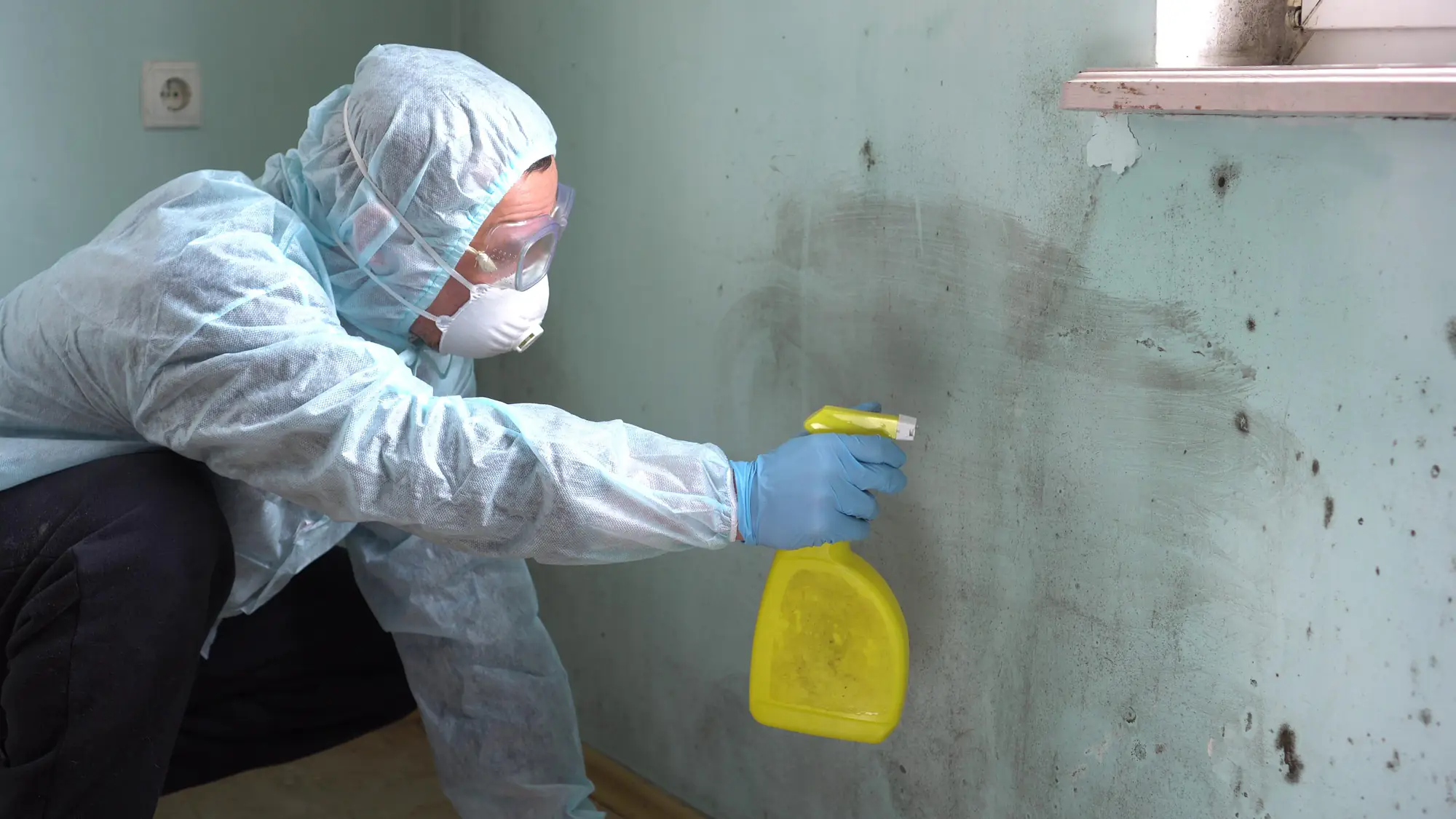
First, we listen. You tell us what you’ve noticed, what you’re concerned about, and where you think the problem might be. Then we inspect your property with infrared cameras and moisture meters to find the actual source, not just the visible symptoms.
We test air samples and surface samples to identify exactly what type of mold you’re dealing with. Black mold requires different handling than common mildew. We don’t guess, and we don’t treat everything the same.
Once we know what we’re dealing with, we explain what we found in plain language and give you a clear, upfront estimate. No surprises, no upselling. If your situation needs immediate attention, we tell you. If it can wait, we tell you that too.
The removal process itself involves containment to prevent spread, HEPA filtration to clean the air, complete removal of contaminated materials, treatment of affected areas, and verification testing to confirm the mold is actually gone. We also identify and fix the moisture source, because removing mold without fixing why it grew just means you’ll be calling someone again in six months.
Ready to get started?
Every mold remediation project includes a complete inspection with advanced detection equipment, identification of the moisture source causing growth, air quality testing to establish contamination levels, and a customized removal plan based on what we actually find in your home.
You get containment barriers to protect unaffected areas, HEPA air filtration running throughout the process, safe removal of all contaminated materials, antimicrobial treatment of affected surfaces, and post-remediation verification testing. We also handle the disposal of contaminated materials according to Pennsylvania regulations.
In Langhorne Gardens specifically, we pay close attention to basement moisture issues and attic ventilation problems that plague homes in this area. Pennsylvania’s weak airflow during humid months means attics can stay damp long enough for mold to establish itself without a single roof leak. We check for these regional issues that out-of-area companies might miss.
We also provide documentation for insurance claims, work directly with your insurance company when coverage applies, and offer cleanup and restoration services after remediation is complete. You’re not juggling multiple contractors to get your home back to normal.

Mold can start growing within 24 to 48 hours after water exposure, which is why the EPA emphasizes that window for response. In Pennsylvania’s humid climate, that timeline gets even tighter during summer months when indoor humidity already sits in the danger zone.
If you’ve had a leak, flood, or any water intrusion, you’re not just racing against mold spores that are already present in every home. You’re fighting Pennsylvania’s climate, which creates ideal conditions for rapid colonization. When outdoor humidity exceeds 70% and your home’s moisture levels are already elevated, mold doesn’t need much time to establish itself.
The problem is that by the time you see visible mold, extensive growth has typically already occurred behind walls, under flooring, or in other hidden areas. What looks like a small patch on your wall might be connected to a much larger colony you can’t see. That’s why professional inspection with moisture meters and infrared cameras matters—we find the full extent of the problem, not just what’s visible on the surface.
It depends on what caused the mold. If mold resulted from a sudden, accidental event like a burst pipe or storm damage, most homeowners insurance policies provide some coverage. If mold resulted from neglect, ongoing leaks, or poor maintenance, coverage typically doesn’t apply.
Pennsylvania insurance policies often include mold coverage limits, commonly around $10,000, though some policies offer higher limits or exclude mold coverage entirely. You need to check your specific policy to know what you’re working with.
Here’s what matters: documentation and timing. Insurance companies want to see that you responded quickly to water damage and took reasonable steps to prevent mold growth. If you waited months after a known leak to address the problem, you’re probably not getting coverage. If you called for remediation within days of discovering water damage, you have a much stronger claim. We work directly with insurance companies, provide the documentation they require, and help you navigate the claims process so you’re not doing this alone.
Mold removal sounds like you’re getting rid of every single spore, which isn’t realistic or even possible. Mold spores exist everywhere, indoors and outdoors. Complete removal would require removing every particle from your home’s air and surfaces, which can’t be done.
Mold remediation is the accurate term because it means bringing mold levels back to normal, safe levels and eliminating the conditions that allowed overgrowth in the first place. Professional remediation identifies the moisture source, removes contaminated materials, treats affected areas, and verifies that mold levels have returned to normal ranges.
The key difference is that remediation addresses why mold grew, not just what grew. If someone removes visible mold but doesn’t fix the leak, poor ventilation, or humidity problem that caused it, you haven’t solved anything. You’ve just delayed the next outbreak. Real remediation means identifying and fixing the root cause so the problem doesn’t come back. That’s what separates professional mold remediation companies from someone who just sprays bleach and calls it done.
If mold covers less than 10 square feet, isn’t black mold, and didn’t result from contaminated water like sewage, you can attempt DIY cleanup. Anything larger than that, any toxic mold species, or any situation involving contaminated water requires professional remediation.
The problem with DIY mold removal is that most people don’t have the equipment to determine what type of mold they’re dealing with or whether the visible growth is connected to a larger hidden colony. You might clean what you can see and miss the extensive growth behind your drywall or under your flooring.
Even for small areas, improper cleaning can make things worse by spreading spores throughout your home. Without proper containment, HEPA filtration, and protective equipment, you risk both health exposure and cross-contamination. And if you don’t identify and fix the moisture source, the mold just comes back. For anything beyond a tiny surface spot, calling certified mold experts isn’t overcautious—it’s the smart move that saves you money and health problems down the road.
Most residential mold remediation projects take between one to five days, depending on the extent of contamination, the size of the affected area, and how many materials need removal. A small bathroom with surface mold might take a day. A finished basement with mold throughout the walls could take a week.
The timeline includes inspection and testing, containment setup, removal of contaminated materials, treatment of affected areas, drying and dehumidification, and post-remediation verification testing. We can’t rush the drying phase—materials need adequate time to reach safe moisture levels, or the problem returns.
For Langhorne Gardens homes dealing with basement moisture or attic ventilation issues, remediation often includes addressing the underlying structural or ventilation problems. That adds time but prevents recurrence. We give you a realistic timeline during the estimate phase based on what we find during inspection. If we discover additional contamination during the process, we tell you immediately and explain how it affects the timeline and cost. No surprises.
Mold exposure commonly causes respiratory issues like coughing, wheezing, and throat irritation. People with asthma or allergies experience worse symptoms, including asthma attacks triggered by mold spores. Skin rashes, eye irritation, and persistent headaches are also common reactions.
Certain mold types, particularly black mold, produce mycotoxins that can cause more serious health effects including chronic fatigue, difficulty concentrating, and in severe cases, neurological problems. Children, elderly individuals, and anyone with compromised immune systems face higher risks from mold exposure.
The challenge is that mold symptoms often mimic other conditions, so people don’t realize their home is making them sick. If symptoms improve when you leave your house and return when you come back, that’s a strong indicator of indoor air quality problems. Indoor air pollution exposure is 2 to 5 times higher than outdoor levels, and mold is a major contributor. An estimated $22.4 billion gets spent annually in the United States on illness due to mold exposure. This isn’t about overreacting to a little mildew—it’s about protecting your family from legitimate health risks that get worse the longer you wait.
Other Services we provide in Langhorne Gardens