
Hear from Our Customers
You’ve probably already tried cleaning it yourself. Maybe you bleached the bathroom ceiling or wiped down the basement walls. A week later, it’s back.
That’s because surface cleaning doesn’t address what mold needs to survive: moisture. If the source isn’t eliminated, you’re just buying time. And in Lower Southampton’s humid climate, that time is short.
When we handle mold remediation, you’re not just getting removal. You’re getting a full assessment of where moisture is coming from, containment so spores don’t spread during cleanup, EPA-approved removal that actually works, and a plan to keep it from returning. The air quality improves. The musty smell disappears. You can stop worrying about what’s growing behind your drywall.
We’ve been serving Lower Southampton and Bucks County since 1999. We’re not a national franchise with rotating crews. We’re local, licensed in Pennsylvania, and we know exactly how this area’s weather affects your home.
Bucks County’s humid summers and temperature swings create condensation in basements, attics, and poorly ventilated spaces. We’ve seen it in hundred-year-old homes and brand-new construction. The conditions here don’t care how old your house is.
We’re EPA-compliant, fully insured, and we back our work with a 5-year warranty. That’s not standard in this industry, but it should be.
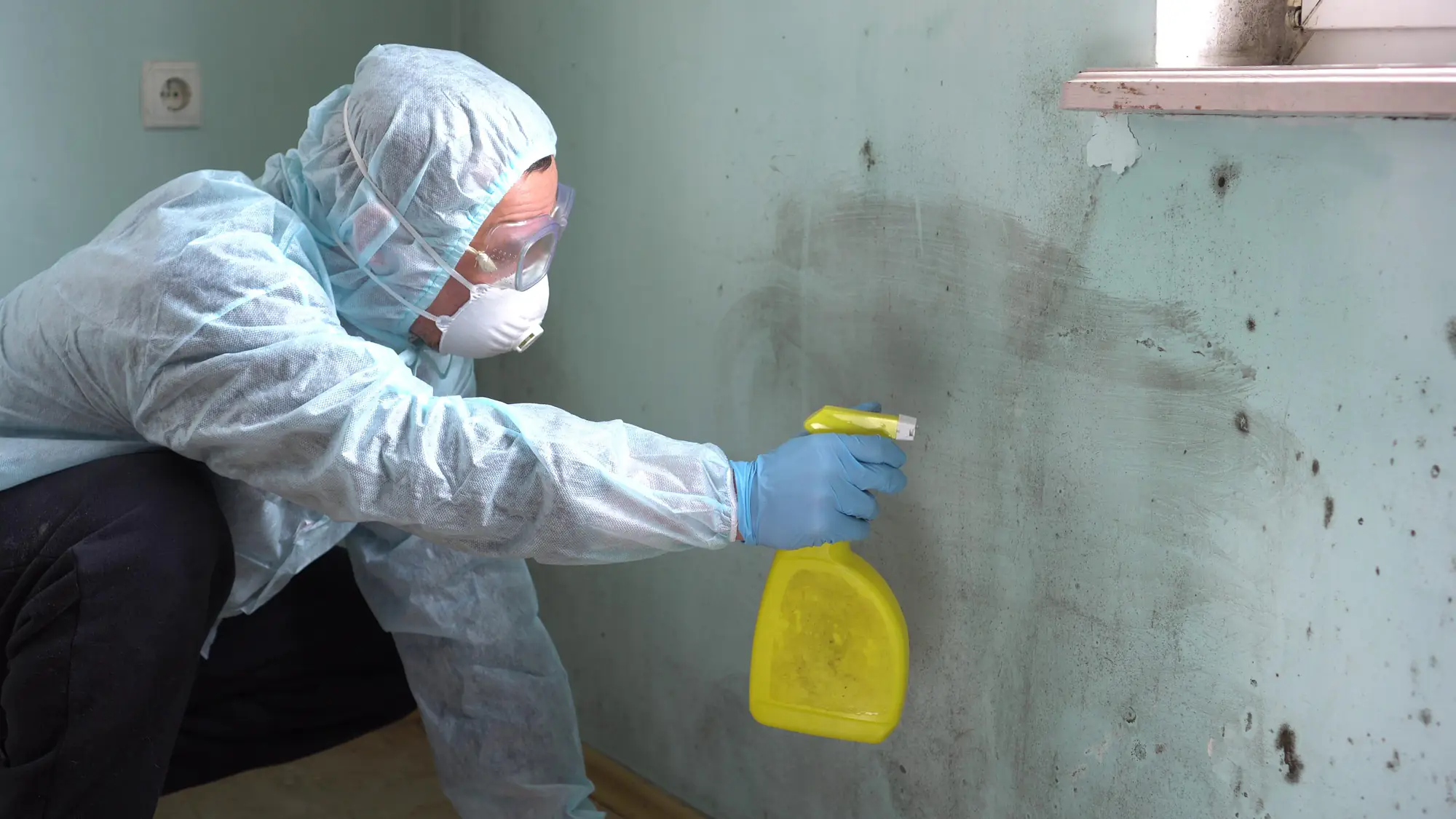
First, we inspect everything. Not just the visible mold, but the areas where it’s likely hiding—behind baseboards, inside wall cavities, under flooring, in HVAC systems. We use moisture meters and thermal imaging to find problem areas you can’t see.
Next, we contain the work area. Mold spreads through spores, and disturbing it without containment turns a local problem into a whole-house problem. We seal off the area with plastic sheeting and use negative air pressure to keep spores from traveling.
Then we remove it. Not with bleach or home remedies, but with HEPA filtration, antimicrobial treatments, and proper disposal of contaminated materials. If drywall or insulation is affected, it gets removed and replaced.
Finally, we address the moisture source. Leaky pipes, poor ventilation, foundation cracks, humidity issues—whatever caused it gets identified and explained. We’ll tell you what needs to be fixed to prevent this from happening again.
Ready to get started?
Every job starts with a free inspection. We’re not going to quote you over the phone without seeing the problem first. You’ll get a written assessment that explains what we found, where the moisture is coming from, and what needs to happen.
During remediation, you get containment barriers to protect unaffected areas, HEPA air filtration running throughout the process, removal and disposal of all contaminated materials, antimicrobial treatment of affected surfaces, and documentation for insurance or real estate purposes if you need it.
In Lower Southampton, we’re seeing more mold issues in finished basements and attics converted to living space. These areas weren’t designed with the same ventilation as the rest of the house. Add in Bucks County’s humidity, and you’ve got conditions where mold doesn’t just grow—it thrives. Nearly half of residential buildings show visible mold or detectable odor. If you’re smelling it, it’s already established.
We also handle emergency situations. Water damage from storms, burst pipes, or flooding can lead to mold growth within 24 to 48 hours. If you’ve had recent water intrusion, waiting isn’t an option.

If you can see mold, smell mold, or you’ve had any water damage in the last few months, you need an inspection at minimum. Visible mold is usually just part of the problem.
What you’re seeing on a wall or ceiling is the surface growth. The bigger issue is often what’s behind it—inside the wall cavity, under flooring, or in ductwork. DIY cleaning might make it look better temporarily, but it doesn’t address hidden growth or the moisture source.
You also need professional help if anyone in your home is experiencing unexplained respiratory issues, allergies, or asthma flare-ups. About 15-50% of people who are genetically prone to allergies react to mold, and for some, exposure causes serious symptoms. If your health improves when you leave the house and worsens when you return, that’s a red flag.
Mold removal is what it sounds like—getting rid of visible mold. Remediation goes further. It’s the process of identifying the source, containing the area, removing contaminated materials, treating surfaces, and preventing future growth.
Removal without remediation is like bailing water out of a sinking boat without plugging the hole. You might get temporary relief, but the problem comes back. Remediation addresses why the mold is there in the first place.
In Pennsylvania, where humidity and temperature swings are constant, moisture control is everything. We don’t just clean mold—we find out where the water is coming from, whether that’s a leaky pipe, poor ventilation, foundation seepage, or condensation buildup. Then we give you a clear plan for fixing it so you’re not calling us again in six months.
It depends on the size of the affected area and how much material needs to be removed. A small bathroom might take one to two days. A finished basement with mold behind drywall could take a week or more.
The timeline includes inspection and testing, containment setup, removal of affected materials, cleaning and treatment of surfaces, air filtration and drying, and final clearance testing if needed. We don’t rush it. Cutting corners means mold comes back, and that defeats the entire purpose.
Most homeowners in Lower Southampton are dealing with basement or crawl space mold, which tends to be more extensive because those areas stay damp longer. If you’ve got mold in multiple rooms or it’s spread through your HVAC system, that extends the timeline. We’ll give you a realistic estimate after the inspection, not a best-case scenario that we can’t actually meet.
Sometimes. It depends on what caused the mold and what your policy covers. If mold resulted from a sudden, accidental event—like a burst pipe or storm damage—there’s a good chance your insurance will cover at least part of it.
If it’s from long-term neglect, like a slow leak you didn’t fix or chronic humidity you ignored, most policies won’t cover it. Insurance companies consider that a maintenance issue, not a covered peril.
We’ve worked with insurance claims in Bucks County for years. We can provide documentation, photos, and a detailed scope of work to support your claim. We’ll also work directly with adjusters if needed. Just know that coverage isn’t guaranteed, and you’ll want to review your policy or call your agent before assuming it’s covered. The greater majority of mold problems come from small leaks that were left unaddressed, and insurers know that.
Bleach kills surface mold on non-porous materials like tile or glass, but it doesn’t penetrate porous surfaces like drywall, wood, or grout. It also doesn’t address the root cause, which is moisture. You’re treating the symptom, not the problem.
Bleach also releases fumes that can irritate your lungs, especially in poorly ventilated spaces like basements or bathrooms. And if you’re scrubbing mold without containment, you’re spreading spores throughout your home. Those spores can settle in other areas and start new colonies wherever conditions are right.
DIY removal works for very small areas—less than 10 square feet—if it’s surface-level and you caught it early. Anything larger, anything hidden, or anything that keeps coming back needs professional remediation. We use HEPA filtration, antimicrobial agents, and proper containment. We also find and fix the moisture source so you’re not doing this every few months.
Get it remediated before listing. Mold is one of the fastest deal-breakers in Bucks County real estate. Buyers will find it during inspection, and once it’s documented, you’re either paying for remediation or losing the sale.
Even if you disclose it upfront, most buyers will either walk away or demand a significant price reduction that costs you more than remediation would have. And if you try to hide it, you’re opening yourself up to legal liability after closing.
We provide documentation that shows the work was done properly, which you can share with buyers and their inspectors. That transparency builds confidence and keeps the deal moving. In Lower Southampton, where home values are strong, protecting your investment means addressing mold problems before they cost you thousands at closing. We’ve seen sellers lose deals over mold that would have cost $3,000 to fix but ended up costing $15,000 in price reductions.
Other Services we provide in Lower Southampton