
Hear from Our Customers
You stop worrying about what’s growing behind your walls. Your family breathes easier because the air quality improves once the source is removed and the space is properly treated.
The musty smell disappears. That’s not masking it with air fresheners—it’s gone because we removed what was causing it.
Your home value stays protected. If you’re selling, you won’t face that awkward conversation where a buyer’s inspector finds mold and tanks your deal. If you’re staying, you’re not watching a small problem turn into a $15,000 nightmare because it spread to the framing.
You get documentation. Lab results, moisture readings, photos of the work. If you need it for insurance or a future sale, you have it.
The problem doesn’t come back next spring when the humidity kicks in, because we identified why moisture was accumulating in the first place. A lot of homes in Irish Meeting House deal with basement moisture and older construction that wasn’t built with vapor barriers. We address that.
We work throughout Bucks County, including Irish Meeting House and the surrounding communities. We’ve seen the common patterns here—stone foundations that weep during heavy rain, crawl spaces with dirt floors, attics with poor ventilation that trap moisture all summer.
We’re not a national franchise reading from a script. We know what causes mold in this area because we’ve been in hundreds of basements, attics, and bathrooms just like yours.
Our team uses thermal imaging and moisture meters to find hidden problems. We follow EPA guidelines for containment and removal. We work with certified labs for testing. And we explain everything in plain terms so you understand what’s happening and why.
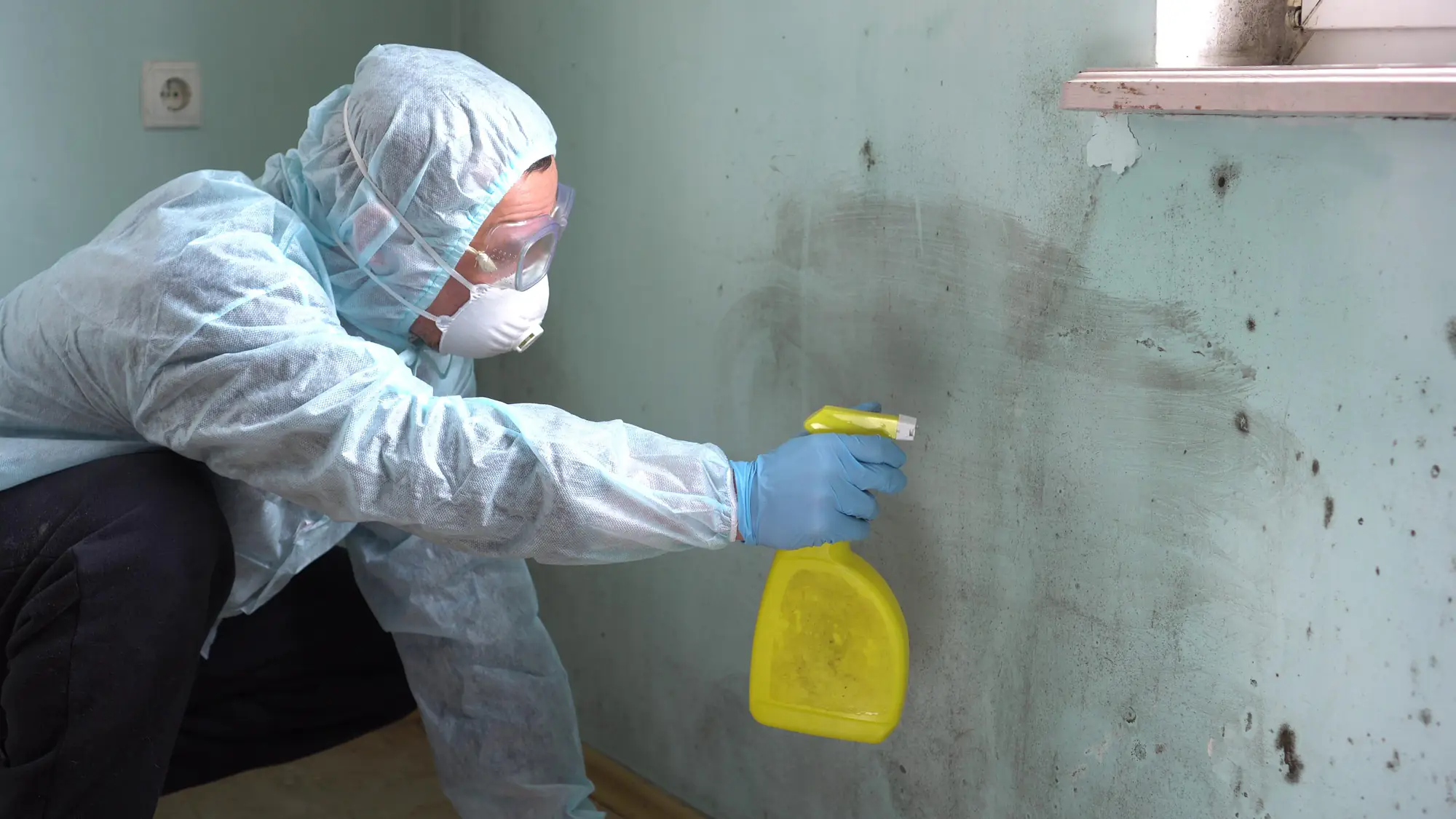
First, we inspect the affected area and use moisture detection equipment to find all the spots where mold is growing—including places you can’t see. We’re looking for the source of moisture, not just the visible mold.
If testing is needed, we collect samples and send them to a certified lab. You get a report that tells you exactly what type of mold you’re dealing with and the concentration levels. That matters for health concerns and insurance claims.
Next, we contain the area using physical barriers and negative air pressure so mold spores don’t spread to clean parts of your home during removal. We remove contaminated materials, treat affected surfaces, and use HEPA filtration to clean the air.
Then we address the moisture source. Maybe that’s fixing a grading issue, sealing a foundation crack, improving ventilation, or installing a dehumidifier. If we don’t fix why the mold grew in the first place, you’ll be calling someone again in six months.
Finally, we verify the work with post-remediation testing if needed and provide documentation of everything we did. You’re not guessing whether it’s really gone.
Ready to get started?
You get a thorough inspection with moisture mapping using infrared cameras and digital meters. We’re checking wall cavities, under flooring, above ceilings—anywhere moisture could be hiding.
Professional containment setup before we start removal. That means sealed barriers, negative air machines, and proper personal protective equipment. We’re not tracking mold spores through your house.
Complete removal of affected materials following Pennsylvania regulations and EPA standards. If drywall, insulation, or flooring is contaminated beyond cleaning, it gets removed properly and disposed of correctly.
Treatment of structural materials that can be saved. Not everything has to be ripped out if we catch it early enough and the material can be properly cleaned and treated.
Source identification and moisture control recommendations specific to your property. In Irish Meeting House, that often means dealing with basement humidity, poor attic ventilation, or drainage issues common to older Bucks County homes. We’ve seen how spring rains affect properties here and what typically fails first.
Air scrubbing with HEPA filtration during and after the work. Post-remediation verification available through independent lab testing. And help with insurance documentation if you’re filing a claim.

If the mold covers more than 10 square feet, the EPA recommends professional remediation. That’s about a 3×3 area. Beyond that size, you’re dealing with enough spores that improper removal can spread the problem and expose you to health risks.
You also need a professional if mold is growing because of contaminated water—like from a sewage backup or flooding. That’s not just mold, that’s potential bacteria and pathogens you don’t want to handle without proper equipment and training.
If you have health issues, especially respiratory problems or a compromised immune system, don’t mess with mold removal yourself. Even small amounts can trigger reactions, and disturbing mold during cleaning releases spores into the air you’re breathing. If the mold keeps coming back after you’ve cleaned it, that means there’s a moisture source you haven’t identified. A professional can find it using moisture meters and thermal imaging—tools most homeowners don’t own.
Mold removal sounds like you’re getting rid of every single spore, which isn’t realistic. Mold spores exist everywhere—they’re in the air outside right now. The goal isn’t zero mold spores, it’s getting levels back to normal and removing the conditions that let mold grow.
Mold remediation is the correct term because it means we’re removing the contaminated materials, cleaning what can be saved, and fixing the moisture problem that caused growth in the first place. We’re remediating the situation, not promising a mold-free environment that doesn’t exist in nature.
That’s an important distinction because some companies will promise “complete mold removal” and charge you for repeated treatments when mold comes back. If the underlying moisture issue isn’t fixed, mold will return. Proper remediation addresses both the growth and the cause. You should be skeptical of anyone who says they’ll remove every trace of mold forever—that’s not how it works, and it suggests they either don’t understand the science or they’re setting you up for future services you shouldn’t need.
Most residential mold remediation jobs take two to five days depending on the size of the affected area and what’s involved. A single bathroom might be done in two days. A finished basement with mold behind drywall could take a week once you factor in removal, treatment, drying time, and verification.
Whether you can stay in your home depends on where the mold is and how extensive the work is. If we’re remediating a basement and you can close it off from the main living area, you can usually stay. If it’s in your HVAC system or multiple rooms, you might want to stay elsewhere while we work.
We use containment barriers and negative air pressure to keep mold spores from spreading to clean areas during removal, but there’s still dust, noise, and disruption. If anyone in your home has respiratory issues, asthma, or mold allergies, it’s safer to stay somewhere else during active remediation even with containment in place. We’ll give you a realistic timeline upfront and let you know if we hit anything unexpected that extends the work. Most delays happen when we open up a wall and find more damage than the initial inspection revealed.
It depends on what caused the mold. If mold grew because of a sudden, accidental water event—like a burst pipe or a roof leak during a storm—most policies will cover remediation. If mold grew because of long-term neglect, poor maintenance, or ongoing moisture problems you didn’t address, probably not.
Insurance companies want to see that you acted quickly after water damage occurred. If your washing machine hose burst and you called for cleanup right away, that’s usually covered. If you ignored a slow leak for months and now there’s mold, they’ll likely deny the claim.
You need documentation. That means photos, moisture readings, lab test results, and a clear timeline of what happened. We help with that because we’ve worked with insurance companies throughout Bucks County and know what they require. Some policies have specific mold coverage limits—like $10,000 max—even if the underlying water damage is covered for more. Read your policy or call your agent before assuming anything. And don’t start remediation before the insurance adjuster sees the damage, or you might hurt your claim. We can do emergency containment to stop mold from spreading while you wait for the adjuster, then proceed with full remediation once you have approval.
Humidity and water intrusion, same as anywhere, but Bucks County homes have some specific vulnerabilities. A lot of houses here were built before modern moisture control standards. Stone foundations look great but they’re porous—water comes right through during heavy rain. Crawl spaces often have dirt floors with no vapor barrier, so ground moisture rises into the house.
Attics in older homes frequently lack proper ventilation. Summer heat and humidity get trapped up there, condensation forms on the underside of the roof deck, and mold grows on the wood sheathing. We see that constantly in Irish Meeting House.
Basements are another common problem area. Poor exterior grading, missing or clogged gutters, and foundation settling all lead to water getting in. Once you have moisture and organic material—like drywall, wood, or carpet—mold grows within 24 to 48 hours if conditions are right. Spring storms and summer humidity create perfect conditions. If your basement feels damp or smells musty, you likely have elevated moisture even if you don’t see standing water. That’s enough for mold. Bathrooms without exhaust fans, kitchens with poor ventilation, and anywhere you’ve had a leak or flood are also prime spots.
Control moisture and you control mold. That means fixing whatever let water or humidity accumulate in the first place. If we removed mold from your basement, you need to address exterior drainage, seal foundation cracks, and possibly run a dehumidifier to keep humidity below 60%.
If the mold was in your attic, you need proper ventilation—ridge vents, soffit vents, and airflow that prevents heat and moisture from being trapped. If it was in a bathroom, you need an exhaust fan that actually vents outside, not into the attic. And you need to use it.
Gutters and downspouts matter more than most people think. If water is pooling next to your foundation because gutters are clogged or downspouts dump water right at the house, that water is getting into your basement or crawl space. Extend downspouts at least six feet away from the foundation and make sure your yard slopes away from the house.
Fix leaks immediately. A small drip under the sink or a roof leak that only shows up during heavy rain will cause mold if you ignore it. Check areas that flooded before, because if it happened once it’ll probably happen again unless you changed something. We’ll give you specific recommendations based on what we found during remediation, but the bottom line is this: keep things dry and mold won’t grow.
Other Services we provide in Irish Meeting House