
Hear from Our Customers
You stop wondering if that musty smell is dangerous. You stop worrying every time someone in your house coughs or sneezes for no clear reason. The air feels different—cleaner, lighter—and you’re not second-guessing whether you should’ve done something sooner.
Real mold removal means finding growth you can’t see, not just wiping down what’s visible. It means identifying why moisture got there in the first place and making sure it doesn’t come back. That’s what changes things.
When the job’s done right, you get documentation proving the air quality is safe again. You get answers about what happened and how to prevent it. You get your home back without the constant worry that something’s growing behind your walls.
Mack’s Mold Removal isn’t a franchise or a call center. We’re local professionals who’ve worked in Lumberville homes for years and understand exactly what happens when summer humidity hits older properties along the Delaware River.
We know which basements flood, which foundations leak, and how HVAC systems struggle when relative humidity climbs above 60% for weeks at a time. We’ve seen what happens in stone foundations, crawl spaces with poor ventilation, and bathrooms that weren’t designed for modern moisture loads.
That local knowledge matters because mold problems in Lumberville aren’t the same as mold problems somewhere else. The climate here, the home construction here, the groundwater conditions here—they all create specific challenges that require specific solutions.
First, we inspect your property with thermal imaging and moisture detection equipment to find every area where mold is growing—including spots you can’t see. We’re looking behind walls, under floors, in HVAC systems, and anywhere moisture has created conditions for growth.
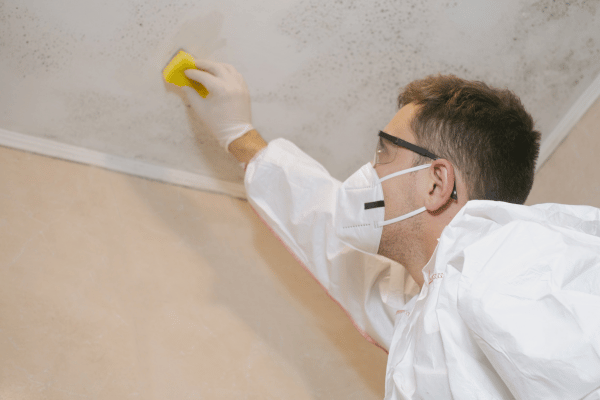
Next, we contain the affected areas with plastic sheeting and negative air pressure so spores don’t spread to clean parts of your home while we work. HEPA filtration systems run continuously to clean the air. Then we remove contaminated materials using EPA-approved methods and professional-grade equipment, not hardware store spray bottles.
But removal is only half the job. We identify and document the moisture source that caused the problem—whether it’s a foundation issue, ventilation problem, plumbing leak, or humidity from your HVAC system. We give you a written report with air quality test results, photos of the work, and specific recommendations to prevent recurrence.
The whole process typically takes a few days depending on the extent of contamination. You get a warranty backing the work, and if you’re filing an insurance claim, we help with that documentation too.
Ready to get started?
You get a free inspection where we assess the full scope of contamination, not just what’s visible on your bathroom ceiling or basement wall. That includes moisture mapping, thermal imaging, and air quality testing to determine exactly what types of mold you’re dealing with.
Professional containment and removal follow EPA guidelines and Pennsylvania regulations. We seal off work areas, use proper protective equipment, and remove affected materials safely. HEPA filtration runs throughout the job to prevent cross-contamination.
In Lumberville specifically, we see a lot of basement moisture issues in older homes with stone or block foundations. We see HVAC problems where air conditioning systems can’t keep up with summer humidity. We see bathroom and kitchen ventilation issues in homes built before modern building codes. Whatever the source, we find it and give you a plan to fix it.
You also get complete documentation—written reports, photos, air quality results before and after treatment, and recommendations specific to your property. If you’re selling a home, buying one, or dealing with an insurance claim, that documentation matters.
If you’re smelling something musty that doesn’t go away, that’s usually mold. If people in your house are experiencing unexplained allergy symptoms, respiratory issues, or headaches that improve when they leave the property, that’s a red flag. Visible growth—even small patches—means there’s likely more you’re not seeing.
Normal moisture evaporates and doesn’t create persistent problems. Mold needs sustained moisture over 24-48 hours to start growing, so if you’ve got conditions where surfaces stay damp, condensation keeps forming, or humidity stays high for extended periods, you’ve created an environment where mold thrives.
The challenge in Lumberville is that summer humidity levels consistently hit 60% or higher, and many older homes weren’t built with the ventilation needed to handle that. A free inspection with moisture detection equipment and thermal imaging will show you exactly what’s happening and whether you’re dealing with a mold problem or just normal seasonal humidity.
Surface cleaning removes what you can see, but it doesn’t address what’s growing inside walls, under flooring, or in your HVAC system. Bleach kills surface mold on non-porous materials, but it doesn’t penetrate porous surfaces like drywall or wood where mold roots dig in. You’re treating the symptom, not the problem.
The bigger issue is that DIY cleaning often spreads spores throughout your home. Without proper containment, HEPA filtration, and protective equipment, you’re stirring up contamination and making things worse. And if you don’t identify and fix the moisture source, the mold just comes back.
Professional mold removal means containment to prevent spread, complete removal of contaminated materials, air filtration during the work, and addressing the underlying moisture issue. It means documentation proving the air quality is safe again. Small surface patches might be manageable on your own, but if you’re seeing growth in multiple areas, smelling persistent odors, or dealing with health symptoms, you need a mold specialist who can assess the full extent of contamination.
Most residential mold removal jobs take two to five days depending on how extensive the contamination is and how many areas need treatment. A single bathroom with surface growth might be a day or two. A basement with widespread contamination affecting multiple rooms could take a week.
Whether you need to leave depends on the scope of work and where the mold is located. If we’re treating a contained area like a basement or single room, you can usually stay in your home as long as we’ve sealed off the work area properly. If contamination is widespread or affecting your HVAC system, it’s often better to stay elsewhere during active removal.
We use containment barriers and negative air pressure to keep spores from spreading to clean areas while we work. HEPA filtration systems run continuously. Once removal is complete and we’ve confirmed air quality is back to normal levels, you’re good to return. The timeline gets discussed during your free inspection when we can see exactly what we’re dealing with and give you a realistic schedule.
It depends on what caused the mold. If it’s from a sudden, covered event like a burst pipe, roof leak during a storm, or appliance failure, most policies will cover remediation. If it’s from long-term neglect, poor maintenance, or gradual issues like basement seepage, most policies won’t.
Pennsylvania insurance policies vary significantly in their mold coverage, and many have specific limits—sometimes as low as $5,000 to $10,000 for mold-related claims. You need to check your specific policy or call your insurance company to understand your coverage before assuming anything.
We help with insurance claims by providing detailed documentation of the contamination, the removal process, and the moisture source. That includes photos, air quality test results, and a written report explaining what we found and what we did. If your claim gets approved, that documentation is what your insurance company needs. If it doesn’t, at least you know where you stand and can make an informed decision about moving forward.
Mold keeps returning because the moisture source hasn’t been fixed. You can remove growth a hundred times, but if water or humidity keeps creating the right conditions, it’ll keep growing back. That’s the cycle most homeowners get stuck in.
In Lumberville specifically, we see recurring mold from basement moisture in older foundations, poor drainage around the property, HVAC systems that can’t control humidity during summer months, bathroom and kitchen ventilation that’s inadequate, and crawl spaces with dirt floors that let ground moisture into the home. Sometimes it’s a combination of several issues.
Professional mold removal includes identifying that moisture source—not just cleaning up the growth. We use moisture meters, thermal imaging, and humidity monitoring to pinpoint exactly where water is coming from and why it’s accumulating. Then we give you recommendations to fix the underlying problem, whether that’s improving ventilation, addressing foundation issues, upgrading your HVAC system, or fixing drainage. Without that step, you’re just treating symptoms.
Small, contained jobs like a single bathroom or closet typically run $500 to $2,000. Moderate contamination affecting a basement or multiple rooms usually falls between $2,000 and $6,000. Extensive remediation involving structural materials, HVAC systems, or multiple floors can reach $10,000 or more depending on the scope.
The cost depends on how much area is affected, what materials need removal, whether your HVAC system is contaminated, and how difficult the moisture source is to access and address. A surface patch on drywall costs less than removing insulation, framing, and subfloor in a crawl space.
We offer free inspections so you know exactly what you’re dealing with before committing to anything. You get a written estimate breaking down the work, the timeline, and what’s included. No surprises, no pressure. Some companies lowball estimates to get in the door and then hit you with add-ons once they start working. We don’t operate that way. You’ll know the real cost upfront based on a thorough assessment of your specific situation.