

Hear from Our Customers
You stop worrying every time someone in your house coughs. The musty smell that’s been lingering in your basement finally disappears. You can breathe easier knowing that black mold isn’t hiding behind your walls anymore.
Real mold removal means finding every spot where it’s growing, not just the visible patches. It means fixing the moisture problem that caused it in the first place. Because if you don’t address why mold showed up, it’ll come back within months.
In Tradesville and throughout Bucks County, our humid summers create perfect conditions for mold growth. Your basement stays damp longer. Your crawl space holds moisture. Your attic condensation doesn’t evaporate like it should. Professional mold cleaning services handle all of it—the visible growth, the hidden colonies, and the water source feeding them.
The result is a home where you’re not second-guessing the air quality. Where you can sell without a failed inspection. Where your kids’ allergies actually improve because the trigger is gone.
We’ve been handling mold problems across Tradesville and Bucks County for years. We’re certified mold remediation specialists who understand how Pennsylvania’s climate affects your home. The humidity spikes in July. The basement flooding after spring storms. The condensation issues in older homes without proper ventilation.
We’ve seen what happens when homeowners try DIY removal with bleach and a spray bottle. The mold comes back because the moisture source wasn’t fixed. We’ve also seen what other mold removal companies miss—the hidden growth in wall cavities, the contamination in HVAC systems, the slow spread into insulation.
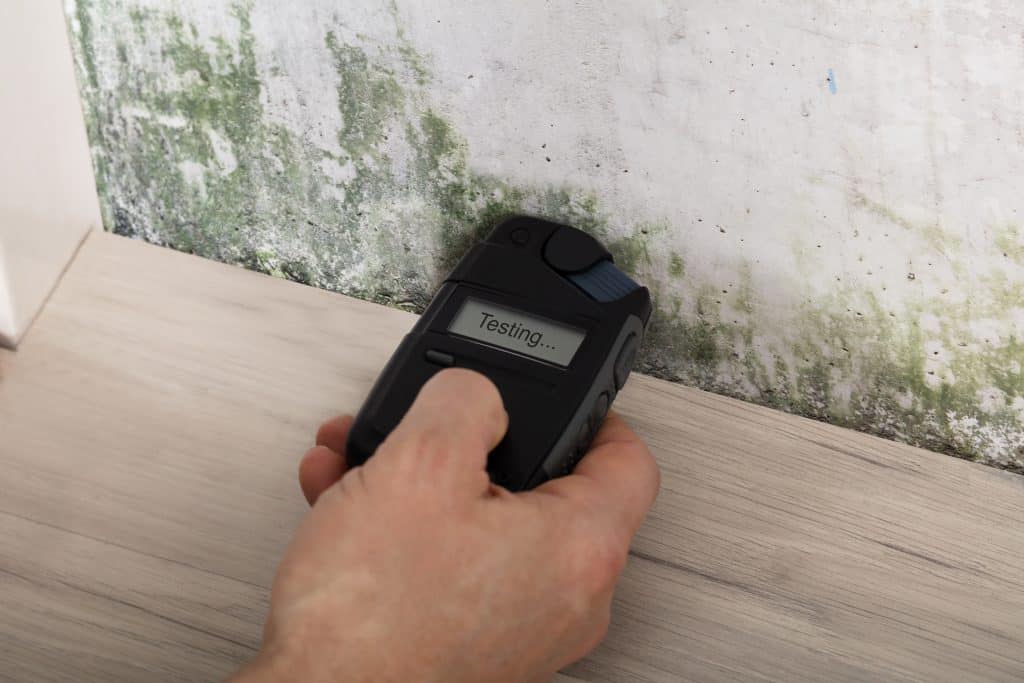
Our team uses moisture meters, infrared cameras, and air quality testing to find problems you can’t see. We document everything for insurance claims. We explain what we’re doing and why. You’re not getting a sales pitch—you’re getting a clear plan to remove mold and keep it from returning.

First, we inspect your property with detection equipment that finds moisture and mold you can’t see. Infrared cameras show us wet spots behind walls. Moisture meters tell us if your subfloor is soaked. Air samples go to a lab to identify exactly what type of mold you’re dealing with.
Next, we contain the affected area so mold spores don’t spread during removal. We seal off the workspace with plastic barriers and use negative air pressure to keep contamination isolated. This step matters more than most homeowners realize—improper containment can spread mold to clean areas of your home.
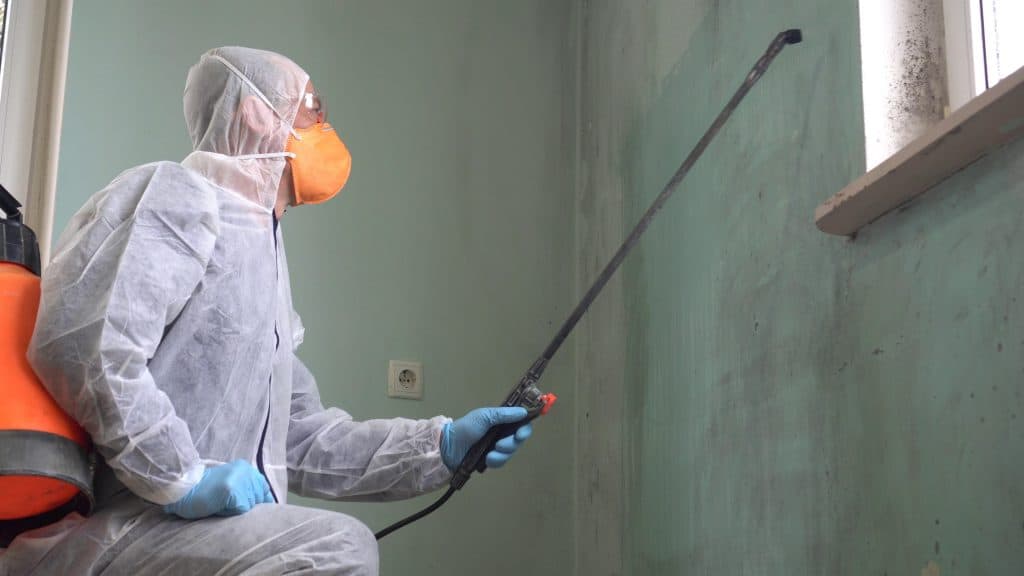
Then we remove the mold using HEPA vacuums and antimicrobial treatments. Porous materials like drywall or insulation that are heavily contaminated get removed entirely. Hard surfaces get cleaned and treated. We don’t just kill surface mold—we extract the roots and spores embedded in materials.
Finally, we fix the moisture problem. Maybe it’s a leaking pipe. Maybe it’s poor ventilation. Maybe it’s groundwater seeping through your foundation. Whatever caused the mold gets addressed, or you’ll be calling another mold specialist in six months. We also recommend preventative measures specific to your home and Tradesville’s climate patterns.
Ready to get started?
You get a complete inspection with moisture mapping and mold testing. We identify all affected areas, not just the obvious spots. Lab analysis tells us the mold type and concentration levels, which determines the removal approach.
Containment and air filtration happen before any removal starts. We protect your unaffected spaces and prevent cross-contamination. Our HEPA air scrubbers run continuously during the job to capture airborne spores.
All contaminated materials get safely removed and disposed of according to EPA guidelines. We clean and treat remaining surfaces with antimicrobial solutions. Then we verify the work with post-remediation testing to confirm mold levels are back to normal.
You also get documentation for insurance claims. Detailed reports with photos, moisture readings, and lab results. We work directly with insurance companies because we know what they require for coverage. Most mold removal companies in Bucks County don’t provide this level of documentation—it costs you money and delays your claim.
In Tradesville specifically, we see a lot of basement mold from poor drainage and crawl space issues from groundwater. Older homes here weren’t built with modern moisture barriers. We address these local construction patterns in our remediation approach so the fix actually lasts.
Mold can start growing within 24 to 48 hours after water exposure, especially during Tradesville’s warm and humid months. If your basement floods or a pipe bursts, the clock starts immediately. The longer materials stay wet, the deeper mold penetrates.
This is why fast response matters. If you dry everything within the first day, you might avoid mold growth entirely. But if wet drywall or insulation sits for three days, you’re looking at removal and remediation instead of just drying.
Pennsylvania’s humidity makes this worse. Even after visible water is gone, materials stay damp longer here than in drier climates. Your basement might feel dry to the touch but still have enough moisture content to support mold growth. Professional moisture meters catch this before it becomes a bigger problem.
Bleach kills surface mold on non-porous materials like tile or glass, but it doesn’t work on porous surfaces like drywall, wood, or insulation. The mold roots penetrate deep into these materials, and bleach only lightens the surface stains. The mold keeps growing underneath.
DIY removal also risks spreading spores throughout your home. Without proper containment and air filtration, you’re stirring up thousands of spores that settle in clean areas. We’ve responded to homes where a small bathroom mold problem became a whole-house issue after improper DIY attempts.
The bigger issue is that DIY never addresses why mold appeared. If you don’t fix the leak, improve ventilation, or resolve the moisture source, mold returns within months. Professional mold cleaning services find and fix the root cause so you’re not dealing with repeat growth.
Cost depends on the size of the affected area, the type of mold, and how much material needs removal. A small bathroom mold problem might run $500 to $1,500. Extensive basement mold remediation can range from $2,000 to $6,000 or more if structural materials need replacement.
Black mold removal typically costs more because it requires stricter containment and safety protocols. Hidden mold in wall cavities or HVAC systems adds to the cost because accessing it requires more labor and materials.
Many homeowners insurance policies cover mold remediation if it resulted from a covered event like a burst pipe or storm damage. We provide detailed documentation and work directly with insurance companies to help maximize your coverage. Getting a free inspection first gives you an accurate estimate and helps you understand what your insurance might cover before you commit to anything.
Mold exposure can trigger allergic reactions, asthma attacks, and respiratory problems, especially in children, elderly individuals, and people with compromised immune systems. Symptoms include coughing, wheezing, throat irritation, nasal congestion, and eye irritation.
Black mold produces mycotoxins that can cause more severe reactions in some people, including chronic fatigue, headaches, and difficulty concentrating. Not everyone reacts the same way—some people are highly sensitive while others show no symptoms. But just because you’re not reacting doesn’t mean the mold isn’t affecting your indoor air quality.
Long-term exposure increases health risks. If you’ve been dealing with unexplained respiratory issues or allergies that won’t go away, hidden mold might be the cause. Getting professional testing identifies whether mold is present and at what concentration levels, which helps you make informed decisions about remediation.
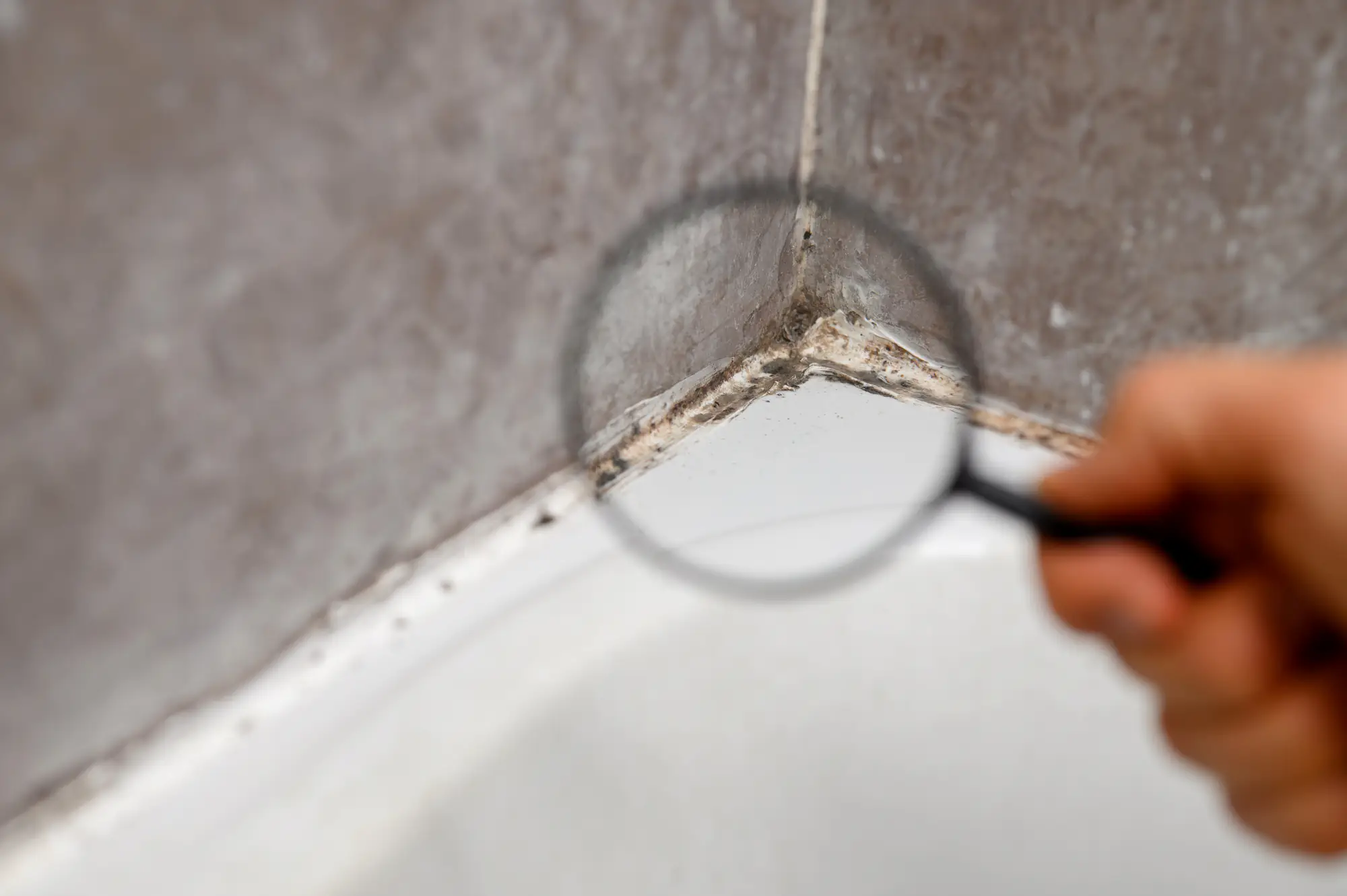
Musty odors are the most common sign of hidden mold. If your basement or crawl space smells earthy or damp, mold is likely growing somewhere you can’t see. Water stains on ceilings or walls indicate past or current leaks that create ideal conditions for mold growth.
Increased allergy symptoms when you’re home—but not when you’re away—suggest mold exposure. Peeling paint or wallpaper, warped walls, and discolored grout also point to moisture problems that support mold growth.
Infrared cameras and moisture meters detect hidden mold by finding temperature differences and elevated moisture levels behind walls, under floors, and in ceilings. Air quality testing measures spore concentrations throughout your home. These tools find problems before they become visible, which saves you money on more extensive remediation later. If you’ve had water damage, flooding, or persistent humidity issues in your Tradesville home, professional inspection catches hidden growth early.
Mold won’t return if the moisture source is fixed. Professional mold removal includes identifying and resolving what caused the growth in the first place. If we remove mold but don’t fix the leaking pipe, improve ventilation, or address groundwater intrusion, you’ll see mold again within months.
This is the difference between surface cleaning and actual remediation. Removing visible mold is the easy part. Finding why your basement stays damp, why condensation forms in your attic, or why your crawl space holds moisture—that’s what prevents recurrence.
We also recommend preventative measures specific to your home. Maybe it’s a dehumidifier for your basement. Maybe it’s better exhaust fans in bathrooms. Maybe it’s regrading your yard to direct water away from your foundation. These steps keep mold from returning and protect your investment in professional removal. Bucks County’s humid climate means you need to stay proactive about moisture control, especially in older Tradesville homes that weren’t built with modern vapor barriers.
Other Services we provide in Tradesville