

Hear from Our Customers
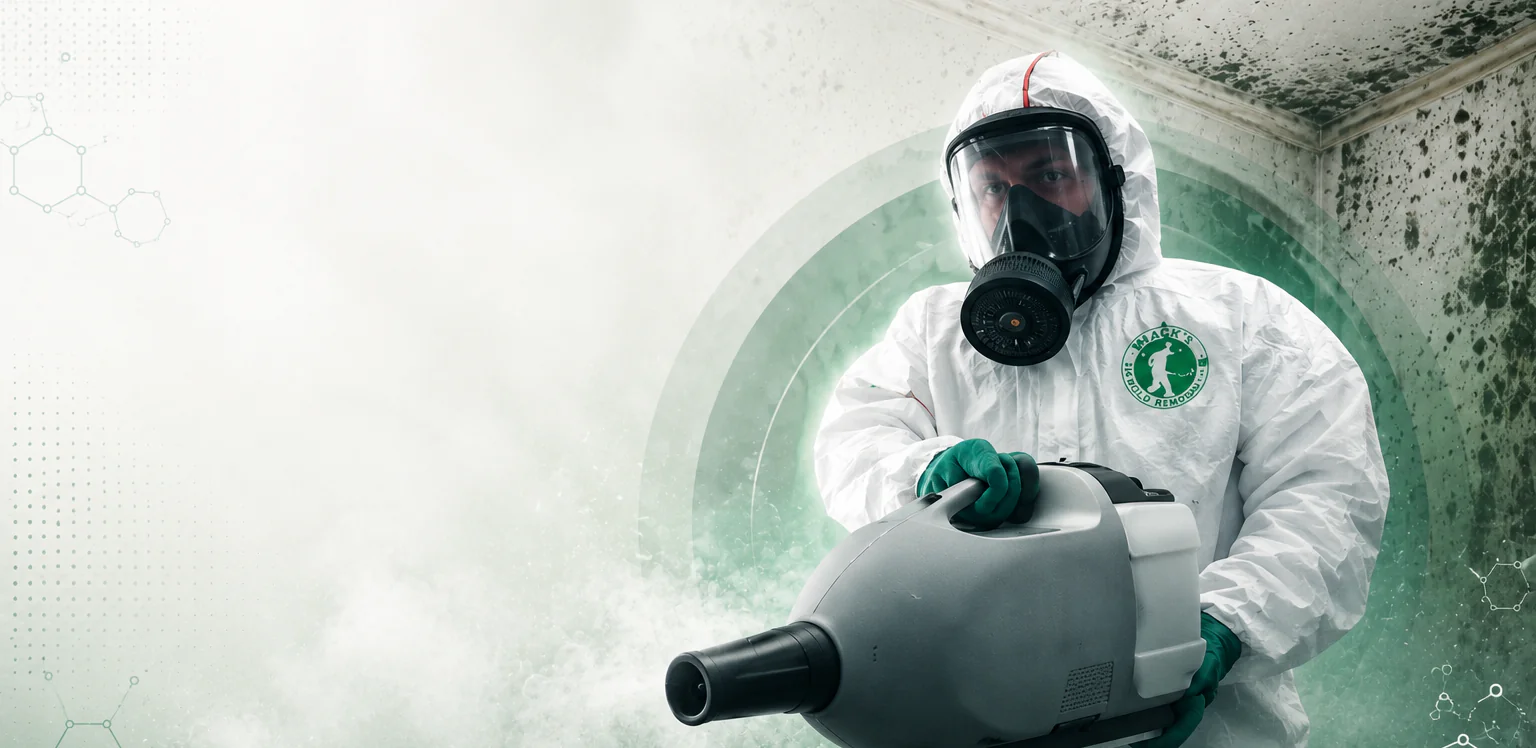
Philadelphia’s housing stock is old — more than half the city’s residential buildings predate 1950. Brick foundations absorb ground moisture. Plaster walls trap it. Flat roofs collect standing water and leak straight into ceilings without making a sound. That’s not a flaw in any one house. It’s just how Philadelphia was built, and it means mold has more places to hide here than in most places.
When you get a professional mold test done, you’re not guessing anymore. You know what’s in the air, where the spore counts are elevated, and whether what you’re dealing with is an active problem or background noise. That matters whether you’re a homeowner in Fishtown who’s been ignoring a musty smell for two winters, a buyer under contract on a rowhouse in Point Breeze with a seven-day inspection window, or a landlord in Kensington who just got a complaint from a tenant.
Philadelphia also sits between two rivers and sees enough humidity every summer to push indoor moisture levels well past the threshold where mold grows fast. When you add that to a basement with no vapor barrier and a shared party wall that just had a pipe burst next door, you’ve got real conditions that real testing accounts for — not a generic checklist.
We’ve been doing this work in the Philadelphia area since 1997. That’s over 25 years of inspecting brick basements in South Philly, crawlspaces in Northeast Philadelphia, and attics in Germantown — long before most of the companies currently showing up in Google results existed.
What makes us different isn’t a tagline. It’s the structure of the business. We test. We do not remediate. That means there’s no financial reason to tell you that you have a serious mold problem if you don’t. If your home tests clean, you get a clean report. If it doesn’t, you get a lab-backed document that tells you exactly what you’re dealing with — and you choose what to do next.
Based in Bensalem, right along the I-95 corridor where Bucks County meets Northeast Philadelphia, we aren’t driving in from the suburbs to serve a market we don’t know. This is the area. These are the houses. This is the work.
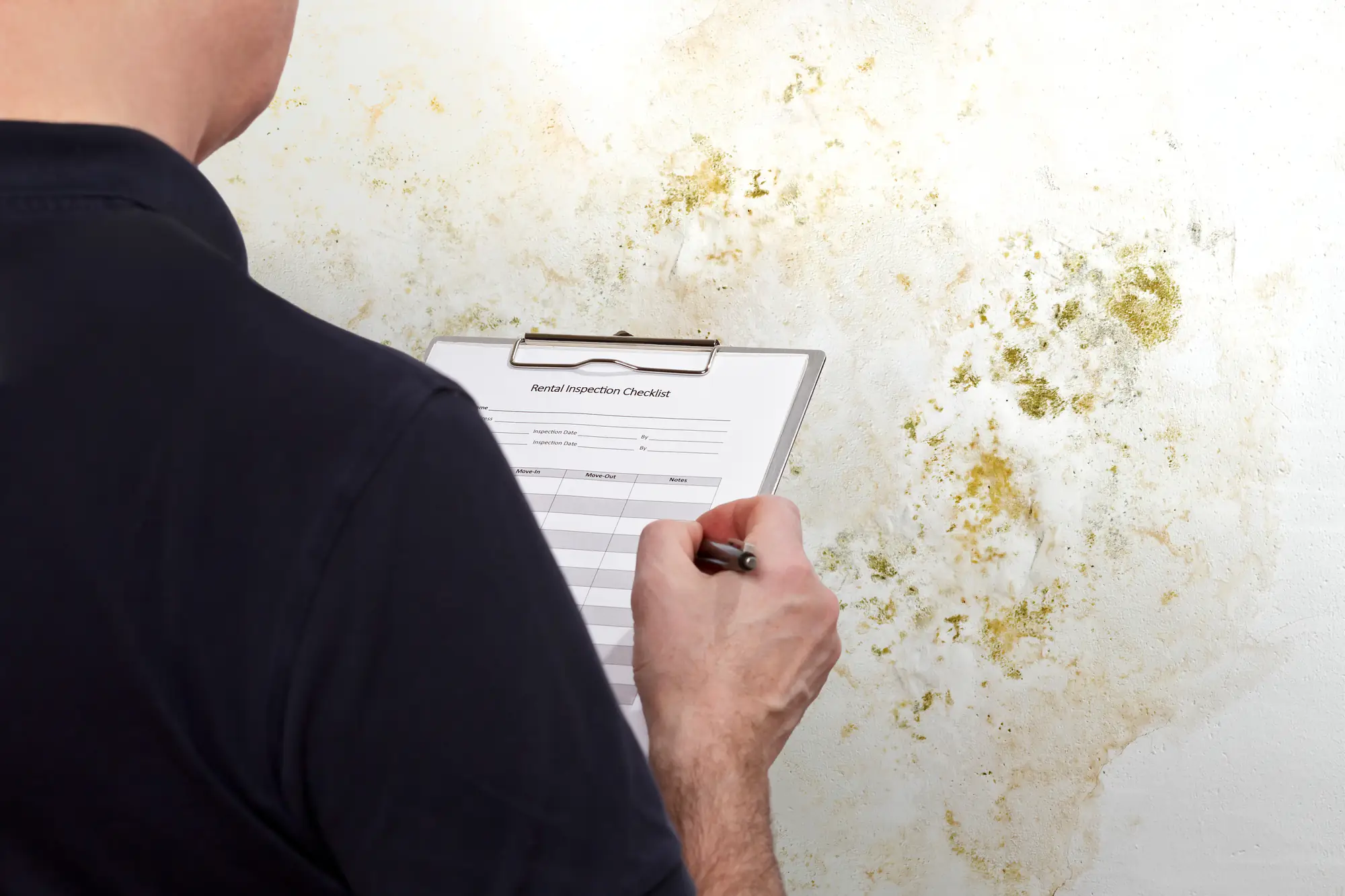
It starts with a call. You describe what you’re seeing, smelling, or concerned about — a damp basement after the last storm, a dark spot behind a piece of furniture, a family member whose allergies haven’t let up since you moved in. From there, we schedule an inspection, often same-day depending on availability.
During the inspection, air samples are collected from the areas of concern and compared against an outdoor baseline sample taken at your property. That comparison is what matters — it tells you whether your indoor spore count is elevated relative to what’s naturally present outside. Surface and swab samples may also be collected if there’s visible growth or a specific area that warrants closer analysis. Moisture readings and a visual inspection of high-risk zones — basement, crawlspace, attic, HVAC — are part of the process as well.
Samples go to a certified, accredited third-party laboratory. Results come back within 24 hours. For Philadelphia home buyers working inside a contingency window, that turnaround is the difference between having real information before you close and finding out about a problem after it’s your problem. The final report is professionally documented, lab-backed, and written clearly enough to use in a real estate negotiation, an insurance claim, or a response to a Department of Licenses and Inspections inquiry.
Ready to get started?
Every mold test through us includes air sampling with an indoor-to-outdoor spore count comparison, moisture readings throughout the inspection area, and a visual assessment of the zones most likely to harbor mold in Philadelphia’s older housing stock — basements, crawlspaces, attics, bathroom and kitchen walls, and HVAC systems. If visible growth is present, surface or swab samples can be collected and sent to the lab alongside the air samples.
The final report isn’t a form letter. It documents what was found, where it was found, what the lab results show, and what the numbers mean in plain language. For landlords managing rental properties in neighborhoods like West Philadelphia, Kensington, or North Philadelphia, that documentation matters. Philadelphia’s Health Code includes Chapter 6-900, which addresses residential mold inspections, and the city’s Department of Licenses and Inspections handles mold complaints in rental housing. A professionally documented mold test from a certified inspector is the kind of record that holds up when a tenant complaint escalates or when L&I shows up at the door.
For home buyers, the report gives you something concrete to bring to your agent and the seller’s table. For homeowners, it answers the question you’ve been sitting on. The test itself is straightforward. What it gives you is clarity — and in a city with Philadelphia’s housing stock, that’s not a small thing.
It’s more common than most people realize, and the reasons are structural. Philadelphia’s rowhouses — especially those built before 1950, which make up the majority of the city’s residential stock — were constructed without modern moisture barriers, vapor retarders, or the insulation standards that newer buildings require. Brick foundations absorb ground moisture directly. Plaster walls can trap humidity behind them for years before anything becomes visible. Flat roofs, common throughout South Philadelphia and other dense neighborhoods, collect standing water and create slow leaks that often go undetected until there’s already mold growing inside a ceiling cavity.
The shared party walls in rowhouses add another layer of risk. A plumbing failure or roof leak in a neighboring unit can push moisture into your wall without any visible sign on your side. Philadelphia also sits between the Delaware River and the Schuylkill River, which keeps ambient humidity elevated — particularly in summer, when indoor humidity in poorly ventilated older homes can stay well above the threshold where mold grows quickly. It’s not that every Philadelphia home has a mold problem. It’s that the conditions here make mold more likely than in newer, suburban construction — and more likely to be hidden when it does occur.
The on-site inspection typically takes one to two hours, depending on the size of the home and how many areas need to be sampled. Air samples, surface swabs, and moisture readings are collected during that visit. Samples are then sent directly to a certified, accredited third-party laboratory — not processed in-house — and results come back within 24 hours.
That 24-hour turnaround matters a lot in Philadelphia’s real estate market specifically. Pennsylvania purchase contracts typically give buyers a seven-to-ten-day window for inspections and contingencies. If you’re under contract on a rowhouse in Graduate Hospital, a twin colonial in Mayfair, or a brownstone in Society Hill, you don’t have the luxury of waiting several business days for lab results. Getting your mold test scheduled early in the inspection period and having results back the next day gives you time to actually review the findings, talk to your agent, and make a decision — rather than scrambling at the end of your window.
Mold testing is the process of collecting air, surface, or swab samples and sending them to a laboratory to determine whether mold is present, what type it is, and at what concentration. Mold remediation is the physical removal and treatment of mold from a structure. These are two separate services — and the IICRC S520, which is the mold industry’s own governing standard, explicitly recommends that they be performed by separate companies.
The reason that recommendation exists is straightforward: a company that profits from finding and removing mold has a financial incentive to report positive findings, whether or not the situation truly warrants remediation. In Philadelphia’s mold testing market, many of the visible companies offer both services under one roof. We test and inspect — that’s it. There’s no remediation revenue on the line when your samples go to the lab, which means the results you get back reflect what’s actually in your home, not what justifies a larger job. For Philadelphia homeowners who’ve dealt with contractors before, that distinction is worth paying attention to.
Under Pennsylvania’s Landlord-Tenant Act, landlords are required to maintain rental properties in a condition fit for human habitation. Mold resulting from plumbing failures, roof leaks, or structural defects in the building falls under that habitability obligation — meaning it’s the landlord’s responsibility to address, not the tenant’s to tolerate.
Philadelphia adds another layer on top of state law. The city’s Health Code includes Chapter 6-900, which specifically addresses residential mold inspections, and the Department of Licenses and Inspections — reachable at (215) 686-2463 — handles mold complaints in rental housing. When a tenant files a complaint or L&I initiates an inspection, having a professionally documented mold test from a certified inspector on file demonstrates that you took the complaint seriously and responded appropriately. That documentation can be the difference between a resolved complaint and an escalating violation. Landlords managing properties in older neighborhoods like Kensington, North Philadelphia, or West Philadelphia — where the housing stock is aging and tenant turnover is frequent — benefit from having a clear, lab-backed record of each property’s condition, especially before re-renting a unit.
Yes — and in Philadelphia’s older housing stock, that’s actually one of the more common scenarios. Mold frequently grows inside wall cavities, behind plaster, beneath subfloors, and inside HVAC ductwork where it’s completely invisible and may produce little to no detectable odor at first. By the time a musty smell becomes noticeable or discoloration appears on a surface, the growth behind that surface has often been active for a while.
Air sampling is specifically designed to detect what you can’t see. It measures the concentration of mold spores in your indoor air and compares that count to an outdoor baseline sample taken at the same property on the same day. If your indoor spore count is significantly elevated relative to what’s naturally present outside, that’s a sign of active mold growth somewhere in the home — even if there’s nothing visible. For Philadelphia homes with brick basements, older plumbing systems, and limited ventilation, this kind of data-driven approach is more reliable than a visual inspection alone. You’re not relying on whether something looks wrong. You’re looking at what the air is actually carrying.
Professional mold testing in Philadelphia typically runs in the range of $300 to $700 for a standard residential inspection, depending on the size of the home, the number of samples collected, and how many areas need to be assessed. Larger properties, multi-unit buildings, or inspections that require additional surface sampling may fall toward the higher end of that range.
The more useful way to think about the cost is what it’s protecting you from. A mold remediation job in a Philadelphia rowhouse — depending on the extent of the growth and the areas affected — can run anywhere from a few thousand dollars to well over $10,000. Mold discovered during a real estate transaction can reduce a property’s value significantly or kill a deal entirely. For landlords, an undocumented mold complaint that escalates to an L&I violation or a tenant dispute carries costs that make a $400 test look like an obvious decision in hindsight. The test itself is a small number. What it tells you — and what it prevents — is where the real value is.
Other Services we provide in Philadelphia