

Hear from Our Customers
Mold doesn’t always show itself. You might smell something musty in your basement, notice discoloration behind furniture, or just have a nagging feeling that something’s off after a leak. That’s where professional mold testing comes in.
Testing tells you what’s actually happening in your home. Not surface-level observations—actual lab analysis of air samples, surface swabs, and moisture readings that show you the full picture. You’ll know what type of mold you’re dealing with, how much of it exists, and where it’s concentrated.
This matters when you’re trying to decide if you need remediation, when your insurance company asks for documentation, or when you’re buying or selling property in Rittenhouse Square. You’re not paying for someone to tell you what you already see. You’re paying for scientific confirmation of what you can’t see—and that’s what protects your investment and your family’s health.
We’ve been testing and treating mold in Philadelphia properties for years. We’ve worked in century-old brownstones, luxury high-rises, and everything in between across Rittenhouse Square and surrounding neighborhoods.
Philadelphia’s climate creates specific problems. High summer humidity, aging infrastructure, poor ventilation in historic buildings—these aren’t just talking points. They’re conditions we deal with every single day. We understand how water moves through old plaster walls, where condensation builds up in buildings with original windows, and why basements in this area stay damp even when there’s no visible leak.
That local knowledge shapes how we test. We know what to look for and where to look for it.
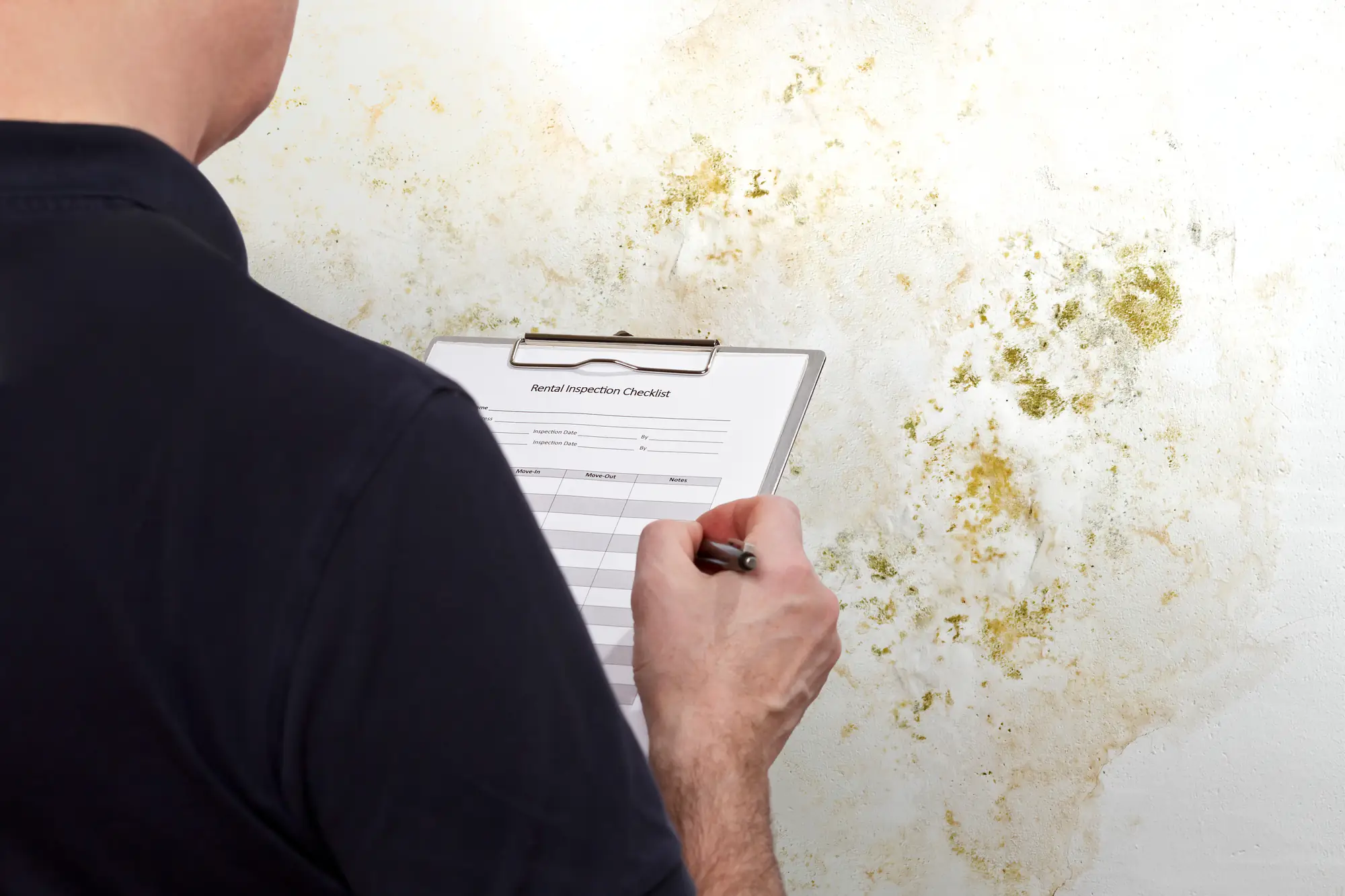
First, we walk through your property and conduct a visual inspection. We’re looking for visible mold, water damage, moisture sources, and conditions that support mold growth. This includes checking behind furniture, inside closets, around windows, in basements, and anywhere else moisture tends to collect.
Next, we take samples. Air sampling captures airborne mold spores throughout your home to measure concentration levels. Surface sampling collects material from suspected mold growth for species identification. We also take moisture readings in walls, floors, and ceilings to map out problem areas.
Those samples go to an independent lab for analysis. You get a detailed report that identifies mold species, spore counts, and contamination levels. The report also compares your indoor air quality to outdoor baseline levels—because some mold is always present. What matters is whether your indoor levels are elevated.
Once results come back, we review them with you and explain what they mean in plain language. If remediation is needed, we’ll outline the scope of work. If levels are normal, you have documentation proving your property is clear.
Ready to get started?
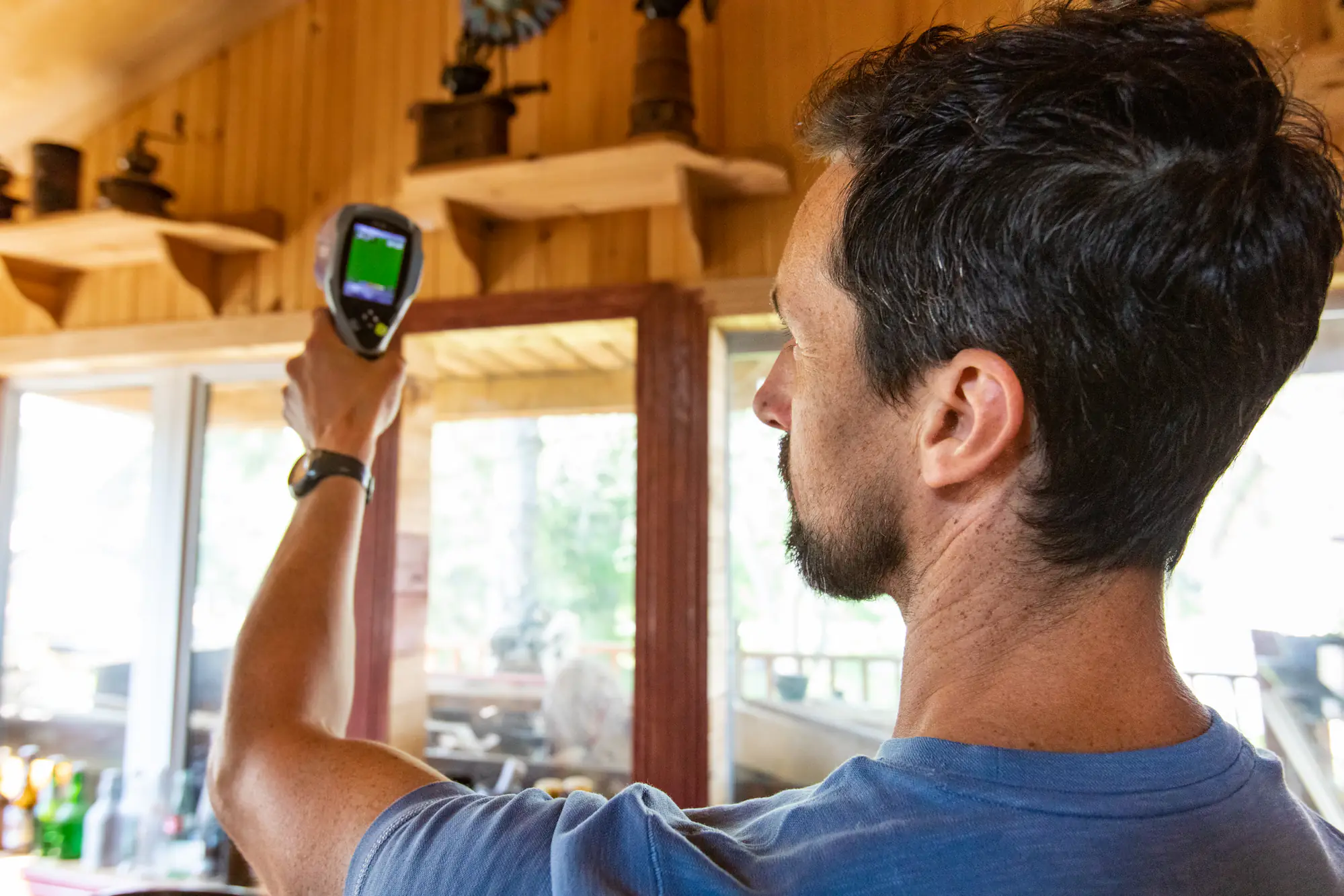
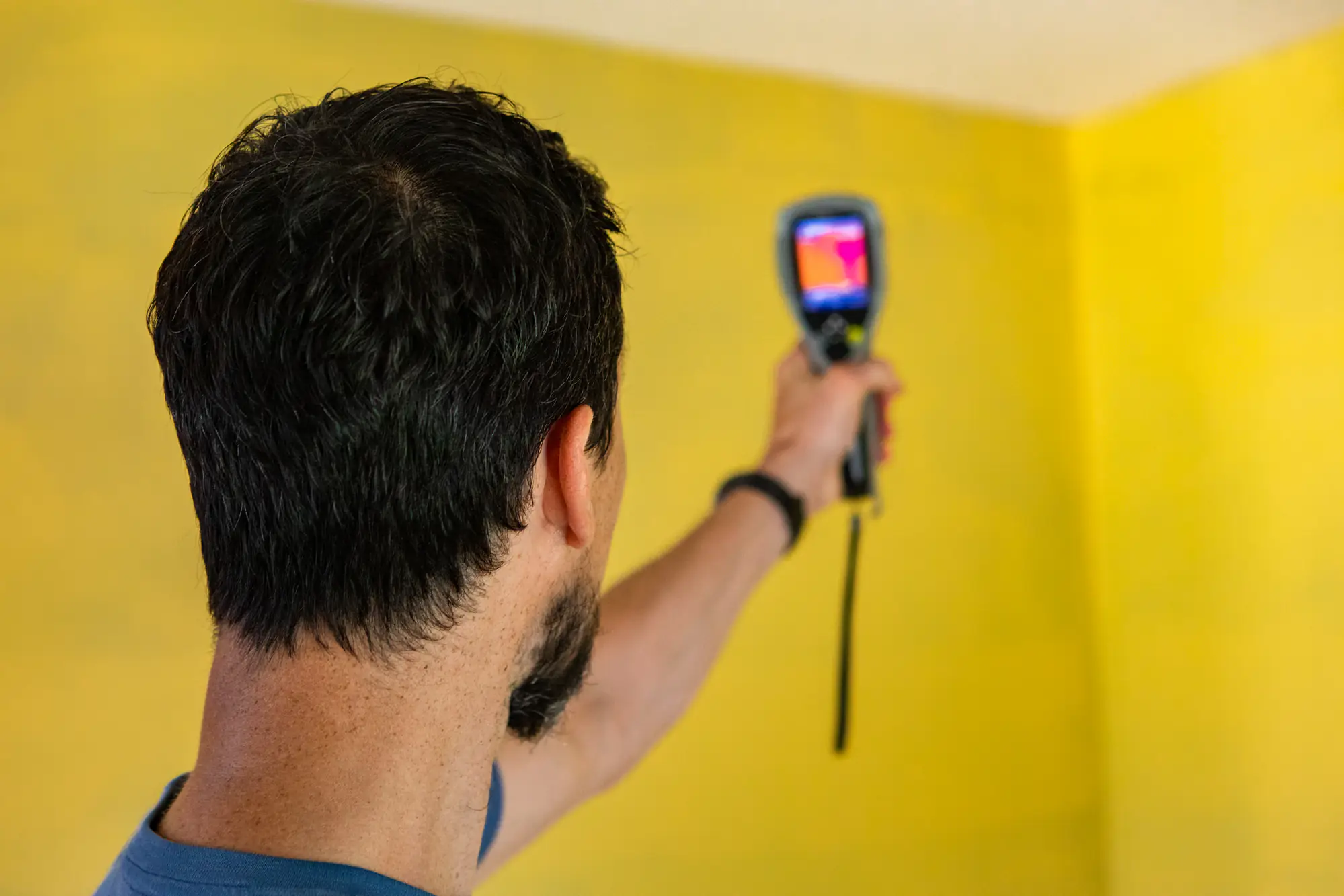
You’re getting a full assessment, not a quick look-around. We conduct comprehensive visual inspections of your entire property, including areas most people don’t think to examine. We use thermal imaging to detect hidden moisture behind walls and ceilings—moisture you can’t see but that’s feeding mold growth.
Air quality sampling measures spore concentration in multiple rooms to identify contamination patterns. Surface sampling tests visible growth and suspicious areas to confirm mold species. We take moisture readings throughout the property using professional-grade meters that measure humidity levels and moisture content in building materials.
Everything gets sent to a certified laboratory for analysis. You receive a detailed report with species identification, spore counts, moisture maps, and contamination severity ratings. The report meets insurance company requirements and can be used for real estate transactions, legal documentation, or remediation planning.
Rittenhouse Square properties—especially older buildings—face unique challenges. Original plumbing, outdated ventilation, and historic construction methods create conditions where mold thrives. Summer humidity in Philadelphia regularly exceeds 60%, and that moisture has nowhere to go in buildings without modern HVAC systems. We account for these local factors when testing and interpreting results.
The on-site inspection and sampling usually takes two to three hours depending on your property size. We’re thorough—we don’t rush through it just to move on to the next job. You’ll see us checking areas you might not have considered, taking multiple samples, and documenting everything carefully.
Lab analysis takes three to five business days after we submit samples. Some labs offer rush processing for an additional fee if you’re working under a deadline, but standard turnaround is usually sufficient for most situations.
You’ll receive a detailed written report that breaks down findings by room, identifies mold species, and provides spore count data. We’ll schedule a follow-up call to walk through results and answer questions. If remediation is recommended, we’ll explain the scope and next steps.
Sometimes yes, sometimes no. If you see a small patch of surface mold from a minor leak that’s been fixed, testing might not be necessary—you can often just clean it and move on. But if you’re seeing widespread growth, if mold keeps coming back, or if you’re dealing with a significant water event, testing tells you what you’re actually dealing with.
Testing identifies the specific mold species, which matters for health risk assessment and remediation planning. It also reveals hidden contamination you can’t see. Mold grows inside walls, under flooring, and in HVAC systems—places where visible inspection doesn’t reach.
Insurance companies often require testing before they’ll approve remediation coverage. Real estate transactions typically need documented testing for disclosure purposes. And if you’re experiencing health symptoms but can’t locate the source, air quality testing pinpoints contamination even when there’s no visible growth. Testing gives you documentation, not just assumptions.
Inspection is visual assessment—walking through your property, looking for mold growth, checking for moisture problems, and identifying conditions that support mold. It’s observational. You get an expert opinion based on what can be seen and measured on-site.
Testing goes further. It includes inspection, but adds laboratory analysis of physical samples. Air samples measure spore concentration. Surface samples identify specific mold species. Those samples get analyzed by a certified lab, and you receive scientific data about what’s growing in your home and how much of it exists.
Most professional mold assessments include both. You need the inspection to know where to test, and you need the testing to confirm what the inspection suggests. For Rittenhouse Square properties—especially historic homes with hidden moisture issues—testing catches problems that inspection alone would miss. Old buildings hide their problems well. Testing reveals them.
Testing typically runs between $300 and $600 for a standard residential property, depending on size and how many samples are needed. Larger homes or properties with multiple suspected contamination areas cost more because they require additional sampling and lab analysis.
That price includes the on-site inspection, sample collection, laboratory analysis, and a detailed written report. Some companies charge separately for each component—we don’t. You’re getting the full assessment for one price.
It’s not cheap, but it’s a fraction of what you’d spend on unnecessary remediation or—worse—on health problems and property damage from undetected mold. Insurance may cover testing costs if you’re filing a claim for water damage or mold remediation. And if you’re buying or selling property, testing is a standard part of due diligence that protects both parties. You’re paying for certainty, and in Rittenhouse Square’s high-value real estate market, that certainty is worth it.
You can buy DIY mold test kits at hardware stores, but they’re not reliable for making real decisions. Most kits just confirm that mold exists—which isn’t useful because mold exists everywhere. The question isn’t whether mold is present, it’s whether contamination levels are elevated enough to be a problem.
Home kits don’t measure spore concentration. They don’t compare indoor levels to outdoor baselines. They don’t identify specific species or assess health risks. And they won’t hold up with insurance companies or in real estate transactions.
Professional testing uses calibrated equipment, follows specific protocols, and sends samples to certified labs. The results are defensible and actionable. If you’re trying to decide whether you need remediation, if you’re dealing with insurance, or if you’re concerned about health impacts, home kits won’t give you the answers you need. They’ll just tell you what you probably already suspected—that mold is present somewhere in your home.
Aspergillus and Penicillium are the most common indoor molds in Philadelphia. They thrive in damp conditions and spread quickly through HVAC systems. You’ll find them in basements, bathrooms, and anywhere moisture accumulates. They’re not always visible—often they’re just discoloration or a musty smell.
Cladosporium grows on porous surfaces like wood, drywall, and fabric. It’s common in older homes with poor ventilation. Stachybotrys—the “black mold” everyone worries about—is less common but does appear in properties with serious water damage or chronic moisture problems. It grows on cellulose materials like drywall and wood when they stay wet for extended periods.
Rittenhouse Square’s historic buildings create perfect conditions for mold growth. Original plumbing leaks slowly over time. Old windows allow condensation. Basements stay damp because they were built before modern waterproofing existed. Professional mold testing identifies exactly which species you’re dealing with, where they’re concentrated, and how extensive the contamination is. That’s information you need before you start tearing into walls or spending money on remediation.
Other Services we provide in Rittenhouse Square