

Hear from Our Customers
You’re not imagining that musty smell in your basement. Your kids’ allergies aren’t getting better even though you’ve tried everything. Or maybe you’re about to close on a house and the inspector found something concerning.
Here’s what happens when you don’t know if mold is actually there: you either spend thousands fixing a problem that might not exist, or you ignore something that’s quietly damaging your home and your family’s health. Neither option feels good.
Professional mold testing removes the guesswork. You get a certified inspection that checks the places you can’t see—inside walls, under floors, in crawl spaces. You get lab analysis that identifies exactly what type of mold you’re dealing with and how much of it is present. And you get a clear report that works for insurance claims, real estate transactions, or just your own peace of mind.
No more wondering if that dark spot is dangerous. No more lying awake worried about what’s behind the drywall. Just facts, and a plan forward.
We work exclusively in Northampton and the surrounding Bucks County area because this region’s homes need people who understand them. The older housing stock here wasn’t built with modern moisture barriers. Pennsylvania’s humidity creates conditions that newer construction in other states never deals with.
We’ve inspected enough basements in this area to know which neighborhoods have recurring foundation moisture issues. We understand how the local climate patterns affect attic ventilation. And we know the difference between surface mold you can wipe away and contamination that requires professional remediation.
Our team uses IICRC-certified inspection methods and sends samples to accredited labs for analysis. You’re not getting a guy with a moisture meter making his best guess—you’re getting documented results that hold up with insurance companies and real estate attorneys.
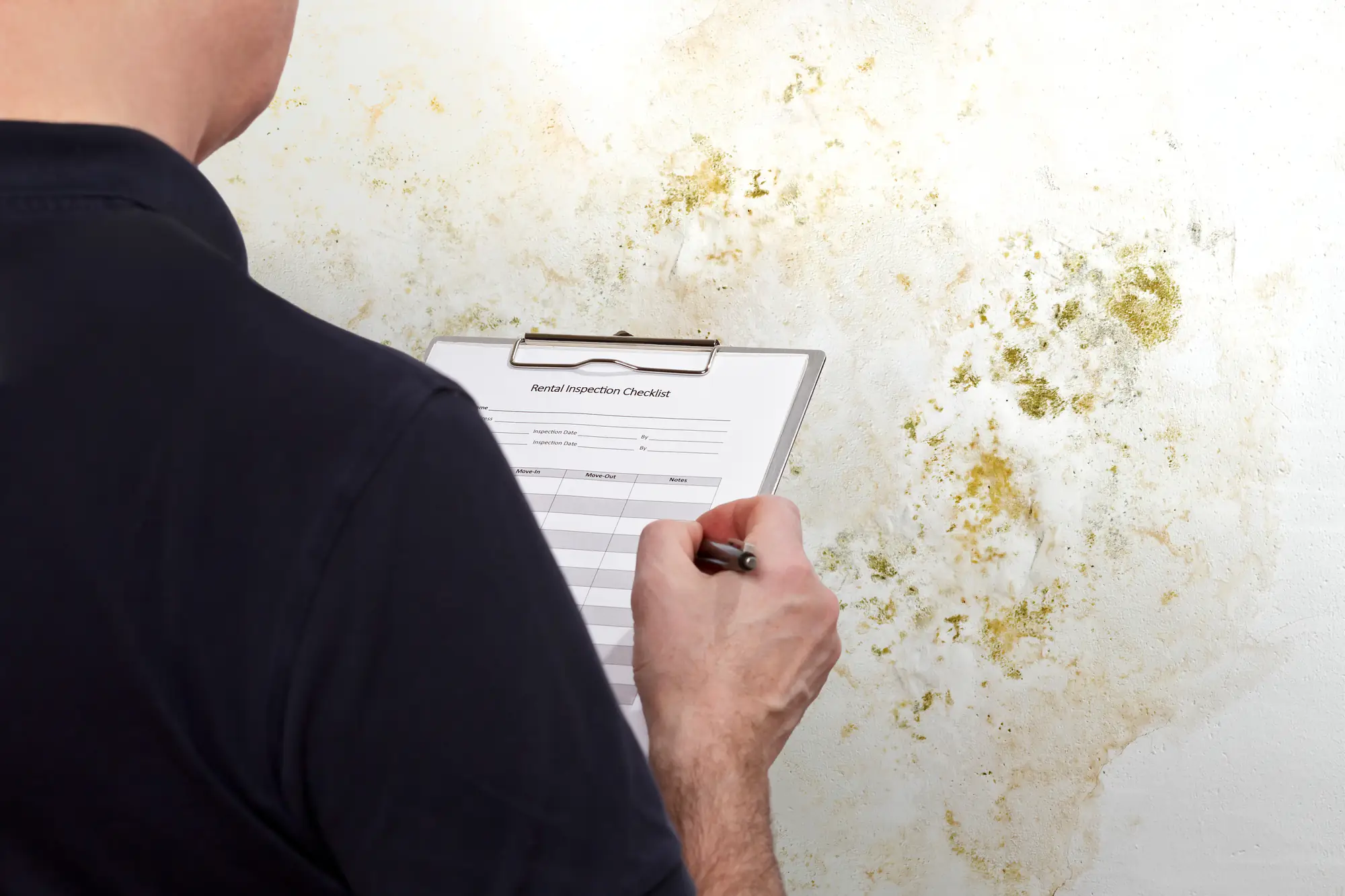
First, we walk through your home with you and listen to what you’ve noticed. That conversation matters because you know your house better than anyone—you know where the smell is strongest, where the humidity feels off, where you’ve had water problems before.
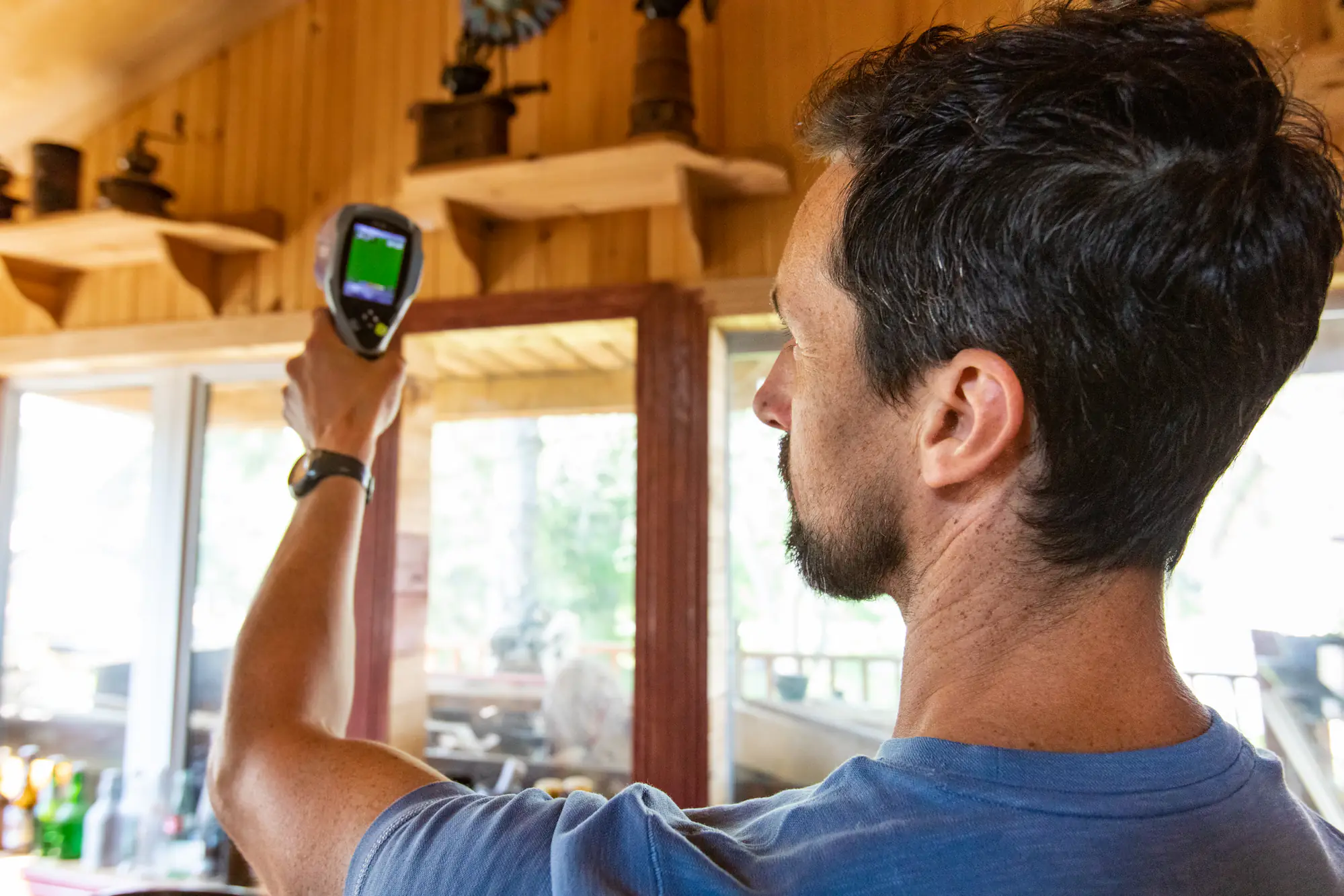
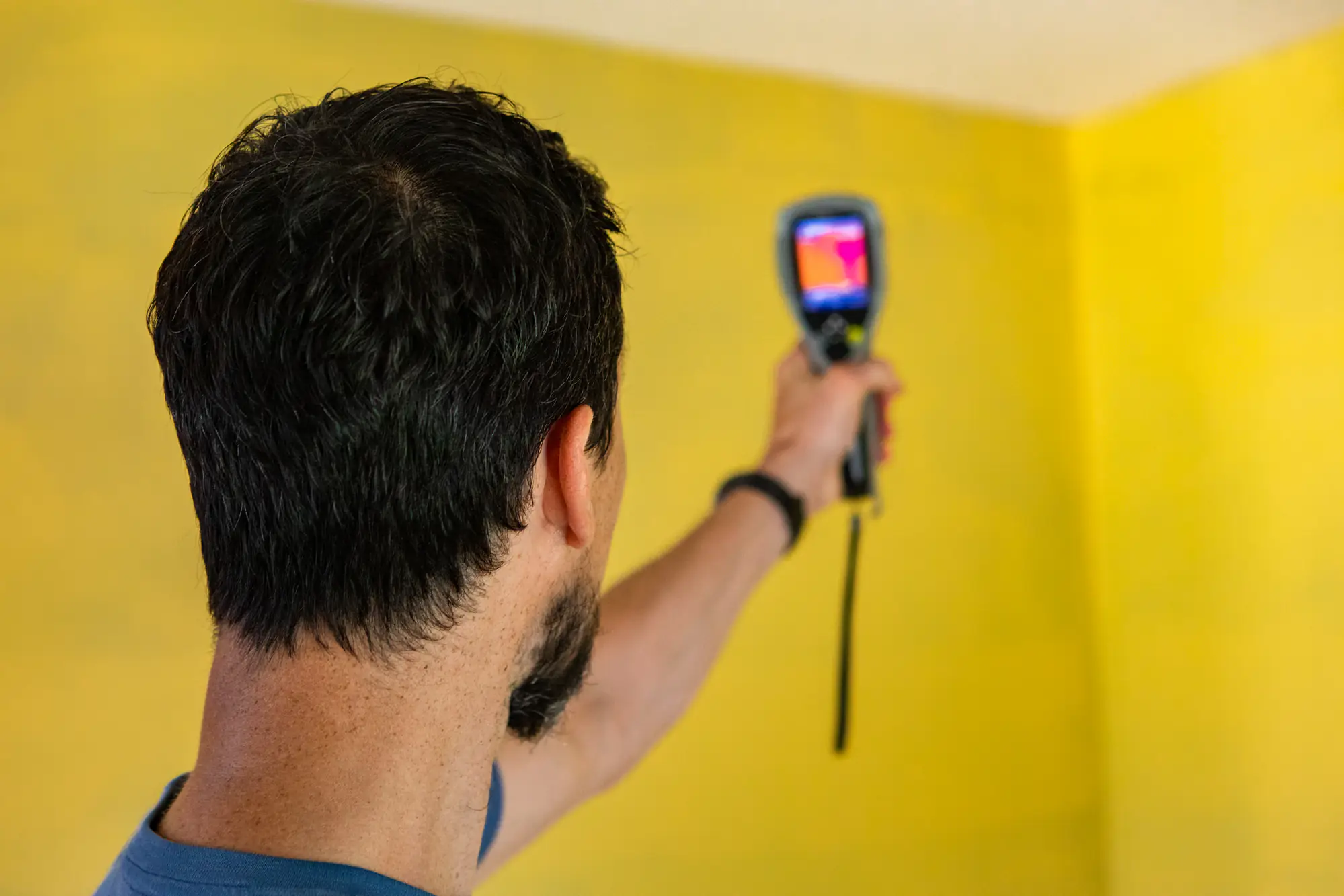
Then we do a visual inspection of your entire property, including the areas most people don’t check regularly. Crawl spaces, attic corners, behind appliances, inside wall cavities if needed. We use moisture meters and infrared cameras to find hidden water sources that create mold growth.
When we find suspected mold, we take air samples and surface samples. Those go to an independent lab for analysis. You’re not trusting our opinion—you’re getting scientific identification of the mold species and concentration levels.
Within a few days, you receive a detailed report that explains what we found, where we found it, and what it means for your home. If remediation is needed, we tell you exactly what that involves and what it costs. If the problem is minor and you can handle it yourself, we’ll tell you that too.
The goal isn’t to sell you services you don’t need. The goal is to give you accurate information so you can make the right decision for your home and your family.
Ready to get started?
Your inspection covers every area of concern in your home. That means basements, bathrooms, kitchens, attics, crawl spaces, and any rooms where you’ve noticed symptoms. We check behind walls if moisture readings suggest hidden growth.
You get both air quality testing and surface sampling. Air tests measure spore concentration throughout your home—important because mold spreads through the air even if you can’t see it. Surface samples identify the specific mold species present, which determines health risk and removal approach.
In Northampton specifically, we pay extra attention to basement foundations and older HVAC systems. Many homes here were built before 1980, and those foundations handle moisture differently than modern construction. We’ve seen how water migrates through stone foundations in this area, and where mold typically develops as a result.
The lab analysis you receive breaks down mold types, concentration levels, and compares your indoor air quality to outdoor baseline samples. That comparison matters because some mold spores are always present outside—the question is whether your indoor levels are elevated to a concerning degree.
You also get our assessment of the moisture sources feeding the mold growth. Finding mold is only half the job. If you don’t fix the water problem, the mold comes back no matter how thoroughly it’s removed.
Most residential mold testing in Northampton runs between $300 and $600, depending on your home’s size and how many areas need sampling. A basic inspection with air quality testing for a smaller home typically costs around $300 to $400. Larger homes or properties where we need to test multiple areas separately—like a basement, attic, and main living space—can reach $500 to $600.
That price includes the on-site inspection, sample collection, laboratory analysis, and a detailed written report. You’re not paying extra for the lab work or the report—it’s all included.
Some companies offer free inspections, but they typically only do visual assessments without any lab testing. That might work if you have visible mold and just need a remediation quote, but it won’t tell you what type of mold you’re dealing with or whether you have hidden contamination. If you’re buying a home, dealing with health symptoms, or filing an insurance claim, you need the lab documentation.
You’re not overreacting if you’re experiencing persistent musty odors, visible discoloration on walls or ceilings, or unexplained respiratory symptoms that improve when you leave the house. Those are legitimate reasons to test.
You should also test if you’ve had any water damage—even if it was cleaned up. A roof leak, burst pipe, or basement flooding creates conditions for mold growth within 24 to 48 hours. Just because you don’t see mold doesn’t mean it’s not growing inside walls or under flooring.
If you’re buying a home in Northampton, testing makes sense even without obvious signs. Many older homes here have had moisture issues at some point, and sellers aren’t always aware of hidden mold problems. Spending $400 on testing before you close can save you from discovering a $5,000 remediation problem after you’ve already bought the house.
Testing isn’t necessary if you have a small amount of surface mold in an expected area—like a little mildew on bathroom grout. You can clean that yourself. But if the mold keeps coming back, or if it’s appearing in unusual places, that suggests a bigger moisture problem that needs professional assessment.
A mold inspection is the visual assessment—we walk through your property, check for visible mold, measure moisture levels, and identify conditions that promote mold growth. An inspection tells you where problems exist and what’s causing them.
Mold testing takes it further by collecting actual samples for laboratory analysis. Air samples measure the concentration of mold spores throughout your home. Surface samples identify the specific species of mold present. Testing gives you scientific documentation of what’s there and how severe it is.
You need both for a complete picture. The inspection finds the problems and the sources. The testing confirms what type of mold you’re dealing with and whether remediation is necessary. Some molds are relatively harmless. Others—like black mold—pose serious health risks and require professional removal.
For real estate transactions or insurance claims, you’ll need the testing component. Documentation from an accredited lab carries weight that a visual inspection alone doesn’t provide. If you’re just trying to figure out whether you have a problem worth addressing, the inspection might be enough to point you in the right direction.
Home testing kits can tell you if mold spores are present, but they can’t tell you much beyond that. Every home has some mold spores in the air—that’s normal. What matters is the type of mold and the concentration level, and cheap kits don’t provide that information with any reliability.
The bigger issue is that DIY kits don’t include a proper inspection. You might test the wrong area and miss the actual problem. Mold often grows in hidden spaces—inside walls, under flooring, in HVAC ducts. If you’re not trained to know where to look, you’re testing blind.
Professional testing costs more, but you’re paying for expertise in finding hidden mold, proper sample collection that doesn’t contaminate results, accredited laboratory analysis, and interpretation of what those results mean for your specific home. You also get documentation that insurance companies and real estate attorneys will actually accept.
If you’re dealing with a potential health issue or a significant financial decision like buying a home, spending $50 on a kit that might give you incomplete or misleading information isn’t worth the savings. You’ll likely end up hiring a professional anyway once you realize the kit didn’t answer your actual questions.
The on-site inspection and sample collection typically takes one to two hours, depending on your home’s size and how many areas we’re testing. We’re not rushing through—we’re checking thoroughly and explaining what we’re finding as we go.
After we collect samples, they go to the lab for analysis. Most labs return results within three to five business days. Rush processing is available if you’re in a time-sensitive situation like a real estate closing, though that costs extra.
Once we receive the lab results, we prepare your detailed report and schedule a time to review it with you. That review usually happens over the phone and takes about 20 to 30 minutes. We walk through what the lab found, what it means in plain language, and what your options are moving forward.
If remediation is needed, we provide a separate written estimate that breaks down the scope of work and costs. You’re never pressured to make an immediate decision. Take the report, get a second opinion if you want, talk to your insurance company—whatever you need to feel confident about the next step.
It depends on what caused the mold. If mold developed because of a covered event—like a burst pipe, roof leak during a storm, or appliance malfunction—most homeowners policies will cover both testing and remediation. The key is that the water damage has to be sudden and accidental, not the result of long-term neglect or lack of maintenance.
If mold grew because you ignored a slow leak for months, or because of chronic humidity issues you didn’t address, insurance typically won’t cover it. They consider that a maintenance issue, not a covered loss.
The testing itself might not be covered separately, but if it’s part of assessing damage from a covered water event, it often gets included in the claim. We work with insurance companies regularly and can help you understand what documentation they’ll need.
Here’s the practical advice: call your insurance company before you do anything. Explain what happened and ask whether your policy covers mold remediation related to that specific cause. If they say yes, ask whether they require you to use their preferred vendor or if you can choose your own. Get claim numbers and adjuster contact information before we start work, because proper documentation from the beginning makes the claims process much smoother.
Other Services we provide in Northampton