
Hear from Our Customers
Philadelphia’s housing stock is old. Most of the rowhouses lining blocks from Fishtown to Germantown to Kensington were built before modern moisture barriers existed, and many have basements that have taken on water more times than their owners can count. That history doesn’t disappear — it hides. It hides behind plaster, under original hardwood, and inside attics that haven’t been properly ventilated in decades.
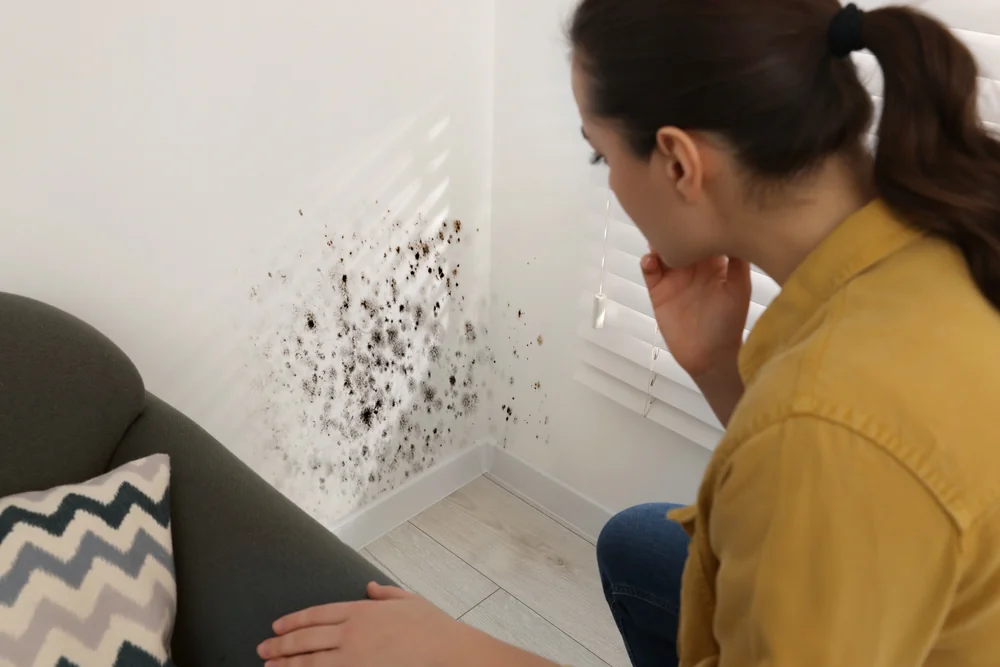
Indoor air quality testing gives you a factual picture of what’s in the air you and your family are breathing. Not a guess based on a musty smell. Not a visual check with a flashlight. Lab-analyzed samples, moisture readings, and infrared imaging that finds what your eyes can’t. If mold is present, you’ll know exactly where it is, how bad it is, and what it would take to fix it — before it becomes a $10,000 remediation project.
Philadelphia’s summers push humidity well past 70%, and the city has received failing grades from the American Lung Association for both ozone pollution and particulate matter. That outdoor air pressure makes what’s happening inside your home even more important. For parents whose kids have been diagnosed with asthma, for homeowners who’ve dealt with repeated basement flooding, and for buyers considering one of the city’s hundreds of thousands of older attached homes — testing isn’t optional. It’s the responsible next step.
We’re based in Bensalem — right on the border of Northeast Philadelphia, minutes from the city line along I-95 and Roosevelt Boulevard. That’s not a coincidence. This is the area we work in, and Philadelphia is a city we know from the inside out — literally. We’ve been in Fishtown rowhouse basements, Germantown colonials with chronic moisture issues, and Northeast Philadelphia twins where the attic hasn’t been opened in thirty years.
For over 15 years, we’ve been doing mold inspections and air quality testing across Philadelphia County and the surrounding region. Our inspectors are certified professionals, not unlicensed operators. In a city this large, that distinction matters — Pennsylvania doesn’t require a state mold contractor license, which means anyone can show up with a test kit and call themselves a specialist. We bring infrared cameras, professional-grade moisture meters, and lab-analyzed results that hold up for insurance claims, L&I complaints, and real estate transactions.
The inspection is free. Pricing is clear before any work begins. That’s how we’ve built our reputation here.
It starts with a free inspection. One of our certified inspectors comes to your home, walks through the property, and looks at the areas most likely to harbor moisture and mold — basements, attics, wall cavities, around windows, and anywhere there’s been a known water event. In Philadelphia rowhouses specifically, we also check shared party walls, because moisture doesn’t respect property lines. A leak in your neighbor’s unit can absolutely be the source of your mold problem.
From there, if air or surface sampling is warranted, we collect samples and send them to an accredited third-party laboratory for analysis. You’re not getting a field guess — you’re getting actual data. Results come back with a clear picture of what spore types are present, at what concentrations, and how those levels compare to normal outdoor baseline readings. That context matters. Elevated spore counts indoors relative to outdoor levels is one of the clearest indicators of an active mold source inside the building.
Once we have results, we walk you through them plainly. What was found, what it means for your health and your home, and what remediation — if any — would look like. If there’s no problem, we tell you that too. If there is one, you’ll have a written scope and a clear price before anything moves forward. No pressure, no vague estimates, no surprises.
Ready to get started?
Philadelphia isn’t a generic market, and the air quality testing we do here reflects that. The city’s combination of aging rowhouse construction, shared walls, basement flooding risk, and some of the worst outdoor air quality grades in the region creates conditions that require more than a basic visual check. Our testing includes air sampling, surface sampling where applicable, infrared thermal imaging to detect hidden moisture behind walls and ceilings, and professional moisture meter readings throughout the property.
For Philadelphia renters dealing with a landlord who won’t act, our written report from certified inspectors carries real weight with the city’s Department of Licenses and Inspections. L&I enforces Philadelphia’s Property Maintenance Code, and a documented air quality problem is a significantly stronger complaint than a verbal one. We’ve helped tenants in rowhouses across the city get the documentation they needed to compel action.
For homebuyers, pre-purchase air quality testing is one of the smartest investments you can make in this market. With typical Philadelphia home values around $221,000, a mold problem that shaves 20–37% off the value represents a loss of $44,000 to $82,000. A professional inspection before closing costs a fraction of that. For homeowners, post-flood testing after a basement water event is critical — mold begins growing within 24 to 48 hours of water exposure, and Philadelphia’s aging sewer infrastructure means basement flooding is a recurring reality for residents in this city.
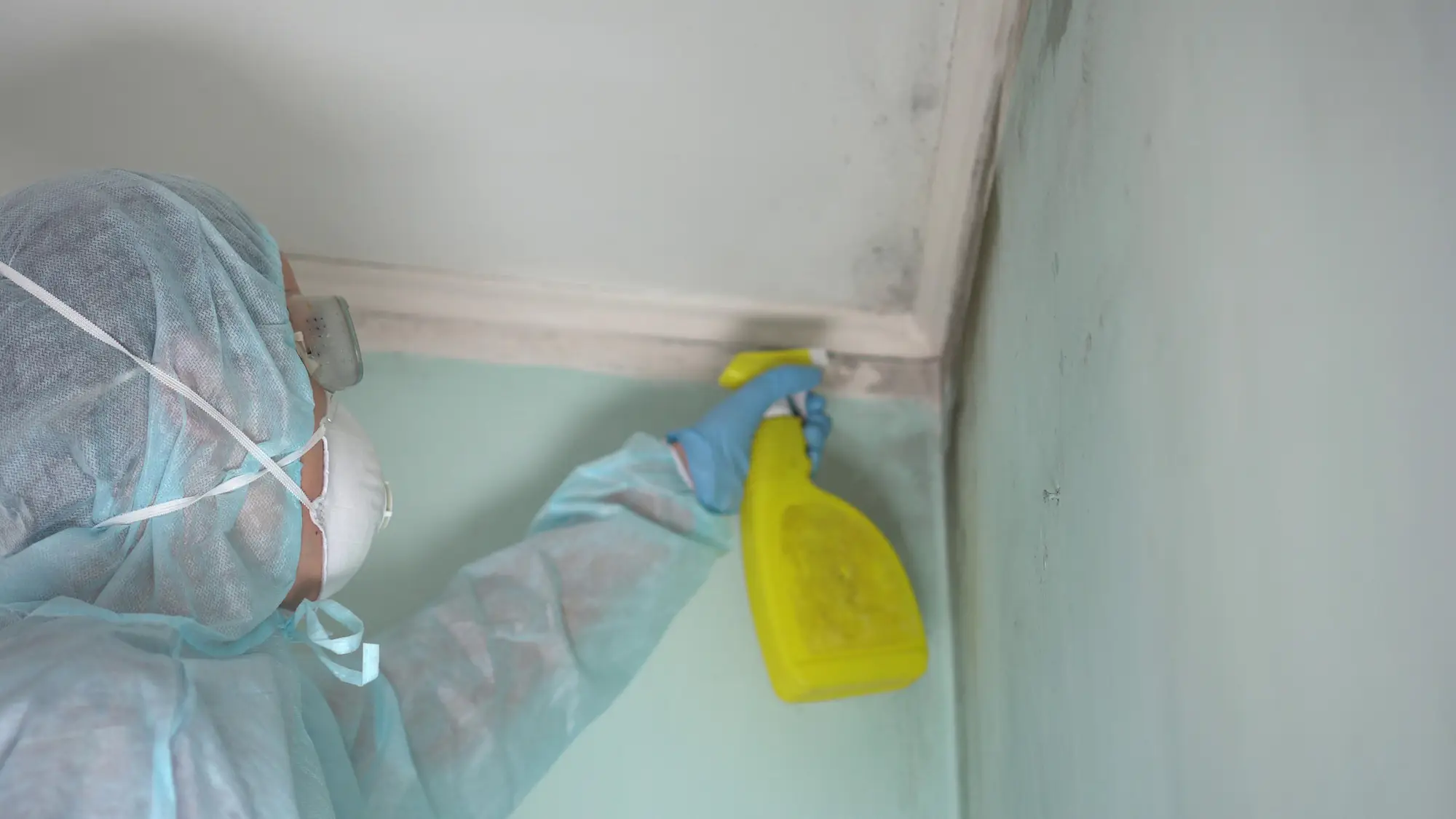
Yes, significantly. Philadelphia’s rowhouses were built primarily in the late 19th and early 20th centuries, long before modern moisture barriers, vapor retarders, or mold-resistant building materials were standard. The original brick and mortar construction absorbs groundwater through foundation walls, and basements in these homes are often unfinished, poorly ventilated, and chronically damp. Plumbing systems in older rowhouses may have slow leaks inside walls that go undetected for years, and attics are frequently inaccessible and unventilated — both conditions that allow mold to grow undisturbed.
One factor that’s unique to Philadelphia’s attached housing is the shared party wall. When two rowhouses share a structural wall, moisture from a leak or water intrusion in one property can migrate into the adjacent unit. That means your mold problem may actually be originating from your neighbor’s home — and a standard visual inspection won’t find that. Infrared imaging and moisture readings through shared wall surfaces are the only reliable way to identify that kind of cross-property moisture transfer.
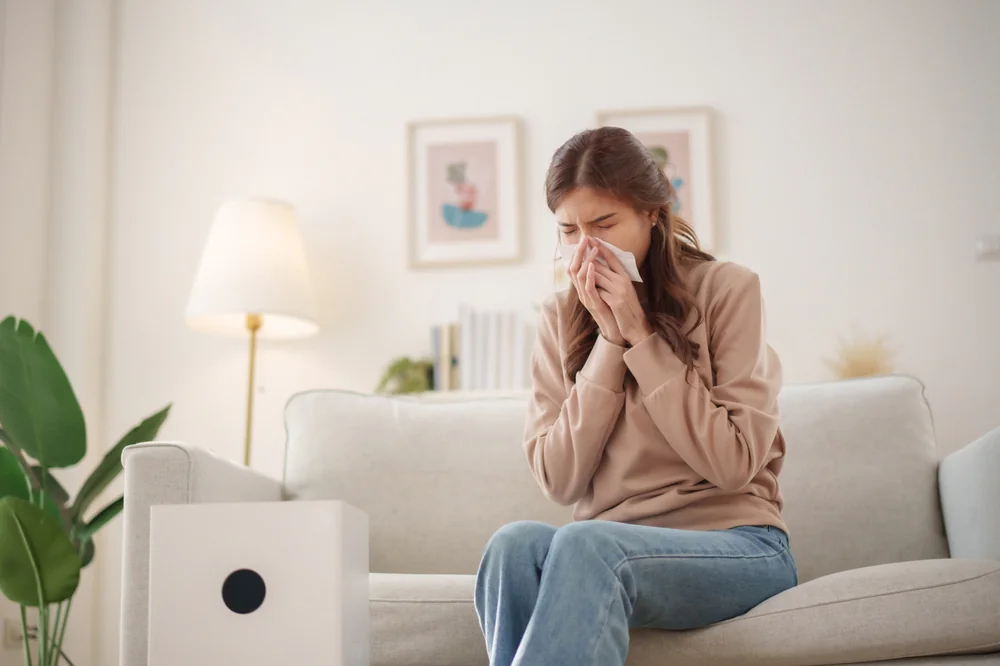
It’s a real possibility, and one that Philadelphia health researchers have been studying for years. Philadelphia has a pediatric asthma rate roughly three times the national average — one in four children in this city has asthma. The Philadelphia Regional Center for Children’s Environmental Health at the University of Pennsylvania has specifically identified housing conditions and indoor allergen exposure as primary drivers of that rate. Mold spores, dust mites, and other airborne irritants that accumulate in older housing are among the leading environmental triggers for asthma attacks in children.
If your child’s symptoms are worse at home than outside, or if they improve significantly when away from the house for a few days, that pattern is worth taking seriously. A professional indoor air quality test will measure the actual spore concentrations in your home’s air and compare them to outdoor baseline levels. If indoor counts are elevated, that’s actionable information — not just a theory. Many Philadelphia pediatricians and allergists recommend home air quality testing as part of an asthma management plan, and our certified inspectors can provide the documentation your child’s doctor may ask for.
The inspection itself is free — we do not charge for the initial walkthrough and assessment. If air or surface sampling is recommended based on what we find during the inspection, those costs are outlined clearly before any samples are collected. There are no surprise charges after the fact. Professional air quality testing with lab analysis typically runs in the range of $300 to $600 depending on the size of the property and the number of samples needed, though your specific quote will reflect your actual home and situation.
To put that in context: the average cost of professional mold remediation is over $2,000, and in a Philadelphia rowhouse with a significant mold problem behind walls or under flooring, costs can run considerably higher. Testing first is almost always the more cost-effective path. It tells you whether you have a problem, how serious it is, and where it is — so that if remediation is needed, it can be done precisely and efficiently rather than as a broad, expensive guess. The free inspection is the right starting point regardless of what you suspect.
The short answer is yes, and timing matters more than most people realize. Mold begins growing within 24 to 48 hours of water exposure — not days later, not after you can see visible growth. By the time mold is visible or a musty smell is detectable, it has typically been growing behind walls, under flooring, or in insulation for some time. Acting quickly after a flooding event is the most effective way to prevent a containable moisture problem from becoming a full remediation project.
Philadelphia’s basement flooding situation is particularly relevant here. The city’s aging combined sewer system can back up during heavy rain events, and many rowhouse basements have taken on water repeatedly over the years. Each flood event is a new mold risk window. Even if your basement dried out quickly and looks fine, moisture can remain trapped inside wall cavities and under concrete slabs where it’s invisible to the naked eye. Our infrared imaging and moisture meter readings detect that hidden moisture — and air sampling will tell you whether mold spores are already elevated in the air. If you’ve had a basement flood in the last several days, call us. The inspection is free and the sooner we can assess it, the better your options are.
This is one of the most common situations we see in Philadelphia, and professional air quality testing is your most important first step. Under Philadelphia’s Property Maintenance Code, landlords are legally required to maintain rental properties free of conditions that endanger health and safety — and mold qualifies. But a tenant’s verbal complaint carries very little weight compared to a written report from a certified inspector with lab-analyzed air and surface sample results.
Once you have that documentation, you have real options. You can file a complaint with Philadelphia’s Department of Licenses and Inspections — L&I takes habitability complaints seriously, and a professional mold report significantly strengthens your case. You can also use the documentation in lease termination negotiations or, if the situation warrants it, in legal proceedings with a housing attorney. Our written reports are produced by certified professionals and include the kind of specific, lab-backed data that holds up in those contexts. If you’re a renter in Philadelphia dealing with a landlord who keeps dismissing your concerns, getting a professional inspection on record is how you move from a complaint to a documented case.
Yes, and it’s one of the most overlooked steps in a Philadelphia home purchase. Standard real estate inspections are visual — they look for what’s visible and accessible. They are not designed to detect mold inside wall cavities, behind plaster, in unventilated attic spaces, or in basement areas that have had chronic moisture exposure. In a city where a large percentage of the housing stock is over 100 years old, that gap in coverage is significant.
Philadelphia’s typical home value is around $221,000, and a mold problem discovered after closing can reduce that value by 20 to 37 percent — a loss of $44,000 to $82,000 on a median-priced home. Beyond the financial impact, remediation in an older rowhouse can be complicated by the construction itself: original plaster walls, shared party walls, and limited access points make mold removal in these homes more involved than in newer construction. Getting a professional air quality test before you close gives you documented, lab-analyzed information about what you’re actually buying. If there’s a problem, you can negotiate. If there isn’t, you have peace of mind. Either way, it’s a far better position to be in than finding out six months after you’ve moved in.
Other Services we provide in Philadelphia