
Hear from Our Customers
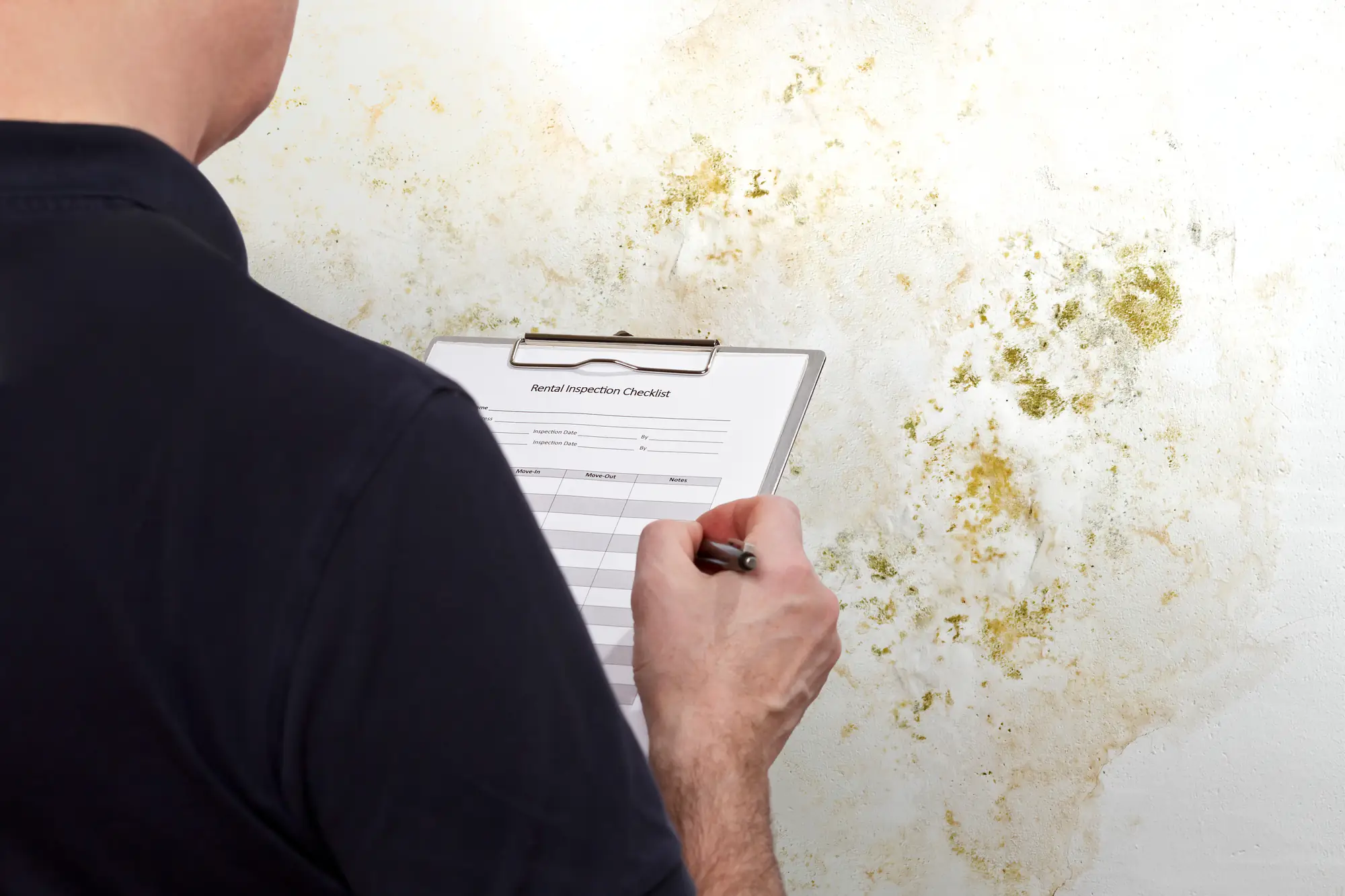
Most Philadelphia homeowners don’t find out they have a mold problem until the smell is impossible to ignore or the discoloration has crept across an entire basement wall. By that time, it’s been growing for months — and the moisture feeding it has usually been there even longer. A professional mold inspection gives you a clear picture of what’s actually happening inside your home, not just what’s visible on the surface.
Philadelphia’s housing stock creates conditions that most other cities simply don’t deal with at the same scale. Stone and brick foundations that are 80 to 120 years old, flat-roof rear additions that pond water after every storm, and shared party walls with neighboring rowhouses — these aren’t generic risk factors. They’re the specific reasons why mold in a Passyunk Square basement or a Kensington rowhouse attic can go undetected for years. When you know where the problem is and what’s causing it, you can actually fix it — not just treat the surface and wait for it to come back.
That’s what a thorough inspection does. It tells you whether what you’re seeing is mold, where it started, and what’s feeding it. That information changes everything about how you respond — and how much you spend.
We’re based in Bensalem — right on the edge of Philadelphia’s northeastern border — and have been serving the Philadelphia metro area for over 15 years. That’s not a franchise territory. That’s Jeff, our owner, showing up in person to homes across South Philly, Germantown, Fishtown, Northeast Philadelphia, and everywhere in between.
When you call Mack’s Mold Removal, you’re not routed to a dispatcher reading from a script. You reach someone who has inspected the full range of what Philadelphia’s housing stock throws at people — from 19th-century trinity houses in Queen Village to mid-century split-levels off Roosevelt Boulevard in the Northeast. That kind of local familiarity isn’t something you pick up from a training manual.
The free inspection isn’t a sales tactic. It’s the way we’ve always operated — because if there’s no problem, you deserve to know that without paying just to find out. And if there is one, you’ll get an honest assessment and an upfront quote, not a pressure campaign.
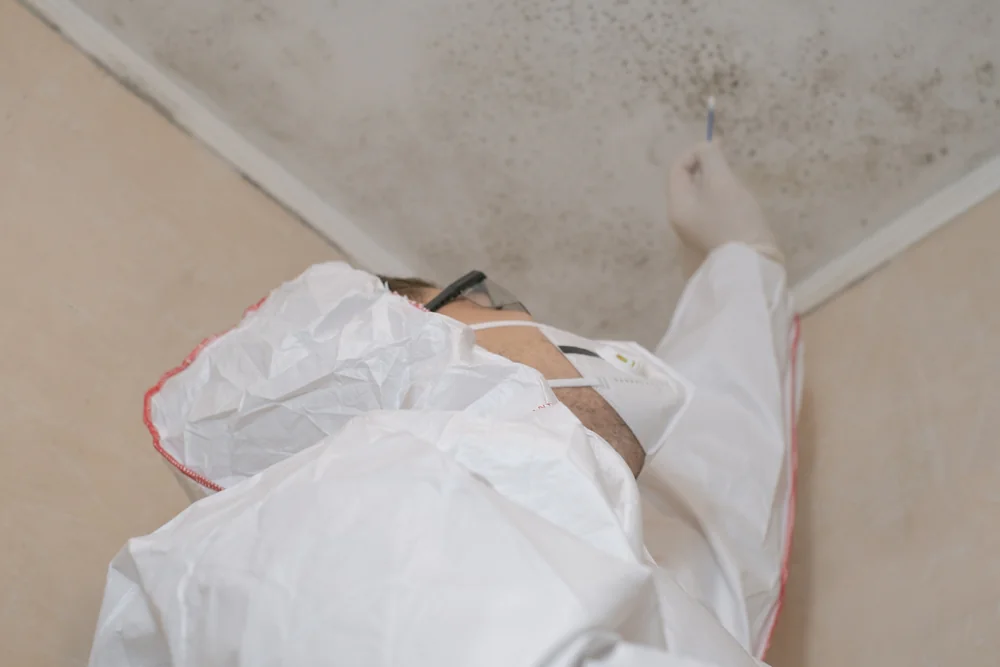
It starts with a call. Jeff talks through what you’re seeing, smelling, or concerned about before anyone sets foot in your home. That conversation matters — because a musty smell in a South Philadelphia basement after a heavy rain tells a different story than discoloration on a ceiling joist in a Germantown attic. The initial context shapes where the inspection begins.
On-site, we cover the full picture: visible mold, moisture readings, ventilation conditions, and — critically — the source. In Philadelphia rowhouses, that source is often not where you’d expect. It might be a failing flat-roof rear addition that’s been slowly saturating the ceiling above your kitchen. It might be moisture migrating through a shared party wall from a neighboring property. It might be a 100-year-old mortar joint in your foundation that’s been wicking water into the cellar wall for decades. Finding the source is the entire point, because treating mold without addressing what’s feeding it is just buying time.
After the inspection, you get a clear explanation of findings — what was found, where it is, what’s causing it, and what remediation looks like if it’s needed. No vague language, no manufactured urgency. Just the information you need to make a smart decision.

Ready to get started?
Philadelphia’s mold inspection needs are different from the suburbs, and our inspection process reflects that. The city’s average annual humidity sits around 68% — above the threshold where mold growth accelerates — and that persistent moisture, combined with the age and construction type of most Philadelphia homes, creates conditions that require a more specific eye than a standard walkthrough provides.
We cover basements and cellars with stone or brick foundation walls, attic spaces in twins and rowhouses where condensation builds in winter, rear additions with flat or low-slope roofs, and any wall or ceiling surface showing discoloration or moisture damage. In homes with shared party walls — which describes most of South Philadelphia, Fishtown, Kensington, and large portions of West and North Philadelphia — we also assess whether moisture may be migrating from an adjacent property. That’s a uniquely Philadelphia problem, and it’s one that gets missed when an inspector isn’t looking for it.
Philadelphia’s Health Code Chapter 6-900 addresses mold inspections for residential properties, and landlords operating in the city face real compliance obligations under both the Health Code and Pennsylvania’s habitability laws. If you’re a property owner managing rentals in any Philadelphia neighborhood, our inspection includes written documentation with photographs — the kind of record that holds up if an L&I complaint or tenant dispute arises. Whether you’re a homeowner, a landlord, or a buyer about to close on a rowhouse in Point Breeze, the inspection gives you what you actually need to move forward.

The inspection itself is free. There’s no charge for Jeff to come out, walk through your home, assess what’s happening, and give you his honest read on the situation. If there’s no mold problem, you’ll know that without having paid anything to find out. If there is a problem, you’ll receive a clear explanation of what was found and an upfront quote for remediation before any work begins.
This matters in Philadelphia’s market because most inspection companies — including several that specifically target the city — charge $50 to $100 or more just to show up. Removing that barrier means you can get a professional answer without committing to anything first.
In a detached home, your moisture problems are your moisture problems. In a Philadelphia rowhouse, that’s not always true. Brick and stone masonry is porous, and when a neighboring property has a moisture issue — a leaking pipe, a failed sump pump, a deteriorating foundation — that water can wick laterally through the shared wall into your home. By the time you notice a musty smell or see discoloration on your side of the wall, the source may be entirely on the other side of the property line.
This is one of the most commonly missed mold sources in Philadelphia’s dense rowhouse neighborhoods, from Bella Vista to Brewerytown to Port Richmond. We include moisture readings on party walls specifically to check for lateral migration. If the source turns out to be a neighbor’s problem, you need to know that before spending money treating the wrong side — because surface remediation won’t stop mold that has an active moisture source feeding it from next door.
The highest-risk areas tend to be neighborhoods with the oldest and densest rowhouse stock — Kensington, Germantown, South Philadelphia, West Philadelphia, and parts of North Philadelphia like Strawberry Mansion and Brewerytown. These neighborhoods have homes built primarily between the 1880s and 1930s, with stone or brick foundations that were never designed with modern waterproofing in mind. Water infiltration through mortar joints is routine in these homes, and many cellars stay damp year-round regardless of what’s happening at the surface.
Neighborhoods along or near the Schuylkill River — Manayunk, East Falls, parts of Roxborough — also carry elevated risk due to proximity to the river and the topography that channels stormwater toward lower-lying properties. Northeast Philadelphia, while generally newer, has its own mold patterns in mid-century homes with aging attic insulation and inadequate ventilation. The short answer is that Philadelphia’s age and density make mold a citywide concern, but the specific cause and location of the problem vary significantly by neighborhood and construction era.
Yes. Pennsylvania law requires that rental units be habitable, and mold that affects indoor air quality or damages the property is considered a habitability issue. In Philadelphia specifically, the city’s Health Code — including Chapter 6-900, which addresses mold inspections — adds a municipal layer of compliance obligation on top of state law. The Department of Licenses and Inspections enforces housing code violations in Philadelphia, and an L&I complaint from a tenant that documents mold can trigger an inspection and a formal violation notice.
For landlords managing properties across Philadelphia’s neighborhoods, the practical implication is straightforward: a verbal “we’ll look into it” is not sufficient documentation if a dispute escalates. A professional mold inspection with a written report and photographs creates a record that demonstrates you took the complaint seriously and responded with a qualified assessment. Whether the inspection finds a problem or clears the unit, that documentation protects you. If remediation is needed, having it done by a certified professional — with before-and-after documentation — is the standard that holds up under scrutiny.
For a standard Philadelphia rowhouse — two to three stories, with a basement or cellar — the inspection typically takes between one and two hours. That timeframe covers the basement or cellar, all living floors, the attic if accessible, and any rear addition or outbuilding on the property. Homes with more complex layouts, finished basements, or specific areas of concern may take a bit longer, but the goal is always a thorough assessment, not a quick walkthrough.
A few things specific to Philadelphia homes can affect the time. Trinity houses in Queen Village or Old City, for example, have tight spiral staircases and one-room-per-floor layouts that require more careful navigation. Homes with finished basements — where drywall may be concealing a foundation wall — require moisture meter readings to assess what’s happening behind the surface. Flat-roof rear additions that show ceiling discoloration need to be assessed from both inside and outside if possible. The inspection adapts to the home, not the other way around.
It’s one of the more important steps you can take before closing on a Philadelphia property, and a standard home inspection often isn’t enough on its own. General home inspectors are trained to identify visible issues and flag concerns, but mold inspection requires moisture readings, knowledge of Philadelphia’s specific construction types, and familiarity with the hidden places mold tends to establish itself in older masonry homes. A home inspector who notes “possible moisture in basement” is giving you a starting point — a mold inspection tells you what’s actually there and what’s causing it.
Philadelphia’s real estate market moves quickly, especially in neighborhoods like Graduate Hospital, Point Breeze, East Kensington, and Fishtown where prices have risen significantly. Buyers are often under pressure to move fast, and mold discovered after closing becomes the buyer’s problem entirely. Getting a mold inspection before you close — or making it a condition of the sale — gives you accurate information while you still have options. If there’s an active problem, you can negotiate, require remediation, or walk away informed. That’s a much better position than finding out six months after you move in.
Other Services we provide in Philadelphia