
Hear from Our Customers
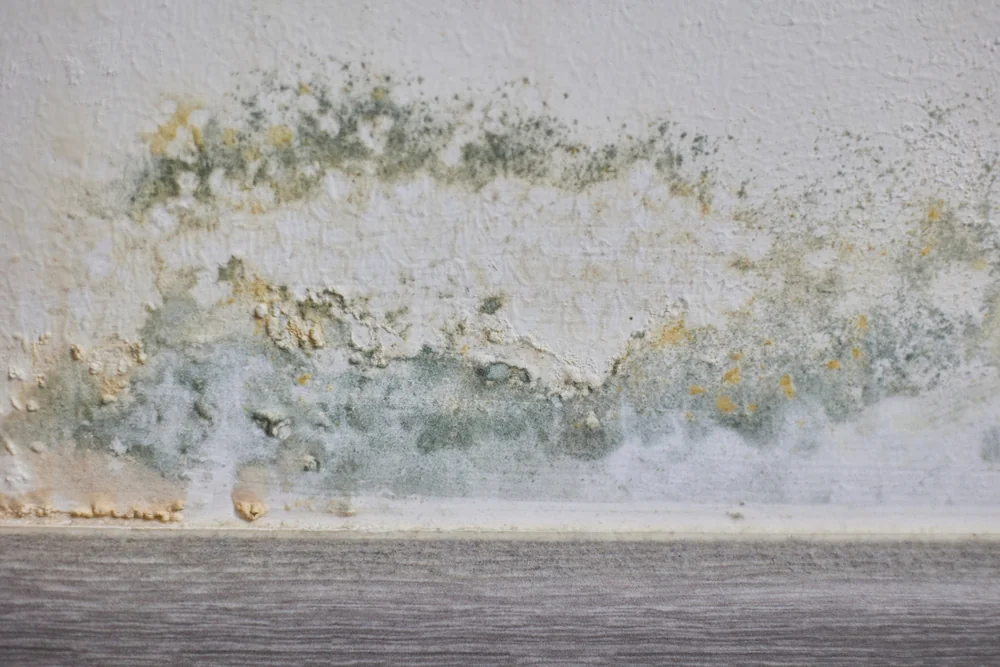
The air in your home feels different. That low-grade headache you’ve been blaming on stress? The congestion that never fully clears? Those things often trace back to mold growing somewhere you can’t see — behind plaster, under floorboards, inside a wall cavity that’s been slowly absorbing moisture from a cast-iron pipe that’s been corroding since the Eisenhower administration.
Philadelphia’s rowhouses are beautiful, but they were not built with modern moisture control in mind. Stone and brick foundations with no waterproofing, flat roofs that hold standing water after every storm, shared party walls where a neighbor’s leak can quietly become your mold problem — these are not hypothetical risks. They are the everyday reality of owning or renting in this city. When mold mitigation is done right, you’re not just removing a stain. You’re removing the source of the problem so it doesn’t come back in six months.
The difference between a surface treatment and a real remediation is whether someone actually found where the moisture is coming from. That’s where most jobs go wrong — and it’s exactly where we start.
We’re based in Bensalem, PA — right on Philadelphia’s northeastern border, a few minutes from Somerton and Torresdale. This isn’t a national franchise routing your call through a 1-800 number. We’re a local team that has worked inside Philadelphia rowhouses, knows what aging infrastructure looks like behind original plaster, and understands why basements in Point Breeze and Kensington flood differently than basements in Fox Chase.
Our technicians carry both IICRC and ACAC certifications — a dual credential combination that most Philadelphia mold companies, including the large franchises that dominate local search results, simply don’t have. That means the same team assessing your home is trained to both find the problem and fix it correctly.
The free inspection isn’t a sales tactic. It’s how we earn the right to tell you what’s actually going on before asking you to spend a dollar.
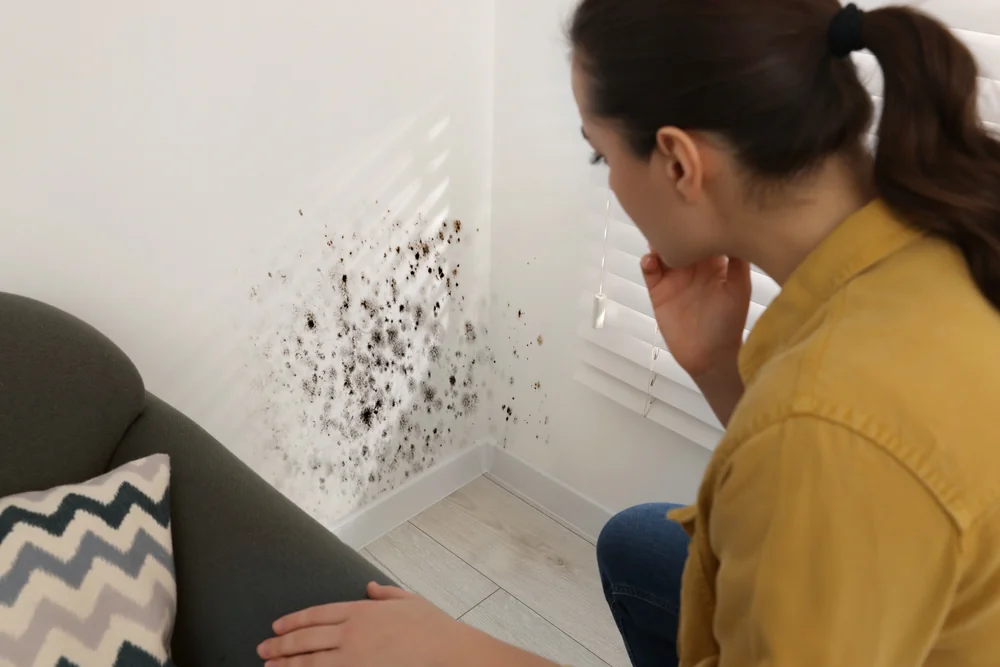
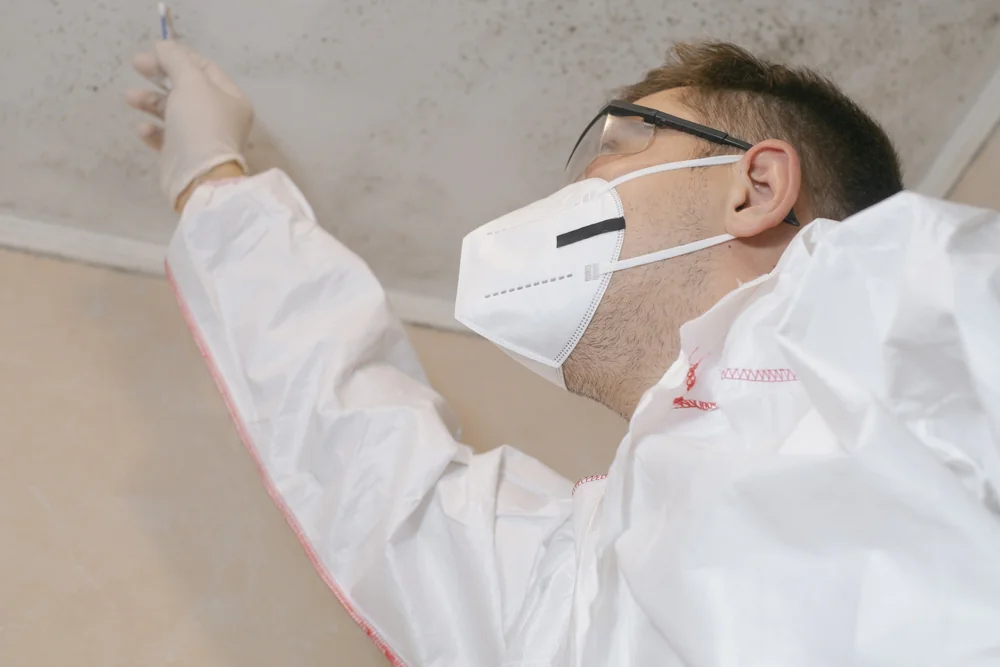
It starts with the free inspection. One of our certified technicians comes to your property, walks the space, and looks for visible mold, moisture indicators, and the conditions that allow mold to grow. In Philadelphia’s older housing stock, that means checking basements, floor joists, party walls, attic decking, and anywhere a flat roof or aging pipe could be pushing moisture into the structure. You get an honest assessment — not an inflated scope designed to maximize a bill.
If mold is present, the next step is containment. We seal off the affected area using physical barriers and negative air pressure so spores don’t travel to clean areas of your home during removal. This matters especially in multi-unit buildings and rowhouses where HVAC systems and shared walls can spread contamination quickly. From there, we remove the mold using HEPA-rated equipment, treat affected surfaces, and address the moisture source — because without fixing what caused it, the mold will return.
After remediation, post-clearance testing confirms the job is complete. If your property is part of a real estate transaction, we can provide documentation that satisfies Philadelphia’s Chapter 6-902 mold inspection ordinance — a city-specific requirement that applies when a home inspector identifies visible mold or water intrusion during a sale. Most companies don’t even know that ordinance exists.

Ready to get started?
Mold mitigation in Philadelphia isn’t a one-size situation. A trinity house in South Philly has different conditions than a Victorian twin in West Philadelphia or a post-WWII brick rowhouse in Mayfair. Our approach adapts to what’s actually in front of the technician — the building type, the moisture source, the extent of growth, and the materials involved. The goal is never to do more than necessary, but always to do enough that the problem is actually resolved.
Every job we do includes a full inspection, containment setup, HEPA removal, surface treatment, moisture source identification, and post-remediation cleanup. We also handle remodeling and restoration after the mold is gone — replacing drywall, repairing plaster, and restoring the space so you’re not left coordinating a second contractor to finish what the first one started. That matters in a city where scheduling multiple trades can drag a project out for weeks.
For Philadelphia landlords dealing with a tenant complaint or a Department of Licenses and Inspections notice, we provide the documentation you need to demonstrate compliance. Under Pennsylvania’s City Rent Withholding Act, a mold problem that reaches code enforcement can put rent collection at risk — fast, documented remediation isn’t optional in that situation, it’s urgent.
Yes — and it’s one of the few places in Pennsylvania where that’s true. Under Chapter 6-902 of the Philadelphia Health Code, if a home inspector identifies visible mold growth or water intrusion during a real estate transaction, the buyer is required to have a comprehensive mold inspection performed by a licensed residential mold inspector before proceeding. This isn’t optional and it isn’t a recommendation — it’s a mandatory trigger built into Philadelphia’s municipal code.
What makes this more significant is that Philadelphia issues its own city-specific mold inspector license, separate from any state credential. Pennsylvania has no statewide mold licensing law, but Philadelphia does — and reports from unlicensed inspectors cannot be used in Philadelphia housing court. If you’re buying or selling in Philadelphia and mold comes up during the home inspection, you need a company that understands exactly what the ordinance requires and can provide documentation that holds up. That’s not something a generic franchise is going to know off the top of their head.
Nationally, homeowners spend between $1,200 and $3,800 on mold remediation on average. In Philadelphia, costs can run higher depending on the building type and how far the mold has spread. Pre-war rowhouses with original plaster walls, unfinished stone basements, and flat roofs create conditions where mold can migrate through multiple surfaces before it’s ever visible — and the more it’s spread, the more labor and materials are involved in removing it properly.
The honest answer is that cost depends on scope, and scope depends on what the inspection actually finds. That’s exactly why we offer a free inspection before quoting anything. You’ll know what you’re dealing with and what it will cost before any work begins. Unlike the price-bait experiences that are unfortunately common in this industry, the number we quote is the number you pay.
It can, and it happens more than most people realize. Philadelphia’s rowhouses share party walls — the masonry barrier between two attached homes. When one property has a significant moisture problem, that moisture doesn’t stay contained. It can migrate laterally through the shared wall material and create conditions for mold growth on the adjacent side, even if the neighboring home has no visible leak of its own.
This is one of the things that makes mold in Philadelphia rowhouses different from a detached suburban home. The source of your mold problem might not be inside your four walls at all — it could be originating from a neighbor’s failed roof, a slow pipe leak, or a flooded basement next door. That’s why moisture source identification is non-negotiable in this type of construction. Removing the mold without tracing it back to where the moisture is actually entering doesn’t solve anything. It just delays the return visit.
A few things converge in Philadelphia that you don’t see to the same degree in most surrounding areas. First, the housing stock is old — most Philadelphia rowhouses were built before World War II, with stone or brick foundations that have no waterproofing membrane and basement floors that are either bare concrete or original stone. Both are highly porous and absorb ground moisture constantly.
Second, Philadelphia’s climate creates ideal mold conditions for a significant chunk of the year. Humidity regularly exceeds 70% during summer months, and the city sits at the confluence of the Delaware and Schuylkill rivers, which keeps ambient moisture levels elevated. Third, approximately 72% of Philadelphia’s surface area is covered by impervious materials — rooftops, pavement, concrete — which means when it rains hard, that water has nowhere to go except into storm drains and, frequently, into basements. Heavy rainfall in Philadelphia is increasing in frequency and intensity, and neighborhoods like Manayunk, Port Richmond, and parts of South Philadelphia flood on a regular basis. All of that water ends up somewhere, and basements are usually first.
It depends on the size of the affected area and where it’s located. For small, contained mold problems — a section of basement wall, a crawl space, a bathroom ceiling — many homeowners can remain in the home during remediation as long as the work area is properly sealed and the rest of the living space isn’t being disturbed. We use physical containment barriers and negative air pressure during removal, which prevents spores from traveling into clean areas of your home.
For larger jobs, or situations where mold is present in a central HVAC system, a heavily trafficked living area, or throughout multiple rooms, temporarily vacating the property during active remediation is the safer call — especially for households with children, elderly family members, or anyone with asthma or a compromised immune system. In Philadelphia’s dense rowhouses where rooms are small and airflow is limited, our technician will give you a straight answer about whether staying put is reasonable or whether a few days away makes more sense for your situation.
The honest answer is that mold will come back if the moisture source isn’t fixed. Mold needs three things to grow: a surface, the right temperature, and moisture. You can’t control surface materials or temperature in most homes, but you can control moisture — and that’s where the work actually happens. Removing visible mold without addressing what’s feeding it is a temporary fix at best.
Our approach starts with finding the moisture source before any removal begins. In Philadelphia homes, that might be a slow cast-iron pipe leak hidden behind original plaster, a failed mortar joint in a party wall, a flat roof that’s been holding standing water after every storm, or a basement that floods every time heavy rain overwhelms the city’s storm drains. Once the source is identified and addressed — whether that’s a repair we handle directly or a referral to the right trade — the remediation has a real foundation. Post-clearance testing after the job confirms the mold levels are back to normal. That’s what separates a real resolution from a surface treatment that looks clean until the next wet season.
Other Services we provide in Philadelphia