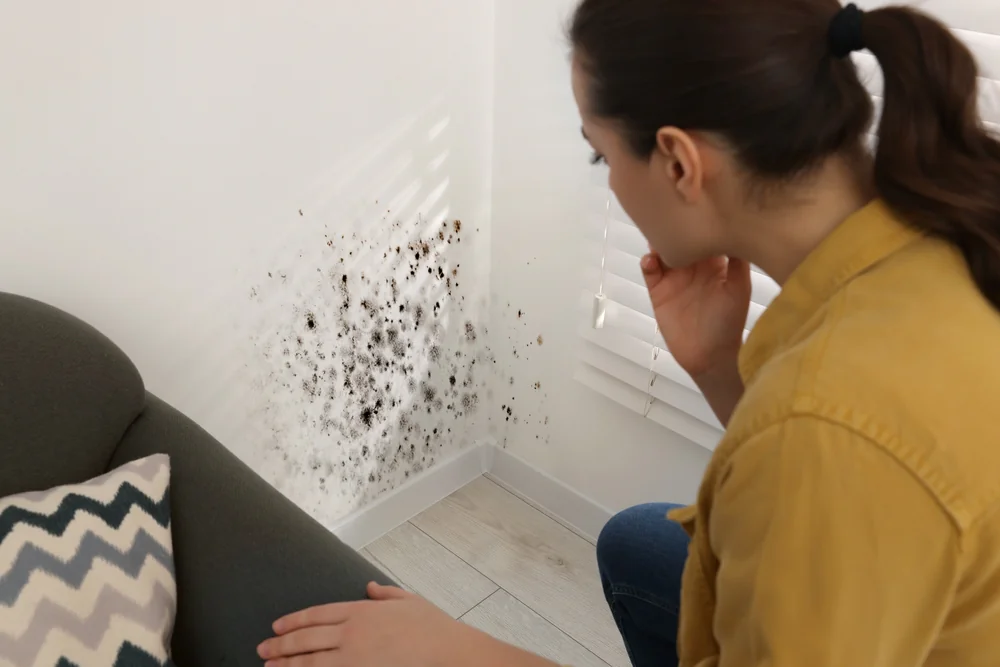
You’ve noticed the musty smell. Maybe you’ve spotted dark patches in the basement corner or around a bathroom vent. Your kids have been coughing more than usual, and you’re starting to wonder if it’s connected.
Mold doesn’t announce itself with fanfare. It creeps in quietly, usually after water damage, high humidity, or that slow leak you didn’t know existed. And once it takes hold, it spreads faster than most people realize—sometimes within 24 to 48 hours.
What you do next matters. Not just for your property value, but for the air your family breathes every day. Let’s talk about what professional mold mitigation actually means and why it’s different from just scrubbing surfaces and hoping for the best.
What Is Mold Mitigation and Why It Matters
Mold mitigation is the process of reducing and controlling mold growth by addressing the moisture conditions that allow it to thrive. It’s proactive. It’s about stopping the problem at its source rather than just treating the symptoms.
Think of it this way: if you have a leaking pipe and mold growing on the wall, wiping down the wall doesn’t solve anything. The leak is still there. The moisture is still feeding the mold. Within days or weeks, you’re back where you started.
Mitigation focuses on moisture control, containment, air filtration, and environmental changes that make your home inhospitable to mold. It’s what keeps the problem from escalating while remediation handles the removal of existing growth. In most professional services, the two work hand-in-hand because you need both to actually solve the problem.
How Much Does Mold Mitigation Cost
This is the question everyone asks first, and the honest answer is: it depends on what you’re dealing with.
Professional mold mitigation typically costs between $1,200 and $3,750 for most residential projects, with the national average landing around $2,300. But that’s a wide range, and your actual cost will depend on several factors that are specific to your situation.
The size of the affected area plays a big role. A small patch of mold in a bathroom might run you $500 to $1,500. A full basement remediation project could reach $3,000 to $6,000 or more. If mold has infiltrated your HVAC system or spread through ductwork, you’re looking at $2,000 to $10,000 because of the complexity and specialized equipment required.
Location matters too. Mold hidden behind drywall or inside wall cavities costs more to address than surface-level growth you can see and access easily. Crawl spaces and attics present their own challenges depending on accessibility.
The type of mold also affects pricing. Black mold remediation often costs 20% to 50% more than other varieties because it requires additional safety protocols and specialized handling.
Here’s what most people don’t realize: the cost of doing nothing is almost always higher. Mold damage can reduce your home’s value by 20% to 37%. It can trigger asthma attacks, respiratory infections, and chronic sinus problems that lead to medical bills. And the longer you wait, the more it spreads, turning a $1,500 problem into a $10,000 one.
Most reputable companies offer free inspections so you know exactly what you’re dealing with before committing to anything. Some work directly with insurance companies, which can cover mitigation costs if the mold resulted from a sudden event like a burst pipe or storm damage. Mold from long-term neglect or slow leaks usually isn’t covered, which is why catching it early matters.
Mold Mitigation vs Remediation: What’s the Actual Difference
People use these terms interchangeably, but they’re not the same thing. Understanding the difference helps you know what you’re actually paying for.
Mold mitigation is about prevention and control. It’s the process of managing moisture levels, improving ventilation, fixing leaks, and taking steps to limit mold growth before it becomes a bigger issue. Mitigation is proactive. It’s what you do to keep mold from spreading or recurring.
Mold remediation is the full removal and restoration process. It’s reactive. It happens when mold has already taken hold and needs to be eliminated. Remediation includes inspection, testing, containment, removal of contaminated materials, air filtration, cleaning, and addressing the underlying moisture source that caused the problem in the first place.
Here’s the key: professional mold remediation includes mitigation as part of the process. You can’t just remove mold and call it done. If you don’t fix the leak, control the humidity, or improve the drainage around your foundation, the mold will come back. That’s why we don’t just clean up what you can see—we identify why the mold grew there and make sure it can’t happen again.
In Bucks County, where we get about 49 inches of rain per year compared to the 38-inch national average, mitigation is especially important. The climate here creates ongoing moisture challenges. Basements in areas like Levittown deal with soil that retains water. Older homes have aging foundations and HVAC systems that struggle with humidity control. Without proper mitigation, you’re fighting a losing battle.
When you hire a professional, you’re getting both. The remediation removes what’s already there. The mitigation makes sure it doesn’t come back.
Professional Mold Remediation: The Complete Process
Professional mold remediation isn’t just about scrubbing surfaces and spraying chemicals. It’s a systematic process designed to eliminate mold at its source and prevent it from returning.
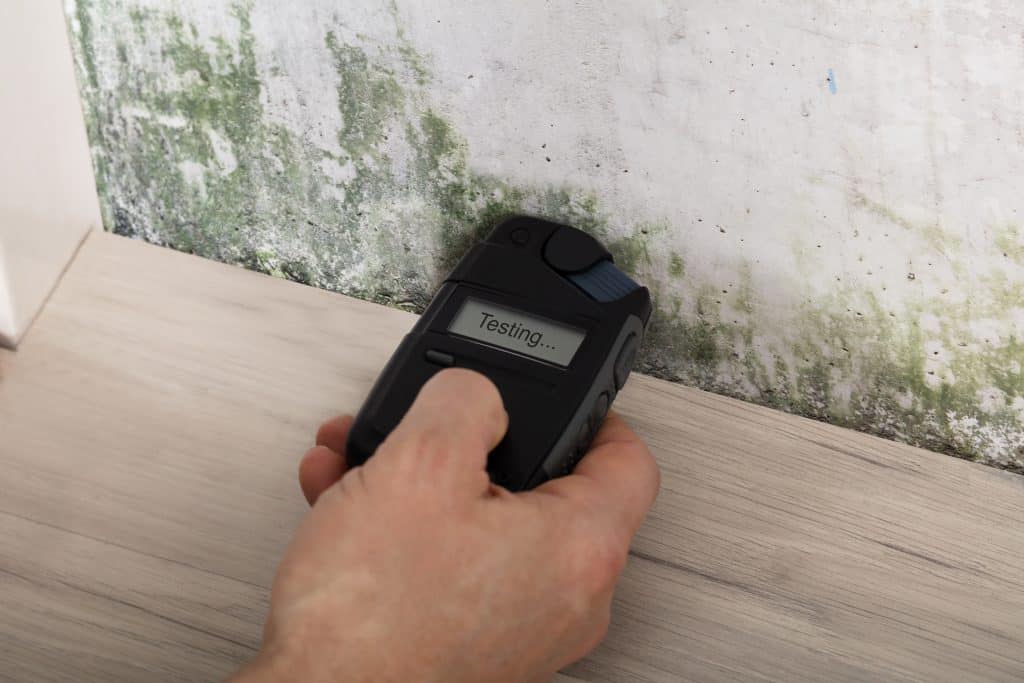
The first step is always a thorough inspection. We check every inch of your property, including hidden areas like wall cavities, crawl spaces, and behind appliances where mold loves to hide. We use moisture meters, thermal imaging, and air quality tests to assess the full extent of the problem.
Testing comes next. Identifying the type of mold you’re dealing with determines the removal strategy and safety protocols. Black mold requires different handling than common household mold varieties.
Once the assessment is complete, containment begins. This is critical. Mold spreads through airborne spores, so we seal off affected areas with plastic barriers and use negative air pressure systems to prevent cross-contamination. We also turn off HVAC systems to keep spores from traveling through ductwork to other parts of your home.
Black Mold Mitigation and Safety Protocols
Black mold gets a lot of attention, and for good reason. Stachybotrys chartarum, commonly called black mold, produces mycotoxins that can cause serious health problems, especially in children, elderly individuals, and anyone with compromised immune systems or chronic lung conditions.
The symptoms aren’t subtle. Persistent coughing, wheezing, sinus congestion, skin irritation, headaches, and respiratory infections are all common reactions to black mold exposure. Studies show that asthma risk doubles in homes with mold present, and nearly 80% of asthma cases begin before age six. That’s not a statistic you want to gamble with if you have young kids.
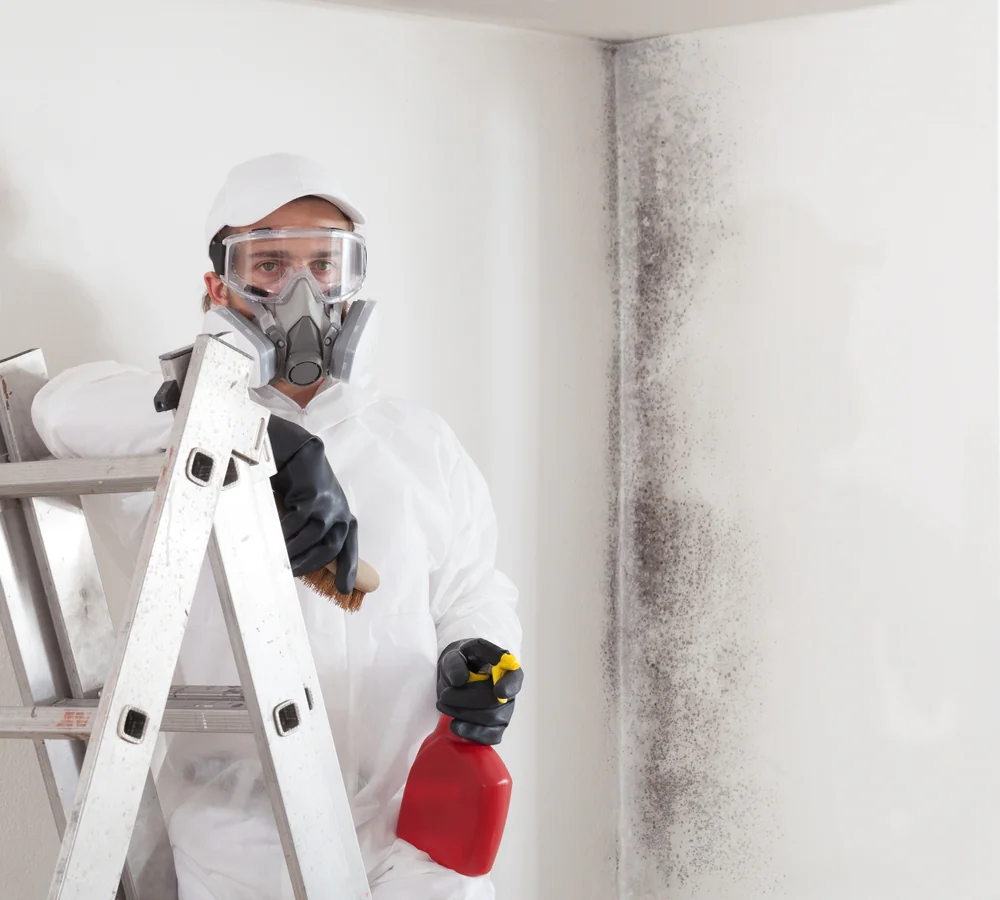
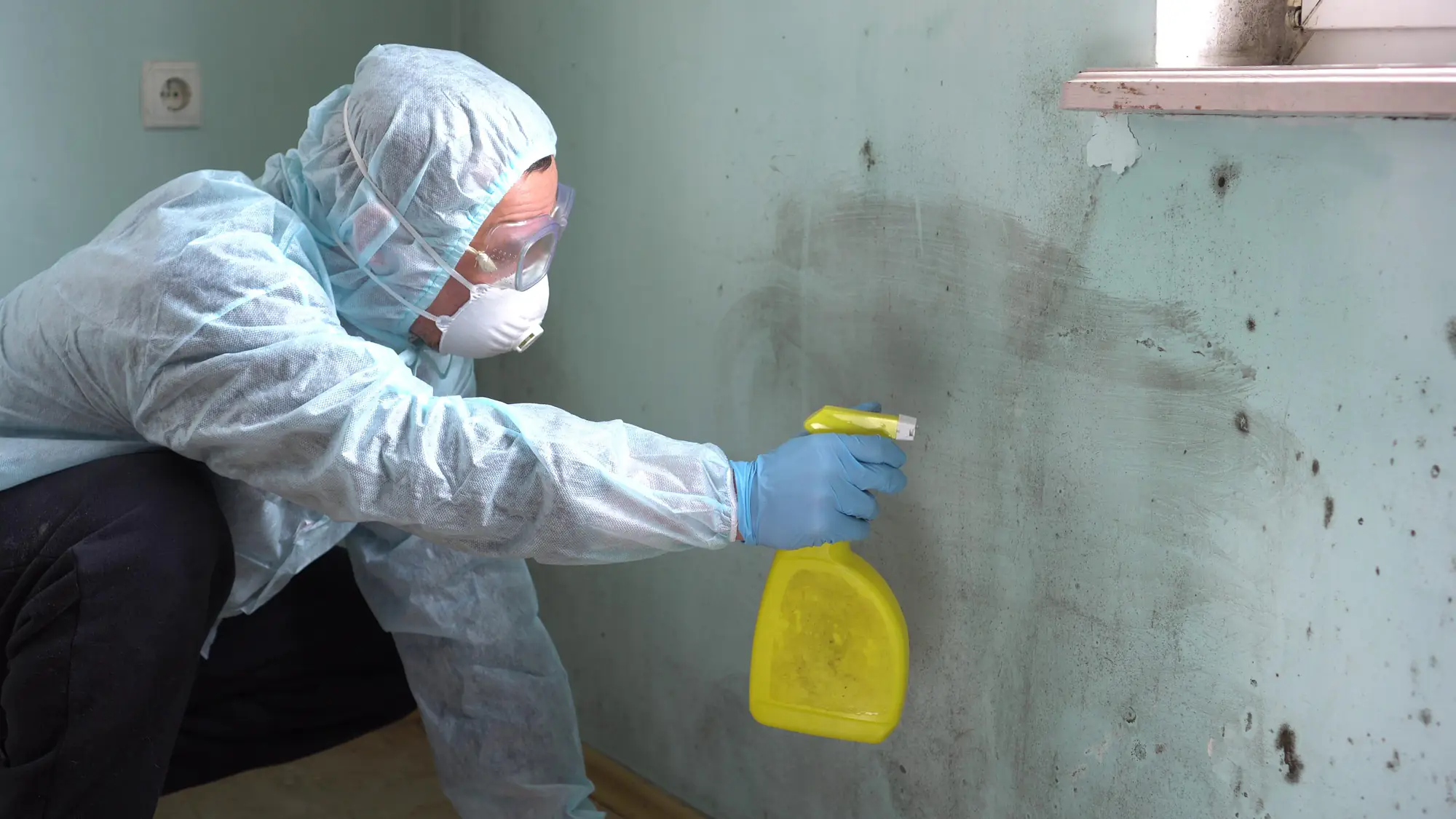
Black mold mitigation requires specialized safety equipment and protocols. We wear protective gear including respirators, gloves, and full-body suits. We use HEPA air filtration systems that capture 99.97% of airborne particles to prevent spores from spreading during removal.
The removal process itself involves carefully extracting contaminated materials—drywall, insulation, carpeting, or any porous material that mold has penetrated. These materials can’t be salvaged. They have to go. Non-porous surfaces like tile or metal can be cleaned with antimicrobial solutions, but anything that absorbed mold needs to be removed and disposed of properly.
After removal, we sanitize the entire area, treat surfaces with mold inhibitors, and run air scrubbers to clean the indoor air. Then comes the most important part: fixing whatever caused the moisture problem in the first place. A leaking pipe. Poor ventilation. Inadequate drainage. High humidity. Without addressing the root cause, you’re just setting yourself up for round two.
Black mold mitigation isn’t a DIY project. The health risks are real, and improper handling can make the problem worse by releasing massive amounts of spores into your home. If you’re dealing with black mold or suspect you might be, call a professional with the right equipment and training.
Emergency Mold Response: Why 24/7 Availability Matters
Mold doesn’t wait for business hours. It grows fast—sometimes within 24 to 48 hours after water exposure. A burst pipe at 2 a.m., a flooded basement after a heavy storm, or discovering mold during a weekend home inspection can all create situations where waiting until Monday isn’t an option.
That’s why 24/7 emergency response matters. The faster you act, the less damage mold can do. Every hour counts when it comes to preventing spread, protecting your family’s health, and minimizing repair costs.
Professional emergency mold response starts with immediate assessment. We arrive on-site, evaluate the situation, and begin containment procedures right away. We identify the moisture source, stop it if possible, and set up equipment to start drying out affected areas. The goal is to halt mold growth in its tracks and prevent it from spreading to unaffected areas of your home.
Time also matters for another reason: insurance coverage. Many homeowners’ policies cover mold remediation if it results from a sudden, covered event like a burst pipe or storm damage. But they often require prompt action. Delays can complicate claims or even result in denial if the insurance company determines you didn’t act quickly enough to mitigate damage.
Emergency services also provide peace of mind. Discovering mold is stressful. You’re worried about your family’s health, your home’s structural integrity, and how much this is going to cost. Having access to professionals who can respond immediately, assess the damage, and start fixing the problem takes a huge weight off your shoulders.
In Bucks County, where humid summers and heavy rainfall create ongoing moisture challenges, having a local company that understands the area’s specific issues and can respond any time, day or night, makes a real difference. We know where to look. We know what causes problems in older homes throughout Doylestown, Bensalem, and Levittown. And we know how to fix it permanently so you’re not dealing with the same issue six months from now.
Getting Professional Help for Mold Mitigation in Bucks County
Mold mitigation isn’t something you want to handle on your own, especially if you’re dealing with more than a small surface patch. The health risks are real. The potential for spreading spores throughout your home is high. And without the right equipment and expertise, you’re likely to miss hidden mold or fail to address the moisture source that caused the problem.
Professional mold mitigation gives you a comprehensive solution. You get trained technicians with EPA-approved methods, advanced equipment like HEPA air filtration and thermal imaging, and a systematic approach that addresses both the mold you can see and the underlying conditions that allow it to grow.
You also get peace of mind. No more musty odors. No more worrying about what’s growing behind your walls. No more wondering if that cough is just allergies or something more serious. Your home becomes safe again. The air becomes cleaner. And you can finally stop holding your breath every time you walk into the basement.
If you’re dealing with mold in Bucks County, we offer free inspections, 24/7 emergency response, and local expertise that understands the unique challenges of this area. We don’t just remove mold—we fix the conditions that caused it and make sure it doesn’t come back.