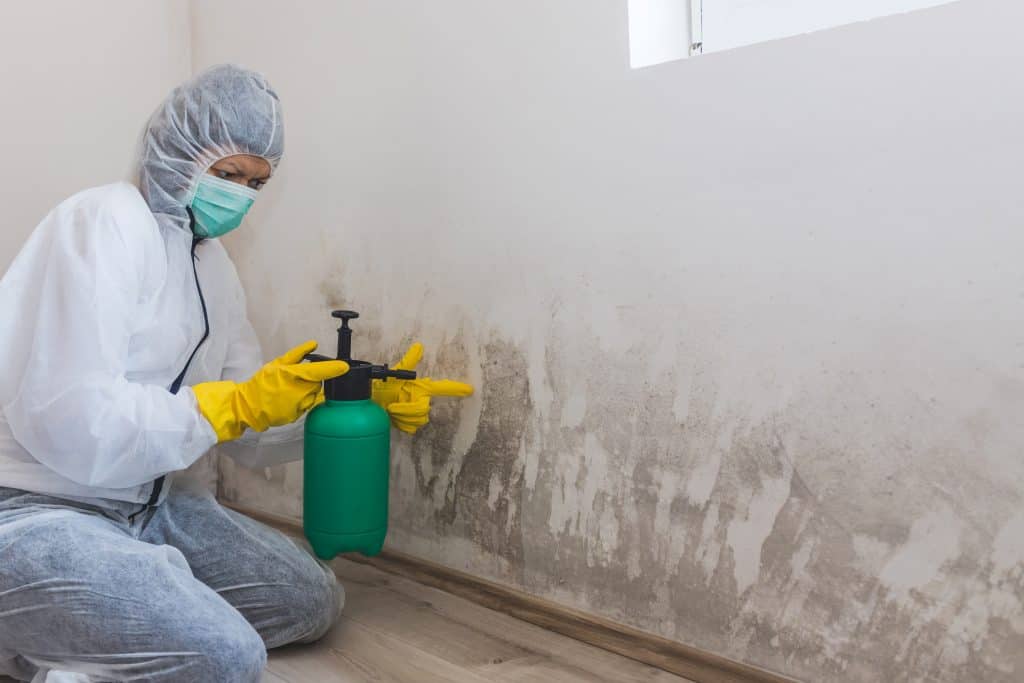
You found something resembling mold. Perhaps you cleaned it up. Perhaps you remain unsure if your cleaning resolved the entire issue. Either way, something still feels off: a musty smell when the heat kicks on, a family member who keeps falling ill, or a nagging suspicion that your home is not as clean as it appears.
Here is a detail most people miss: mold and mycotoxins are entirely different entities. Mold represents the organism growing on your wall. Mycotoxins are the toxic chemical compounds generated by that mold, and they do not vanish simply because the visible mold disappears. Understanding this distinction serves as the essential first step toward solving the problem.
What Are Mycotoxins And Why Are They Different From Mold Spores?
Mold operates as a living organism, while mycotoxins represent what that organism manufactures. Think of mold as a factory and mycotoxins as the products produced behind your walls: invisible, odorless, and completely undetectable without professional testing.
You inhale mycotoxins, absorb them through your skin, or ingest them if they contaminate household surfaces. This multi-pathway exposure makes connecting mycotoxins to specific symptoms difficult. Unlike a bee sting or a food allergy, their effects build slowly over time, leading most people to overlook the connection between their home environment and their physical well-being.
Which Molds Produce Mycotoxins, And Is Black Mold The Only Concern?
Black mold, scientifically known as Stachybotrys chartarum, receives the majority of attention, and for good reason. It produces mycotoxins called macrocyclic trichothecenes that become airborne in contaminated indoor environments. When people discuss toxic mold, they typically refer to this species.
However, Stachybotrys is not the sole mold producing mycotoxins. Aspergillus, commonly found in HVAC systems, links to severe allergic reactions and serious respiratory issues. Penicillium, a blue-green mold growing on everything from walls to ductwork, produces mycotoxins regularly detected in indoor air quality tests. Cladosporium and Alternaria round out the species frequently identified during Bucks County home inspections.
The practical takeaway is straightforward: you do not need to discover black mold to face a mycotoxin issue. Any home combining a moisture problem with one of these mold species holds the potential for mycotoxin exposure. Bucks County climate makes that combination more common than expected. Humid summers foster condensation inside HVAC systems and ductwork. Aging basement infrastructure in communities like Levittown, Bensalem, and Bristol, where housing stock largely dates back to the late 1940s and 1950s, creates chronic moisture conditions fueling mold growth year-round rather than strictly following storms.
According to National Institutes of Health research, no safe dose level of mycotoxins in humans has been firmly established. That invalidates the dismissal that a little mold causes no harm, as no defined threshold guarantees safe exposure levels. Professional testing matters far more than a simple visual inspection.
What Does Mycotoxin Exposure Feel Like? Symptoms Most People Miss
This area grows complicated, causing many people to spend months or years chasing incorrect answers.
Acute mycotoxin exposure, meaning a high dose over a short period, produces obvious symptoms like fever, cough, breathing difficulties, and debilitating pain. Chronic exposure (low-level, ongoing contact with mycotoxins in your home environment) presents entirely differently. Peer-reviewed research published in the NIH database links chronic toxigenic mold exposure to headaches, memory loss, depression, mood swings, sleep disturbances, anxiety, chronic fatigue, and, in serious cases, seizures.
Review that list of symptoms. They frequently send individuals to primary care doctors, therapists, or neurologists. They get blamed on stress, aging, poor sleep, or numerous other factors. Physicians rarely ask if you recently tested your home air quality.
If you reside in a Bucks County home featuring moisture issues, such as a basement damp after heavy rains, an uninspected HVAC system, or an untested crawl space, and you struggle with unexplained fatigue, recurring headaches, or brain fog lacking clear origins, investigating the connection is worthwhile. While it does not guarantee your home is the culprit, ruling it out proves necessary.
Regional climate shifts increase baseline mold risk in Bucks County specifically. Penn State and MARISA climate data shows heavy rainfall increasing in frequency and intensity throughout Bucks County, directly contributing to flash floods, property damage, and indoor air quality concerns. Annual rainfall is projected to rise by two to four inches over coming decades. Delaware River sea levels have risen roughly 0.8 feet since 1950, increasing vulnerability in flood-prone lower Bucks County communities like Bristol, Croydon, Yardley, and Morrisville to water intrusion events that initiate mold growth.
How Air Ducts Become A Mycotoxin Delivery System
People often view mold as a localized issue, restricted to a bathroom patch or a basement corner. In reality, a single mold colony residing within your HVAC system distributes mycotoxins to every room simultaneously each time your heating or air conditioning runs.
Your ductwork functions as an interconnected network. When mold colonizes inside that network (around evaporator coils, inside drip pans, or along duct walls where condensation gathers), the airflow intended for comfort becomes the mechanism spreading contamination. Air duct cleaning targeting mold contamination goes beyond a luxury add-on; for homes housing active HVAC mold, it differentiates between remediation that succeeds and remediation that fails.
Why Bucks County Homes Are Vulnerable To Mold In HVAC Systems
The combination of Bucks County climate and local housing stock creates a specific HVAC mold risk that requires careful consideration before assuming systems remain clean.
During Bucks County summers, air conditioning systems operate nearly continuously. Whenever warm, humid outdoor air meets cool interior duct surfaces, condensation forms. That moisture, combined with dust and organic debris naturally accumulating in duct systems, creates ideal mold-growing conditions. Existing minor mold presences expand rapidly during these humid months.
Communities like Levittown, Bensalem, Langhorne, and Bristol face additional risks. Much of lower Bucks County housing dates to the late 1940s and 1950s, featuring original ductwork designed without modern moisture management standards, minimal vapor barriers, and different insulation requirements. Duct systems operating for sixty or seventy years without thorough inspection harbor contamination rather than cleanliness.
When inspecting Bucks County HVAC systems, we utilize thermal imaging cameras and moisture meters to uncover issues invisible to standard visual checks. Mold growing inside duct walls, behind access panels, or surrounding coils hides silently, making specialized tools and professional air testing essential to determine what circulates through the air.
Does Cleaning Mold Remove Mycotoxins In Ductwork?
Homeowners frequently ask this vital question, and the honest response is no, not automatically.
Eliminating visible mold from surfaces, such as duct walls, drywall, or basement floors, treats the organism itself. It does not automatically eradicate mycotoxins deposited into porous materials. Mycotoxins persist within insulation, older duct linings, and building materials long after mold colonies vanish. Consequently, surface cleaning alone, including DIY efforts involving bleach or commercial sprays, frequently fails to resolve the underlying issue.
Professional remediation approaches this differently. Procedures begin with comprehensive inspections covering both visible and hidden areas, followed by air quality testing utilizing independent lab analysis to identify specific mold species and concentrations. Such testing yields concrete data rather than assumptions. Containment prevents cross-contamination during removal, and EPA-approved treatment protocols target both active mold and residual contamination in affected materials. Post-remediation testing then verifies project completion.
For HVAC systems specifically, professional air duct cleaning tied to mold remediation employs HEPA filtration equipment capable of capturing particles down to a fraction of a micron, matching the scale of mycotoxin-carrying particles. Standard duct cleaning services lacking mold specialization cannot achieve equivalent results.
Addressing moisture sources alongside mold is mandatory. Mold in ductwork never appears randomly; something feeds it. Identifying and correcting condensation issues, slow leaks, drainage problems near air handlers, or other moisture pathways is essential. Remediation without source mitigation provides only a temporary fix, ensuring mold returns.
Air quality testing in Bucks County generally ranges from $300 to $600, representing a fraction of full remediation expenses while providing exact diagnostic data before larger decisions occur.
What Bucks County Homeowners Should Do If They Suspect Mycotoxin Exposure
Approach this possibility with practical seriousness rather than panic, treating it like any other home issue that worsens if ignored. Mycotoxins are real, their health impacts are documented, and regional climate and housing conditions make mold growth common throughout Bucks County.
If you discovered visible mold, noticed persistent musty odors when your HVAC runs, or experienced unexplained health symptoms unresponsive to medical treatments, scheduling professional air quality testing is the logical first step to secure reliable data. A complimentary inspection incurs no cost and clarifies whether a legitimate issue requires attention or if your home can be ruled out as the source.
Mack’s Mold Removal has served Bucks County for over 15 years, possessing deep familiarity with local groundwater patterns, aging lower Bucks County housing, and seasonal factors contributing to hidden mold growth and mycotoxin risks. Contact our team to request a free inspection and receive clear, straightforward answers.