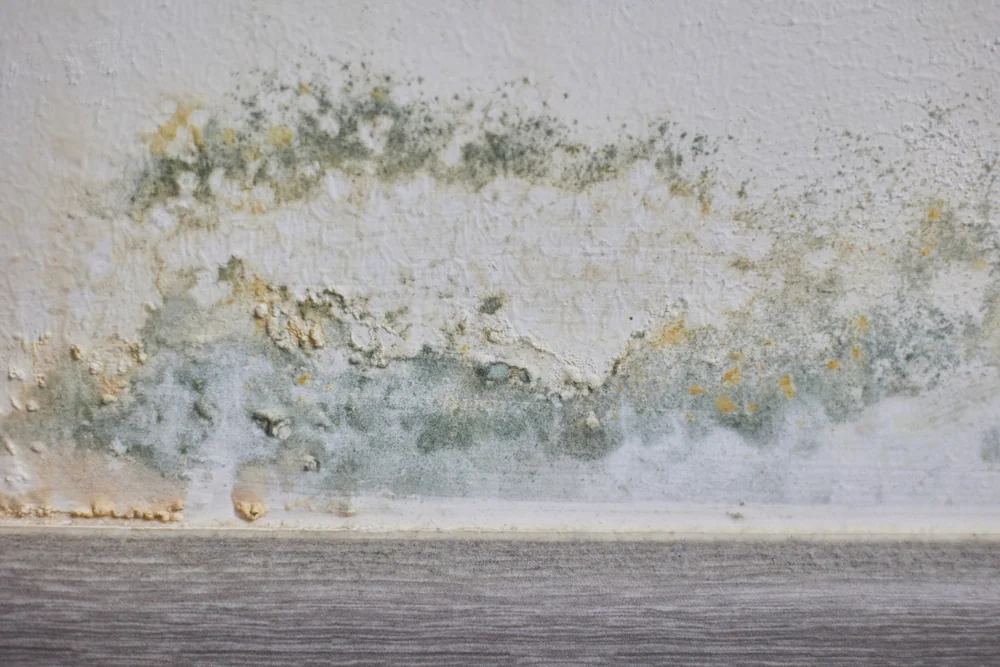

You’ve spotted something that looks like mold. Or maybe you smell it but can’t find it. Either way, you’re here because you want to know what a mold inspection actually costs in Bucks County, PA—and whether you’re about to get hit with surprise fees.
Fair question. The mold industry has a reputation for unclear pricing, upselling unnecessary tests, and leaving homeowners confused about what they’re even paying for. This page cuts through that. You’ll see real cost ranges for Pennsylvania, understand what drives the price up or down, and learn the difference between an inspection and testing so you know exactly what you need.
What Does a Mold Inspection Actually Cost in Pennsylvania?
Let’s start with the number you came here for. In Pennsylvania counties like Bucks, Montgomery, Delaware, and Chester, a professional mold inspection typically runs between $295 and $486 for most residential properties. The national average sits around $670, but local pricing in the Philadelphia metro area tends to fall slightly below that.
That’s for a standard inspection of a home under 4,000 square feet. If your property is larger, expect costs to climb toward $700 to $1,000. Smaller condos or townhomes might land closer to $300. The size of your home is the biggest factor because it determines how much ground the inspector has to cover.
Professional Mold Inspection Price Breakdown: What’s Included
Here’s what you’re actually paying for when you hire a professional mold inspector in Bucks County, PA. A standard inspection includes a thorough visual assessment of your property—basements, attics, crawl spaces, bathrooms, around windows, behind appliances, and anywhere moisture tends to hide. The inspector documents visible mold growth, water stains, condensation, and signs of past or current leaks.
They’ll also use moisture meters to detect dampness inside walls, ceilings, and floors that you can’t see. Some inspectors include thermal imaging cameras to identify temperature differences that signal hidden moisture or mold growth behind drywall. These tools catch problems before they become visible.
Most professional inspections also include at least one or two air samples—typically an outdoor control sample and one indoor sample. The outdoor sample establishes a baseline for what’s normal in your area. The indoor sample is compared against it to see if your home has elevated mold spore levels. Additional samples cost extra, usually $75 to $150 each depending on the inspector and lab fees.
You’ll receive a written report that outlines findings, identifies moisture sources, includes photos of problem areas, and provides recommendations for remediation if needed. This documentation is critical if you’re buying or selling a home, filing an insurance claim, or dealing with a landlord dispute. A verbal walkthrough doesn’t hold up when you need proof.
What’s not included in a basic inspection? Invasive testing that requires cutting into walls or removing materials. Lab analysis beyond the included air samples. Mold remediation itself—that’s a separate service. And in most cases, testing for specific mold species unless you request it and pay for additional lab work.
Why Pennsylvania Mold Inspection Rates Vary So Much
You might get quotes ranging from $200 to over $1,000 for what sounds like the same service. Here’s why. Property size is the obvious one—a 1,200 square foot condo takes half the time of a 4,000 square foot house. But complexity matters just as much.
If your home has multiple levels, a finished basement, an attic with limited access, or a crawl space that requires special entry, the inspection takes longer and costs more. Hard-to-reach areas like inside HVAC ducts or behind built-in cabinetry add time and sometimes require removing registers or panels. Some inspectors charge extra for that access work.
The number of samples you need drives cost up fast. A basic inspection might include two air samples. But if you have visible mold in multiple rooms, the inspector may recommend surface samples from each area to identify specific mold types. If you’ve had water damage in several locations, you might need six or more samples to get a complete picture. At $75 to $150 per sample, that adds up.
Geography within Pennsylvania also plays a role. Inspectors in Philadelphia County or closer to the city tend to charge slightly more than those serving rural areas of Bucks or Chester County. Travel time, cost of living, and demand all factor in.
Then there’s the inspection type. A visual-only inspection is the most affordable option. It identifies visible mold and moisture issues but doesn’t include lab testing. A standard inspection adds air sampling and basic lab analysis. A comprehensive inspection throws in thermal imaging, moisture mapping, HVAC inspection, and multiple sample types. You’re looking at $300, $500, or $900+ depending on which tier you choose.
Timing matters too. If you need same-day or emergency service after a pipe burst or flood, expect to pay a premium. Rush lab processing to get results within 24 to 48 hours instead of the standard five to seven days also costs extra.
Pennsylvania doesn’t require mold inspectors to be licensed at the state level, which means you’ll find a wide range of experience and pricing. Some inspectors have decades of experience and advanced certifications. Others took an online course and hung out a shingle. The cheapest quote isn’t always the best value, especially when you’re dealing with something that affects your health and property value.
Mold Testing vs Inspection Cost: What’s the Difference?
This is where most homeowners get confused. Mold inspection and mold testing are not the same thing. They serve different purposes, and understanding the difference saves you money.
A mold inspection is a visual and technical examination of your property. The inspector looks for visible mold, checks for moisture problems, identifies sources like leaks or condensation, and uses tools like moisture meters and thermal cameras to find hidden issues. The goal is to determine if you have a mold problem, where it’s located, and what’s causing it. An inspection gives you an action plan.
Mold testing involves collecting samples—air, surface, or bulk—and sending them to a lab for analysis. The lab identifies specific mold species and measures spore concentrations. Testing tells you what types of mold are present and at what levels. It doesn’t tell you where the moisture is coming from or what to do about it. Testing gives you data, not a solution.
When You Need Inspection, Testing, or Both
If you can see mold or smell it, you already know it’s there. A lab test confirming it’s Aspergillus or Cladosporium at 1,500 spores per cubic meter doesn’t change what you need to do—remove it and fix the moisture source. In that case, you need an inspection to map the problem and plan remediation. Testing is optional unless you have specific health concerns or need documentation for legal or insurance purposes.
Testing makes sense in a few situations. If you’re experiencing unexplained respiratory symptoms, allergies, or chronic sinus issues that improve when you leave the house, testing can confirm whether elevated mold levels are the culprit. If you’re buying a home and want to verify indoor air quality before closing, testing provides objective data. If you’ve completed mold remediation and want proof the problem is gone, post-remediation testing is the standard.
For real estate transactions, many buyers request both. An inspection identifies visible problems and moisture issues. Testing confirms whether the home has elevated spore levels even in areas that look clean. Sellers sometimes get pre-listing inspections to address problems before they scare off buyers or tank negotiations.
If you’ve had significant water damage—a burst pipe, roof leak, or basement flood—both inspection and testing are smart. The inspection finds where water got in and where mold is likely growing. Testing confirms whether remediation is needed and, after the work is done, verifies success.
DIY mold test kits cost $10 to $50 at hardware stores, plus another $30 to $150 for lab analysis if the kit requires it. They’re cheap, but they’re also unreliable. These kits only capture mold spores that happen to land on the test plate during the exposure period. They don’t measure actual air quality, can’t detect hidden mold, and don’t identify moisture sources. You might get a false negative and assume you’re fine when mold is growing behind your walls. Or you might get a positive result that freaks you out even though every home has some mold spores in the air. Without professional context, DIY results are mostly useless.
Pennsylvania Mold Inspection Rates by County and Service Type
Let’s get specific about what you’ll pay in different parts of Pennsylvania. In Philadelphia County, the average mold inspection cost runs $341 to $426, with a range from $298 to $469 depending on property size and scope. Chester County averages $337 to $422, ranging from $295 to $464. Delaware County and Montgomery County fall into similar ranges.
Bucks County, where we operate, sees comparable pricing. A basic visual inspection for a standard single-family home typically costs $300 to $400. That includes the inspector’s time, moisture detection tools, and a written report. If you add two air samples with lab analysis, you’re looking at $450 to $600. A comprehensive inspection with thermal imaging, moisture mapping, HVAC inspection, and multiple samples can reach $700 to $900.
Commercial properties are priced differently. Inspectors often charge by square footage or by the hour for larger buildings. A small office or retail space might cost $250 to $500. A multi-unit apartment building or warehouse could run $1,000 or more depending on size and complexity.
Some companies advertise “free” inspections, but there’s a catch. They’re often tied to remediation services, meaning the inspector works for the company that will do the cleanup. That creates a conflict of interest. An independent inspector has no incentive to exaggerate the problem or recommend unnecessary work. You pay for the inspection, but you get an unbiased assessment.
Pennsylvania doesn’t regulate mold inspectors at the state level, so there’s no licensing requirement outside of Philadelphia, which has its own residential mold inspection license. That means anyone can call themselves a mold inspector. When you’re comparing quotes, ask about certifications, experience, and whether the inspector is independent or affiliated with a remediation company. Cheaper isn’t always better when the person has no real training.
Lab fees are usually included in the per-sample cost, but some inspectors charge separately. Clarify upfront whether the quote includes lab analysis or if that’s an additional fee. Accredited labs typically charge $40 to $150 per sample depending on the type of analysis. Stain testing runs around $150. Mold culture testing adds $50. ERMI or HERTSMI-2 dust testing, which analyzes settled dust for mold DNA, costs $200 to $300.
What to Do Next: Getting a Mold Inspection in Bucks County, PA
Now you know what a mold inspection costs in Pennsylvania and what you’re actually paying for. If you’re seeing visible mold, smelling musty odors, dealing with unexplained health symptoms, or preparing for a real estate transaction, a professional inspection is the right move. DIY kits won’t give you the answers you need, and guessing just delays the problem.
When you’re ready to move forward, look for an inspector with real experience, professional certifications, and independence from remediation companies. Ask for a detailed quote that breaks down what’s included—visual inspection, moisture detection, number of samples, lab analysis, and reporting. Avoid vague estimates that leave room for surprise fees.
We serve Bucks County, PA and surrounding areas with transparent pricing, comprehensive inspections, and EPA-approved methods. If you need clarity on your situation, reach out for a free consultation. You’ll know exactly what you’re dealing with and what it’ll take to fix it.