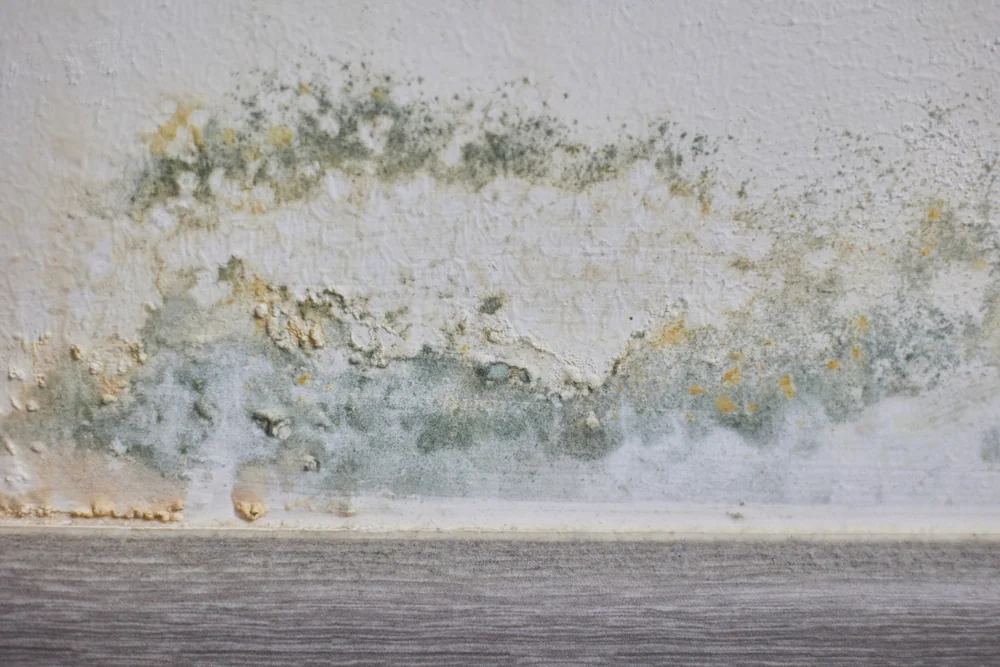

Your crawl space shouldn’t smell like a swamp. Those dark patches spreading across your floor joists aren’t normal either.
Spotted mold down there? Caught that unmistakable musty smell? You’re facing a problem that won’t fix itself. How you remove it determines whether it stays gone or comes right back in three months.
Soda blasting offers an eco-friendly way to eliminate crawl space mold without harsh chemicals or damage to wood. More importantly, when done right, it addresses the moisture issues feeding the growth.
Here’s what you need to know about soda blasting, how it compares to other methods, and what actually works for Bucks County crawl spaces.
What Soda Blasting Crawl Space Treatment Actually Does
Soda blasting uses sodium bicarbonate—baking soda—propelled by compressed air to physically blast mold off wood surfaces. Fine soda particles hit contaminated joists and beams at high speed, explode on impact, and break mold free without gouging or weakening the wood underneath.
It’s non-toxic. No harmful fumes. Safe for your family and pets. That matters in enclosed spaces like crawl spaces where ventilation is already limited.
The real advantage shows up in tight spaces. Your crawl space has thousands of nails, corners, gaps, and spots you can’t reach with a scrub brush. Soda blasting covers everything because the pressurized particles get into every crevice, removing mold that manual methods miss entirely.
How the Soda Blasting Process Removes Fungal Growth in Crawl Space Areas
We start by sealing off your crawl space. This prevents mold spores from spreading into living areas during removal. We set up negative air pressure systems and HEPA filtration to capture airborne particles before they travel through your HVAC or floor gaps.
Next comes the actual blasting. Our technicians use a specialized applicator connected to an air compressor, spraying sodium bicarbonate across every affected surface. When soda grains hit the wood, they fragment on contact—creating a micro-explosion that shakes mold loose without penetrating deep into wood fibers.
This removes both visible growth and spores embedded in the surface. In a typical crawl space with hundreds of square feet of joists and subflooring, soda blasting finishes in hours, not days. It reaches over, under, and around every structural element, including spots you’d never scrub by hand.
After blasting, we vacuum the space clean. Spent baking soda and dead mold material are removed, leaving surfaces ready for the next critical step: fixing moisture. Here’s what most companies won’t say up front—removing mold is only half the job.
If you don’t fix what caused it, you’re buying time until it grows back. Legitimate remediation includes moisture testing, source identification, and prevention. Wood moisture content needs to drop below 20% before treatment and stay there afterward. Otherwise, you’re looking at regrowth within weeks.
Our work also includes post-treatment verification. Testing confirms the mold is gone and air quality has improved. You get proof, not just promises.
Soda Blasting vs Bleach, HEPA Vacuuming, and Hand Scrubbing
You’ve got options for removing crawl space mold. Understanding the differences helps you avoid wasting money on methods that fail.
Bleach is the most common DIY approach. It’s also the least effective. Bleach might lighten surface stains temporarily, but it doesn’t penetrate wood to kill spores at the root. It also adds moisture to an already damp space, which can encourage regrowth. Vinegar and store-bought mold sprays have similar limitations—they work on tile, not wood.
HEPA vacuuming removes surface mold that’s dry, but it struggles with wet wood and can smear growth rather than remove it. The vacuum nozzle can’t reach tight joints, around nails, or into rough-cut lumber grain. Useful as part of a process, but not a complete solution.
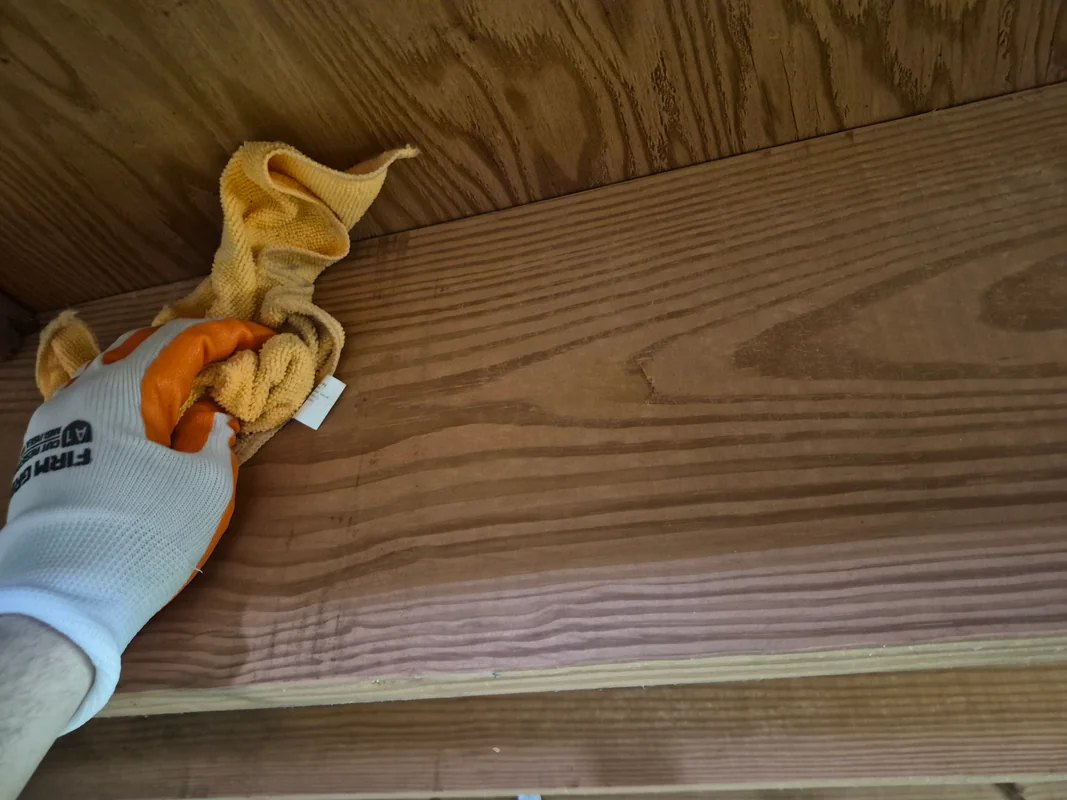
Hand scrubbing with brushes and antimicrobial solutions is thorough but slow. You’re talking days of labor for even a modest crawl space, and you’ll still miss spots. The physical effort makes this impractical, and the exposure risk is significant without proper respiratory protection.
Soda blasting is different. Faster than manual methods. More thorough than vacuuming. Actually removes mold instead of killing it in place. The process takes hours instead of days, covers 100% of surfaces including tight spaces, and doesn’t damage wood. Cost runs higher than DIY, but it’s roughly 75% less expensive than sanding and dramatically more effective.
The other advantage is safety. No toxic chemicals in a space that shares air with your home. No dust clouds spreading spores. Professional soda blasting includes containment, filtration, and proper disposal—all the things DIY skips, which is why DIY fails.
Dry ice blasting works similarly but uses frozen CO2. The problem? Carbon dioxide buildup in confined crawl spaces creates serious health risks, including oxygen deprivation. Soda blasting delivers the same results without the danger.
Identifying Mildew in Crawl Space vs Serious Mold
Mildew is mold. Specifically, it’s a type that appears as a thin, powdery layer—usually white or gray—growing flat against surfaces. The term sounds less serious, but it’s not. It requires the same treatment and urgency as any other fungal growth.
The visual difference matters mainly for identification. Mildew looks powdery and stays flat. Other molds appear fuzzy, slimy, or three-dimensional, often in black, green, or dark colors. Both need moisture, organic material, and warmth. Both release spores into your air. Both cause health problems and structural damage if ignored.
What you’re really determining is surface growth versus deeper contamination that’s penetrated the wood. Surface mold can sometimes be addressed with less aggressive methods. Mold that’s grown into wood fibers, or covers large areas, typically requires professional intervention like soda blasting.
Signs Your Moldy Crawl Space Needs Professional Treatment
Visible growth is obvious, but not the only sign. That musty, earthy smell is your first indicator mold is present, even if you can’t see it. The odor comes from microbial volatile organic compounds released as mold grows. If you smell it in your home, spores are already in your air.
Health symptoms are another red flag. Unexplained respiratory issues, allergy symptoms, chronic coughing, or headaches that improve when family members leave the house—crawl space mold could be the cause. Children, elderly family members, and anyone with asthma or compromised immunity are particularly vulnerable.
Physical changes to your home point to mold too. Sagging or uneven floors, especially ground level, suggest moisture has compromised structural wood. Cupping in hardwood floors directly above the crawl space indicates high humidity below. Increased pests—spiders, termites, crickets, rodents—mean you’ve got the damp conditions they’re attracted to.
Standing water is a guaranteed problem. Puddles mean active moisture intrusion needing immediate attention. High humidity above 60% creates perfect conditions for growth. Check with an inexpensive hygrometer, but honestly, if your crawl space feels damp, it’s too humid.
Size of the affected area matters. Small patches under 10 square feet might be manageable with careful DIY. Anything larger requires professional equipment. If mold covers multiple joists, extends across large subflooring sections, or appears throughout the space, you need soda blasting or another professional-grade method.
Black mold—Stachybotrys chartarum—gets attention for toxicity, but any widespread growth is a problem. Type matters less than extent and underlying moisture. If you’re seeing mold in multiple areas, or it keeps coming back after cleaning, the moisture source hasn’t been addressed. DIY won’t solve it.
In Bucks County, mold problems peak during humid summers and after heavy rain. The area’s groundwater patterns, older homes, and increased precipitation—up to 10% more recently—create ongoing challenges. Crawl spaces in Levittown, Newtown, Doylestown, and Bensalem are particularly vulnerable due to soil composition and seasonal moisture.
Understanding Crawl Space Fungus Treatment Cost Factors
Most Bucks County homeowners pay between $1,500 and $8,000 for complete crawl space mold remediation. Soda blasting specifically runs $2.50 to $3.00 per square foot. Smaller jobs might cost $500 to $1,500. Extensive problems requiring structural repairs can reach $5,000 or more.
Several factors affect your final cost. Size of the affected area is the biggest—larger spaces cost more total but often less per square foot. Accessibility matters too. Low clearance, limited access points, or obstacles increase labor time and difficulty.
Severity of contamination changes the price. Surface mold is simpler to treat than growth that’s penetrated deep into wood or caused rot. If structural repairs are needed—replacing damaged joists, fixing sagging beams—costs jump significantly.
The moisture source drives costs up or down. A simple plumbing leak fix is relatively inexpensive. Poor drainage requiring exterior grading, gutter work, or foundation repairs adds thousands. Crawl space encapsulation with vapor barriers, dehumidifiers, and sealed vents typically adds $3,000 to $8,000 but prevents future mold growth.
Type of treatment affects price. Hand scrubbing runs about $1 per square foot but takes days. Soda blasting costs more per square foot but finishes faster and works better. Some companies offer spray treatments at lower cost, but these often fail to remove mold completely, just kill surface growth.
Location within Pennsylvania matters slightly. Bucks County pricing tends to align with regional averages, but companies serving Philadelphia metro areas may charge differently than rural contractors.
Insurance coverage is hit or miss. Many policies cover mold removal if it’s caused by a covered event like a burst pipe. Mold from groundwater, humidity, or poor drainage is usually considered maintenance and excluded. Companies that work directly with insurance can help navigate claims and minimize out-of-pocket costs.
What you’re really paying for is permanent results. Removing visible mold, killing hidden spores, fixing moisture sources, and preventing future growth. Cheap surface treatments that ignore underlying problems aren’t solutions—they’re delays before the mold returns.
Get multiple quotes, but compare what’s included. The lowest price often skips critical steps like moisture control or post-treatment testing. You want upfront pricing, clear scope of work, and verification that the job was done right.
Getting Professional Crawl Space Mold Removal in Bucks County
Crawl space mold won’t fix itself. The longer it grows, the more spores it releases, the deeper it penetrates, and the more expensive remediation becomes. A $2,000 problem today easily becomes $6,000 in six months.
The right approach removes what’s there, fixes what caused it, and prevents it from returning. That means professional inspection, moisture testing, proper removal methods like soda blasting, source elimination, and verification testing.
We offer free inspections, EPA-approved methods, and local expertise handling Pennsylvania’s specific moisture challenges. We serve Bucks, Montgomery, Delaware, Chester, and Philadelphia Counties with 24/7 availability, upfront pricing, and direct insurance coordination.
Your crawl space affects up to 50% of the air you breathe in your home. Getting it clean and keeping it dry protects your family’s health, your home’s structure, and your investment.