You cleaned the mold. You used the bleach. You figured it was handled. A few weeks later, however, someone in the house is still waking up with headaches. The musty smell never fully went away. Now you are starting to wonder if you solved the problem, or if you simply made it less visible.
That is the thing about mycotoxins. They are not something you can wipe down with a paper towel and call it a day. They are chemical compounds produced by certain mold species, and they stick around long after the mold itself is gone. In Bucks County homes, many of which have decades of moisture history baked into their walls, basements, and ductwork, mycotoxins represent a more common problem than most homeowners realize.
Here is what you need to know.
What Are Mycotoxins And Why Are They Different From Mold Spores?
Mold spores and mycotoxins are not the same thing, and the difference matters. Spores are how mold reproduces; they float through the air, land somewhere damp, and start a new colony. Mycotoxins are something else entirely: toxic chemical compounds that certain mold species produce as a byproduct of their growth.
You can have mycotoxin contamination in a space where spore counts look completely normal. Unlike spores, mycotoxins do not just get filtered out by a standard air purifier or neutralized by a bleach wipe. They are chemicals, not organisms. Killing the mold does not kill the toxins it has already released into your environment.
Which Molds Produce Mycotoxins, And Is It Only Black Mold?
Black mold gets most of the attention, and for good reason: Stachybotrys chartarum produces trichothecene mycotoxins linked to everything from skin irritation to pulmonary fibrosis. Black mold is far from the only culprit, however.
Aspergillus, Penicillium, and Fusarium are all common household mold species that also produce dangerous mycotoxins, including aflatoxins and ochratoxins. These molds are far more widespread than Stachybotrys and show up regularly in Bucks County, PA homes, appearing in basements, crawl spaces, behind drywall, and inside HVAC systems.
The reason this matters is that a lot of homeowners see a greenish or white fuzzy patch, assume it is not the dangerous kind, and move on. That assumption can prove costly. Any mold growing indoors indicates a moisture problem, and any of those common mold types can produce mycotoxins without any visible warning sign that something serious is happening.
The health effects of mycotoxin exposure are well-documented and wide-ranging. Peer-reviewed research identifies them as immunotoxic, neurotoxic, and capable of affecting the lungs, kidneys, and liver. One study published in the Archives of Environmental Health found that 93% of chronic fatigue syndrome patients tested positive for at least one mycotoxin in their urine. That is not a fringe finding; it serves as a signal that long-term, low-level mycotoxin exposure in a home environment can contribute to serious, ongoing illness that often gets misdiagnosed or dismissed entirely.
The neurological effects are particularly underappreciated. Medical research has documented that mycotoxins can interfere directly with the nervous system, causing persistent headaches, memory problems, mood changes, and difficulty concentrating. If someone in your household has been dealing with symptoms that do not quite add up, such as fatigue that will not resolve, brain fog, or recurring respiratory issues, the indoor environment is worth investigating before assuming it is something else.
Does Killing Mold With Bleach Remove Mycotoxins?
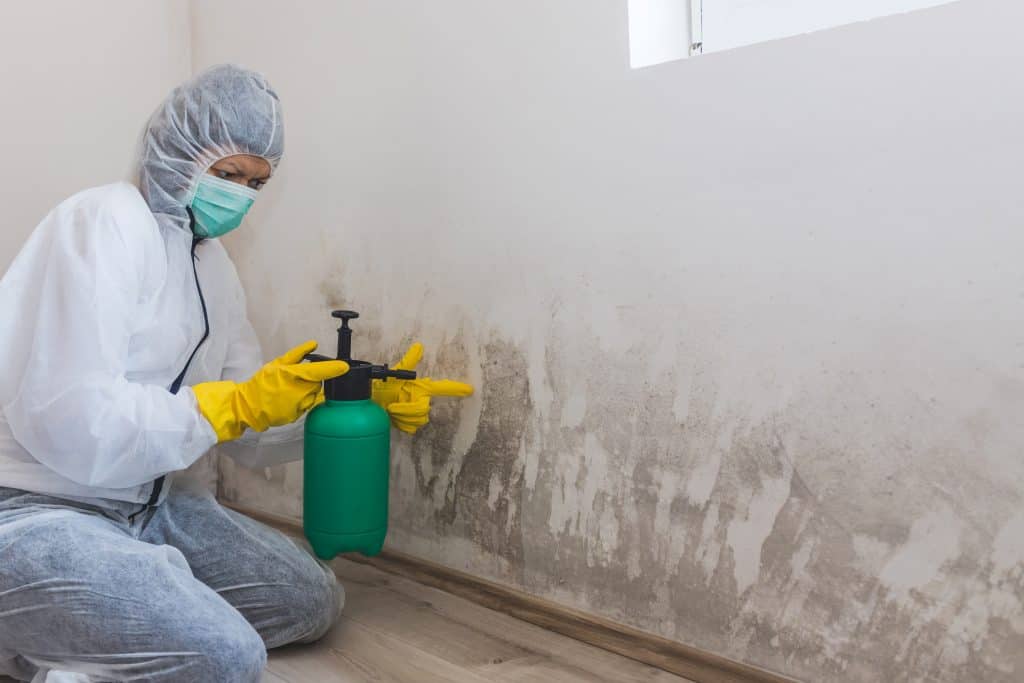
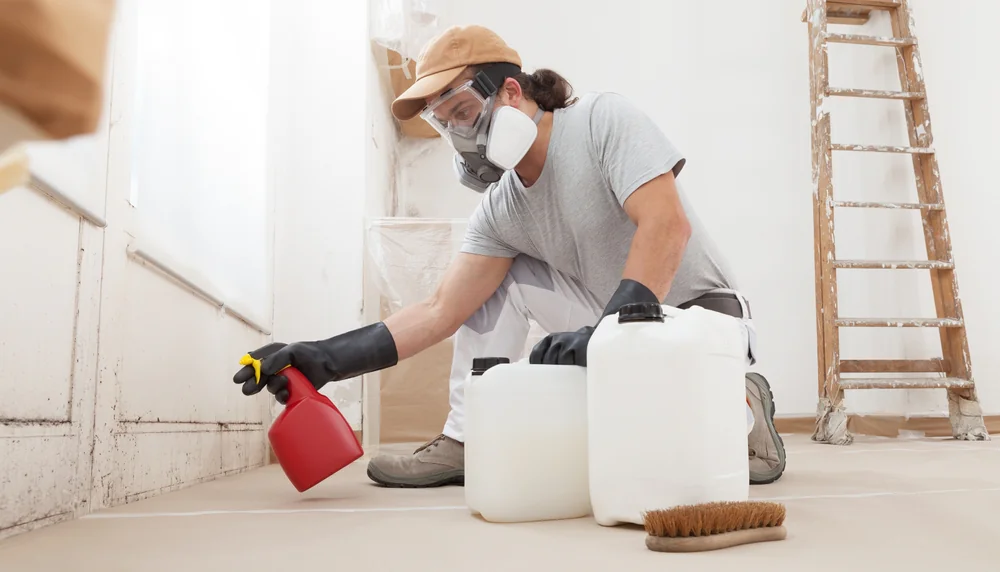
This is one of the most common misconceptions we run into, and it is worth addressing directly because it leads a lot of homeowners to believe a problem is solved when it is not. Bleach can kill mold on a non-porous surface. What it cannot do is neutralize the mycotoxins that mold has already deposited on surfaces, in building materials, and in the surrounding air.
The NIH is explicit on this point: even dead mold can still cause health problems due to mycotoxins and mold-related volatile organic compounds. The toxins do not disappear when the fungus dies. They remain on whatever surface the mold was growing on, and they can remain airborne or settle into porous materials like drywall, insulation, wood framing, and carpet padding, none of which bleach can adequately penetrate or decontaminate.
This is why proper remediation involves physical removal of contaminated materials, not just killing the mold in place. Spraying a surface and walking away leaves the toxins right where they were. A complete remediation process removes the affected material, addresses the moisture source that allowed the mold to grow in the first place, and verifies through post-remediation testing that the environment has returned to safe conditions.
For Bucks County, PA homeowners, especially those in older stone farmhouses in Doylestown or Quakertown, or post-war slab homes in Levittown and Fairless Hills, this distinction is especially important. These homes have building materials that have absorbed moisture over decades. A surface-level treatment fails to reach what has slowly accumulated inside the walls, under the floors, or in the crawl space.
The only way to know the problem is resolved is to remove the source, test the air, and verify the results.
How Mycotoxins Spread Through Air Ducts In Bucks County Homes
Here is the part that catches most homeowners off guard. Even if the visible mold is confined to one area, such as a basement corner, a bathroom ceiling, or a section of crawl space, the mycotoxins it produces do not necessarily stay there. When mold colonizes your HVAC ductwork, your forced-air system becomes a distribution network, pushing mycotoxin-laden particles into every room of the house every time it runs.
Bucks County humid summers and the moisture swings accompanying the region increasing heavy rainfall create ideal conditions for mold to take hold inside ductwork. HVAC drip pans collect condensation. Coils stay damp. Dust accumulates and gives mold the organic material it needs to grow. During months when the system sits idle, spores settle into the ductwork and begin colonizing undisturbed.
Can Mold In Air Ducts Make Your Whole Family Sick Even If You Only See It In One Room?
Yes, and this is exactly why a single patch of visible mold can understate the scope of the problem. If mold has reached the ductwork, it is no longer a localized issue. Every time your heating or cooling system kicks on, it moves air through contaminated passages and distributes whatever is in those passages throughout the entire living space.
French researchers demonstrated that mycotoxins can aerosolize directly from mold growing on surfaces, meaning they become airborne without any physical disturbance. You do not need to disturb a mold colony to experience mycotoxin exposure. The mold simply needs to be present and actively producing toxins, and your HVAC system does the rest of the distribution work.
For families in Bucks County, PA, this represents a real and underappreciated risk. The county older housing stock, particularly the fieldstone-foundation homes in New Hope, the aging ranches and split-levels throughout Newtown and Yardley, and the post-war construction in Lower Bucks, often houses HVAC systems that have never been inspected for mold. These systems run year after year, and if mold has established itself inside the ductwork, the family living in the house breathes that air continuously without knowing a problem exists.
The symptoms resulting from this kind of chronic, low-level exposure are easy to dismiss or attribute to other causes. Seasonal allergies, recurring colds, fatigue, and headaches are common enough that most people do not connect them to their home air quality. When symptoms persist year-round, however, or when multiple people in the same household experience them simultaneously, the HVAC system and ductwork are worth investigating.
A proper inspection examines more than just accessible surfaces. It includes the ductwork, the HVAC components, and the areas behind walls and under floors where moisture tends to collect in Bucks County homes, especially those near the Delaware River corridor or in flood-prone areas along Neshaminy Creek and Tohickon Creek.
What Does Mycotoxin Testing And Air Duct Remediation Involve?
Standard mold air sampling, the kind counting spores, does not confirm mycotoxin presence. Mycotoxins require specialized lab analysis to detect. This is a meaningful distinction because a spore count test can come back within normal ranges while mycotoxins remain present in the environment at levels affecting health. If mycotoxin exposure is a concern, the testing process must calibrate to look for the right targets.
Additionally, no U.S. federal regulatory standards exist for airborne mycotoxin levels in homes. Unlike radon or lead, no government threshold allows direct comparison of your results. Professional judgment and the current industry standard, specifically the ANSI/IICRC S520 updated to explicitly include mycotoxins in its definition of indoor contamination conditions, serve as the benchmarks that matter. Working with a company understanding those standards provides meaningful protection to homeowners.
When ductwork is involved, remediation extends beyond removing visible mold from surfaces. It includes proper containment to prevent cross-contamination during the process, HEPA-filtered air scrubbers to capture particles down to 0.3 microns, and physical removal of contaminated material rather than simple in-place treatment. After project completion, post-remediation air quality testing verifies that conditions have returned to normal, rather than assuming the visible mold is gone.
In Bucks County, PA, where climate data confirms that heavy rainfall events are increasing in frequency and intensity, the moisture conditions driving mold growth inside HVAC systems are not going away. Homes near the Delaware River floodplain, along creek corridors, or in neighborhoods with aging infrastructure face particular exposure.
Air quality testing in Bucks County typically runs between $300 and $600 for a professional assessment, serving as a reasonable starting point for understanding what is in your home air before making remediation decisions. The goal of a thorough inspection is not to find the worst-case scenario and run with it, but rather to provide accurate information so you can make an informed choice about necessary next steps.
Getting Real Answers About Mycotoxins In Your Bucks County Home
Mycotoxins are a topic where deeper understanding helps all the pieces fit together: the mold you thought you handled, the symptoms that never fully resolved, and the HVAC system running for years without an internal inspection. None of these things are unrelated.
The good news is that this problem is solvable when approached correctly, utilizing proper testing, careful removal of contaminated material, moisture source identification, and verification that the work succeeded. That process differs from spraying bleach on a wall and hoping for the best, but it is the process that produces results.
If you reside in Bucks County, PA and have questions about mycotoxins, indoor air quality, or what a professional inspection involves, we at Mack’s Mold Removal offer free inspections and have partnered with homeowners in this area for over 15 years. Reach out to obtain real information regarding your specific situation with zero pressure and straightforward answers.