You found mold. Now what?
That’s the question thousands of Bucks County homeowners face every year, especially after our area’s heavy rainfall and humid summers create perfect conditions for growth. The answer isn’t always simple. Sometimes a quick cleanup works. Sometimes it makes things worse.
The difference comes down to understanding what you’re dealing with, what’s actually safe to handle yourself, and when professional help isn’t just recommended—it’s necessary. Here’s what you need to know before you grab that spray bottle or pick up the phone.
When DIY Mold Clean Up Makes Sense (And When It Doesn’t)
The EPA draws a clear line: if mold covers less than about 10 square feet—roughly a three-foot by three-foot patch—you can often handle it yourself. That’s assuming the mold is on a hard, nonporous surface like tile, glass, or metal, and it came from a simple moisture issue you’ve already fixed.
Think shower grout. A small spot behind the bathroom sink. Surface mold on a windowsill from condensation you’ve since addressed.
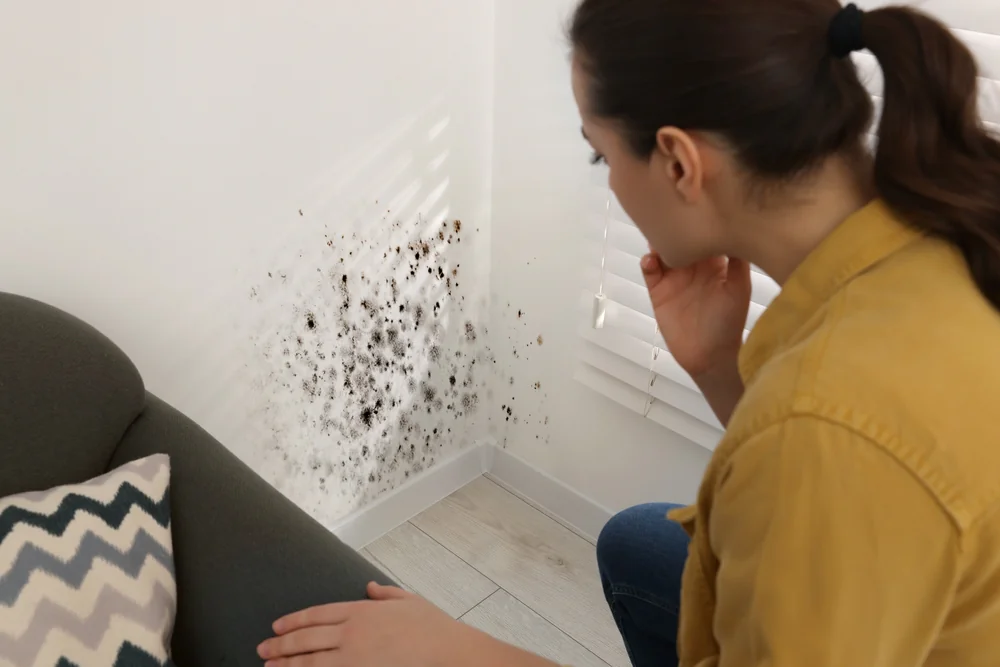
But here’s where most people get into trouble. They see a small visible patch and assume that’s all there is. Mold you can see is often just the beginning. What’s growing behind that drywall? Inside that wall cavity? In the insulation you can’t reach?
If the affected area is larger than 10 square feet, if it’s on porous materials like drywall or carpet, if it came from contaminated water, or if it keeps coming back no matter how many times you clean it—you’re past the point where DIY is safe or effective.
Why Surface Cleaning Isn’t the Same as Mold Removal
Here’s what happens when you spray mold with a household cleaner and wipe it down: you might remove what you can see. You might even lighten the discoloration. But you haven’t necessarily killed the mold, and you definitely haven’t removed it from porous materials where it’s already taken hold.
Bleach, for example, can lighten mold on hard surfaces. It looks clean. But on porous materials like wood or drywall, bleach only reaches the surface while the mold’s roots continue growing underneath. Worse, the moisture from the bleach solution can actually feed the problem.
Then there’s the bigger issue most people don’t think about: disturbance. The moment you start scrubbing, wiping, or spraying, you’re releasing mold spores into the air. Without proper containment, those spores spread to other rooms through your HVAC system, on your clothing, in the air currents you create by walking through your house.
One small bathroom mold problem becomes a whole-house issue because spores settled in places that were previously clean. You’ve just made the problem bigger, and you didn’t even know it.
That’s why professional mold cleanup isn’t just about removing what’s visible. It’s about containment, air filtration, proper disposal, and addressing the moisture source so it doesn’t come back. It’s about treating mold like the living organism it is—one that spreads, reproduces, and thrives when given the chance.
The Real Risks of DIY Mold Clean Up Without Proper Equipment
Let’s talk about what actually happens when you disturb mold without the right protection and containment.
Mold releases microscopic spores—millions of them—the moment you touch it. These spores are so small they stay airborne for hours, traveling through your home on air currents, settling on furniture, getting pulled into HVAC systems, landing on surfaces in rooms you haven’t even entered.
If you’re not wearing at minimum an N95 respirator, you’re breathing those spores in. If you don’t have the area contained with plastic barriers and negative air pressure, those spores are spreading. If you’re not using HEPA-filtered equipment, you’re just moving contamination around.
The health effects aren’t always immediate, but they’re real. Respiratory distress. Eye irritation. Skin reactions. Severe allergic responses. If you have asthma, allergies, or a compromised immune system, the risks are even higher. Kids and elderly family members are particularly vulnerable.
Here’s what most people don’t realize: even dead mold can cause health problems. The allergenic and toxic components remain even after the mold is killed. That’s why simply spraying something and calling it done doesn’t work. The mold has to be physically removed, and the materials it’s contaminated often need to be replaced entirely.
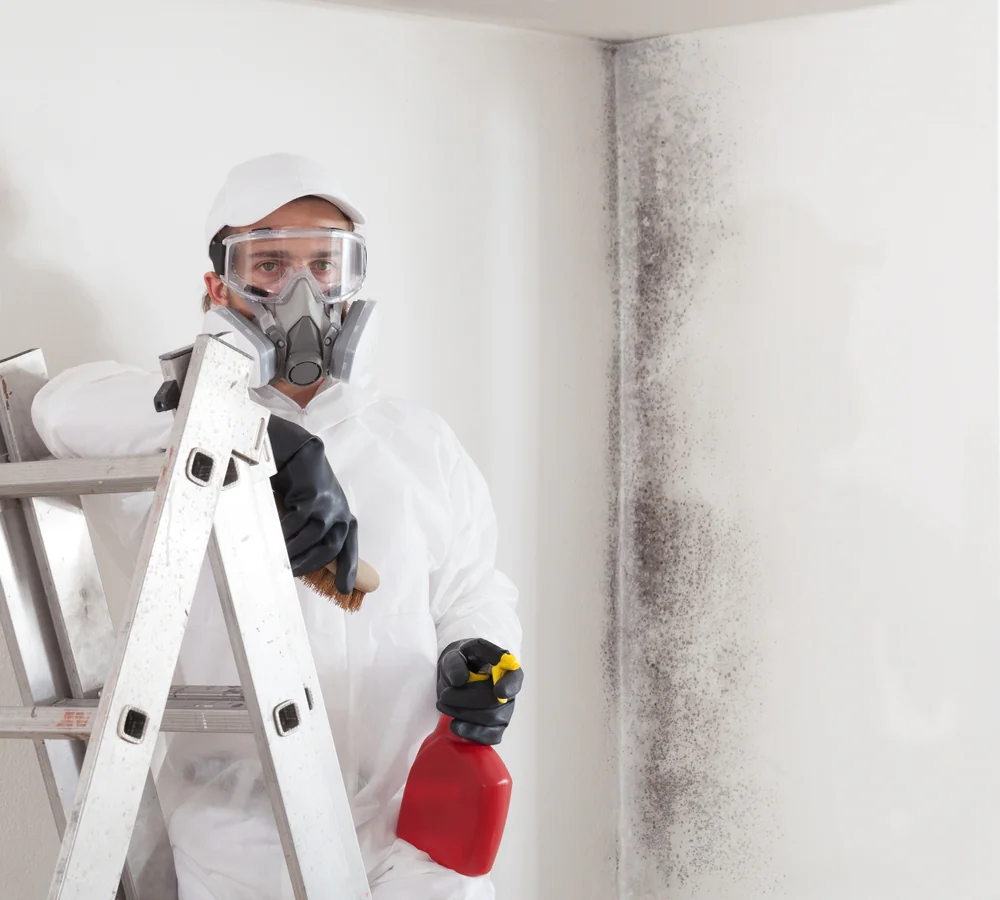
Professional remediation companies understand this. We set up containment barriers before we even start working. We use HEPA air scrubbers to filter the air continuously during the entire process. We wear full protective gear—not just a dust mask, but respirators, disposable suits, gloves, and eye protection.
We remove contaminated materials in sealed bags. We HEPA vacuum every surface, not once but multiple times. We treat the area with antimicrobial solutions after the physical removal is complete. Then we test the air to verify that spore counts have returned to normal levels.
That’s not something you can replicate with supplies from the hardware store. And it’s not something you should try to replicate if the mold problem is anything more than a small, surface-level issue on a nonporous material.
Black Mold Clean Up: Why This Requires Professional Help
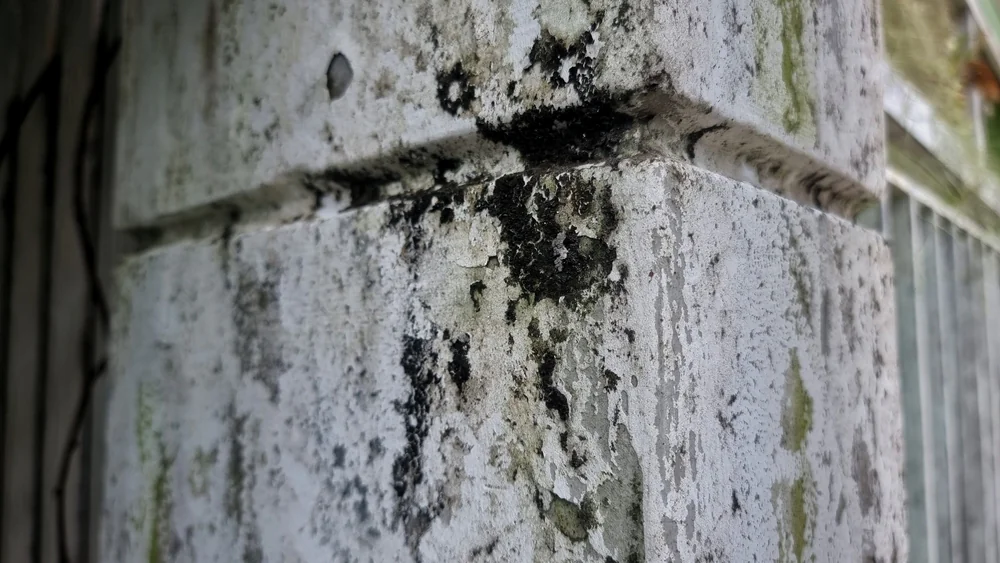
Black mold—technically Stachybotrys chartarum—gets a lot of attention, and for good reason. While not every black-colored mold is the toxic variety, you can’t tell the difference just by looking at it.
This type of mold produces mycotoxins that can cause serious health problems even with brief exposure. It typically grows in consistently humid environments or areas that experienced prolonged water damage. Basements, crawl spaces, areas around foundations, attics with roof leaks.
The cleanup process for black mold costs more because it requires higher-grade respiratory protection, more rigorous containment procedures, and careful handling throughout the entire process. This isn’t a corner you can cut.
Cleaning Black Mold: The Professional Approach
Professional black mold cleanup follows a specific sequence that’s designed to protect both the technicians doing the work and the people living in the home.
First comes containment. The affected area gets sealed off with double layers of plastic sheeting. A decontamination chamber gets built for workers to enter and exit safely. All HVAC vents, doors, and openings get sealed to prevent spore migration.
Then negative air pressure gets established. HEPA-filtered machines pull air out of the containment area and exhaust it outside, creating lower pressure inside the work zone than in surrounding rooms. This ensures that any spores disturbed during the work get pulled toward the filtration system instead of escaping into clean areas.
Only then does the actual removal begin. Contaminated materials get removed in sealed bags. Hard surfaces get HEPA vacuumed and wet-wiped multiple times. The air gets filtered continuously, sometimes for days, until spore counts drop to acceptable levels.
After the physical work is complete, an independent inspector comes in to verify the results. They test moisture levels to ensure everything is adequately dried. They take air samples to confirm that spore counts match outdoor levels. They visually inspect to make sure all contaminated materials have been removed.
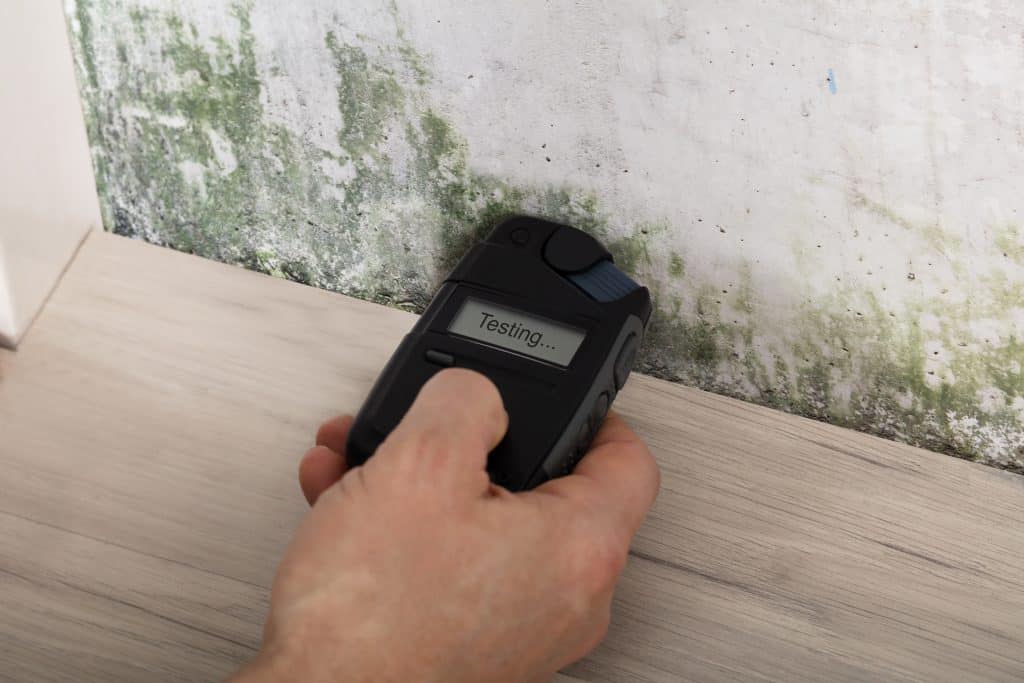
This level of thoroughness isn’t possible with DIY methods. The equipment alone—industrial HEPA filtration systems, negative air machines, moisture meters, air sampling equipment—represents an investment most homeowners don’t have access to. The training to use it properly takes years to develop.
That’s why black mold cleanup should always be left to professionals who have the certifications, equipment, and experience to do it safely.
Getting Rid of Black Mold: Addressing the Root Cause
Here’s the hard truth about mold removal: if you don’t fix the moisture problem that caused it, the mold will come back. Every time.
Mold needs three things to grow: the right temperature range, a food source, and moisture. You can’t control the temperature—mold thrives in the same conditions humans find comfortable. You can’t eliminate the food source—mold grows on drywall, wood, dust, paper, anything organic.
Moisture is the only variable you can control, and it’s the most important one.
In Bucks County, we deal with specific moisture challenges that other areas don’t face. We get 49 inches of rain per year compared to the national average of 38 inches. Our humid summers create ideal conditions for mold growth. Seasonal groundwater shifts affect basements and crawl spaces. The soil in areas like Levittown retains moisture more than other regions.
Add in older homes with aging foundations and HVAC systems that struggle with humidity control, and you have a perfect storm for recurring mold problems.
Professional mold remediation addresses this. It’s not just about removing the mold you can see. It’s about identifying where the moisture is coming from—whether that’s a roof leak, a plumbing issue, poor ventilation, groundwater intrusion, or high indoor humidity—and fixing it permanently.
Sometimes that means repairing a leak. Sometimes it means improving ventilation with exhaust fans or dehumidifiers. Sometimes it means waterproofing a basement or encapsulating a crawl space. Sometimes it means upgrading an HVAC system that’s not controlling humidity properly.
The point is this: mold cleanup without moisture control is just temporary. You’re treating the symptom, not the cause. Within weeks or months, you’ll be dealing with the same problem again, except now it’s spread further and the damage is worse.
That’s why we don’t just clean up mold—we identify and correct the underlying moisture issues. We recommend long-term solutions like ventilation improvements, dehumidification systems, and waterproofing measures that prevent future growth.
It’s the difference between a band-aid and an actual solution. And it’s why investing in professional help often costs less in the long run than repeated DIY attempts that never fully solve the problem.
Making the Right Decision for Your Home and Health
Mold cleanup isn’t one-size-fits-all. A small patch on bathroom tile is different from extensive growth behind drywall. Surface mold from a one-time spill is different from recurring contamination from an ongoing moisture problem.
The key is knowing the difference and being honest about which category your situation falls into. If it’s small, surface-level, on a nonporous material, and caused by a moisture issue you’ve already fixed, DIY might work. Anything beyond that, and you’re risking your health, your home, and potentially making the problem worse.
Professional mold cleanup provides containment, proper equipment, trained technicians, and solutions that address root causes. It costs more upfront, but it solves the problem completely instead of just pushing it down the road.
If you’re dealing with mold in Bucks County and you’re not sure whether to handle it yourself or call for help, we offer free consultations. We’ll assess what you’re dealing with, explain your options, and help you make the decision that’s right for your situation. Because the goal isn’t just to remove mold—it’s to keep it from coming back.