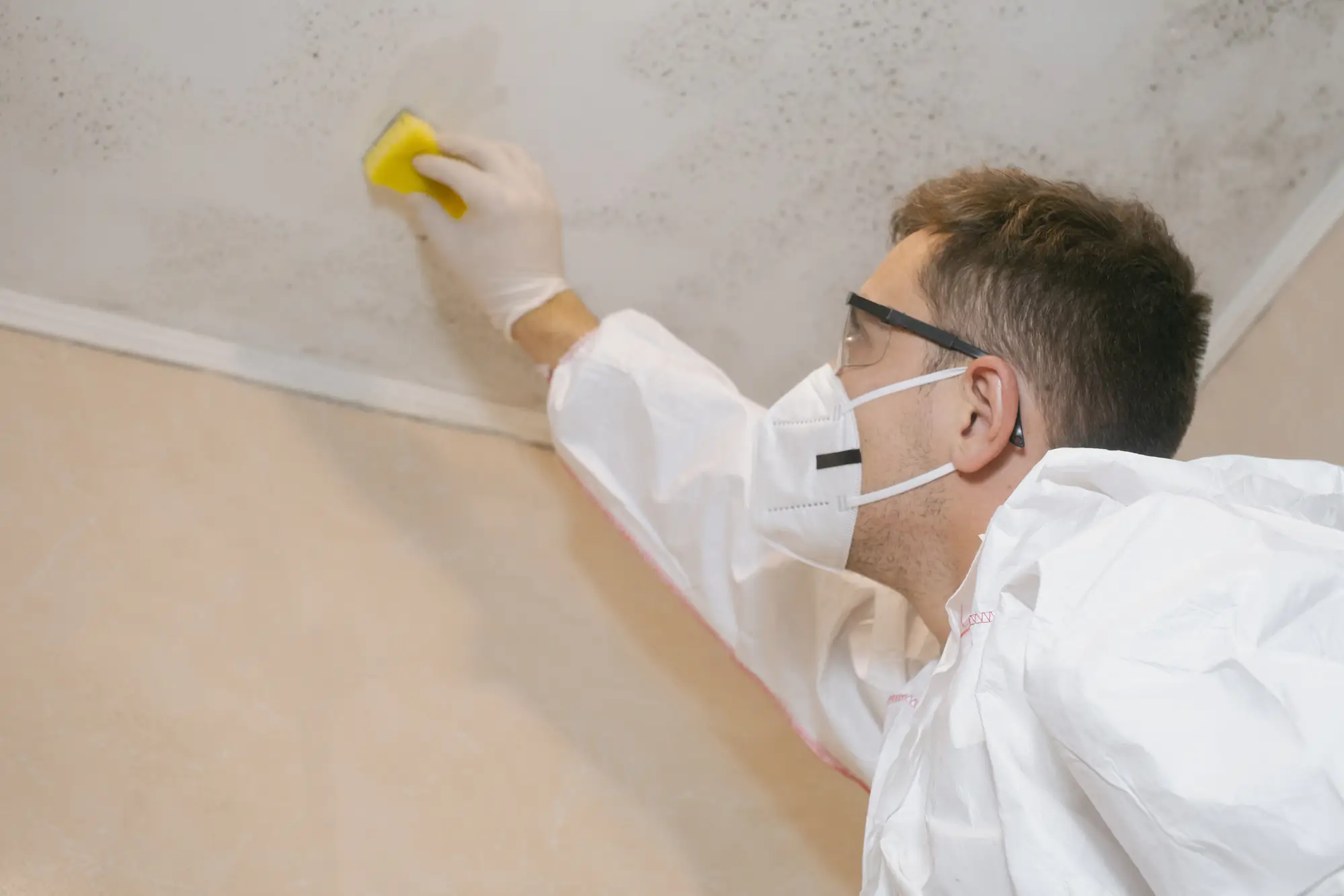
You had the mold removed. The visible stuff is gone. So why does your family still feel off?
It is a question we hear more than you would think. The answer, more often than not, comes down to something most homeowners have never heard of: mycotoxins. These are the chemical compounds that certain mold species produce. Unlike mold spores, you cannot see them, smell them, or wipe them away with a cleaning product. They move through the air, settle into dust, and travel through your HVAC system to every room in the house.
If you live in Bucks County, PA, specific local factors make this worth understanding. Let us walk through what mycotoxins are, how they spread, and what you can realistically do about them.
What Are Mycotoxins And How Are They Different From Mold Spores?
Mold spores are the reproductive particles that mold releases to spread and grow. Mycotoxins are something different, functioning as toxic chemical compounds that certain mold species produce as a byproduct of their normal biological activity. Not every mold produces them, but the ones that do include some of the most common species found in Pennsylvania homes: Stachybotrys chartarum (the one people call black mold), Aspergillus, and certain strains of Penicillium and Fusarium.
The distinction matters because the two problems require different solutions. You can remove visible mold growth and still have mycotoxins present in your building materials, insulation, and air. A surface clean does not touch what is already airborne or embedded in your ductwork. That is where a lot of remediation jobs fall short, and why some families feel better for a few weeks before symptoms creep back.
Can Mycotoxins Cause Sleep Problems, Brain Fog, Or Mood Changes?
This is the part that surprises most people. When we think about mold exposure, we tend to picture respiratory symptoms like sneezing, coughing, and irritated eyes. Those are real. However, the research on chronic mycotoxin exposure goes significantly further than that.
Peer-reviewed studies published through the National Institutes of Health have linked long-term, low-level mycotoxin exposure to a range of neurological symptoms: sleep disturbances, mood swings, anxiety, depression, chronic fatigue, memory loss, and in more serious cases, headaches and cognitive difficulty. These are not fringe claims, but rather documented outcomes from sustained exposure to mycotoxin-producing molds in indoor environments.
The reason this matters so much is that these symptoms are easy to misattribute. You visit the doctor, try different things, and nothing sticks. The idea that your home air quality might be the underlying cause rarely comes up in a clinical setting. If you have been living in a house with hidden mold behind walls, under floors, or in a crawl space you rarely access, and you have experienced this kind of diffuse, hard-to-explain unwellness, asking the question is worthwhile.
Bucks County, PA housing stock makes this especially relevant. A significant portion of homes here were built before 1975, and a meaningful share were built before 1950. Older stone and frame construction in areas like Doylestown, New Hope, and the townships of Upper Bucks tends to feature porous foundations, inadequate vapor barriers, and crawl spaces not designed with today understanding of moisture management in mind. These environments allow mold to grow undisturbed for years, quietly producing mycotoxins pulled into the living space every time the heat or air conditioning kicks on.
How Do Mycotoxins Spread Through Home Air Ducts?
The mechanism that most homeowners fail to fully understand explains why air duct cleaning represents such an important part of mycotoxin remediation, going beyond basic mold remediation.
When mold grows in a basement, crawl space, or inside a wall cavity, the mycotoxins it produces become airborne. They remain small enough to travel as particles through the air, and once airborne, your HVAC system acts like a distribution network. Every time your system runs, it pulls air from the contaminated area, circulates it through the ductwork, and delivers it to every room in the house, bedrooms included.
This explains why a family can have mold confined to one area of the home and still experience symptoms throughout the house. The ductwork connects everything. Because mycotoxins are chemical compounds rather than living organisms, they do not die off the way mold spores do. They persist in duct lining, in the settled dust inside your system, and in the air your family breathes every day.
For Bucks County, PA homes specifically, this presents a serious concern. The combination of humid summers, aging ductwork in older properties, and the increasing frequency of heavy rainfall events, which Penn State climate researchers have documented as a growing trend for this region, creates conditions where sustained mold growth takes hold without anyone noticing. Homes near the Neshaminy Creek corridor, properties along the Delaware River floodplain in areas like Yardley and New Hope, and post-war slab construction in Lower Bucks communities like Levittown all harbor moisture vulnerabilities. The details differ, but the underlying risk remains constant: water enters, mold grows, and if the HVAC system is omitted from the remediation plan, mycotoxins keep circulating.
Professional air duct cleaning, performed as part of a complete remediation process rather than as a standalone service, removes accumulated contamination from inside the system and breaks the distribution cycle. Without it, you address the source while leaving the delivery mechanism intact.
How Is Mycotoxin Testing And Remediation Done?
Testing for mycotoxins starts with air quality sampling. Using calibrated equipment, we collect air samples from different areas of your home and send them to a certified lab for analysis. The results identify which mold species are present, their concentration levels, and if any of those species are known mycotoxin producers. Results typically arrive within 24 hours of sample collection.
This process yields actual data: specific species, specific spore counts, and comparisons against outdoor baseline levels. Real lab results tell you what you face and inform what remediation needs to happen.
What Does Mycotoxin Remediation Involve?
Effective mycotoxin remediation follows a defined sequence, and cutting corners at any step causes the problem to return.
It starts with containment, isolating the affected area so the remediation process does not spread spores and mycotoxins to clean parts of the home. From there, contaminated materials are physically removed. The 2024 update to the IICRC S520 standard, serving as the governing document for professional mold remediation, is explicit on this point: source removal serves as the primary method. Treating surfaces without removing contaminated material fails to meet current professional standards and leaves the problem unresolved.
During and after removal, HEPA air filtration runs continuously to capture airborne particles. EPA-approved antimicrobial treatments apply to affected surfaces. Post-remediation testing then confirms the work achieved its goal. You should never have to take anyone word for it, as lab results either show clearance or they do not.
For homes where the HVAC system distributed mycotoxins, air duct cleaning is integrated into this process. We inspect the ductwork, clean it thoroughly, and verify that the system will not re-contaminate newly remediated spaces. It is not an add-on, but rather a logical part of addressing the full scope of the problem.
Pennsylvania does not license mold remediation contractors at the state level, meaning any company can legally offer these services regardless of training or credentials. The certifications that matter here are IICRC and MICRO, which are the professional bodies setting the standards for this work. We hold both and follow current standards because your family health depends on the outcome.
How Much Does Mycotoxin Testing And Mold Remediation Cost In Bucks County, PA?
Air quality testing for Bucks County, PA homeowners typically runs between $300 and $600 for professional testing with certified lab analysis. This provides documented results you can use when deciding on remediation, navigating insurance claims, or preparing for real estate transactions.
For remediation, the range widens because scope varies significantly based on affected material volume, location, and HVAC involvement. Average mold remediation costs in Bucks County, PA run between $1,500 and $7,500. Determining where your situation falls requires a professional visual assessment.
We offer free inspections, not because we need a foot in the door, but because you deserve clarity regarding your situation before committing to anything. If a problem exists, we outline what it is and what is required to fix it. If no problem exists, we share that directly.
Mold and mycotoxin issues carry insurance implications, and we maintain experience helping homeowners navigate documentation, adjuster coordination, and reporting to help claims move forward.
What Bucks County, PA Homeowners Should Do If They Suspect Mycotoxins
If something feels off in your home, such as unexplained symptoms, a history of water intrusion, or a musty smell coming and going, take mycotoxins seriously. This is necessary not because the situation is dire, but because testing is the sole way to know for sure. Guessing fails to protect your family, and ignoring the issue allows it to worsen.
The good news is that this problem is solvable. Testing identifies what is present, while correct remediation addressing ductwork and post-remediation verification resolves it completely. Bucks County, PA older housing stock carries genuine moisture risk, yet it mirrors the exact environments we have serviced for decades.
If you want straight answers about what populates your home air, reach out to Mack’s Mold Removal and Inspections. We begin with a free inspection and guide you from there.