
Hear from Our Customers

The musty smell in your Philadelphia basement isn’t just annoying — it’s a sign that moisture has found a home somewhere inside your walls, your floor joists, or your HVAC system. Once that’s addressed properly, you’re not just breathing easier. You’re stopping the damage that keeps compounding every season Philadelphia throws at you.
Philadelphia gets nearly 49 inches of rain a year, and the city sits between two tidal rivers that flood low-lying neighborhoods with regularity. Manayunk deals with the Schuylkill. Eastwick watches Cobbs Creek. Kensington and Port Richmond see basement backups after every major storm. When that moisture has nowhere to go, it finds your walls — and it stays there. Proper mold remediation doesn’t just clean what you can see. We address the source, so the problem doesn’t come back six months later.
For anyone living in a Philadelphia rowhouse, there’s another layer to this. Your walls are shared. If your neighbor has a slow leak or an unaddressed water problem, that moisture can migrate through the shared masonry into your home without either of you knowing. That’s a documented, common reality in dense Philly neighborhoods. Getting a professional in who understands that dynamic is the difference between a fix that holds and one that doesn’t.
Mack’s Mold Removal is a locally owned, owner-operated company based in Bensalem, PA — right on the northern edge of Philadelphia via I-95 and Roosevelt Boulevard. We’ve been serving Philadelphia County and the surrounding region for over 15 years. That’s not a franchise timeline. That’s a track record built one job at a time in the actual homes and basements of southeastern Pennsylvania.
We specialize in mold — not water damage, not fire restoration, not everything under the sun. Just mold. That focus matters because mold in a pre-war Fishtown rowhouse is a different job than mold in a 1960s split-level in Mayfair. The materials are different, the moisture pathways are different, and the fix has to account for all of it. We use thermal imaging cameras and moisture meters to find what a visual inspection misses, and we don’t hand you a bill until you know exactly what the job involves.
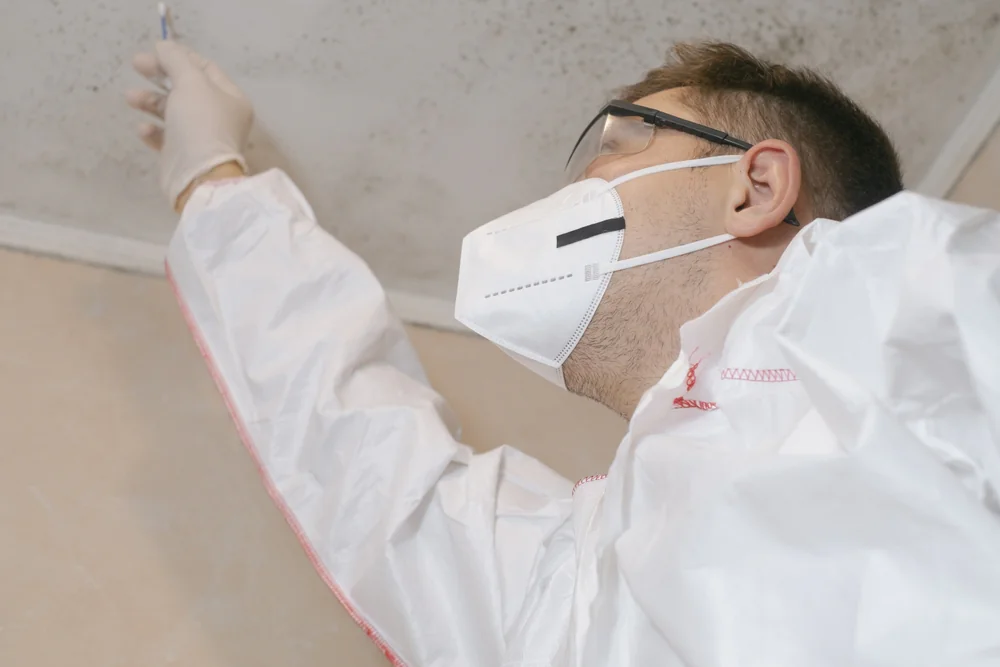
It starts with a free inspection. We come out, walk the property, and use thermal imaging cameras and moisture meters to map what’s actually happening — not just what’s visible on the surface. In Philadelphia’s older housing stock, the real problem is almost always behind the wall or under the floor, not on it. We identify the moisture source first, because treating mold without addressing the source is a temporary fix at best.
Once we know the full picture, you get a written price before anything starts. No surprises. For most residential jobs in Philadelphia, remediation runs between $1,300 and $3,600 — though older construction with plaster walls, original wood joists, and no vapor barriers can push that higher, and we’ll tell you exactly why if it does. If your home insurance covers the cause — a burst pipe, storm damage, a sewage backup from the city’s aging combined sewer system — we work directly with your adjuster and handle the documentation.
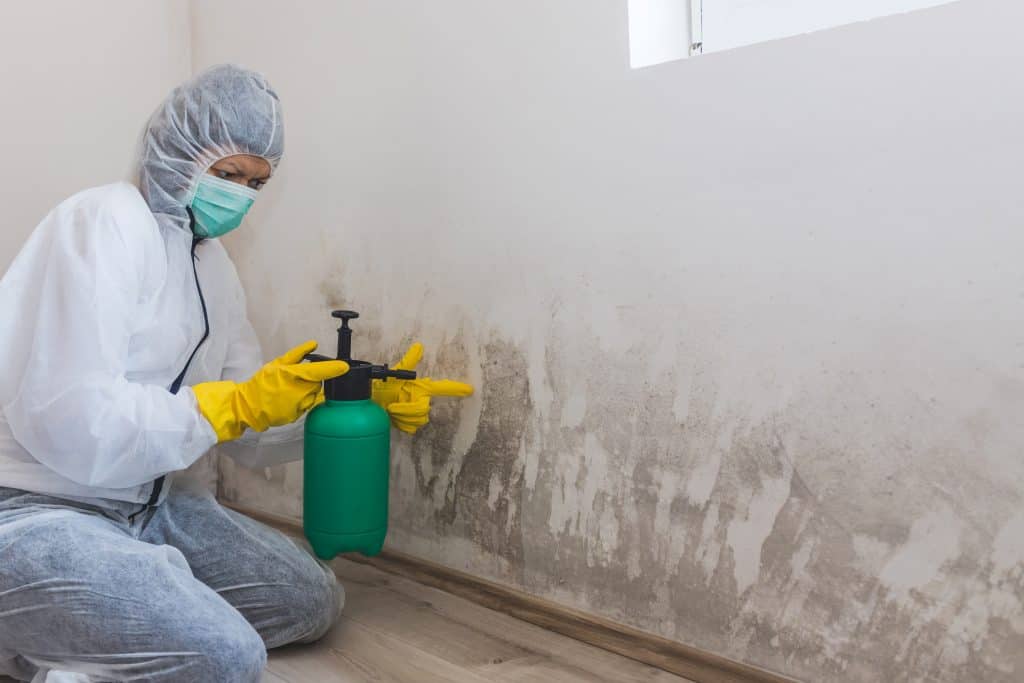
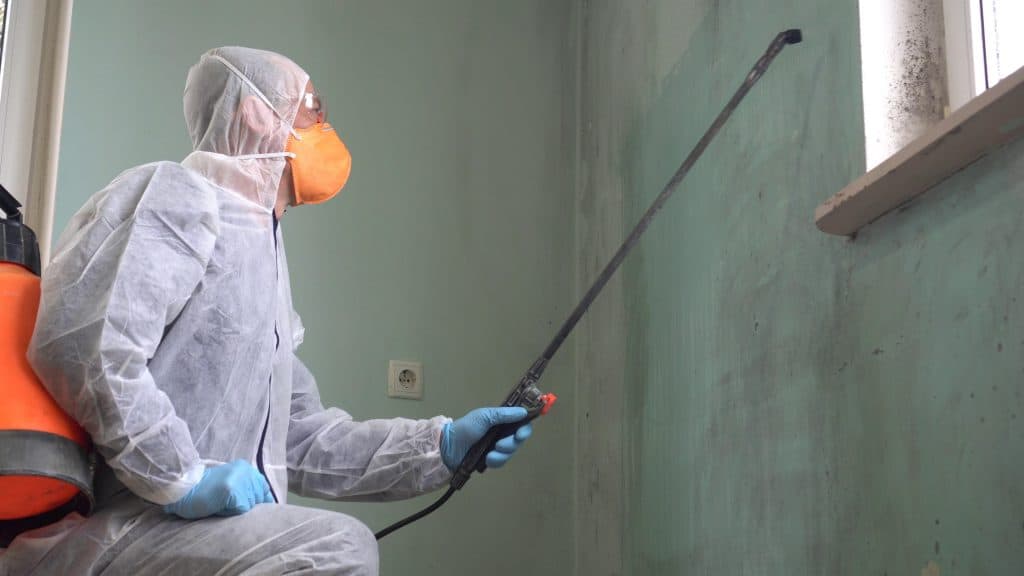
The remediation itself involves full containment of the affected area, removal of mold-impacted materials, treatment with EPA-approved and eco-friendly products, and air scrubbing to bring spore counts down. We finish with post-remediation testing to confirm the job is actually done — not just visually clean, but genuinely resolved. Philadelphia’s Chapter 6-900 Health Code has its own municipal mold inspection licensing requirements, and our documentation holds up whether you’re dealing with an insurance claim, a landlord dispute, or a home sale.
Ready to get started?
Every job includes a free inspection, third-party lab testing to identify the specific mold type, full containment, removal, EPA-approved treatment, air scrubbing, and post-remediation testing. That last step — the post-remediation verification — is something a lot of companies skip. In Philadelphia’s housing stock, skipping it is how problems come back.
The mold types we deal with most often in Philadelphia homes are directly tied to the city’s conditions: black mold in brick basements that have been taking on groundwater for decades, surface mold on plaster walls in rowhouses where ventilation hasn’t kept up with humidity, and HVAC mold in older Northeast Philadelphia split-levels where ductwork hasn’t been serviced in years. HVAC remediation alone can run $2,000 to $8,000 depending on the system and how far the contamination has spread. Basement mold removal typically falls between $500 and $3,000. We quote it straight.
We also handle the insurance coordination directly. If your claim involves a covered peril — a burst pipe in a Germantown rowhouse, storm flooding in a Manayunk basement, a sewage backup in South Philadelphia — we document everything your adjuster needs and manage that process alongside the remediation. You don’t have to be the go-between. And because we work in a city with its own municipal mold inspection licensing rules under Philadelphia’s Health Code, our inspection reports are documentation that actually holds up — in housing court, with insurance, and with L&I.

Yes — and it’s one of the most common questions we hear from Philadelphia homeowners, because it’s a real and documented problem. Rowhouses share masonry walls, and moisture doesn’t respect property lines. If your neighbor has a slow leak, a cracked foundation, or an unaddressed water problem, that moisture can migrate through the shared brick or block into your home. By the time you smell something or see a dark patch, the mold may already be established on both sides of the wall.
This doesn’t mean you’re responsible for your neighbor’s problem, but it does mean that a surface cleaning job on your side won’t solve it. A proper remediation identifies the moisture source — including whether it’s coming from an adjacent unit — and addresses the pathway, not just the symptom. If you’re in a dense Philadelphia neighborhood like Passyunk Square, Northern Liberties, or Kensington and you’re dealing with recurring mold despite having remediated before, the shared wall dynamic is one of the first things we look at.
For most residential jobs in Philadelphia, you’re looking at a range of $1,300 to $3,600, with an average around $2,450. Basement mold removal tends to fall between $500 and $3,000 depending on accessibility and how far the contamination has spread. HVAC mold remediation — common in older Northeast Philadelphia split-levels and homes with aging ductwork — can run $2,000 to $8,000.
Philadelphia’s older housing stock pushes costs higher than comparable jobs in newer construction. Plaster walls, original wood joists, brick basements with no vapor barriers, and decades of accumulated moisture damage all factor in. We’ll tell you exactly where your job falls and why before any work begins. The free inspection exists specifically so you’re not guessing — and so you’re not calling us back in six months because the first fix didn’t hold.
It does — and most Philadelphia homeowners don’t know this until they’re already in the middle of an insurance claim or a housing dispute. Pennsylvania has no state-level mold law, but Philadelphia enacted its own municipal mold inspection licensing requirement under Chapter 6-900 of the Philadelphia Health Code. Under that ordinance, anyone performing residential mold inspections in the city needs a license specific to Philadelphia’s requirements — a state contractor’s license isn’t enough.
This matters practically because an unlicensed inspection report won’t hold up in Philadelphia housing court, and insurance adjusters frequently reject mold claims backed only by unlicensed reports. If you’re a renter dealing with a landlord who won’t act, or a homeowner filing a claim after a basement flood, or someone trying to close a home sale, the licensing piece is not a technicality — it’s what makes your documentation usable. Our inspection reports are compliant with Philadelphia’s municipal requirements, which is part of why we’re specific about how we document and report findings.
Mold can begin growing within 24 to 48 hours of water exposure. That’s the EPA’s documented timeline, and it’s the reason response speed matters so much in Philadelphia, where basement flooding is a regular event. Philadelphia’s combined sewer system was built in the late 1800s and early 1900s, and during heavy rain events, overwhelmed sewers back up through basement fixtures and floor drains. That’s not just water — it’s sewage, which introduces organic material that accelerates mold growth significantly.
If your basement flooded, the clock is already running. The longer materials stay wet — drywall, wood framing, carpet, insulation — the larger the remediation scope and the higher the cost. We’re available 24/7 for emergency response, and we dispatch quickly to all Philadelphia neighborhoods. Getting someone in within that first 24-hour window is the single most effective thing you can do to limit how far the problem spreads.
It depends on the cause, not the mold itself. Most standard homeowner’s insurance policies in Pennsylvania cover mold remediation when it results from a covered peril — a sudden burst pipe, an appliance leak, or storm damage that allowed water into the home. What they typically don’t cover is mold resulting from long-term neglect, chronic moisture issues, or flooding from outside sources like the Schuylkill River or Cobbs Creek overflowing, which usually requires separate flood insurance.
The documentation piece is where a lot of Philadelphia homeowners run into trouble. Insurance adjusters need specific reports that connect the mold to the covered event, and if that documentation comes from an unlicensed inspector, the claim can be rejected outright. We handle the insurance coordination directly — we document the damage, communicate with your adjuster, and walk the claim through alongside the remediation work. You don’t have to figure out what your policy covers on your own while also managing a mold problem.
Not always — but in Philadelphia’s housing stock, it usually warrants a closer look. That musty smell is caused by microbial volatile organic compounds, which are byproducts of mold and mildew growth. In an older Philadelphia home — especially a pre-war rowhouse with a brick basement, plaster walls, and no vapor barrier — the conditions that produce that smell are almost always present to some degree. The question is whether it’s surface-level mildew from humidity, or active mold growth inside a wall cavity, under a floor, or in an HVAC system.
A free inspection with thermal imaging and moisture meters can tell you the difference in a single visit. If it’s minor surface mildew from poor ventilation, we’ll tell you that and point you toward the fix. If there’s active mold behind a wall or in a crawl space you can’t see, you’ll know exactly where it is and what it would take to address it — before you’ve committed to anything. In Philadelphia, where 49 inches of annual rainfall and aging infrastructure keep moisture pressure constant year-round, knowing what you’re actually dealing with is worth more than guessing.
Other Services we provide in Philadelphia