You spotted mold in your basement. Or maybe you’re dealing with that musty smell that won’t go away no matter how much you clean. You know you need help, but what exactly happens when you call a mold removal service? What’s the difference between just scrubbing it off and actually fixing the problem? And how do you know if the company you’re considering will do it right? This guide breaks down what professional mold removal service actually includes, what the process looks like, and why some approaches work while others just mask the problem temporarily. Let’s start with what you’re really paying for.
What Does a Complete Mold Removal Service Include
A real mold removal service isn’t a guy with a spray bottle and a scrub brush. It’s a multi-step process that addresses both what you can see and what you can’t.
Most complete services start with inspection and assessment. Technicians look for visible mold, but they also use moisture meters and thermal imaging to find hidden problems behind walls, under floors, or in your HVAC system. They’re looking for the source, not just the symptom.
Then comes testing to identify the type of mold and measure spore levels in your air. This tells them how serious the problem is and what safety protocols they’ll need. Some mold is relatively harmless. Some requires full protective gear and containment.
Inspection and Testing: Finding What You Can’t See
The inspection phase is where professionals earn their keep. Anyone can spot black spots on a bathroom ceiling. But mold doesn’t always announce itself.
In Bucks County, PA, where we get about 49 inches of rain per year compared to the national average of 38 inches, moisture problems hide in places most homeowners never check. Behind that finished basement wall. Under the insulation in your attic. Inside the ductwork of your HVAC system.
Professional inspectors use moisture mapping technology to pinpoint damp areas. We check crawl spaces where soil retains moisture. We look at areas around windows and doors where condensation builds up. We inspect HVAC systems that struggle with humidity control, especially in older homes.
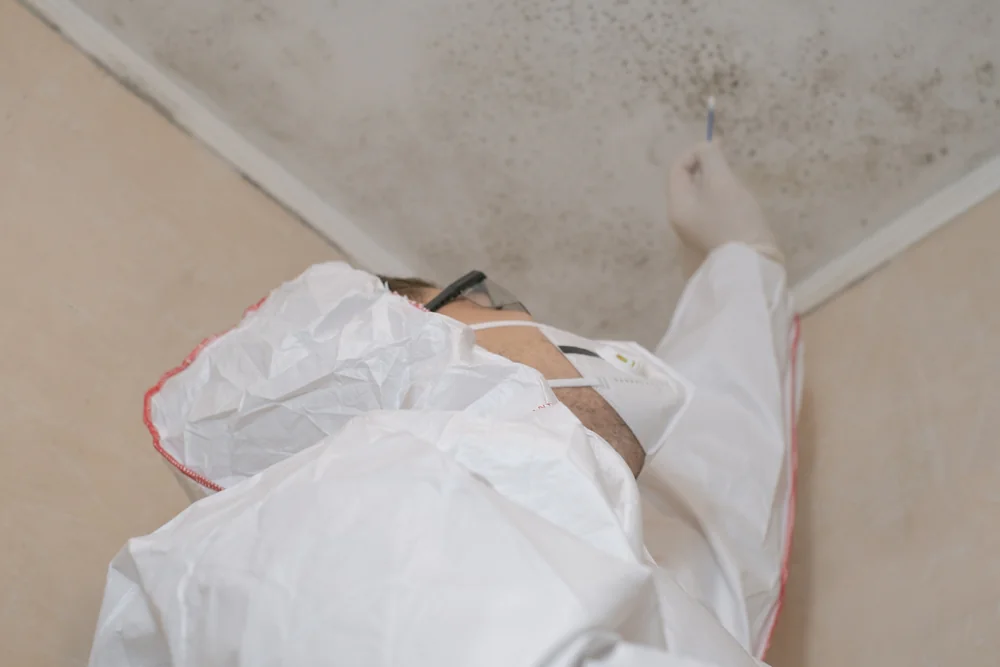
Testing goes beyond just confirming mold is present. Air sampling measures spore concentration. Surface sampling identifies specific mold types. We even use thermal imaging to spot temperature differences that indicate moisture intrusion you can’t see.
This matters because you can’t fix what you don’t know about. If there’s a slow leak behind your wall feeding mold growth, just cleaning the visible mold on your basement floor won’t solve anything. The problem will come back in weeks, and you’ll have wasted your money.
The inspection also determines the scope of work. Is this a small bathroom issue that’ll take a day, or is there mold throughout your HVAC system that’ll require a week of work? That assessment shapes everything that comes next. Most residential projects in Bucks County, PA take 3-5 days from start to finish, but timeline depends entirely on what the inspection reveals.
Containment and Air Filtration During the Removal Process
Here’s what separates professional mold removal from DIY attempts: containment. When you disturb mold, you release spores into the air. Those spores float around and land on new surfaces. You’ve just spread your problem to rooms that were previously clean.
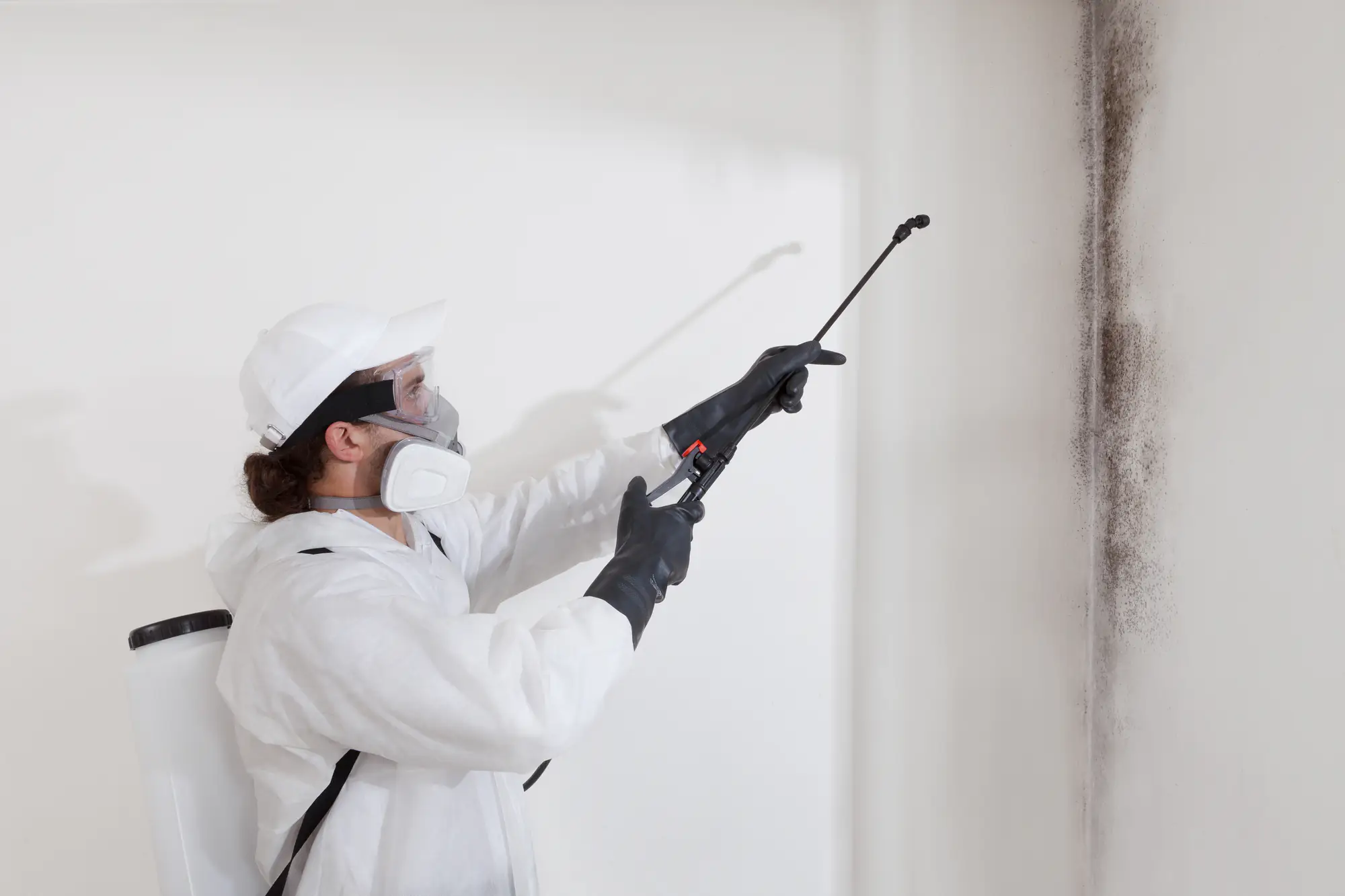
Professional mold removal and remediation services set up physical barriers using plastic sheeting to isolate the work area. We seal off doorways and vents. For larger jobs, we create negative air chambers that use fans and filters to keep contaminated air from escaping the work zone.
HEPA filtration runs continuously during the removal process. These aren’t the filters in your home vacuum. HEPA filters capture 99.97% of particles as small as 0.3 microns, which includes mold spores. Air scrubbers pull air through these filters, trapping spores before they can spread.
All fans and heating and cooling systems get turned off during this phase. Running your HVAC during mold removal is like using a fan to blow dandelion seeds across your yard. You’re just distributing the problem.
The actual removal depends on what’s contaminated. Non-porous surfaces like metal or glass can be cleaned. Porous materials like drywall, carpet, or insulation usually need to be removed and discarded. You can’t clean mold out of the empty spaces and crevices in porous materials. It’s in there for good.
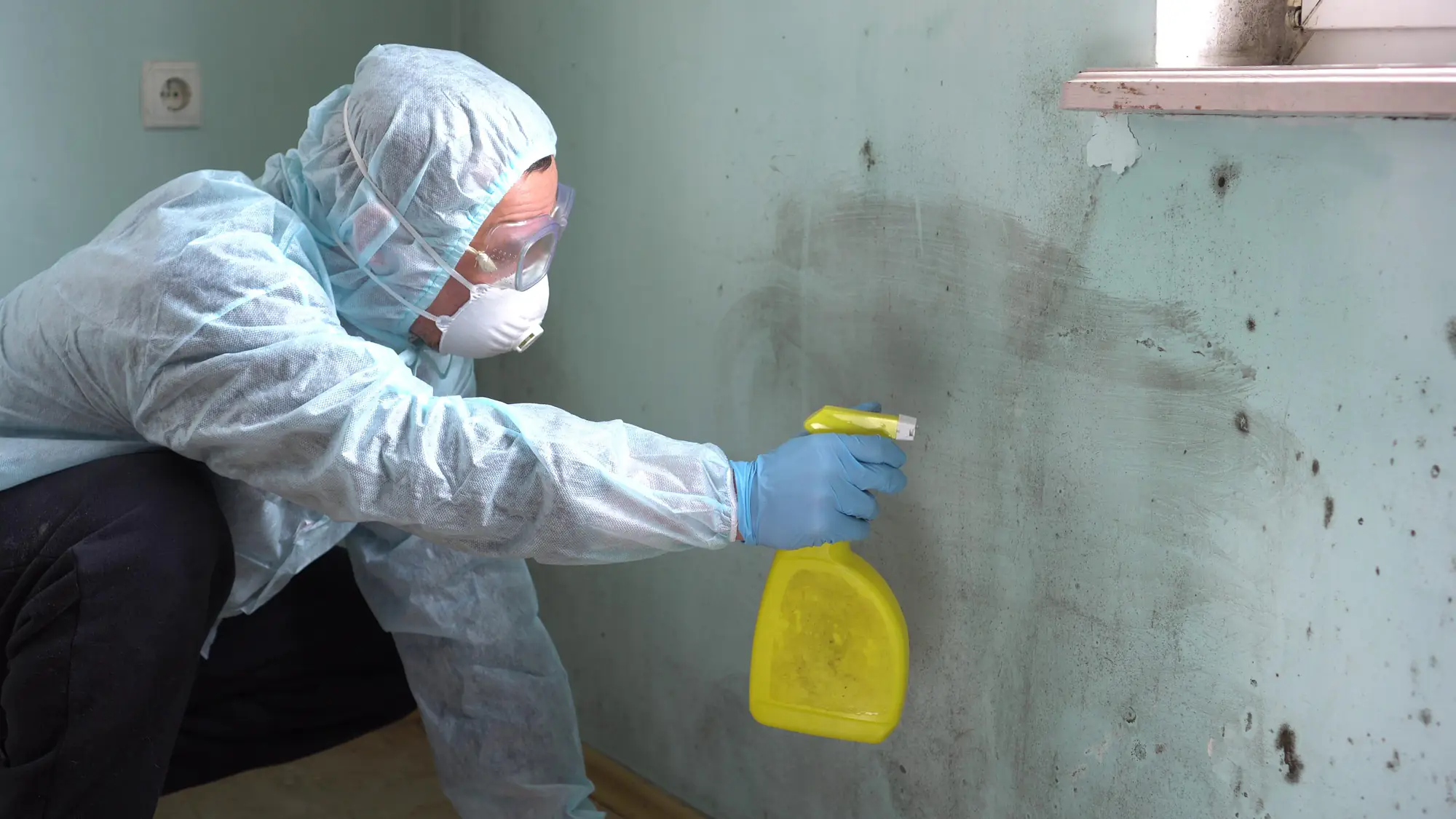
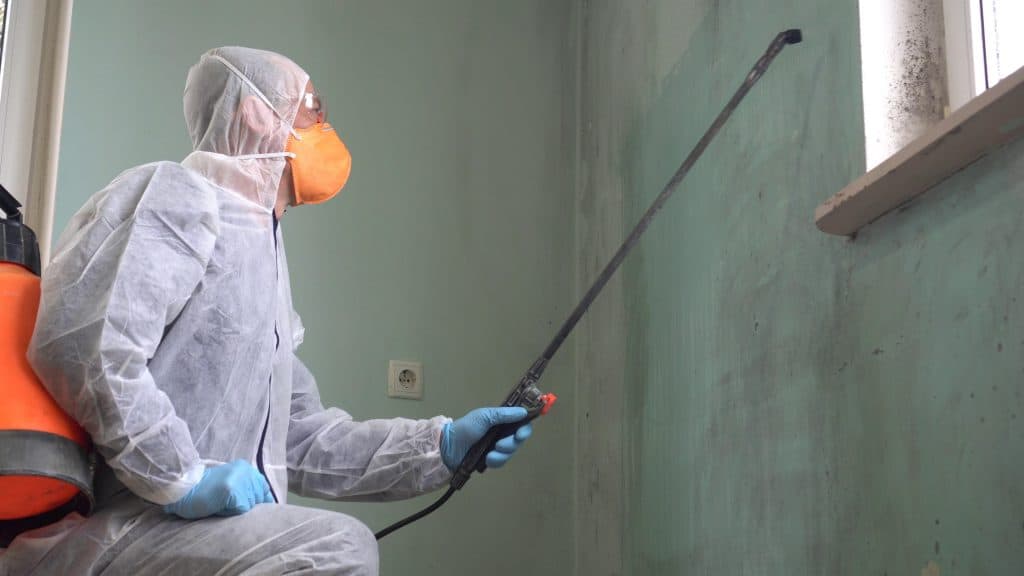
Technicians wear protective equipment during this work. Respirators, gloves, protective suits. This isn’t paranoia. Disturbing mold releases spores and mycotoxins into the air at concentrations much higher than normal. Without protection, they’d be breathing in exactly what you’re trying to get out of your home.
After removing contaminated materials, we clean remaining surfaces with antimicrobial treatments. We HEPA vacuum everything. We wipe down surfaces multiple times. The goal is to remove mold spores, not just kill them, because dead mold can still cause allergic reactions. This is what proper mold removal looks like when done according to EPA standards.
Proper Mold Removal vs. Quick Fixes That Fail
You’ve probably seen ads promising to “remove all mold” from your home. Here’s the truth: that’s impossible. Mold spores exist everywhere, indoors and outdoors. They float through the air constantly.
The difference between mold removal and mold remediation is the difference between treating a symptom and curing the disease. Removal means cleaning visible mold off surfaces. Mold remediation means identifying why the mold grew, fixing that problem, and then removing the mold so it doesn’t come back.
Think of it this way. You can scrub mold off your bathroom wall. It’ll look clean. But if you haven’t fixed the ventilation problem that caused moisture to build up in the first place, that mold will be back in a few weeks. You’ve wasted time and effort on a temporary fix.
Why Moisture Control Matters More Than Surface Cleaning
Mold needs three things to grow: moisture, organic material to feed on, and oxygen. You can’t eliminate oxygen. Your home is full of organic materials like wood, drywall, and paper. That leaves moisture as the only factor you can control.
Every professional mold removal service starts with one question: where is the water coming from? Until you answer that, you’re just cleaning up symptoms.
In Bucks County, PA’s climate, moisture problems come from multiple sources. Heavy rainfall and humid summers create perfect conditions. Seasonal groundwater shifts affect basements and crawl spaces. Aging foundations develop cracks that let water seep in. HVAC systems that can’t keep up with humidity leave condensation on cold surfaces.
The source might be obvious, like a leaky pipe or roof damage. But often it’s subtle. Poor ventilation in bathrooms and kitchens. Condensation on cold water pipes. High indoor humidity levels. Improper grading around your foundation that directs water toward your house instead of away from it.
We use dehumidifiers and air movers to dry out affected areas completely. We don’t just remove standing water. We bring moisture levels down below 45% humidity, the threshold where mold struggles to grow.
We also address the source. If there’s a plumbing leak, it gets fixed. If poor ventilation is the problem, we’ll recommend solutions like exhaust fans or dehumidifiers. If your crawl space has moisture problems, we might suggest encapsulation.
This is why mold removal and remediation services cost more than simple cleaning. You’re not just paying someone to scrub surfaces. You’re paying for expertise to identify moisture sources you didn’t know existed and solutions that prevent recurrence.
Without moisture control, mold will return. It might take a few weeks or a few months, but it’ll come back. And you’ll be paying for the same work twice. That’s the difference between hiring someone who understands proper mold removal and someone who’s just trying to make a quick buck.
What Happens During Post-Remediation Verification Testing
The work isn’t done when the visible mold is gone. The final step is verification that the remediation actually worked.
Post-remediation testing measures airborne mold spore levels after all work is complete. These results get compared to outdoor air samples or baseline levels from unaffected areas of your home. If indoor spore counts are higher than outdoor levels, something was missed.
Visual inspection confirms that all contaminated materials were removed and surfaces are clean. We check that moisture levels are back to normal. We verify that the source of moisture has been addressed. This is where we prove the job was done right.
This quality assurance step protects you. It’s evidence that the job was done right. Some companies skip this because it costs money and takes time. But without it, you have no way to know if you’re safe to move back into the space or if mold spores are still circulating through your air.
We provide documentation of the entire process. Before and after photos. Air quality test results. Moisture readings. A detailed report of what was found, what was done, and what the final conditions are.
This documentation matters if you ever sell your home. It’s proof that a mold problem was professionally remediated. It can also help with insurance claims, which typically require documentation of both the damage and the remediation.
The timeline for all of this varies. Small bathroom issues might be complete in a day or two. Whole-house problems could take a week or more. The process includes inspection and testing, containment setup, removal and cleaning, drying and dehumidification, and final testing. Rushing any of these steps means the mold could come back.
Most homeowners in Bucks County, PA see projects completed within that 3-5 day window, but your specific situation determines the actual timeline. What matters is that each step gets done right, not fast.
Getting Professional Mold Removal Service Done Right
Professional mold removal service is more than just cleaning what you can see. It’s a comprehensive process that finds hidden mold, identifies moisture sources, removes contamination safely, and verifies the problem is actually solved.
The difference between a surface cleaning and real remediation is the difference between a problem that comes back in weeks and one that’s gone for good. Proper containment prevents spreading spores to clean areas. Moisture control addresses the root cause. Post-remediation testing confirms you’re safe.
When you’re dealing with mold in your Bucks County, PA home, you need a service that understands local climate challenges and follows EPA-approved protocols. We provide comprehensive mold removal and remediation services with the expertise to handle everything from initial inspection through final verification. We use state-of-the-art equipment, follow all PA regulations, and offer free consultations to help you understand exactly what your situation needs.