You found mold. Now you’re trying to figure out what it’ll cost to fix it without getting ripped off.
The truth is, black mold removal costs anywhere from $500 for a small bathroom issue to $30,000 for extensive whole-house remediation. Most homeowners in Bucks County, PA end up paying between $1,200 and $3,750, but that range doesn’t help much when you’re staring at dark spots on your basement wall.
What actually determines your cost? The size of the affected area, where the mold is growing, what type it is, and whether it’s just on surfaces or deep in your walls. Let’s break down what you’re really paying for and what you should expect.
What Affects Black Mold Removal Cost
Most mold removal companies charge $10 to $25 per square foot. That means a 100-square-foot area runs $1,000 to $2,500. But square footage alone doesn’t tell the whole story.
Accessibility matters. Mold in an open basement costs less to remove than mold in your attic or behind walls. Crews need more time, specialized equipment, and sometimes demolition to reach hidden growth. That drives up labor costs fast.
The type of mold also impacts pricing. Black mold (Stachybotrys chartarum) requires stricter safety protocols, specialized protective gear, and often third-party lab testing. Expect to pay 25-50% more for black mold compared to common household molds like Cladosporium or Aspergillus. This isn’t contractor markup – it’s the real cost of handling toxic mold safely.
How Much Does Dry Fog Mold Removal Cost
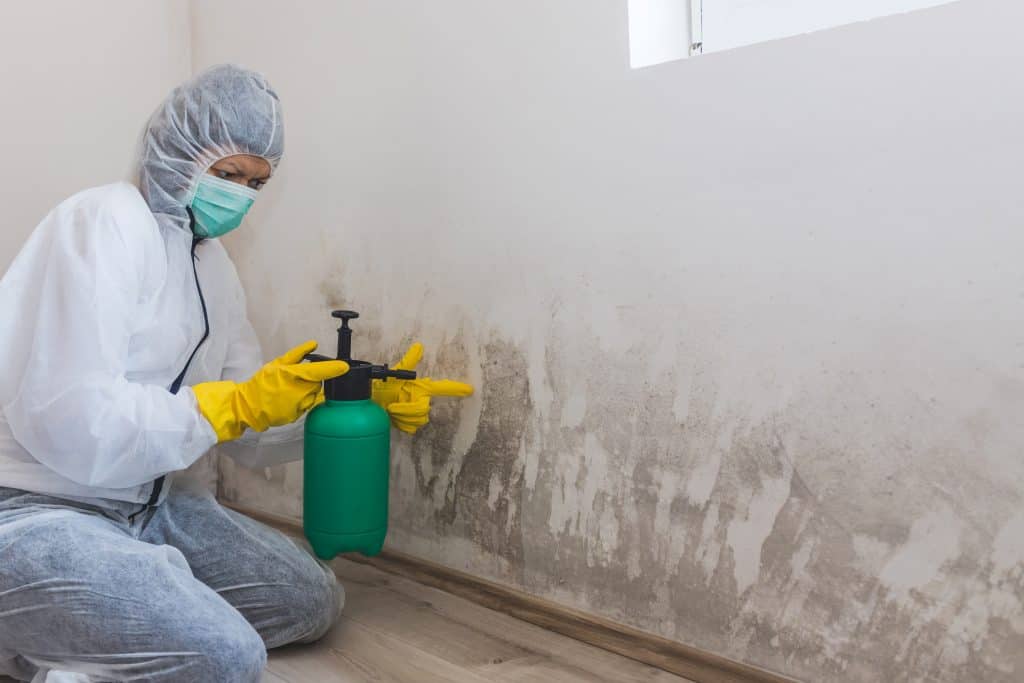
Dry fog mold removal typically costs $500 to $3,000, which sounds appealing compared to traditional remediation. The process involves spraying a fine mist of EPA-approved chemicals throughout contaminated areas. The particles are small enough to penetrate porous surfaces and kill mold on contact.
Here’s what you need to know before choosing dry fog. It kills surface mold and airborne spores, but it doesn’t remove the dead mold or address the root system growing into porous materials like drywall. Industry standards (IICRC S520) require physically removing mold-contaminated materials, not just killing what’s visible.
Some contractors market dry fog as a standalone solution. Most reputable remediation experts use it as a supplementary step after removing contaminated materials and fixing moisture sources. If someone offers you dry fog as the only treatment, that’s a red flag.
The method works best for decontaminating air and hard surfaces after the main remediation is complete. It’s also useful when you need to make a space temporarily safer while scheduling full remediation. But it’s not a replacement for proper mold removal, and it won’t prevent mold from coming back if you haven’t fixed the moisture problem causing it.
Think of dry fog like painting over water stains instead of fixing the leaky roof. It might look better temporarily, but the problem isn’t solved. You’ll end up paying twice – once for the dry fog treatment and again for proper remediation when the mold returns.
Black Mold in Attic Removal Cost
Attic mold removal runs $1,000 to $6,000 depending on how extensive the growth is and how easy your attic is to access. Small, accessible spots on the low end. Widespread contamination requiring insulation removal and roof leak repairs on the high end.
Attics create perfect conditions for mold in Bucks County, PA. Roof leaks, poor ventilation, and humid summers combine to create moisture problems. The mold typically grows on roof sheathing, rafters, and insulation. Once it’s there, it spreads fast because attic temperatures fluctuate and create condensation.
Accessibility drives a big part of the cost. If your attic has plenty of headroom and easy entry, crews work faster and charge less. Tight crawl spaces with limited access mean slower work, more safety equipment, and higher labor costs. Some attics require removing sections of drywall or ceiling just to get equipment inside.
Contaminated insulation adds to the expense. Fiberglass and cellulose insulation can’t be cleaned once mold penetrates it – it has to be removed and replaced. Disposal fees run $0.30 to $0.45 per pound, adding $250 to $550 for an average attic. Then you’re paying for new insulation installation on top of the mold remediation itself.
The real cost often includes fixing what caused the mold. A simple roof cap reseal might add $250 to $600. Replacing rotted sheathing or correcting a bathroom fan that dumps moist air into your attic can add $2,000 to $4,000. But skipping these repairs means the mold comes back, and you’re paying for remediation all over again.
Cost to Get Rid of Mold: What’s Included
Understanding what you’re actually paying for helps you evaluate quotes and spot contractors trying to inflate prices or hide costs.
Professional mold remediation includes inspection and assessment, containment setup, physical removal, cleaning and treatment, and final testing. Each step has associated costs, and skipping any of them usually means the mold comes back.
Inspection and testing run $250 to $650 separately, but many remediation companies include it in their quote. The crew identifies all affected areas, tests to determine mold type, and measures moisture levels to find the source. Some contractors offer “free inspections” but make up the cost in inflated remediation pricing. Get itemized quotes so you know what you’re paying for.
Ceiling Mold Removal Cost
Ceiling mold remediation costs $1,000 to $9,000 depending on how much of the ceiling is affected and what’s causing the moisture. Small patches from bathroom humidity sit at the low end. Extensive growth from roof leaks or second-floor plumbing problems hit the high end.
Ceiling mold is tricky because you’re often dealing with hidden growth. What you see on the surface usually means there’s more behind the drywall or in the insulation above. Contractors need to remove sections of ceiling to assess the full extent, which means demolition and reconstruction costs on top of mold removal.
The type of ceiling material matters. Drop ceilings and acoustic tiles absorb moisture and grow mold easily, but they’re also easy to remove and replace. Drywall ceilings require more careful removal to avoid spreading spores, and patching or replacing drywall adds labor and materials costs. Popcorn ceilings built before the 1980s might contain asbestos, which requires specialized abatement and dramatically increases costs.
Containment is critical for ceiling work. Mold removal disturbs spores, and gravity pulls them down into your living space. Professional crews seal off the area with plastic barriers, use negative air pressure systems, and run HEPA filters to capture airborne spores. This equipment rental adds $85 to $110 per day per air scrubber, and larger rooms often need two.
The moisture source determines whether your costs stop at mold removal or extend into major repairs. A leaky bathroom above might mean replumbing work. A roof leak could require shingle replacement or flashing repairs. Budget for these fixes because removing mold without stopping the moisture source means you’ll be paying for remediation again in six months.
When You Can Skip the Professionals
The EPA says you can handle mold removal yourself if the affected area is less than 10 square feet, the mold isn’t black mold, and you don’t have respiratory issues or allergies. That’s roughly a 3-foot by 3-foot patch – about the size of a bathroom ceiling corner or a small section of basement wall.
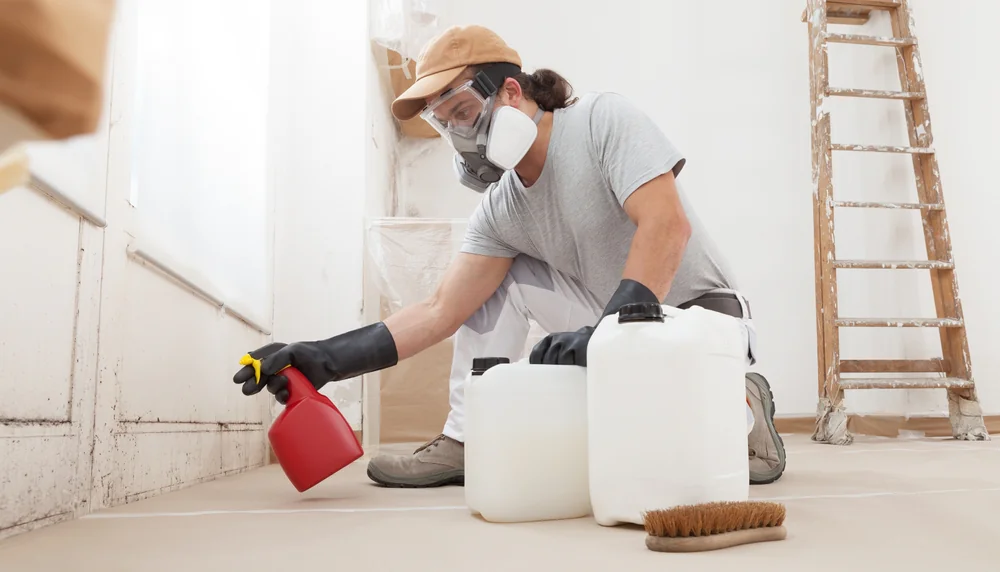
DIY mold removal costs $200 to $600 for proper equipment and supplies. You’ll need an N-95 respirator ($12 to $25), protective goggles, rubber gloves, disposable coveralls, heavy-duty trash bags, and antimicrobial cleaning solution. Don’t skip the protective gear. Even “harmless” mold releases spores that irritate lungs and eyes.
The process is straightforward for surface mold on non-porous materials. Seal off the area, bag and dispose of any porous materials you can’t clean (like ceiling tiles), scrub non-porous surfaces with detergent, and treat with a bleach solution or commercial mold killer. Let everything dry completely, then HEPA vacuum the area.
Here’s when DIY doesn’t work. If the mold is inside walls, in HVAC systems, in crawl spaces, or covers more than 10 square feet, call professionals. If anyone in your household has asthma, allergies, or compromised immunity, don’t risk exposure. If the mold resulted from sewage backup or contaminated water, that’s a biohazard requiring professional handling.
The biggest DIY mistake is underestimating the problem. What looks like a small patch on your wall might extend several feet behind the drywall. Disturbing it without proper containment spreads spores throughout your house, turning a localized problem into a whole-home issue. When in doubt, get a professional assessment before attempting removal yourself.
Getting Accurate Quotes for Mold Removal
Black mold removal costs vary because every situation is different, but you should expect to pay $10 to $25 per square foot for professional remediation. Small jobs start around $500. Extensive problems reach $30,000 or more.
Get at least three quotes from different contractors, and make sure each quote breaks down inspection, containment, removal, disposal, and testing separately. Watch for contractors who offer suspiciously low bids or who pressure you to start immediately without a written estimate. In Pennsylvania, there’s no state licensing for mold remediation contractors, so verify certifications like IICRC and check references.
The fastest way to control costs is catching mold early. Mold spreads quickly once it starts growing, and what costs $1,500 to fix today could cost $5,000 in six months. If you’re dealing with mold in Bucks County, PA, we provide free consultations and transparent pricing to help you understand exactly what you’re facing before making any decisions.