You wake up tired. Your head feels heavy before the day even starts. You blamed the season, the stress, or maybe just getting older. Here is something worth considering: if those symptoms ease up when you leave the house and return when you are back home, your air ducts might be part of the problem.
We have seen this pattern repeatedly in homes across Bucks County. When mold colonizes inside ductwork, it announces nothing. Every time your HVAC system runs, it pushes contaminated air through every room. You breathe it in the kitchen, the bedroom, and the living room continuously without knowing it. This post explains what lives inside many ductwork systems, how it gets there, and what it takes to resolve the issue completely.
Can Mold In Your Air Ducts Make You Sick?
The short answer is yes, and it happens in a way most people fail to expect. When mold colonizes inside your ductwork, it never just sits there. Every time your HVAC system kicks on, it pushes air through those contaminated passages and distributes whatever grows inside them into every room of your home.
What makes this particularly difficult is that you cannot see it happening. The mold does not reside on a wall where you would notice it. It sits deep inside a system that most homeowners never examine, located in a part of the house that rarely gets inspected. By the time symptoms show up, the exposure has often continued for weeks or months.
What Are Mycotoxins And Why Do They Matter In Your Home?
When certain mold species grow inside ductwork, they produce compounds known as mycotoxins. These are not the mold spores themselves; they represent chemical byproducts that mold releases as it grows. Species like Stachybotrys, Aspergillus, and Alternaria are all capable of producing them, and all three can colonize inside HVAC systems under appropriate conditions.
The health effects tied to mycotoxin exposure are well-documented. Respiratory distress remains the most commonly cited issue, but symptoms extend further. Fatigue that fails to resolve with sleep, persistent headaches, difficulty concentrating, and general mental fog all associate with ongoing exposure to elevated indoor mold toxins. Researchers describe this as a low-grade systemic inflammatory response where your body reacts to something in the air, yet because the source remains hidden, most people never connect the dots.
What makes this frustrating is that safe dose levels of mycotoxins in humans are not clearly established. The CDC has stated that no standards exist for acceptable mold levels in a home. That means any confirmed mold presence inside your ductwork is a legitimate health concern rather than something to monitor and revisit later.
For Bucks County homeowners specifically, this matters more than it might in a drier climate. Humid summers, aging housing stock, and the region documented increase in heavy rainfall events all create conditions where moisture enters homes more frequently, and moisture is precisely what mold needs to begin growing. Once inside the ductwork, your HVAC system does the rest.
You Had Mold Remediated (But Did You Clean The Ducts?)
This represents one of the most common gaps we observe, and it deserves direct attention. A homeowner discovers mold (perhaps in the basement or behind drywall), hires a remediation company, completes the work, and considers the problem solved. In many cases, the remediation itself is executed well. However, if the HVAC system was ignored during that process, the job remains unfinished.
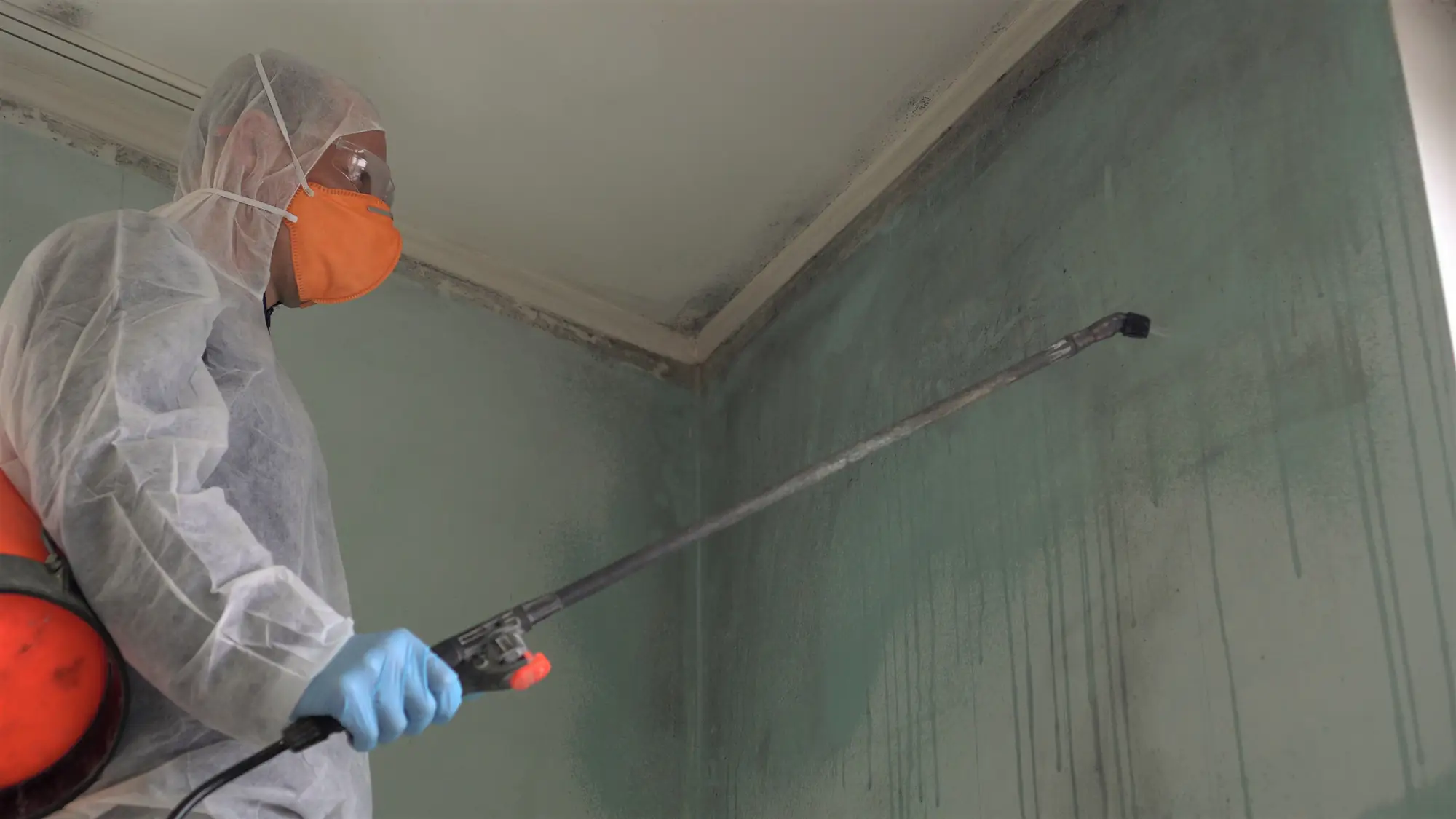
Here is why. Mold spores are microscopic and airborne. During a mold event, stemming from a slow leak, a flood, or humidity buildup, spores travel through the air and get pulled into the return air ducts. They settle inside the ductwork and find moisture on evaporator coils or in areas where condensation forms. Then they start growing.
Meanwhile, the visible mold in the basement gets treated and removed. The remediation passes inspection. Yet the ductwork, now quietly colonized, starts redistributing spores back into the living space, sometimes within days. This is the cycle that leads homeowners to state that they removed the mold, but something still feels wrong.
Because we operate as a mold remediation company first, we understand this cycle in a way general HVAC cleaning services typically do not. We recognize what mold looks like at different stages, how it spreads through a home air system, and what is required to break the cycle completely rather than treating the visible part and moving on. Cleaning the ducts after remediation is never optional if you want the work to hold; it protects the investment you already made.
What Does Professional Air Duct Cleaning Involve?
This deserves a clear explanation because significant confusion exists in the market, alongside bad actors who make homeowners understandably skeptical. A legitimate, thorough air duct cleaning is never a 30-minute job. It does not consist of a single technician with a shop vac, and it certainly is not a $99 special covering your entire home.
A proper cleaning begins with an assessment, ideally utilizing a video inspection so you can view the interior before work begins. From there, the process uses powerful negative-pressure vacuum equipment to contain and remove loosened contaminants instead of pushing them deeper into the system or back into your living space. Every component gets addressed, extending past the visible registers.
How To Tell A Legitimate Air Duct Cleaning Company From A Scam
Consumer Reports has documented the $99 whole-house special scam extensively. The setup remains consistent: a low advertised price gets a technician through the door, and then the upselling starts. Suddenly, add-ons appear alongside findings requiring immediate attention, resulting in a final bill bearing no resemblance to the initial quote.
Here is what to look for in a company you can trust. We provide written, flat-rate quotes prior to starting any work. We gladly show you what lies inside the system through video inspection or photographic documentation before and after cleaning. The job spans several hours, not 45 minutes, and we explain the process in plain language, covering the equipment used, debris containment methods, cleaned components, and steps taken to address any discovered moisture issues.
NADCA, the National Air Duct Cleaners Association, publishes standards for this work. Their ACR Standard, serving as the industry benchmark since 1992, defines proper cleaning as a combination of negative pressure collection and source removal. The EPA references NADCA standards in its duct cleaning guidance and recommends that homeowners verify provider compliance.
If a company cleans your ducts without asking questions about moisture, HVAC maintenance history, or your reasons for calling, they treat the task as routine maintenance rather than a health concern. A company with genuine expertise in indoor air quality, particularly one with a mold remediation background, approaches the task differently. We seek the full picture because we recognize that cleaning ducts without resolving underlying moisture sources provides only a temporary fix.
Why Bucks County Homes Face A Higher Risk Of Duct Contamination
This is not a generic warning applying everywhere equally. Bucks County features specific conditions making duct contamination a pressing concern here compared to many other regions.
Penn State’s MARISA research program documents that heavy rainfall in Bucks County increases in both frequency and intensity. Flash flooding, groundwater intrusion, and moisture-related property damage are all rising, with projections showing annual rainfall continuing upward through 2050 and beyond. Increased moisture events create more opportunities for water to enter homes, giving mold more chances to establish a foothold before anyone notices.
The housing stock in Bucks County adds another layer of vulnerability. The region contains numerous older homes, including stone farmhouses in the upper county featuring porous foundation walls and mid-century ranchers in Levittown and Fairless Hills built with crawl spaces that draw in humid summer air and condense it on joists and subfloors. These are not design flaws unique to poor builders; they characterize homes constructed in earlier eras before modern moisture management became standard. However, they mean moisture pathways entering the home and eventually the HVAC system remain numerous and often invisible until problems arise.
Summer humidity compounds these issues. Bucks County sits within a humid continental climate zone, and during peak summer months, air conditioning systems run constantly, pulling warm and humid air through ductwork while creating condensation on evaporator coils. That unmanaged moisture turns into the exact environment mold requires.
Homeowners in Doylestown, Bensalem, Warminster, Newtown, and communities across Bucks County navigate these conditions annually, often remaining unaware of ductwork risks until symptoms appear or remediation reveals what circulates through the home. We have worked in this county long enough to understand how these patterns unfold. The homes, climate, and seasonal rhythms are familiar to us because we have worked inside hundreds of properties resolving these exact problems.
Air Duct Cleaning In Bucks County, PA: What To Do Next
If you read this far, you likely seek more than a routine maintenance checklist. You want to determine if something in your home affects how you feel, and you want to know if cleaning the ducts will make a difference. That is a fair question, and the honest answer relies entirely on what the ducts contain.
The first step involves finding out. A proper inspection examining the full system, rather than just accessible registers, reveals whether a real problem exists or if your ducts remain in reasonable shape. From there, you make decisions based on clear information instead of guesswork.
Mack’s Mold Removal offers free consultations and upfront pricing with no obligation and zero pressure. If you live in Bucks County and feel uneasy about your home air quality, reach out. We will evaluate the full picture because in this work, the complete picture remains the only one that counts.