If you’ve noticed a musty smell coming from below your floors or spotted dark patches in your crawl space, you’re not alone. Crawl space mold is one of the most common issues facing Bucks County homeowners, and it’s not hard to see why. Between our humid summers and the 49 inches of rain we get each year, the conditions are practically built for mold growth. But here’s what matters: getting rid of mold under your house isn’t just about scrubbing away what you can see. It’s about fixing what’s causing it in the first place. That’s where real mold remediation service comes in.
Why Crawl Spaces Are Vulnerable to Mold Growth
Your crawl space sits right between your home and the ground, which puts it in a tough spot. Moisture rises up from the soil through a process called capillary action, releasing water vapor into the air below your floors. When that humid air has nowhere to go, it condenses on wood joists, insulation, and ductwork.
Add in Bucks County’s climate and you’ve got a perfect recipe for trouble. The county gets 11 more inches of rain per year than the national average, and our humid summers keep moisture levels high for months. Groundwater patterns shift with the seasons, especially in areas like Levittown, where soil retains moisture longer. Older homes built before modern ventilation standards make the problem worse.
Limited access means most people don’t check their crawl spaces regularly. By the time you notice a musty smell upstairs or see visible mold, the problem has usually been growing for a while. That’s why understanding what makes crawl spaces vulnerable is the first step toward fixing the issue for good.
How Moisture Gets Into Your Crawl Space
Moisture doesn’t just come from one source. Ground vapor is the most common culprit in our area. The soil underneath your home constantly releases water vapor, and without a proper barrier, that moisture moves right up into your crawl space. The wetter the soil, the more vapor it releases.
Groundwater seepage happens when the water table is high or after heavy rainfall. Water slowly works its way through foundation walls or cracks, evaporating over time and raising humidity levels inside. You might not see standing water, but the dampness is there, soaking into wood and insulation.
Plumbing leaks are another major source. A slow drip from a supply line or a leaking drain can form puddles that sit unnoticed for weeks. That standing water increases moisture and creates ideal conditions for mold. Then there’s condensation from HVAC equipment and ductwork. When cool air passes through warm, moist spaces, water collects on surfaces, giving mold exactly what it needs to thrive.
Open crawl space vents were once thought to help with ventilation, but in humid climates like ours, they actually make things worse. Instead of drying out the space, those vents invite humid outdoor air inside, raising moisture levels and allowing condensation to form on cooler surfaces. Poor drainage around your foundation compounds the problem, directing rainwater toward your home instead of away from it.
Health Risks of Mold Under Your House
What happens in your crawl space doesn’t stay in your crawl space. Because of something called the stack effect, up to 50% of the air you breathe in your home comes from below your floors. If that air is contaminated with mold spores, you’re bringing those spores into your living space every single day.
The health symptoms can be subtle at first. You might notice more sneezing, a runny nose, or itchy eyes that seem to get better when you leave the house. Some people develop a persistent cough or feel more congested than usual. For anyone with asthma, mold exposure can trigger attacks or make existing symptoms worse.
Children are especially vulnerable. Research shows that prolonged exposure to household mold raises the risk of developing asthma in school-aged kids. People with weakened immune systems or existing respiratory conditions face even more serious complications, including lung inflammation and infections.
The tricky part is that these symptoms are easy to dismiss as allergies or a lingering cold. But if multiple family members are experiencing respiratory issues, headaches, or allergy-like symptoms that improve when they’re away from home, mold could be the underlying cause. The musty odor is often the first clue, even before you see visible growth.
Ignoring the problem doesn’t make it go away. Mold continues to spread, releasing more spores into your home’s air supply. The longer it grows, the more extensive the contamination becomes, and the harder it is to eliminate. That’s why addressing mold under house treatment quickly matters for both your health and your home’s structural integrity.
Mold Under House in Crawl Space: What Professional Treatment Involves
Professional crawl space treatment is different from DIY mold removal in one critical way: it addresses the source of the problem, not just the symptoms. You can scrub visible mold off wood joists all day long, but if the moisture source is still there, the mold will be back within weeks.
A comprehensive mold remediation service starts with inspection and testing. We check every inch of your crawl space, including areas you can’t easily access. We use moisture meters to measure humidity levels and wood moisture content, thermal imaging to find hidden water intrusion, and air quality testing to determine the extent of contamination. This assessment tells you exactly what you’re dealing with before any work begins.
The next step is containment. We seal off the work area with heavy-duty plastic sheeting and create negative air pressure using specialized equipment. This keeps mold spores from spreading into your living space when they’re disturbed during removal. It’s one of the most important parts of the process, and it’s something you can’t replicate with a DIY approach.
The Mold Remediation Process Step by Step
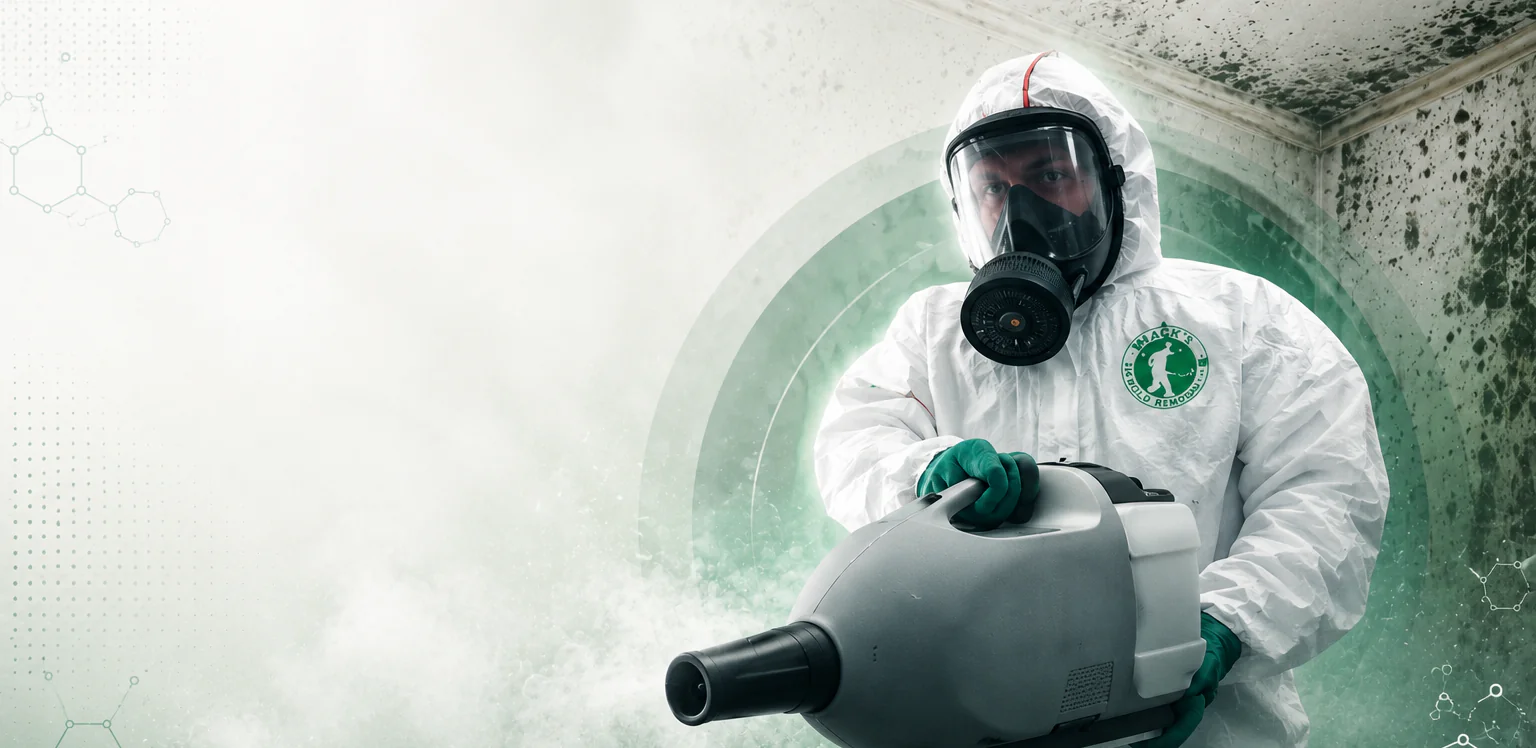
Once containment is in place, the actual removal begins. HEPA filtration and air scrubbers run continuously, capturing microscopic mold spores from the air. We remove contaminated materials that can’t be saved, like saturated insulation, damaged vapor barriers, or heavily compromised wood. These materials get sealed in airtight bags before removal to prevent spore spread.
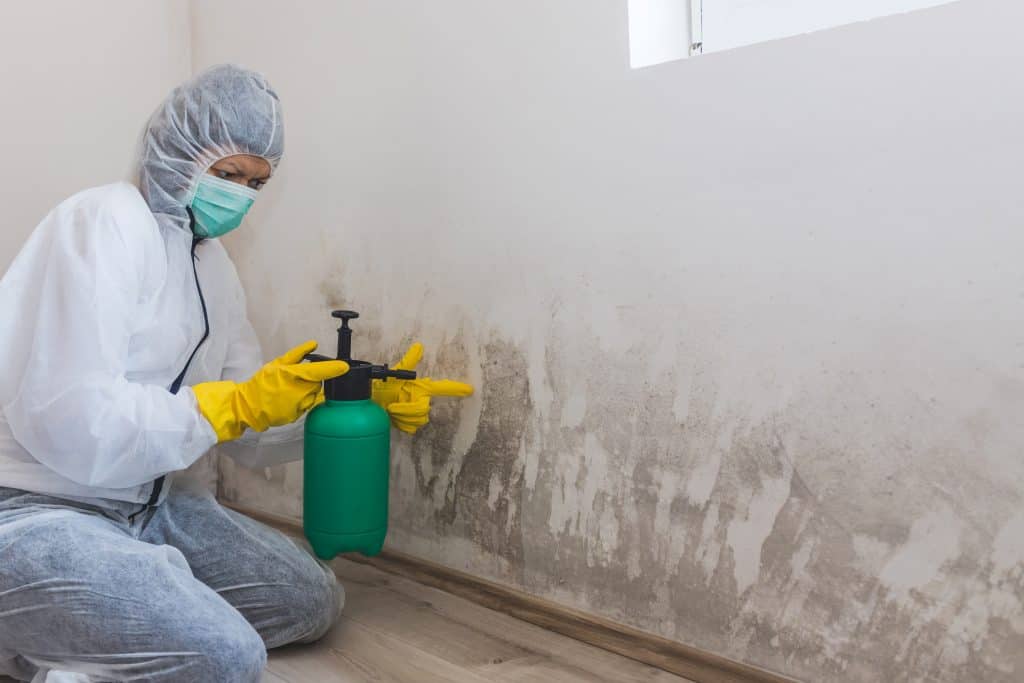
For surfaces that can be salvaged, we use EPA-approved antimicrobial treatments. These aren’t the same as household bleach, which only kills surface mold without penetrating porous materials like wood. Professional-grade products are designed to eliminate mold at the root and prevent regrowth.
But here’s where the real work happens: fixing the moisture problem. This might mean repairing plumbing leaks, improving drainage around your foundation, installing a sump pump, or adding a dehumidifier to control humidity levels. Without this step, you’re just treating symptoms. The mold will return because the conditions that allowed it to grow in the first place haven’t changed.
Crawl space encapsulation is often recommended for homes with persistent moisture issues. This involves sealing the entire space with a heavy-duty polyethylene vapor barrier on floors and walls, closing off vents, and installing a dehumidifier to maintain proper humidity levels. It creates a controlled environment that stops ground moisture from entering and prevents condensation from forming. While it costs more upfront than a basic vapor barrier, encapsulation provides long-term protection against recurring mold problems.
Post-remediation verification is the final step. A third-party inspector conducts air quality testing to confirm that mold levels have returned to normal, safe ranges. This clearance testing gives you proof that the job was done right and that your crawl space is safe again.
Why 24/7 Availability Matters for Crawl Space Mold
Mold doesn’t follow a schedule. You might discover a major water leak on a Saturday night or notice a strong musty odor on a holiday weekend. When you’re dealing with active water intrusion, every hour counts. Materials that stay wet for more than 24 to 48 hours become prime targets for mold colonization.
Emergency availability means you can get help when you need it, not days later when the problem has gotten worse. With 24/7 response, we can assess the situation quickly, stop active water sources, and begin the drying process before mold has a chance to establish itself.
This is especially important after flooding, burst pipes, or major storms. The sooner we can contain the damage and start drying out your crawl space, the less extensive the remediation will be. Waiting until Monday morning might save you a weekend service call, but it could cost you thousands more in additional remediation work.
For homes in Bucks County, where groundwater levels shift with seasonal rainfall and older plumbing systems are more prone to failure, having access to emergency mold remediation service provides peace of mind. You know that if something goes wrong, help is available immediately, not just during business hours.
The other benefit of 24/7 availability is flexibility for your schedule. Maybe you work long hours and can’t be home during the day. Maybe you need the inspection done before a real estate transaction closes. We can accommodate your timeline instead of forcing you to work around ours.
Getting Professional Help for Crawl Space Mold in Bucks County
Crawl space mold isn’t something you can ignore and hope it goes away. The longer it grows, the more it spreads, and the more expensive the fix becomes. But the good news is that with the right approach, it’s completely solvable. Professional mold remediation service addresses both the mold you can see and the moisture sources you can’t, giving you a permanent solution instead of a temporary fix.
If you’re dealing with musty odors, visible mold growth, or unexplained health symptoms in your Bucks County home, don’t wait to get it checked out. The inspection process is straightforward, and we offer free consultations so you can understand what you’re dealing with before committing to anything.
We specialize in comprehensive crawl space treatment throughout Bucks County and surrounding areas. We use EPA-approved methods, state-of-the-art equipment, and eco-friendly products to eliminate mold and prevent it from coming back. With 24/7 emergency availability and free consultations, you can get the help you need when you need it. Your crawl space might be out of sight, but it shouldn’t be out of mind.