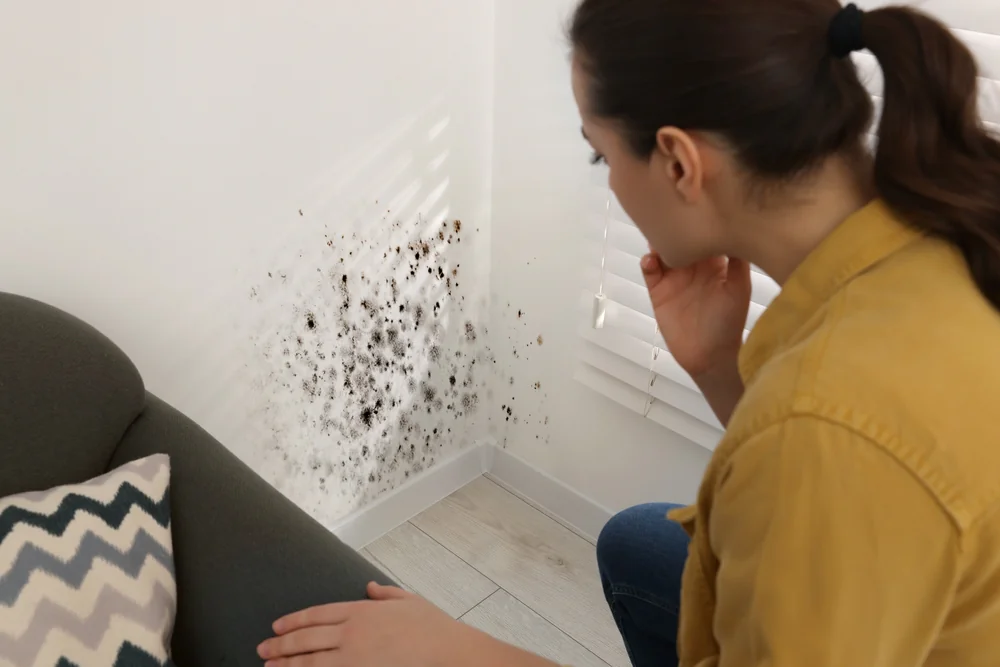
You found the mold. Now you’re trying to figure out what it’s going to cost to fix it without getting taken for a ride.
The problem is that mold removal pricing feels like a black box. One company quotes you $2,000, another says $8,000, and a third offers to “take a look” for free before giving you a number that makes your stomach drop. You’re not sure what’s fair, what’s included, or whether you’re about to pay for work you don’t actually need.
Here’s what you need to know about mold removal cost in Bucks County—the real numbers, the factors that move the price, and how to tell the difference between a solid quote and a red flag.
What Does Mold Removal Cost in Bucks County?
Most homeowners in Bucks County pay between $1,500 and $6,000 for professional mold remediation. That’s the realistic range for typical household projects—basement corners, bathroom ceilings, attic spots, crawl space issues.
Small, contained problems might run $500 to $1,500 if you catch them early. A patch under 10 square feet on a hard surface, visible and accessible, is about as cheap as it gets. Extensive contamination that’s spread through wall cavities, HVAC systems, or multiple rooms can hit $15,000 or more once you factor in repairs.
The national average sits around $2,300 to $2,400, and Bucks County tracks close to that. Our humid summers and heavy rainfall create perfect conditions for mold, so we see plenty of it. We know the common trouble spots—leaky basements, aging foundations, HVAC systems that can’t keep up with the moisture.
Mold Removal Price Per Square Foot
Most professionals price mold work at $10 to $25 per square foot. That’s the industry standard, and it holds pretty steady across Pennsylvania.
Simple jobs land on the low end of that range. If the mold is on an exposed concrete wall in an unfinished basement, you’re looking at straightforward cleanup. Accessible, non-porous surfaces are the easiest to treat. You might pay closer to $10 per square foot.
Complex jobs push toward $25 or higher. Mold behind finished drywall costs more because the wall has to come down. Hidden mold inside wall cavities, under flooring, or in ductwork requires demolition, containment, and reconstruction. If we have to cut into your home to reach the problem, expect the higher end of the range—sometimes $15 to $30 per square foot.
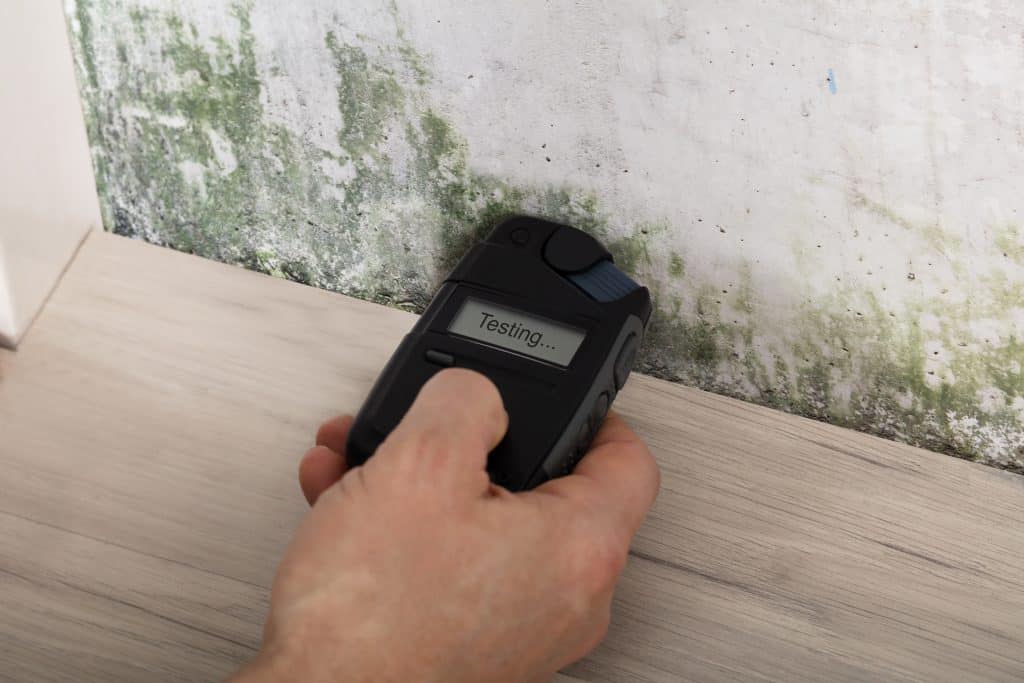
Here’s the thing most people don’t realize until they’re mid-project. If you can see mold on the surface, there’s often more hiding behind it. A five-square-foot patch on your drywall might be 50 square feet on the backside. This is why a proper inspection with moisture meters and thermal imaging matters before anyone gives you a final number.
Square footage is a starting point, but it’s not the whole story. A 100-square-foot bathroom mold problem could cost $1,000 to $2,500 depending on severity, location, and mold type. The same square footage in a basement with hidden water damage and structural issues could run $3,000 to $5,000.
Average Cost of Mold Removal by Location in Your Home
Where the mold is growing has a bigger impact on price than most homeowners expect.
Bathrooms are usually the cheapest if it’s just surface mold from daily steam and condensation. Visible growth on tile, grout, or around a shower costs $500 to $1,000 to remove because it’s easy to access and treat. But if there’s a hidden leak behind the vanity or under the tub, you’re looking at demolition and reconstruction. That can push the cost to $8,000.
Basements are common trouble spots in Bucks County. Groundwater, humidity, and poor ventilation create perfect conditions. A small corner with mold might cost $500 to remove. A full basement remediation can hit $1,500 to $6,000, sometimes $15,000 if the entire space is contaminated and materials need replacing.
Attics vary widely. If it’s a small, accessible spot from a roof leak, you might pay $1,000 to $3,000. If mold has spread across insulation, roof structures, or hard-to-reach areas, costs climb to $4,000 or $7,000. Roof leaks are the usual culprit, and fixing the leak is a separate cost—typically $350 to $1,250—that has to happen alongside remediation or the mold just comes back.
Crawl spaces run $1,500 to $4,000 depending on size and accessibility. These areas are small, but the confined space makes the work slower and more labor-intensive. Ground moisture and limited airflow make crawl spaces especially prone to mold in our area.
HVAC systems are the most expensive. Mold in your ductwork doesn’t just sit there. It circulates spores throughout your entire home every time the system runs. Cleaning ducts, coils, and components requires specialized equipment and careful containment. Expect $3,000 to $10,000, and in some cases, parts of the system may need replacing entirely.
Mold Clean Up Cost: What’s Actually Included
This is where a lot of homeowners get blindsided. You get a quote for mold removal, say yes, and then find out halfway through that testing, repairs, and moisture fixes are all separate line items.
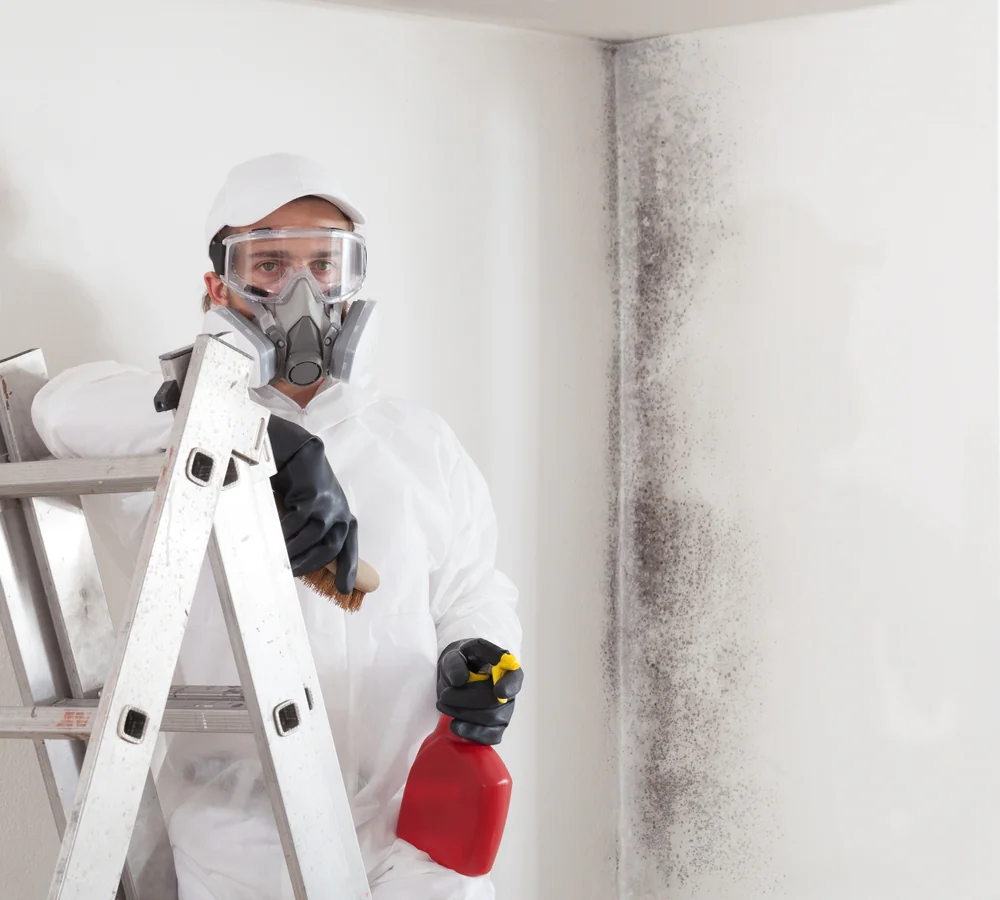
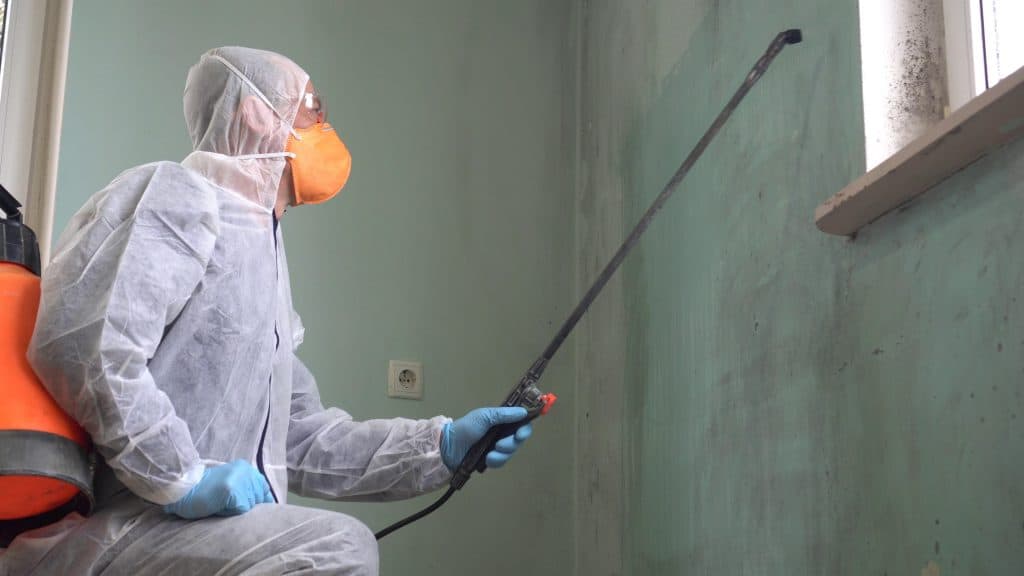
A complete mold remediation should include inspection, containment, removal, cleaning, antimicrobial treatment, and disposal. That’s the baseline. But many quotes don’t include testing, clearance verification, or the repairs needed after contaminated materials are removed.
Ask what’s covered before you sign anything. If the quote doesn’t mention containment setup, HEPA filtration, or post-remediation testing, you’re probably looking at a partial scope. That’s not necessarily a scam, but you need to know what you’re actually paying for.
Hidden Costs That Aren’t Always in the Quote
Mold inspection and testing are often separate. An inspection runs $300 to $650 for an average-sized home, up to $1,000 for larger properties. Testing—where samples are taken from air or surfaces and sent to a lab—costs another $250 to $500. Some companies offer free inspections, but that usually means they’re hoping to land the remediation job. There’s nothing wrong with that as long as you know the setup.
Clearance testing happens after the work is done to confirm the mold is actually gone. That’s another $200 to $600. It’s not required, but it’s the only way to know for sure the job was done right. If a company doesn’t mention clearance testing in their quote, ask about it.
Structural repairs are almost never included in the remediation quote. If mold has damaged drywall, flooring, insulation, or framing, those materials have to be replaced. Drywall replacement runs $1.50 to $3.50 per square foot. Subfloor replacement is $2.20 to $4.75 per square foot. If you need both remediation and reconstruction, get both quotes upfront so you’re not surprised.
Moisture correction is the part that actually stops mold from coming back. Fixing leaky pipes costs $150 to $850. Roof leak repairs run $150 to $1,000 for small areas, $3,000 to $6,000 for major structural fixes. Basement waterproofing can be $6,000 to $18,000. A dehumidifier with installation is $1,100 to $2,800. If the company doesn’t address the moisture source, you’re just paying to remove mold that will grow back.
HVAC cleaning is another add-on. If mold has spread into your ductwork, cleaning the system is essential to prevent recontamination. That’s typically not included in the base remediation quote.
How to Evaluate Mold Removal Price Quotes
Get at least three written quotes. Prices for the same job can vary by 50 percent or more, and three quotes give you a realistic range. If one is way lower than the others, that’s not necessarily a bargain. It might mean they’re cutting corners, leaving out services, or planning to hit you with change orders once the work starts.
Look for itemized breakdowns. A good quote should list containment setup, removal, disposal, antimicrobial treatment, HEPA vacuuming, and post-remediation testing as separate line items. If it’s just one lump sum with no detail, ask for clarification.
Check for licensing and certification. The industry standard is IICRC certification with S520 accreditation for mold remediation. If the company can’t show that, keep looking. Also verify they carry pollution liability insurance, not just general liability. Mold work requires specific coverage.
Watch for red flags. High-pressure language like “your family is in immediate danger” or “we need to start today” is a sales tactic, not a professional assessment. Extremely low quotes often hide additional charges that show up later. Vague scopes, verbal agreements instead of written contracts, or refusal to provide references are all signs to walk away.
Ask if the same company is doing the inspection and the remediation. That’s a conflict of interest. The company testing for mold shouldn’t be the same one profiting from finding it. Independent third-party testing costs a bit more upfront, but it protects you from scope inflation.
Make sure the quote separates remediation from reconstruction. A low remediation bid that hides a high rebuild add-on is one of the most common ways total project cost gets misrepresented. Get both numbers upfront so you’re comparing apples to apples.
Making the Right Call on Mold Removal Cost
Mold removal isn’t cheap, but it’s also not something you can ignore. The longer you wait, the more it spreads, and the more you’ll pay to fix it.
Understanding the cost factors—square footage, location, mold type, moisture source—helps you evaluate quotes intelligently. Knowing what should be included in a complete scope protects you from companies that lowball the estimate and inflate it later. And recognizing red flags keeps you from hiring someone who’s more interested in your wallet than actually solving the problem.
If you’re dealing with mold in Bucks County and want a straight answer about what it’s going to cost, we offer free inspections and upfront pricing. No pressure, no surprises, just a clear plan to get your home back to healthy.