
Hear from Our Customers
You’re not just getting rid of visible mold. You’re eliminating the spores you can’t see, the ones floating through your air and settling into every corner of your home.
That means fewer respiratory issues for your family. Less coughing at night, fewer headaches during the day, and better air quality in the rooms where your kids play and sleep.
Proper mold mitigation also protects your property value. When you address mold the right way—by fixing the moisture problem and removing contamination completely—you’re preventing the kind of structural damage that costs tens of thousands to repair later. Most homeowners in Warrington, PA who catch mold early spend between $1,500 and $9,000 on mitigation. Wait too long, and you’re looking at $15,000 to $30,000 or more when the problem spreads behind walls and into HVAC systems.
You get peace of mind knowing the job was done correctly. No guessing whether bleach worked. No wondering if it’ll come back next month.
We’ve been serving Warrington and the surrounding Bucks County area for over 27 years. We’re not a national franchise with rotating crews. We’re local, and we understand how Pennsylvania’s humid summers and older home construction create the perfect conditions for mold growth.
We’ve seen what happens when homeowners try DIY solutions or hire the cheapest option. The mold comes back because the moisture source was never addressed. We don’t just clean surfaces—we use moisture meters and infrared cameras to find hidden problems behind walls, under floors, and in crawl spaces.
You’re working with IICRC-certified professionals who know how to contain mold during removal so it doesn’t spread to clean areas of your home. That’s not something you get from a handyman with a spray bottle.
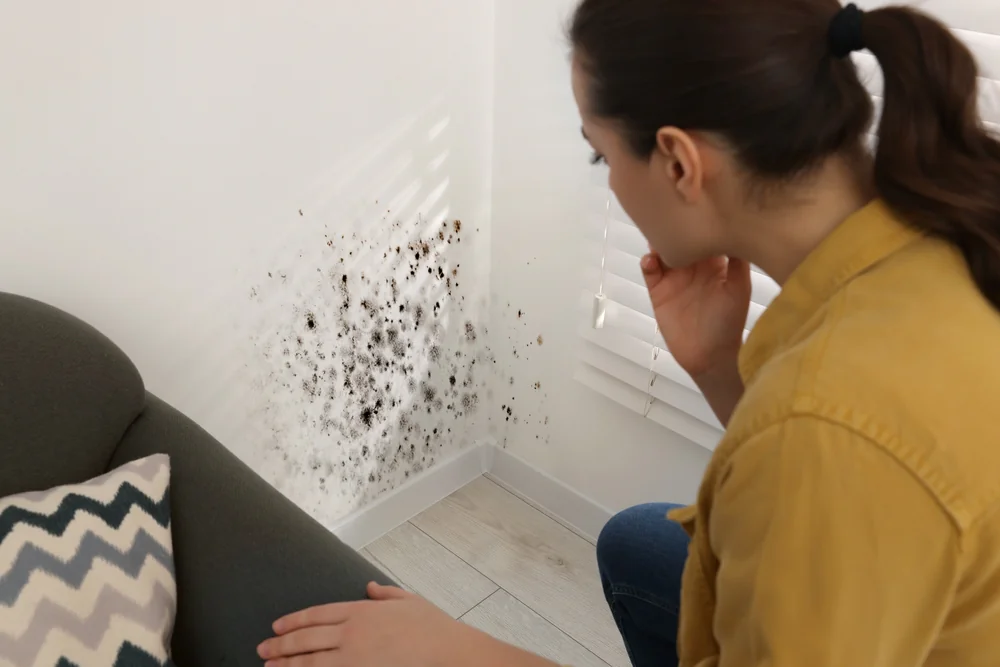
First, we inspect your home to find all the mold—not just what you can see. We use moisture meters to detect dampness behind drywall and infrared cameras to spot temperature differences that indicate hidden water damage. This tells us how far the contamination has spread and what’s causing it.
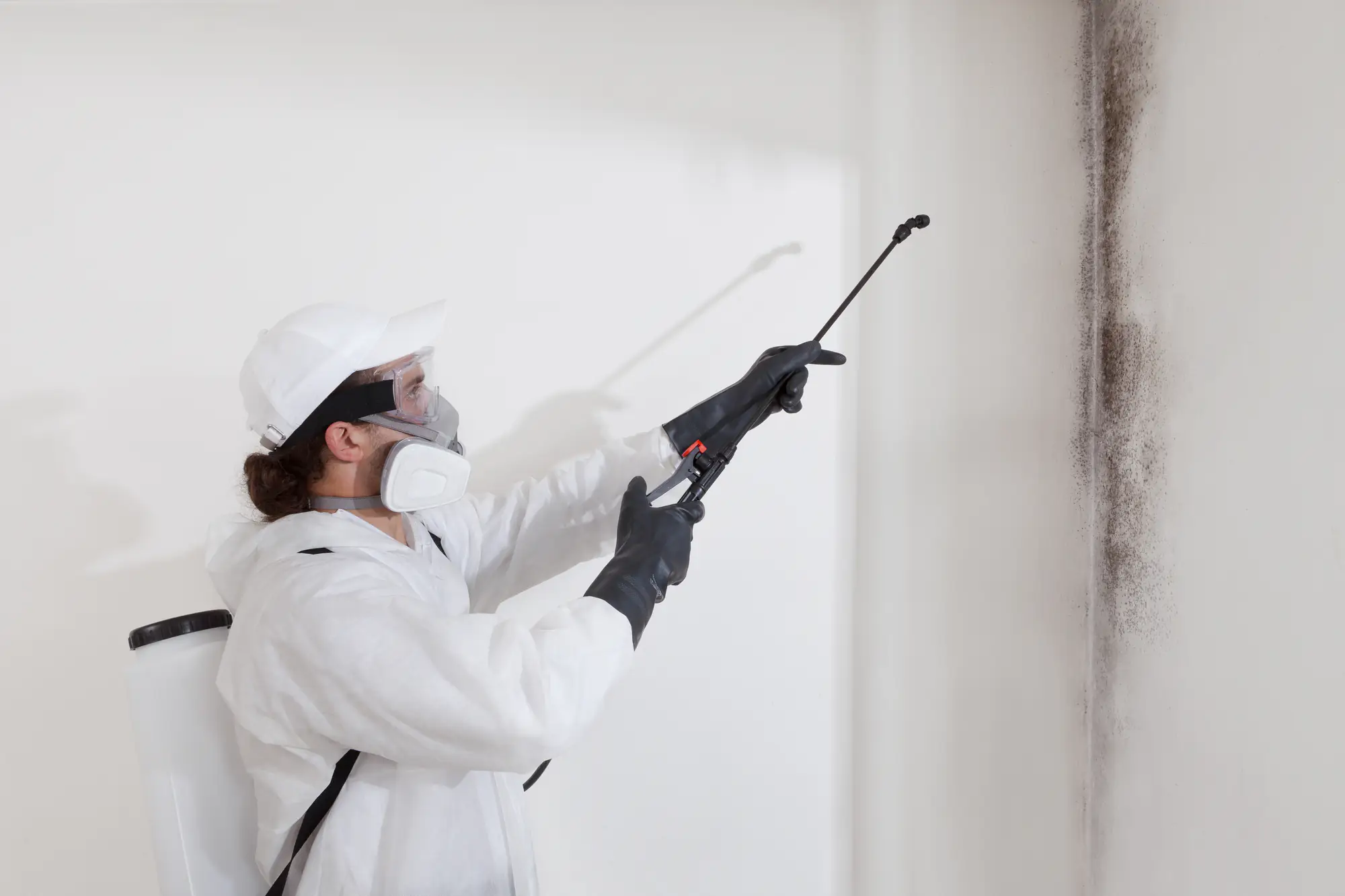
Next, we contain the affected area. We seal it off with physical barriers and set up negative air pressure systems so spores don’t float into clean rooms while we work. This is critical and it’s where most DIY attempts fail.
Then we remove the contamination. That means pulling out damaged materials like soaked drywall or insulation that can’t be saved, and cleaning salvageable surfaces with HEPA vacuums and air scrubbers that capture microscopic spores from the air.
After removal, we fix the moisture problem. Whether that’s repairing a roof leak, improving ventilation in your bathroom, or installing a dehumidifier in your basement, we address what caused the mold so it doesn’t return.
Finally, we verify the work. Post-remediation testing confirms that spore levels are back to normal and your home is safe.
Ready to get started?
Mold mitigation means more than wiping down walls. You’re getting a full assessment of your property with advanced detection tools that find problems you didn’t know existed.
You’re getting containment that prevents cross-contamination. We don’t just start tearing out moldy drywall and hope for the best—we isolate the work area so spores stay put.
You’re getting professional-grade equipment: HEPA filtration systems, commercial dehumidifiers, antimicrobial treatments, and air scrubbers that actually remove particles from your indoor air. This isn’t available at the hardware store.
In Warrington and throughout Bucks County, we see a lot of basement mold from poor drainage and crawl space issues from inadequate ventilation. Older homes in the area weren’t built with modern moisture barriers, so water intrusion is common. We account for these local factors when we create your custom mitigation plan.
You also get documentation for insurance purposes. We photograph the damage, detail our findings, and provide reports that help if you’re filing a claim. Most standard homeowner policies don’t automatically cover mold, but if the cause is sudden and accidental—like a burst pipe—you may have coverage up to $2,500 to $5,000 depending on your policy.
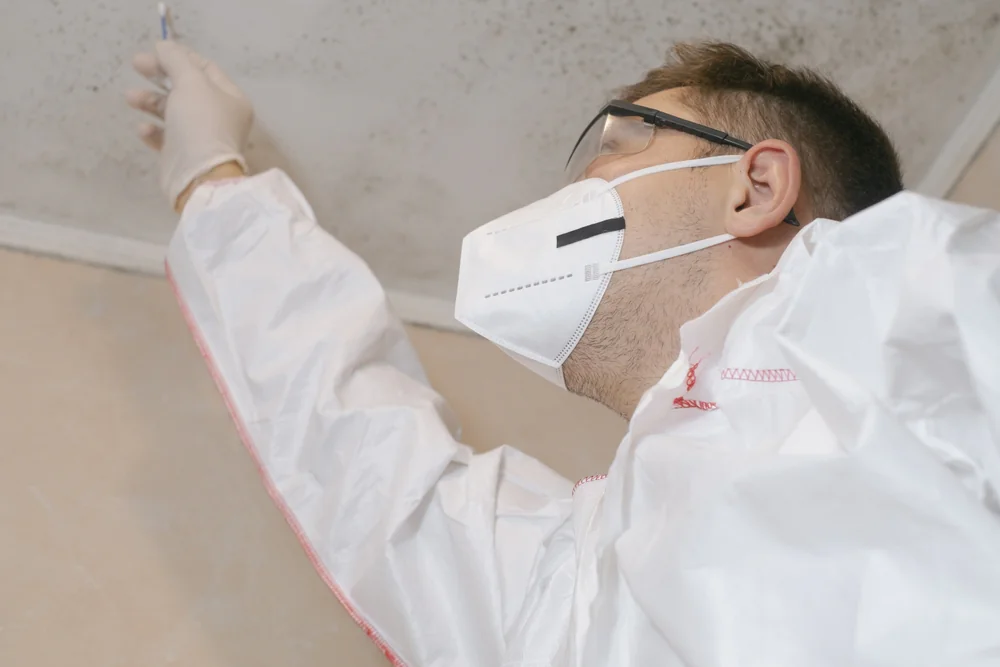
Mold removal sounds like you’re eliminating every single spore, but that’s not realistic. Mold spores exist everywhere—they’re in outdoor air, and they’re in your home right now even if you don’t have a mold problem.
Mold mitigation is the accurate term. It means reducing mold levels back to normal, natural levels and removing the conditions that allowed overgrowth in the first place.
When we mitigate mold, we’re removing visible contamination, cleaning affected surfaces, eliminating excess spores from your indoor air, and fixing the moisture issue so new mold doesn’t grow. That’s a complete solution. Just “removing” mold without addressing why it grew means you’ll be dealing with the same problem again in a few weeks.
It depends on how much mold you have and where it’s growing. A small bathroom mold issue might take one to two days. A basement with widespread contamination behind finished walls could take a week or more.
The timeline includes inspection, containment setup, removal, drying, and post-testing. We don’t rush the drying phase—if materials aren’t completely dry, mold will return.
Most homeowners in Warrington are dealing with basements or crawl spaces where moisture has been an ongoing issue. Those jobs take longer because we’re often removing insulation, treating floor joists, and installing better ventilation or dehumidification systems. You’ll know the estimated timeline after our initial inspection, and we’ll keep you updated if anything changes during the work.
Maybe. It depends entirely on what caused the mold and what your policy says.
Most standard policies don’t cover mold damage if it resulted from long-term neglect, like ignoring a slow leak for months. But if the mold grew because of a sudden, accidental event—a burst pipe, a roof damaged in a storm—you might have coverage, typically capped between $2,500 and $5,000.
Some insurers offer additional mold coverage as an endorsement, which raises your limit. It’s worth checking your policy or calling your agent before we start work.
We provide detailed documentation of our findings and the work we perform, which helps if you decide to file a claim. Even if insurance doesn’t cover it, addressing mold now prevents much larger expenses down the road when structural damage gets worse.
Usually, yes—but it depends on the size and location of the contamination. If we’re working in your basement or a single bathroom and we’ve properly contained the area, the rest of your home remains safe and livable.
If the mold problem is extensive or involves your HVAC system, we might recommend staying elsewhere for a few days. When mold gets into ductwork, spores can spread throughout your home every time the system runs, so containment becomes more complex.
We use negative air pressure and physical barriers to keep spores from migrating into clean areas during removal. That means you won’t smell demo work in your kitchen if we’re tearing out drywall in the basement.
Your safety is the priority. If we think you should relocate temporarily—especially if you have young children, elderly family members, or anyone with respiratory issues—we’ll tell you upfront.
Pennsylvania’s climate is a big factor. Humid summers, temperature swings, and frequent rain create constant moisture exposure. When indoor humidity stays above 50% for extended periods, mold starts growing on any organic material it finds—drywall, wood, insulation, even dust.
Warrington has a lot of older homes that weren’t built with modern moisture barriers or proper ventilation. Basements in this area often have foundation cracks or poor drainage that let water seep in after heavy rain. Crawl spaces without vapor barriers pull moisture up from the ground.
We also see mold from roof leaks, plumbing failures, and poorly vented bathrooms. If your exhaust fan isn’t vented to the outside—or if you don’t use it—steam from showers condenses on walls and ceilings, creating perfect conditions for mold.
The key is controlling moisture. Fix leaks immediately, keep indoor humidity below 50%, and make sure your home has adequate ventilation. Those steps prevent most mold problems before they start.
If you can see mold, you don’t need testing to confirm it’s there. You need mitigation. Testing tells you what type of mold is present and measures spore levels, but it doesn’t change the fact that visible mold needs to be removed.
Testing makes sense in a few situations: when you smell mold but can’t find it, when you’re experiencing health symptoms but don’t see contamination, or after mitigation is complete to verify that spore levels are back to normal.
Some homeowners want testing for peace of mind or documentation before selling a property. That’s fine. But if you’re looking at black mold on your basement walls, the next step is mitigation, not a lab report.
We use moisture meters and infrared cameras during inspection to find hidden mold and determine the extent of contamination. That gives us the information we need to create an effective mitigation plan without unnecessary delays.