
Hear from Our Customers
Most South Philadelphia homeowners have been told the same thing for years: “It’s just an old house — they all smell like that.” That’s not true, and it’s not something you should have to accept. That musty smell coming from your basement or back bedroom is a signal, not a quirk. It’s what mold smells like when it’s actively growing behind your walls or under your floors.
South Philadelphia’s housing stock is genuinely one of the most moisture-vulnerable in the region. Pre-war flat-roof rowhouses were built long before vapor barriers and modern ventilation standards existed. When your flat roof develops a drainage issue — and most eventually do — moisture works its way into your attic space, your top-floor ceiling, and then down. Add in the fact that 67% of South Philadelphia properties face severe flood risk, and your basement has likely seen water more than once. Every time that happens, the 24 to 48-hour mold growth window opens.
After we conduct a professional air quality test, you stop guessing. You know what species are present, what the concentration levels are, and where the source is. You have a written report you can use — whether that’s for a real estate negotiation in Passyunk Square, a landlord dispute with Philadelphia’s Department of Licenses and Inspections, or simply peace of mind that the air your kids are breathing at home is clean.
Mack’s Mold Removal is a locally owned, owner-operated company serving South Philadelphia and Philadelphia County for over 15 years. Not a franchise. Not a call center routing you to whoever’s available. When you call 215-431-4744, you’re talking to people who actually show up and do the work.
Our inspectors have been inside hundreds of South Philadelphia rowhouses — the flat-roof brick construction in Pennsport, the renovated shells in Point Breeze, the century-old basements in Queen Village. We know where moisture hides in these buildings because we’ve found it in all of them. We use infrared thermal imaging cameras and calibrated moisture meters to detect problems that a visual inspection alone will never catch — moisture migrating through a shared party wall, a slow leak behind plaster, a drainage failure above a drop ceiling.
Every job starts with a free inspection. Before any work is quoted, before any equipment is brought in, you know what you’re dealing with. And before any work begins, you have the price in writing. No surprises.
It starts with a phone call. You describe what you’re noticing — a smell, a symptom, a recent flooding event, a real estate transaction you need documentation for — and we schedule a free inspection at your property. No charge to find out what you’re dealing with.
When our inspector arrives, they don’t just walk through and look around. We use infrared thermal imaging cameras to scan walls, ceilings, and floors for temperature differentials that indicate hidden moisture. In South Philadelphia’s attached rowhouses, this matters more than most people realize — moisture from a neighbor’s plumbing failure or roof issue can migrate through a shared party wall and show up in your home with no visible sign on your side. Calibrated moisture meters confirm what the thermal camera identifies. If air or surface sampling is warranted, samples are collected and sent to an independent certified laboratory for analysis.
Within a few days, you receive a written report with the lab results, identified problem areas, moisture readings, and a clear explanation of what was found and why it matters. If remediation is needed, you get upfront written pricing before anything starts. South Philadelphia’s older housing stock — especially in neighborhoods like Grays Ferry and Wharton where industrial history and aging infrastructure overlap — sometimes surfaces issues that require a phased approach, and we walk you through that clearly before any commitment is made.
Ready to get started?
Air quality testing from Mack’s isn’t a single swab and a checkbox. Our inspection covers the full picture: mold spore sampling from the air and surfaces, moisture mapping using thermal imaging, VOC screening where applicable, and a detailed written report with lab-certified results. Every report is documentation-grade — usable for insurance claims, real estate transactions, Philadelphia L&I complaints, and legal proceedings if it comes to that.
For South Philadelphia specifically, our inspection protocol accounts for the conditions that make this area different from the rest of the Philadelphia market. Flat-roof drainage failures. Basement water intrusion from the area’s documented flood risk. Moisture migration through shared masonry walls in attached rowhouses. The cumulative effect of years of humidity between the Delaware and Schuylkill Rivers on homes that were never built with modern ventilation in mind. These aren’t hypothetical risk factors — they’re what our inspectors find in this neighborhood regularly.
If you’re a renter in Passyunk Square whose landlord keeps dismissing the smell in your unit, this report gives you something they can’t dismiss. If you’re buying a renovated rowhouse in Point Breeze and want to know what was behind the walls before the drywall went up, this test tells you. If you’ve had basement flooding more than once and your family has been dealing with unexplained respiratory symptoms, this is where you start getting real answers.
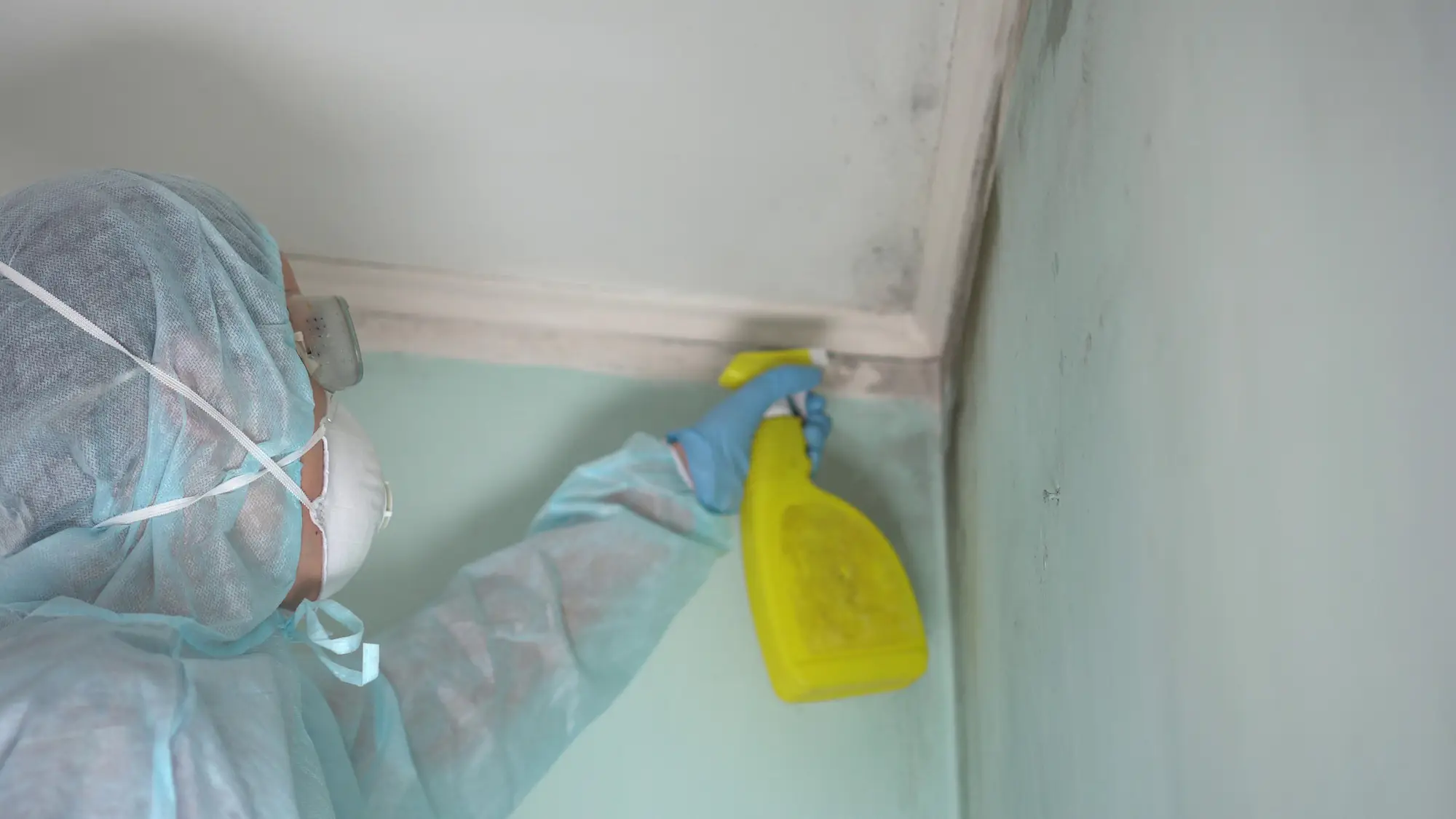
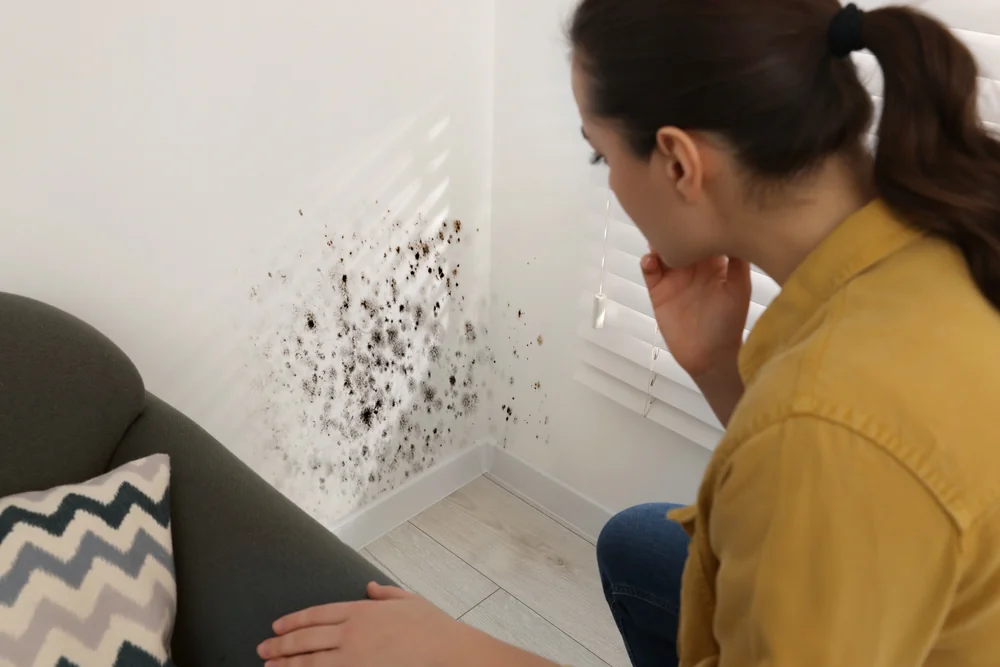
The most common signs are a persistent musty odor — especially in the basement or on lower floors — unexplained allergy or respiratory symptoms that improve when you leave the house, visible discoloration on walls or ceilings, or a history of water intrusion. In South Philadelphia’s pre-war rowhouses, these signs are often dismissed as normal characteristics of an old building. They’re not.
What makes South Philadelphia homes particularly tricky is that the source of the problem isn’t always visible or even in your unit. Moisture can travel through shared party walls from an adjacent property. A flat-roof drainage failure above your top floor can saturate framing and insulation for months before you see anything on the ceiling. Infrared thermal imaging finds these hidden moisture pockets before they become a full remediation project. If something feels off about the air in your home, a professional inspection is the only way to know for certain — and the initial inspection is free.
Professional air quality testing typically runs in the range of $300 to $600 depending on the size of the property and the scope of sampling needed. The initial inspection at Mack’s is free — you’re not paying anything just to find out whether there’s a problem worth investigating.
The way to think about the cost is in context. The average mold remediation project in a South Philadelphia rowhouse runs approximately $2,450, and more significant cases can reach $3,600 or higher depending on how far moisture has spread through the structure. A $400 air quality test that catches a problem early — before it spreads through a shared wall or works its way into your HVAC system — is straightforward math. And if the test comes back clean, you have documented proof that your home’s air quality is healthy, which has real value in a real estate transaction or a landlord dispute.
Yes, and here’s why: mold begins growing within 24 to 48 hours of water exposure. If your basement has flooded more than once over the years, you may be dealing with cumulative mold growth that has built up across multiple events — not just the most recent one. Each flooding event is a new growth window, and older growth from previous events doesn’t disappear on its own.
South Philadelphia’s flood risk is among the highest in the city — 67% of South Philadelphia properties face severe flood risk over the next 30 years, more than double the citywide average. That’s not a future projection for most homeowners here; it’s a pattern they’ve already lived. Post-flood air quality testing gives you a documented baseline after each event, which is useful for insurance claims and for tracking whether remediation efforts are actually working over time. If you’ve had repeated flooding and have never had a professional test done, the starting point is a free inspection to assess what’s accumulated.
Absolutely — and it’s one of the most practical uses of a pre-purchase air quality test in South Philadelphia’s market. These neighborhoods have seen significant appreciation, and many of the properties changing hands are older rowhouses that have been renovated. Renovation can conceal prior water damage behind new drywall, new flooring, and fresh paint. A visual inspection won’t catch what’s been covered up. An air quality test with infrared thermal imaging and air sampling will.
If the test surfaces a mold issue before closing, you have documented leverage to negotiate a price reduction, require remediation as a condition of sale, or walk away entirely. If the test comes back clean, you have a certified written report confirming the home’s air quality at the time of purchase — documentation that protects you if something surfaces later. Given what homes in these neighborhoods are selling for right now, the cost of a professional air quality test before closing is minimal compared to the risk of discovering a hidden problem after the deed transfers.
The on-site inspection typically takes one to two hours depending on the size and condition of the property. Our inspectors work methodically — thermal imaging scan, moisture meter readings, and air or surface sample collection if warranted — so the time on-site reflects a thorough process, not a rushed walkthrough.
Once samples are collected, they go to an independent certified laboratory for analysis. Turnaround on lab results is generally two to five business days. After results are received, we compile a written report that explains what was found, what it means, and what the recommended next steps are. If you’re working against a real estate transaction deadline — which is common in South Philadelphia’s active market — it’s worth mentioning that timeline upfront when you call, so the inspection and sampling can be scheduled with enough lead time. Rush processing is sometimes available through the lab for time-sensitive situations.
This is one of the most common situations we encounter in South Philadelphia’s rental market, and a professional air quality test is exactly the right tool for it. A verbal complaint to a landlord is easy to dismiss. A certified written report from a professional inspector with lab-analyzed results is not.
Philadelphia’s Department of Licenses and Inspections enforces the city’s property maintenance code, which requires landlords to maintain habitable conditions — and mold in a living space can constitute a code violation. When you file a complaint with L&I, having independent documentation from a certified inspector significantly strengthens your position. The report identifies the mold species, the concentration levels, and the likely source, which gives L&I investigators something specific to act on rather than a he-said-she-said dispute. If the situation escalates to a housing attorney, that same report is admissible documentation. The inspection starts free, and the written report you receive at the end is yours to use however you need it.
Other Services we provide in South Philadelphia