
Mold Remediation in South Philadelphia, PA

South Philly Rowhouses Have a Mold Problem Most Contractors Miss

We find what’s hiding behind your walls — and fix it for good.
Mold Inspection Professional in Bucks County Pennsylvania

Hear from Our Customers

Laboratory technician handling petri dishes with microbial samples using blue gloves and precision equipment, conducting mold or bacteria testing in a controlled lab environment.

Residential Mold Remediation South Philadelphia

What Changes When the Mold Is Actually Gone

That musty smell in your basement isn’t just “old house.” It’s a sign that moisture has been sitting somewhere long enough to grow something — and in South Philadelphia’s rowhouses, that somewhere is usually behind a wall, under original flooring, or inside a shared party wall you can’t see into. Once it’s properly identified and removed, the difference is immediate. The air feels different. The smell is gone. And you’re not wondering anymore.

South Philly gets roughly 49 inches of rain a year — well above the national average — and the city’s combined sewer system puts basements here at real risk of backup flooding after heavy storms. The Philadelphia Water Department has specifically identified South Philadelphia as one of the neighborhoods most impacted by those backups. When sewage-contaminated water enters your basement, mold can start growing within 24 to 48 hours. Getting ahead of that isn’t optional — it’s the difference between a contained remediation job and a full gut.

For families in neighborhoods like Point Breeze, Passyunk Square, or Pennsport, the health side of this matters just as much as the property side. Mold exposure is directly linked to respiratory illness, and Philadelphia’s own health data shows that children in older, denser neighborhoods face elevated asthma risks tied to indoor air quality. When the mold is gone — actually gone, not just bleached over — your home stops working against the people living in it.

Mold Remediation Company South Philadelphia, PA

15 Years Working South Philadelphia Rowhouses. Every Job Still Gets the Same Attention.

We’ve been working in South Philadelphia homes for over 15 years. That includes the century-old rowhouses in Pennsport, the stone-foundation basements in Grays Ferry, and the gut-renovated properties in Point Breeze where mold gets uncovered the moment someone opens up a wall that hasn’t been touched in decades. This isn’t a franchise operation running crews on volume. It’s an owner-operated business where I’m personally involved in every job — and that accountability shows in how the work gets done.

We built this company around one thing: mold. Not water damage, not fire restoration, not general contracting with mold as a checkbox. Just mold — finding it, removing it, and making sure it doesn’t come back. That focus is what makes the difference between a remediation that holds and one that has you calling someone else six months later.

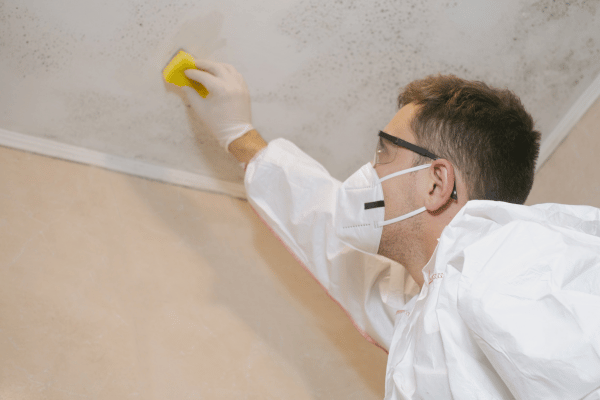
Protective worker spraying treatment on damp interior wall with visible mold and moisture damage near the floor during professional mold remediation.

Professional Mold Remediation Services South Philadelphia

No Guesswork — Here's Exactly What the Process Looks Like

It starts with a free inspection. Before anything is quoted or scheduled, one of our certified technicians walks your home and uses moisture meters and thermal imaging cameras to locate where moisture is actually coming from — not just where mold is visible. In South Philadelphia’s attached rowhouses, that source is often hidden. A neighbor’s leak can saturate the party wall you share without a single drop appearing on your side. Thermal imaging finds it anyway.

Once the source and scope are confirmed, you get upfront pricing before any work begins. No open-ended estimates. No surprises when the invoice arrives. If mold samples are needed, they go to an independent third-party lab for identification — so the treatment is specific to what’s actually growing in your home, not a generic approach applied to everything.

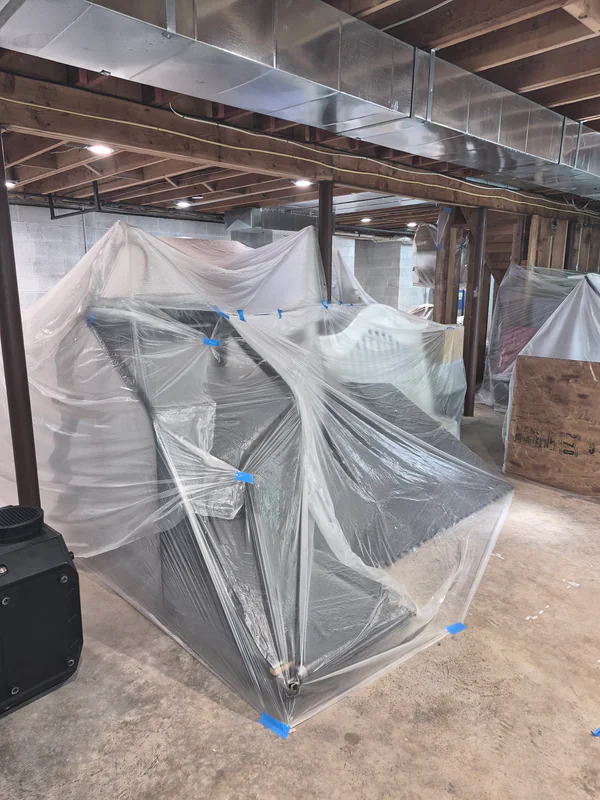
Remediation follows EPA-approved protocols with full containment, so the rest of your home stays protected while the affected area is treated. After removal, the space is cleaned and cleared. If your situation involves a homeowners insurance claim — which is common after the combined sewer backups that hit South Philly basements — we handle the documentation and adjuster communication directly. You focus on your home. We handle the paperwork.

Protective worker spraying mold treatment on a damp interior wall using a long spray wand during professional mold remediation and moisture control.

Ready to get started?

Explore More Services

About Mack's Mold Removal

Mold Remediation Services Near South Philadelphia

Built for the Homes That Actually Exist in South Philadelphia

South Philadelphia’s housing stock is unlike most of the surrounding region. You’ve got rowhouses in Pennsport dating back to 1815, stone foundations in Queen Village that predate modern drainage standards, flat roofs across Bella Vista and Passyunk Square that pool water and leak, and party walls throughout the entire neighborhood that can carry moisture from one property to the next without any visible sign on your end. Generic mold remediation doesn’t account for any of that. We do.

Every remediation we perform includes source identification using thermal imaging and moisture meters, full containment to protect unaffected areas of your home, EPA-approved removal methods, and post-remediation cleanup. We use third-party lab testing to identify the specific mold type when sampling is warranted — because treating black mold and treating surface mildew are not the same job, and you deserve a company that knows the difference. For homeowners dealing with insurance claims after flooding or water damage, we coordinate directly with your insurer throughout the process.

If you’re selling or buying a rowhouse in South Philly — especially in the active markets around Passyunk Square or Pennsport — mold clearance documentation is something buyers, sellers, and real estate attorneys increasingly expect before closing. We provide that documentation as part of the remediation process, so your transaction doesn’t stall over something that could have been handled cleanly.

Team of protective workers wearing full safety suits spraying disinfectant with backpack sprayers inside a public walkway during sanitation or biohazard cleaning.

Why does my South Philadelphia rowhouse basement always smell musty?

That smell is almost always moisture — either sitting water, chronic dampness, or active mold growth that hasn’t been found yet. In South Philadelphia specifically, there are a few reasons basements stay damp: stone and brick foundations that absorb groundwater, flat roofs that pool water and eventually leak through, aging window seals, and the city’s combined sewer system that can push contaminated water back through basement drains during heavy rain events. The Philadelphia Water Department has explicitly identified South Philadelphia as one of the neighborhoods most affected by those backups.

The problem with the musty smell is that most homeowners assume it’s just the age of the house and leave it alone. But that smell usually means something is actively growing somewhere — behind a wall, under flooring, or in a sealed crawlspace. A proper inspection with moisture meters and thermal imaging will tell you whether you’re dealing with a surface issue or something that needs professional remediation. Our free inspection is the right first step before assuming the worst or dismissing it entirely.

Yes — and this is one of the most underappreciated mold risks in South Philadelphia. Rowhouses share party walls, which are structural masonry walls between adjacent properties. When a neighbor has a roof leak, a burst pipe, or a basement flooding event, moisture can saturate that shared wall and migrate into your side of the structure. Because there’s no visible water intrusion on your end, most homeowners don’t connect the dots until mold has already been growing for weeks or months.

This is exactly why a visual inspection alone isn’t enough in an attached rowhouse. Thermal imaging cameras detect temperature differentials inside wall cavities — which is how hidden moisture shows up even when the surface looks completely dry. If you’ve had a neighbor mention water issues, or if you’re noticing mold or a musty smell on an exterior-facing or shared wall, that’s worth investigating before it spreads further into your home’s structure.

For most residential jobs, mold remediation in the Philadelphia area runs somewhere between $1,500 and $6,000. The range is wide because the scope varies significantly — a small bathroom ceiling is a very different job than a basement that flooded after a combined sewer backup and sat wet for 48 hours before anyone noticed. The national average for a mid-sized remediation job lands around $3,500, but South Philadelphia’s older housing stock — stone foundations, plaster walls, and party wall systems — can push jobs toward the higher end of that range when the moisture source is embedded in aging masonry or hidden inside a structural cavity.

The most important thing to know is that the cost of skipping professional remediation is almost always higher than the remediation itself. Mold that isn’t fully removed at the source comes back. If you’re selling a rowhouse in Passyunk Square or Pennsport, undisclosed or unresolved mold can kill a deal or force a price reduction that far exceeds what remediation would have cost. We provide free inspections and upfront pricing so you know exactly what you’re looking at before committing to anything.

It depends on the cause of the flooding and how your policy is written, but many homeowners insurance policies do cover mold remediation when it results from a sudden, covered water event — like a burst pipe or an appliance failure. The situation gets more complicated with South Philadelphia’s combined sewer backups, which are a known and recurring issue in this neighborhood. Standard homeowners policies often exclude sewer backup damage unless you’ve added a specific sewer backup rider to your coverage.

If you’re unsure what your policy covers, the best move is to document everything before cleanup begins and call your insurer as soon as possible after the event. We work directly with homeowners insurance companies throughout the remediation process — handling documentation, adjuster communication, and the paperwork side of the claim so you’re not managing that on top of everything else. It’s worth noting that the City of Philadelphia also offers a Basement Backup Protection Program that provides free backwater valve installation to qualifying homeowners in South Philadelphia’s combined sewer area, which can help prevent future events.

The EPA’s general guideline is that any mold area larger than 10 square feet warrants professional remediation. That’s roughly a three-by-three-foot patch — smaller than most people picture. But square footage isn’t the only factor. The type of mold matters. The location matters. And in South Philadelphia’s rowhouses, the construction itself matters. Mold growing inside a wall cavity, behind original plaster, or in a sealed basement crawlspace isn’t something a can of bleach spray is going to reach — and surface treatment without addressing the moisture source guarantees the mold comes back.

There’s also the health exposure question. Disturbing mold without proper containment spreads spores through the air and into other parts of your home. For families with children, elderly residents, or anyone with asthma or respiratory conditions — which is a real concern in South Philly given the neighborhood’s documented asthma health disparities — that exposure risk is significant. Professional remediation uses full containment protocols specifically to prevent that from happening. If you’re seeing visible mold growth, smelling something that won’t go away, or you’ve had recent water intrusion, a free professional inspection is the right call before touching anything.

There’s no Pennsylvania law that mandates mold remediation before a home sale, but that doesn’t mean you can ignore it. Pennsylvania requires sellers to disclose known material defects — and known mold is a material defect. If a home inspector finds mold during a buyer’s inspection, you’re likely looking at a renegotiation, a price reduction, or a deal that falls apart entirely. In South Philadelphia’s active real estate market, particularly in neighborhoods like Passyunk Square, Pennsport, and Point Breeze where buyers are paying significant prices for renovated rowhouses, mold discovered at inspection is a serious transaction risk.

Getting remediation done before listing — and having the documentation to prove it — puts you in a much stronger position. It removes a negotiating point, signals to buyers that the home has been properly maintained, and keeps the transaction on schedule. We provide post-remediation documentation as part of the process, which you can share directly with buyers, agents, and attorneys. For sellers in South Philly’s current market, that documentation is worth more than the cost of the job.

Other Services we provide in South Philadelphia