Summary:
What Is Mold Testing and When Do You Need It
Mold testing is the process of collecting samples from your home’s air or surfaces and analyzing them in a lab to identify mold species, measure spore levels, and assess contamination severity. A professional mold inspection answers questions you can’t answer by eye alone.
You might see something that looks like mold. But is it? And if so, is it the kind that poses serious health risks, or something relatively harmless? Mold testing gives you concrete answers. It’s especially useful when you suspect mold but can’t see it—like when there’s a musty smell with no visible source, or when respiratory symptoms worsen at home but improve when you leave.
Mold testing also makes sense after water damage, before buying a home, or when you need documentation for insurance claims. It’s not always necessary if mold is clearly visible and needs removal anyway. But when uncertainty exists, testing removes the guesswork.
How Professional Mold Testing Works in Philadelphia County
Professional mold testing in Philadelphia typically involves three main approaches: air sampling, surface sampling, and moisture readings. Each serves a different purpose.
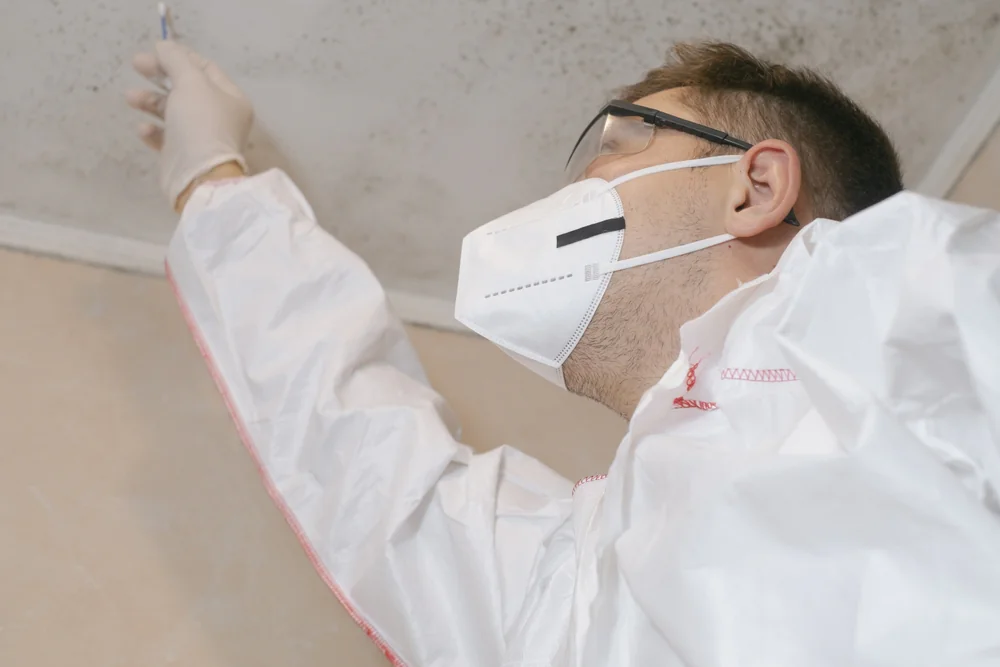
Air sampling captures mold spores floating in your indoor environment. A certified inspector uses specialized equipment to collect air samples from multiple rooms, plus an outdoor sample for comparison. The lab analyzes these samples under a microscope to identify mold genera and count spore concentrations. Results usually come back within 24 to 48 hours for microscopy analysis, or 7 to 14 days if culture testing is used for more detailed species identification.
Surface sampling uses swabs, tape lifts, or bulk samples to test specific areas where mold appears to be growing. This method works well for testing HVAC vents, behind wallpaper, below carpet, or on drywall. The samples go to a lab where technicians identify exactly what’s growing on that surface.
Moisture readings are equally important. Inspectors use moisture meters and infrared cameras to find hidden water sources feeding mold growth. Philadelphia’s humid climate and aging homes make this step critical—you might have condensation issues, leaky pipes, or foundation cracks letting moisture in. Without addressing these sources, mold will keep coming back no matter how many times you clean it.
The cost for professional mold testing in Philadelphia County typically ranges from $200 to $800, depending on how many samples you need and the size of your property. Some companies offer free inspections, but be cautious—if the same company does both testing and removal, there’s a potential conflict of interest. Independent testing gives you unbiased results.
What you get from testing is a detailed lab report showing which mold species are present, their concentration levels, and how indoor levels compare to outdoor baseline readings. Common molds identified include Aspergillus, Penicillium, Cladosporium, and Stachybotrys (black mold). Some species are more concerning than others, and the report helps you understand the health implications.
Testing doesn’t fix anything. But it gives you the information needed to make smart decisions about what comes next.
When Mold Testing Is Worth It and When You Can Skip It
The EPA and CDC are clear: if you can see mold growing, you generally don’t need testing to confirm it’s there. Visible mold needs to be removed regardless of species. Testing won’t change that fact.
But there are situations where mold testing is absolutely worth it. If you smell mold but can’t locate it, testing can pinpoint hidden growth behind walls, in crawl spaces, or inside HVAC systems. Philadelphia’s older homes—especially historic rowhouses with outdated ventilation—often hide mold in places you’d never think to look.
Testing also matters when someone in your household is experiencing unexplained respiratory symptoms, allergies, or asthma attacks that improve when they leave the house. Lab results can confirm whether elevated mold spores are the cause, and which species might be triggering the reaction. This is particularly important for families with young children, elderly members, or anyone with compromised immune systems.
Real estate transactions are another common scenario. If you’re buying a home in Philadelphia County, a mold inspection can reveal problems before you close. Sellers might have covered up water stains or painted over mold, and testing exposes what’s really going on. It protects your investment and gives you leverage for negotiations or repairs.
Insurance claims often require documentation. If you’ve had flooding, a roof leak, or pipe burst, your insurance company may want proof that mold developed as a result. Testing provides that evidence and helps ensure your claim gets approved.
Post-remediation testing is equally valuable. After mold removal is complete, clearance testing confirms that spore levels have returned to normal and the job was done correctly. Without this final step, you’re taking the remediation company’s word for it. Third-party testing gives you peace of mind.
On the flip side, testing has limitations. There are no federal standards for acceptable mold levels, so results require interpretation. Spore counts fluctuate throughout the day and season. A single test is just a snapshot of that moment. And not all molds grow well in lab cultures, so some species might be missed.
The bottom line: testing is a diagnostic tool. It’s most useful when you need to identify hidden mold, determine species and severity, document problems for insurance or legal purposes, or verify that remediation worked. If mold is visible and clearly needs removal, skip the test and focus on fixing the problem.
Want live answers?
Connect with a Mack's Mold Removal expert for fast, friendly support.
What Is Mold Removal and How It Differs from Testing
Mold removal—often called mold remediation—is the actual process of eliminating mold from your home and addressing the conditions that allowed it to grow. While mold testing identifies the problem, mold removal solves it.
The key difference is action. Testing is passive: you collect data. Removal is active: you contain the mold, eliminate contaminated materials, clean affected surfaces, and fix moisture sources. One gives you information. The other gives you results.
Mold remediation focuses on returning mold levels to normal, not removing every single spore (which is impossible since mold spores exist everywhere). The goal is to get rid of active growth, clean up spores that have spread, and create conditions where mold can’t thrive again.
The Professional Mold Removal Process Explained
Professional mold removal in Philadelphia follows a systematic approach designed to eliminate mold safely and prevent it from spreading during the cleanup.
It starts with a thorough inspection. Even if testing identified mold in one area, we check your entire property—including hidden spaces like wall cavities, under flooring, and inside ductwork. We use moisture meters and infrared cameras to find all affected areas and identify water sources feeding the growth.
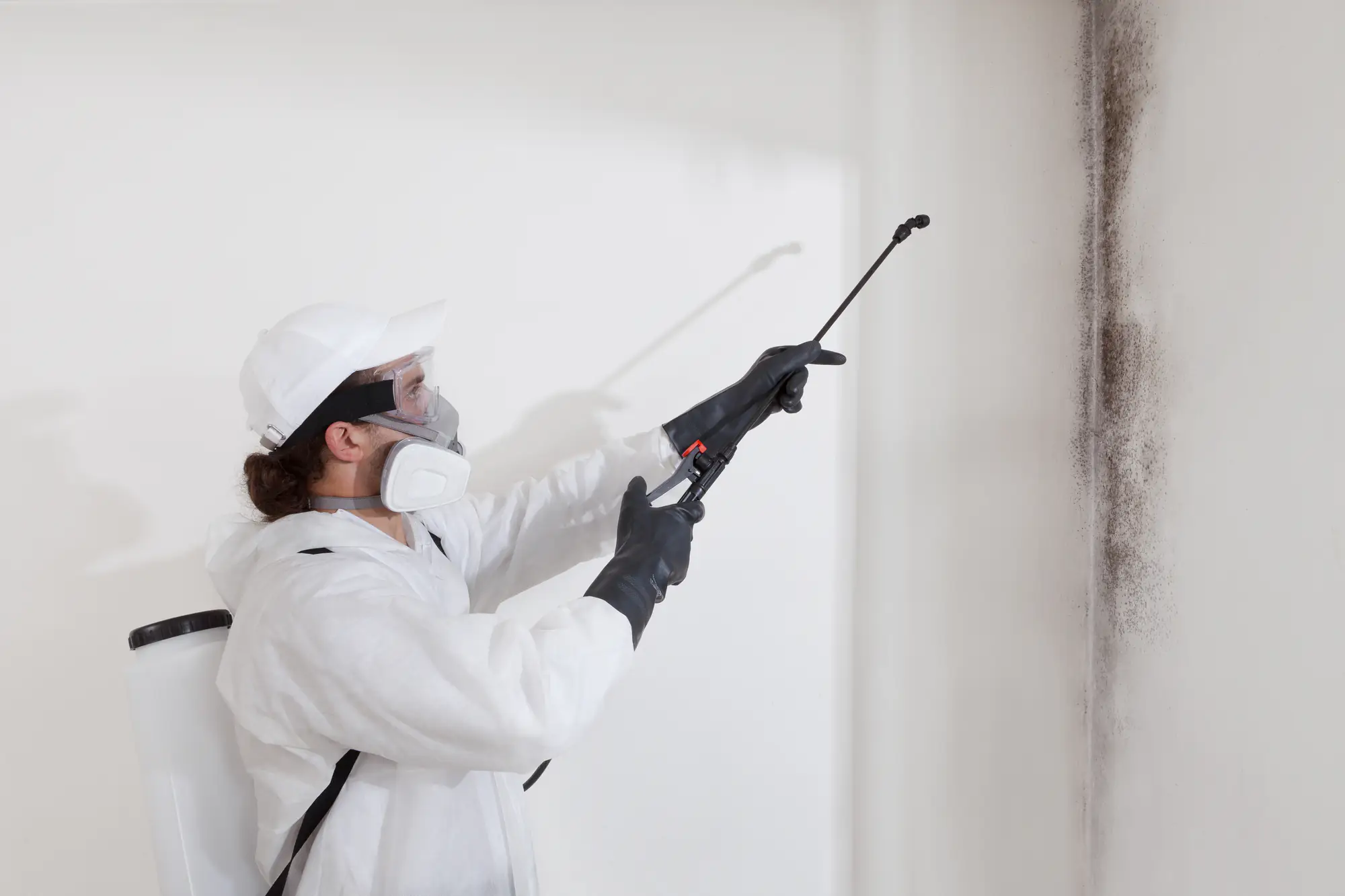
Next comes containment. Mold releases spores when disturbed, so we seal off the work area with plastic sheeting and create negative air pressure using specialized equipment. This prevents spores from floating into clean areas of your home during removal. We might also shut down your HVAC system temporarily to avoid spreading contamination through ducts.
Air filtration runs continuously throughout the project. HEPA air scrubbers capture microscopic mold spores from the air, reducing your exposure and keeping the rest of your home clean. These machines filter particles as small as 0.3 microns—far smaller than the naked eye can see.
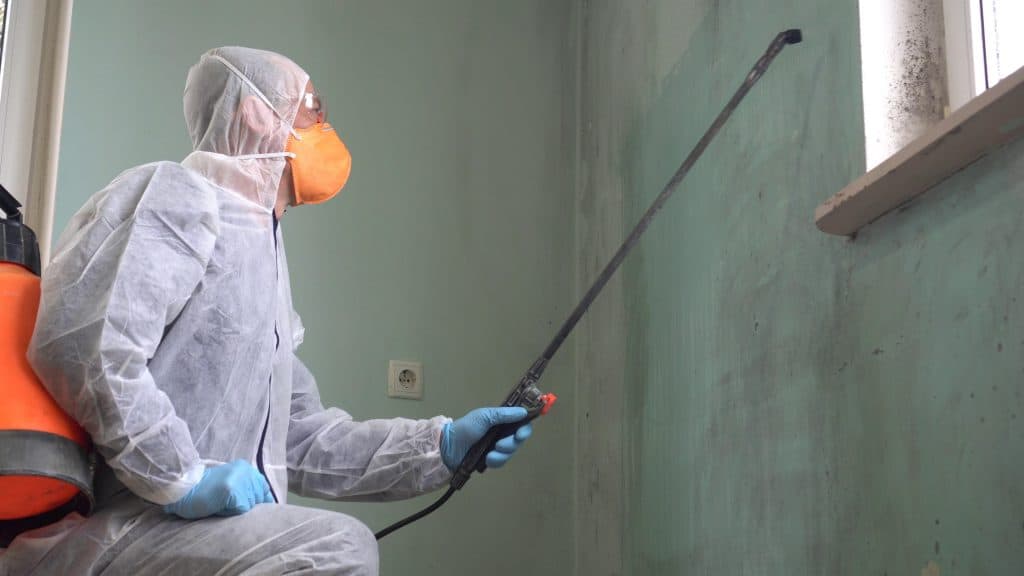
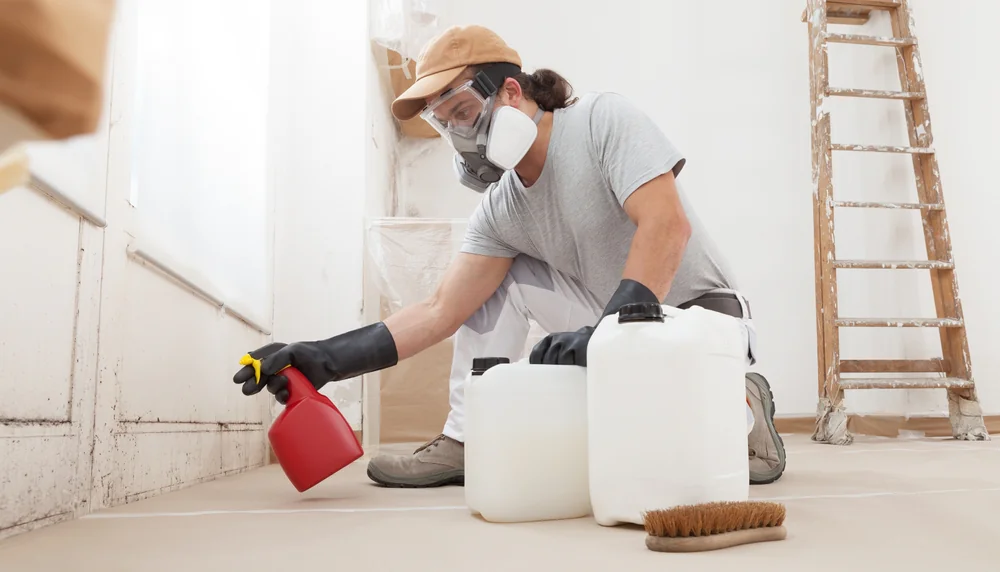
Removal itself depends on what’s contaminated. Non-porous materials like metal, glass, and hard plastics can usually be cleaned with antimicrobial solutions and HEPA vacuuming. Porous materials like drywall, insulation, carpet, and ceiling tiles typically need to be removed and discarded. Mold grows deep into porous surfaces where cleaning can’t reach, so removal is the only reliable option.
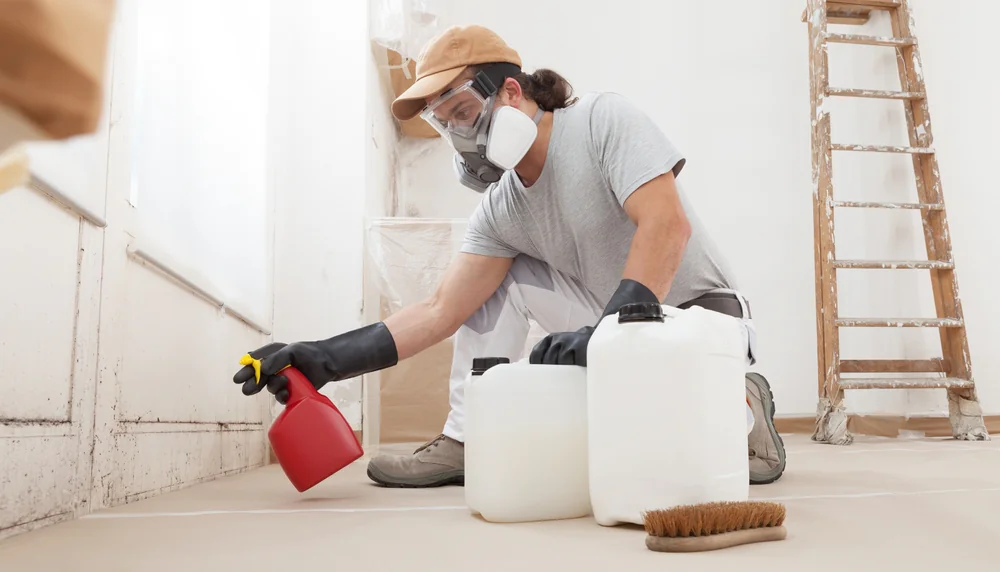
Cleaning and sanitization follow removal. We use specialized brushes, antimicrobial treatments, and HEPA vacuums on all remaining surfaces. We wipe down every pipe, wire, duct, door frame, and baseboard to remove residual spores and mycotoxins. This step is tedious but critical—leftover spores can recolonize if moisture returns.
Drying and dehumidification ensure the area is completely dry before reconstruction begins. Philadelphia’s humidity makes this step especially important. We use industrial fans, dehumidifiers, and moisture meters to confirm materials have reached acceptable dryness levels. Skipping this step invites mold to return.
Finally, restoration repairs any damage from removal. This might include replacing drywall, installing new insulation, repainting, or fixing structural elements. We handle some of this work in-house and can refer you to trusted contractors for other repairs.
The entire process can take anywhere from one day for small, isolated areas to several weeks for extensive contamination. Cost varies widely based on the size of the affected area, type of mold, and extent of damage. Most Philadelphia homeowners pay between $1,200 and $3,400, with an average around $2,200.
Why Skipping Mold Testing Before Removal Can Backfire
Some homeowners skip mold testing and go straight to removal when they see visible mold. In certain cases, that’s fine—if the mold is clearly surface-level and limited to a small area, cleaning it yourself or hiring a pro to remove it makes sense.
But mold removal without testing has blind spots. You might be treating symptoms while missing the bigger problem.
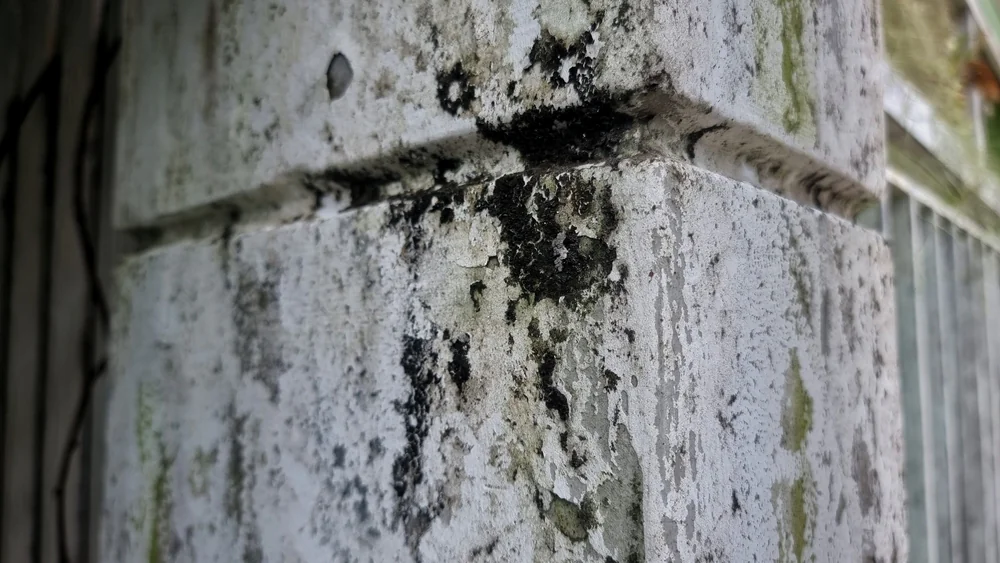
Hidden mold is the most common issue. What you see on your basement wall might be just a fraction of what’s growing behind it, inside your HVAC system, or under your flooring. Philadelphia’s older homes are notorious for concealing mold in wall cavities, crawl spaces, and around old plumbing. If you only address visible growth, the hidden mold continues spreading and releasing spores into your air.
Species identification matters too. Not all mold is created equal. Some species like Stachybotrys (black mold) produce mycotoxins that pose serious health risks and require more aggressive containment and removal protocols. Other common molds like Cladosporium are less concerning. Without testing, you won’t know which you’re dealing with or how urgently you need to act.
Testing also reveals the extent of contamination. Spore counts tell you whether you’re dealing with a minor issue or a major infestation. High spore levels indicate that mold has spread throughout your home’s air, settling on furniture, clothing, and other belongings. Those items may need professional cleaning or disposal, even if they don’t show visible growth.
Moisture sources are another critical factor. Mold grows because water is present. If you remove mold without identifying and fixing leaks, condensation, humidity problems, or drainage issues, it will come back. Testing includes moisture mapping that pinpoints exactly where water is entering your home. We use this information to address root causes, not just surface mold.
Post-remediation verification is the final piece. How do you know the removal worked? Without clearance testing, you’re relying on visual inspection alone. Spores are microscopic—you can’t see them. A room might look clean but still have elevated spore levels. Post-testing confirms that contamination has been eliminated and your indoor air quality is back to safe levels.
Insurance and legal documentation also require testing. If you’re filing a claim or dealing with a landlord dispute, you need proof of the problem and evidence that it was properly resolved. Testing provides that documentation.
The risk of skipping testing is that you might spend money on removal without actually solving the problem. You could miss hidden mold, underestimate the severity, fail to address moisture sources, or have no way to verify success. For a few hundred dollars, testing eliminates that uncertainty and ensures your remediation investment actually works.
Using Both Mold Testing and Removal for Complete Protection
Mold testing and mold removal aren’t competing services—they’re complementary steps in the same process. Testing diagnoses the problem. Removal fixes it. Together, they give you the complete picture and lasting results.
If you’re dealing with mold in Philadelphia County, start by understanding what you’re up against. Mold testing identifies hidden growth, determines species and severity, and maps moisture sources. That information guides an effective mold remediation plan tailored to your specific situation. After removal, post-testing confirms the job was done right and your home is safe again.
For Philadelphia homeowners dealing with allergies, respiratory concerns, or just wanting peace of mind, both services matter. Don’t guess. Don’t cut corners. Get the facts, eliminate the problem, and protect your family’s health. If you need professional mold testing or removal services, we provide comprehensive solutions backed by experience and local expertise.