

Hear from Our Customers
You’re noticing a musty smell in the basement. Your kids’ allergies seem worse at home than anywhere else. You see a small patch of discoloration near the bathroom, but you’re not sure if it’s actually mold or just how serious it might be.
Here’s what most people don’t realize: the mold you can see is rarely the whole problem. It’s growing behind walls, under flooring, inside HVAC systems—places a flashlight and your best guess won’t reach. And the longer it sits there, the more it spreads and the worse your indoor air quality gets.
Professional mold testing tells you three things DIY kits and guesswork can’t: where the mold actually is, what type you’re dealing with, and how much of it is in your air. That’s not just useful information. It’s what you need to make a smart decision about what happens next—whether that’s targeted removal, a full remediation, or just better ventilation in one room.
We’ve been serving Wismer and the surrounding Bucks County area for over a decade. Every inspection is handled by certified professionals who use the same equipment and testing methods you’d find in commercial buildings—not consumer-grade shortcuts.
We don’t perform mold removal. That’s intentional. When your inspector isn’t also trying to sell you a remediation job, you get unbiased results you can actually trust. We test, we report, and we explain what the lab found in plain terms.
Wismer’s mix of older homes and humid summers creates the perfect conditions for mold to grow unnoticed. We’ve inspected hundreds of properties in this area, and we know where moisture hides in Bucks County basements, crawl spaces, and attics.
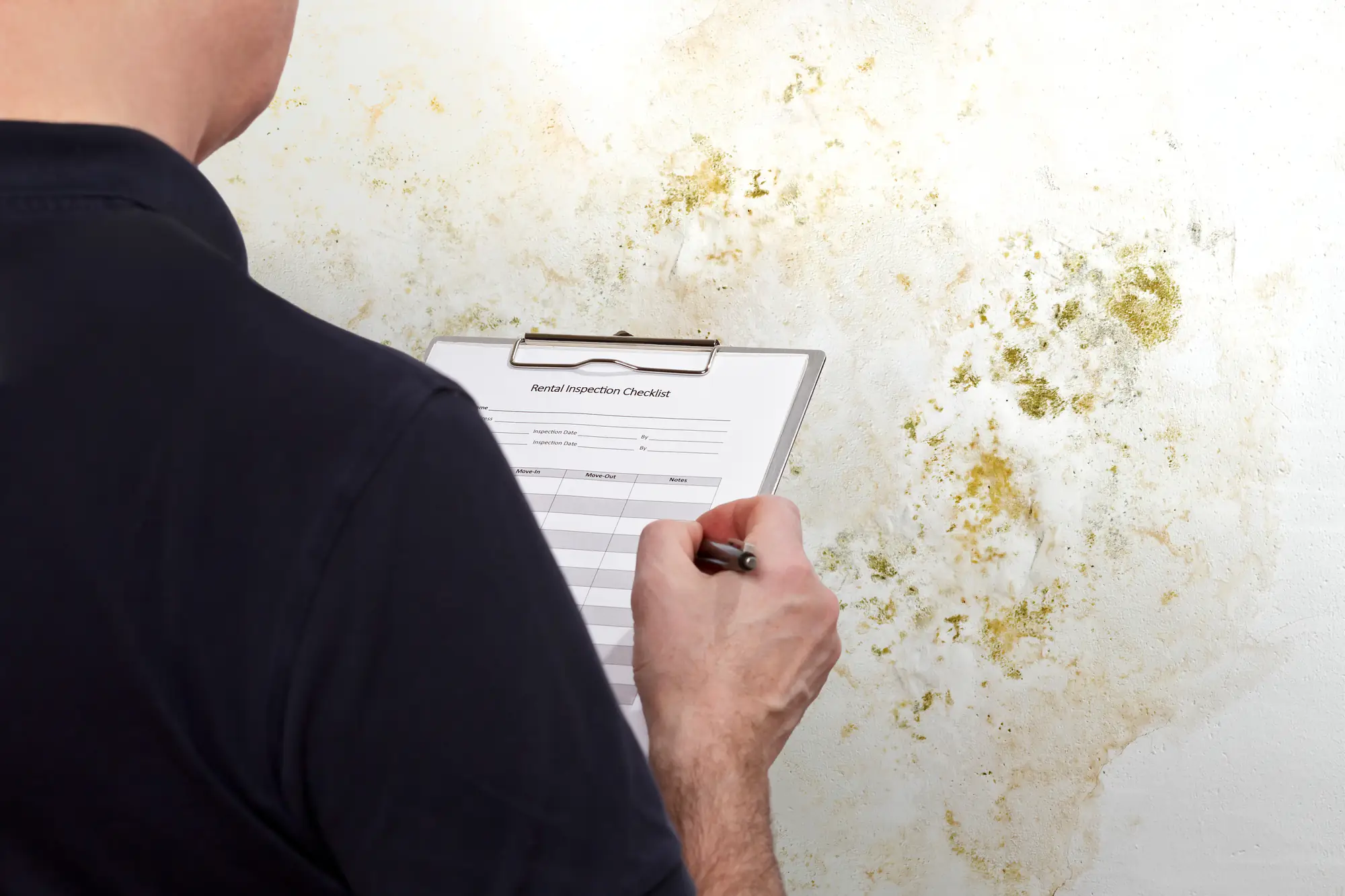
First, we walk through your property and talk about what you’ve noticed—smells, visible growth, health symptoms, water damage history. This isn’t a checklist. It’s a conversation that helps us know where to look.
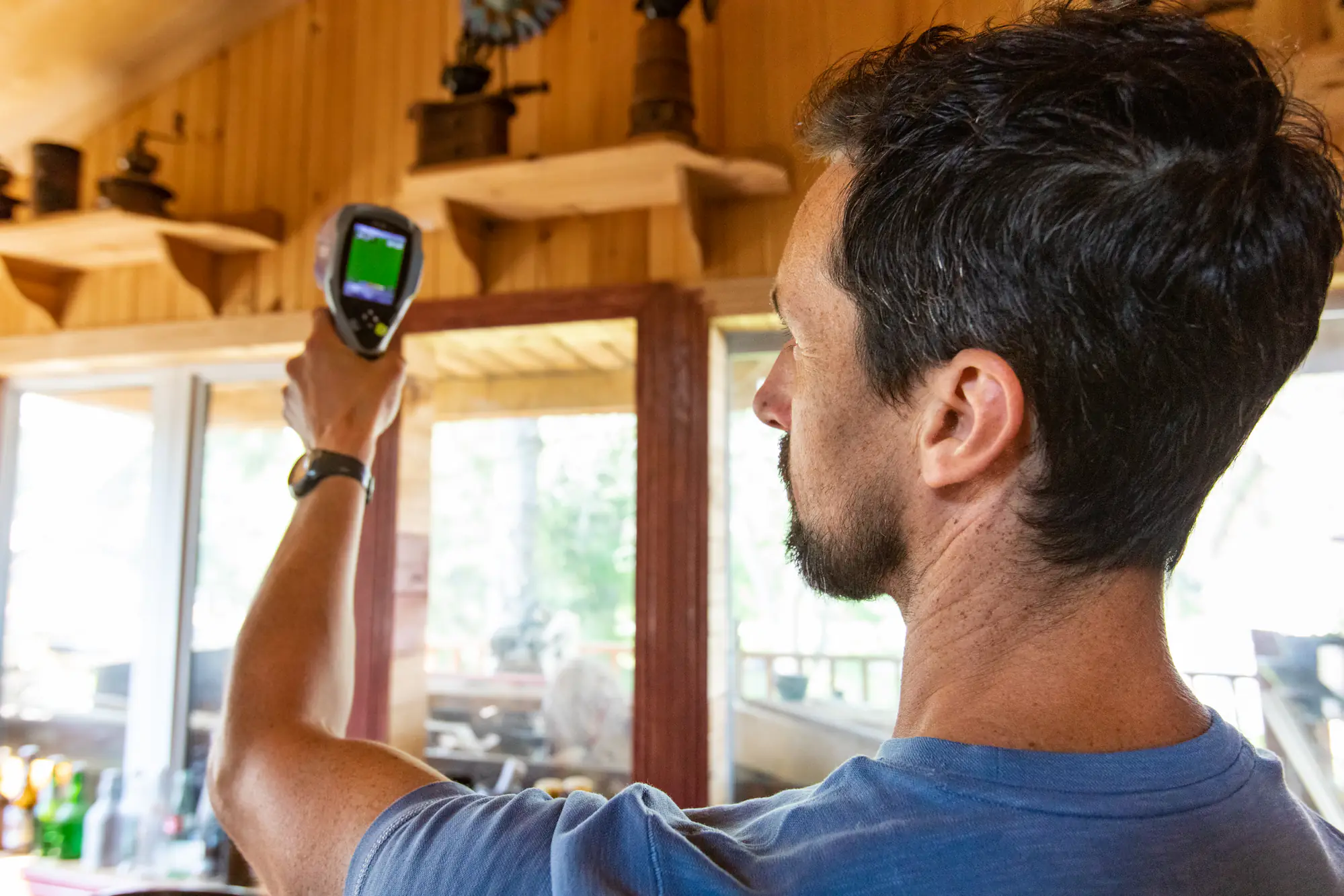
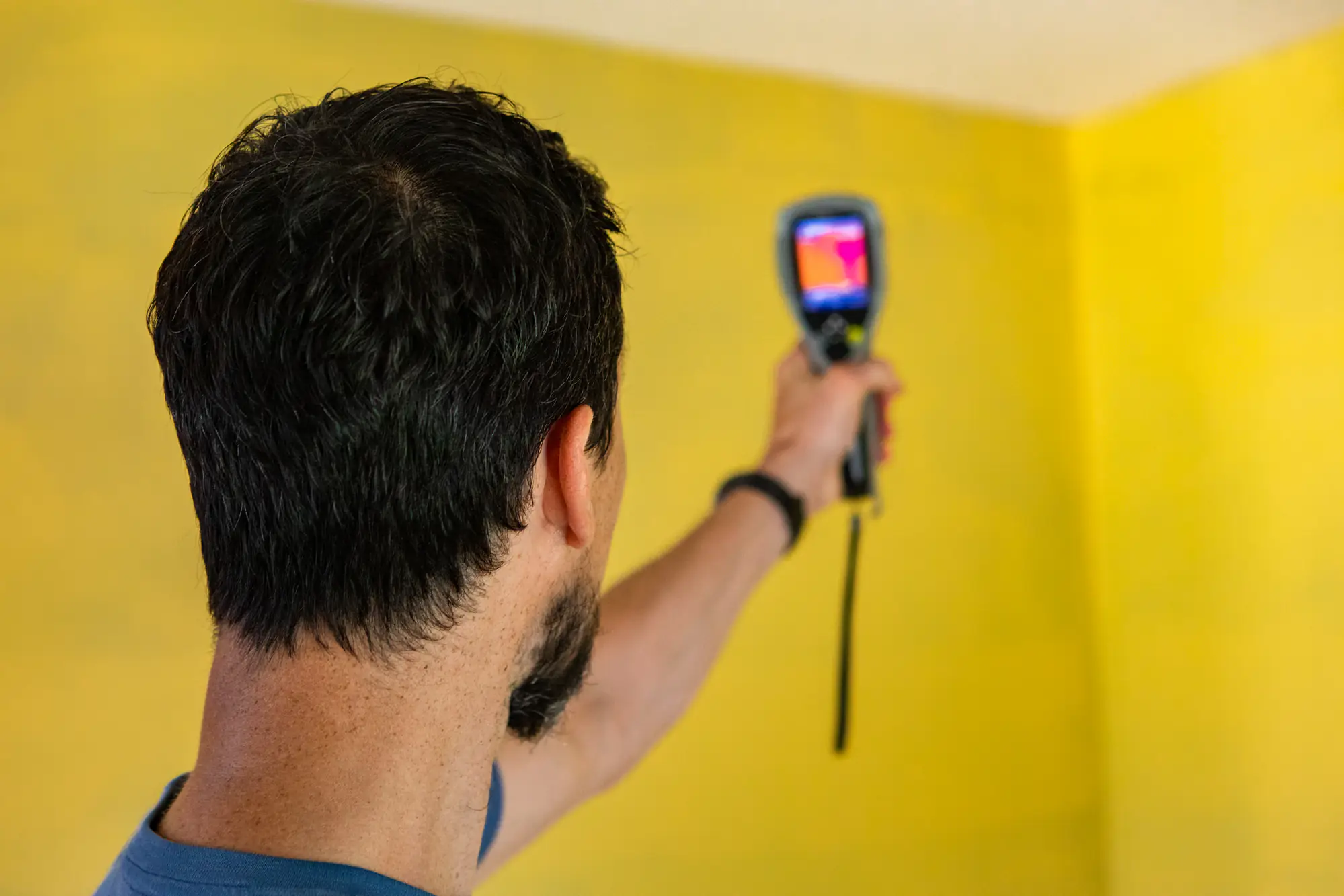
Next, we use thermal imaging and moisture meters to find areas where humidity is high or water is trapped. Mold needs moisture to grow, so these readings tell us where problems are likely hiding. We’re checking behind walls, under floors, around windows, in attics—anywhere moisture could be sitting unnoticed.
Then we collect samples. Depending on what we find, that might be air samples, surface swabs, or both. These go to an independent lab for analysis. The lab identifies the type of mold, measures spore counts, and compares your indoor air quality to outdoor baseline levels.
Within a few days, you get a full report. We walk you through what was found, what it means for your health and your property, and what your options are. No upselling. No scare tactics. Just the facts and what makes sense for your situation.
Ready to get started?
Every mold testing service includes a full visual inspection of your property, moisture mapping with infrared technology, and sample collection using professional-grade equipment. We don’t just test one room and call it done. We’re looking at the whole picture—attics, basements, crawl spaces, HVAC systems, anywhere moisture or mold could be present.
In Wismer and throughout Bucks County, we see recurring issues tied to the local climate. Precipitation in Pennsylvania has increased 5% to 10% in recent years, and that extra moisture doesn’t just disappear. It settles into unfinished basements, older foundations, and poorly ventilated crawl spaces. Homes built before modern moisture barriers are especially vulnerable, and even newer construction can have problems if grading or drainage wasn’t done right.
Your lab report will show mold spore counts, identify specific mold types (including black mold if present), and indicate whether your indoor levels are elevated compared to outdoor air. We also provide a written summary that explains what the numbers mean, where the moisture is coming from, and what steps make sense based on severity. If remediation is needed, you’ll have documentation that any licensed contractor can work from. If it’s minor, we’ll tell you that too.
Mold testing typically costs between $200 and $800 depending on the size of your property and how many samples need to be collected. A small single-family home with one or two areas of concern will be on the lower end. Larger homes, multi-unit properties, or commercial buildings require more time and more samples, which increases the cost.
What you’re paying for is certified inspection, lab analysis, professional equipment like thermal imaging cameras and moisture meters, and a detailed report you can use to make informed decisions. DIY test kits might seem cheaper, but they don’t give you spore counts, they don’t identify moisture sources, and they won’t hold up if you need documentation for a contractor, insurance claim, or real estate transaction.
We give you an upfront price before we start. No surprises, no upselling once we’re on-site.
A mold inspection is the visual and technical assessment—walking through your property, using moisture meters and thermal imaging to find problem areas, and identifying where mold is likely growing. A mold test is the actual sample collection and lab analysis that tells you what type of mold is present and how much of it is in your air or on surfaces.
Most people need both. The inspection finds the mold. The test tells you what it is and how bad the problem is. Some companies will try to sell you testing without a real inspection, which means you might be testing the wrong areas. Others will skip testing altogether and just estimate based on what they see, which doesn’t give you the data you need for remediation or insurance purposes.
We do a full inspection first, then recommend testing based on what we find. If testing isn’t necessary, we’ll tell you. If it is, we’ll explain why and what samples make sense for your situation.
You can, but it won’t give you the same information. Home test kits can tell you if mold spores are present, but they don’t measure concentration, they don’t identify specific types, and they don’t locate the source. You’re basically confirming what you probably already suspected—that there’s mold somewhere.
Professional mold testing uses calibrated air sampling equipment that measures spore counts per cubic meter and compares your indoor levels to outdoor baselines. That’s how you know if your indoor air quality is actually elevated or if you’re just dealing with normal environmental mold that’s not a health risk. Lab analysis also identifies the species, which matters because some molds are more toxic or more aggressive than others.
The other issue with DIY kits is that they don’t include moisture mapping or thermal imaging. Mold grows where moisture is trapped, and if you don’t find the moisture source, you’re just treating symptoms. Professional testing finds the root cause so you can fix it properly the first time.
Lab results typically come back within three to five business days after we collect samples. The timeline depends on the lab’s current workload, but most reports are ready within a week. Rush processing is available if you’re in a time-sensitive situation—like a real estate closing or an urgent health concern—but that usually comes with an additional fee.
Once we get the lab report, we’ll contact you to schedule a time to review the findings. We don’t just email you a PDF full of technical terms and leave you to figure it out. We walk you through what was found, explain what the spore counts mean, show you where the problem areas are, and discuss what your options are based on severity.
If you need documentation for a contractor, insurance claim, or legal matter, the report includes everything required—sample locations, mold species identified, spore concentration levels, and our professional interpretation of the findings.
Lab analysis can identify hundreds of mold species, including the ones people are most concerned about—Stachybotrys (black mold), Aspergillus, Penicillium, Cladosporium, and Alternaria. The lab uses microscopy and sometimes DNA analysis to determine exactly what’s growing in your home, not just whether mold is present.
Different molds behave differently. Some are more toxic. Some spread faster. Some indicate specific moisture problems, like long-term water damage versus recent humidity issues. Knowing what type you’re dealing with helps determine how aggressive the remediation needs to be and whether there are health risks for people with asthma, allergies, or compromised immune systems.
Black mold gets the most attention, but it’s not the only one that matters. Aspergillus can trigger severe respiratory reactions in sensitive individuals. Penicillium is common in water-damaged materials and can spread quickly. The point of testing isn’t just to scare you with a name—it’s to give you accurate information so you can respond appropriately.
If you can see mold, you know you have a problem—but testing still tells you how big that problem is and whether there’s more you’re not seeing. Visible mold is often just the surface growth. The bigger issue is usually hidden behind walls, under flooring, or inside ductwork where moisture has been sitting for weeks or months.
Testing also identifies the mold type, which affects how it should be removed. Some molds require more containment and safety precautions than others. If you’re hiring a remediation company, they’ll often want test results before they give you a quote because it tells them what level of containment and equipment they’ll need.
The other reason to test even when mold is visible: documentation. If you’re dealing with insurance, a landlord-tenant dispute, or a real estate transaction, you’ll need a professional report that shows what was found, where it was found, and what the spore levels were. A few photos and your word won’t be enough in those situations.
Other Services we provide in Wismer