

Hear from Our Customers
You notice a musty smell in the basement. Maybe there’s a dark spot on the ceiling that wasn’t there last month. Or you’re buying a house in Dolington and want to know what you’re getting into before closing.
Mold doesn’t announce itself until it’s already a problem. By the time you see it, there’s usually more hiding behind walls, under floors, or in your HVAC system. That’s where professional mold testing comes in.
We use thermal imaging cameras and moisture meters to find mold you can’t see. Our testing tells you what type of mold you’re dealing with, how much is there, and where it’s coming from. You get certified lab results in 24-48 hours—not guesswork, not maybes. Just facts you can use to make the right call for your home and your family.
This matters because nearly half of homes in our area show signs of mold or dampness. Bucks County’s humid summers and damp basements create perfect conditions for growth. If you’re dealing with a water leak, finished basement, or older home, the odds go up even more.
We serve homeowners and property managers throughout Dolington and Bucks County. We’re local technicians who understand what homes in this area face—the humidity, the older construction, the basement moisture issues that come with our climate.
We’re not a national franchise following a script. When you call, you’re talking to someone who knows the difference between a surface issue and a structural problem. Someone who’s seen what happens when mold gets ignored in a Dolington home.
Our testing equipment is calibrated daily. Our lab partners are nationally recognized. And our reports hold up with insurance companies, real estate agents, and banks—because they’re thorough, accurate, and backed by certified analysis.
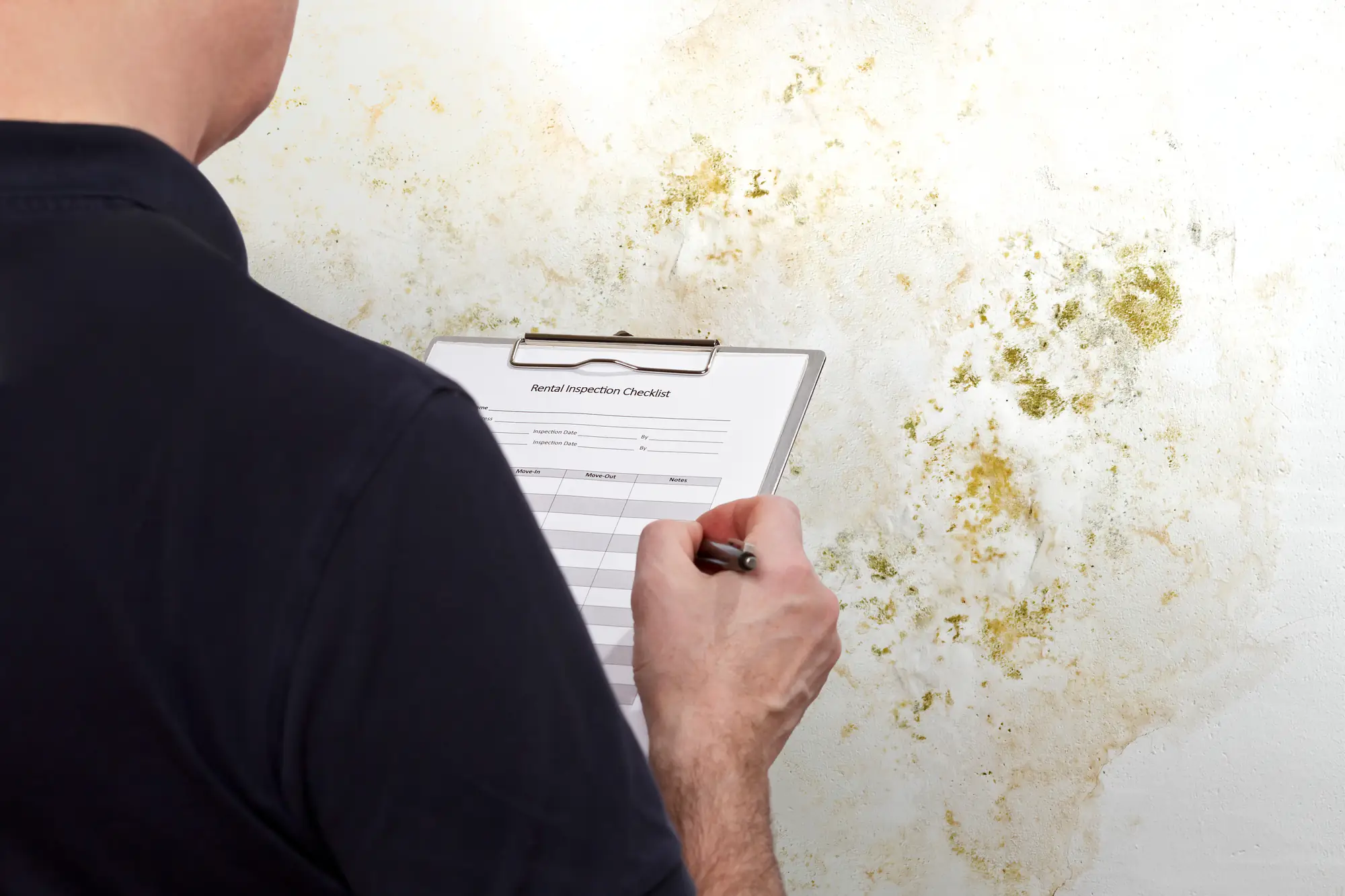
First, we schedule an inspection at a time that works for you. No waiting around for a four-hour window. When we arrive, we walk through your home and listen to what you’ve noticed—smells, stains, health symptoms, water issues.
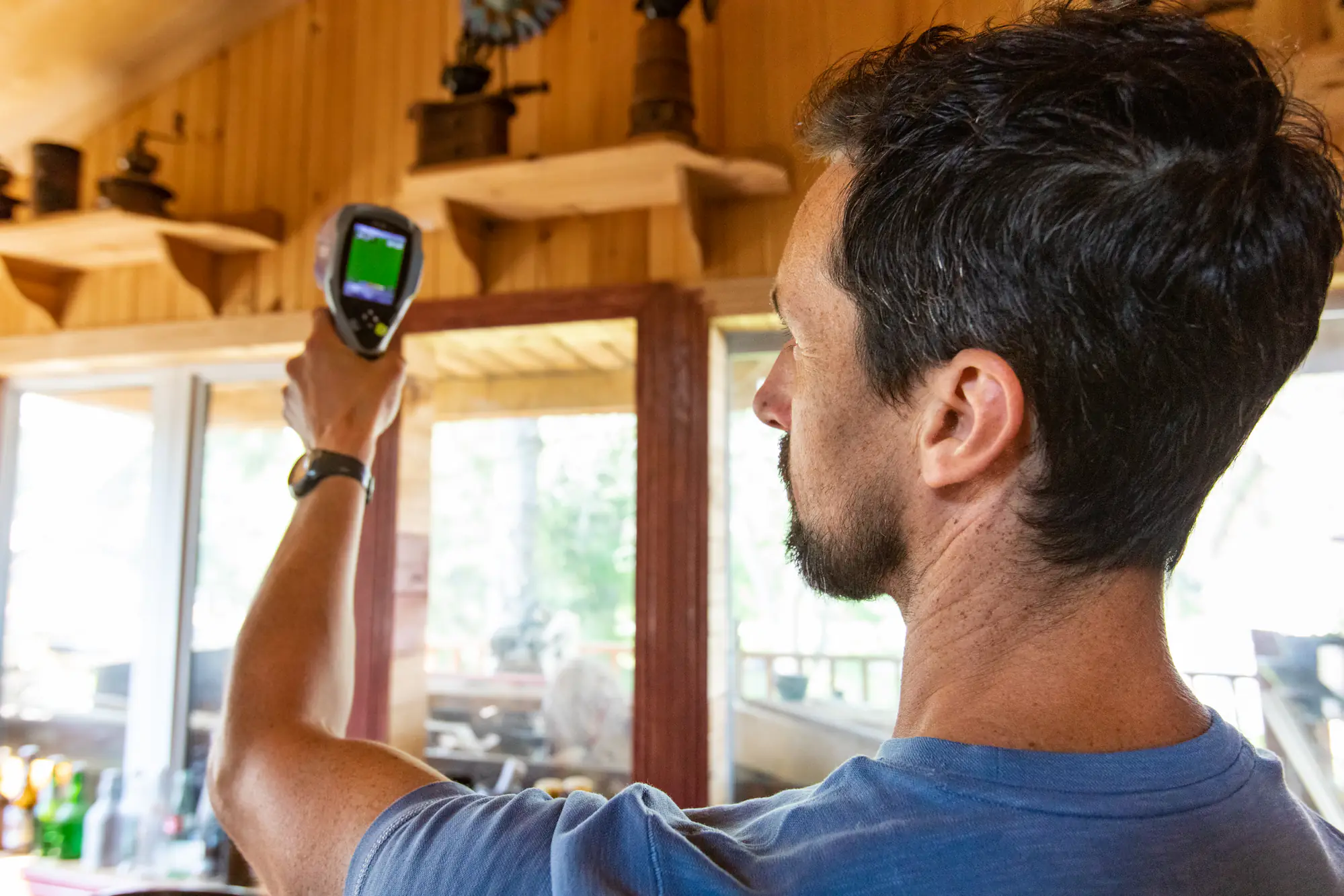
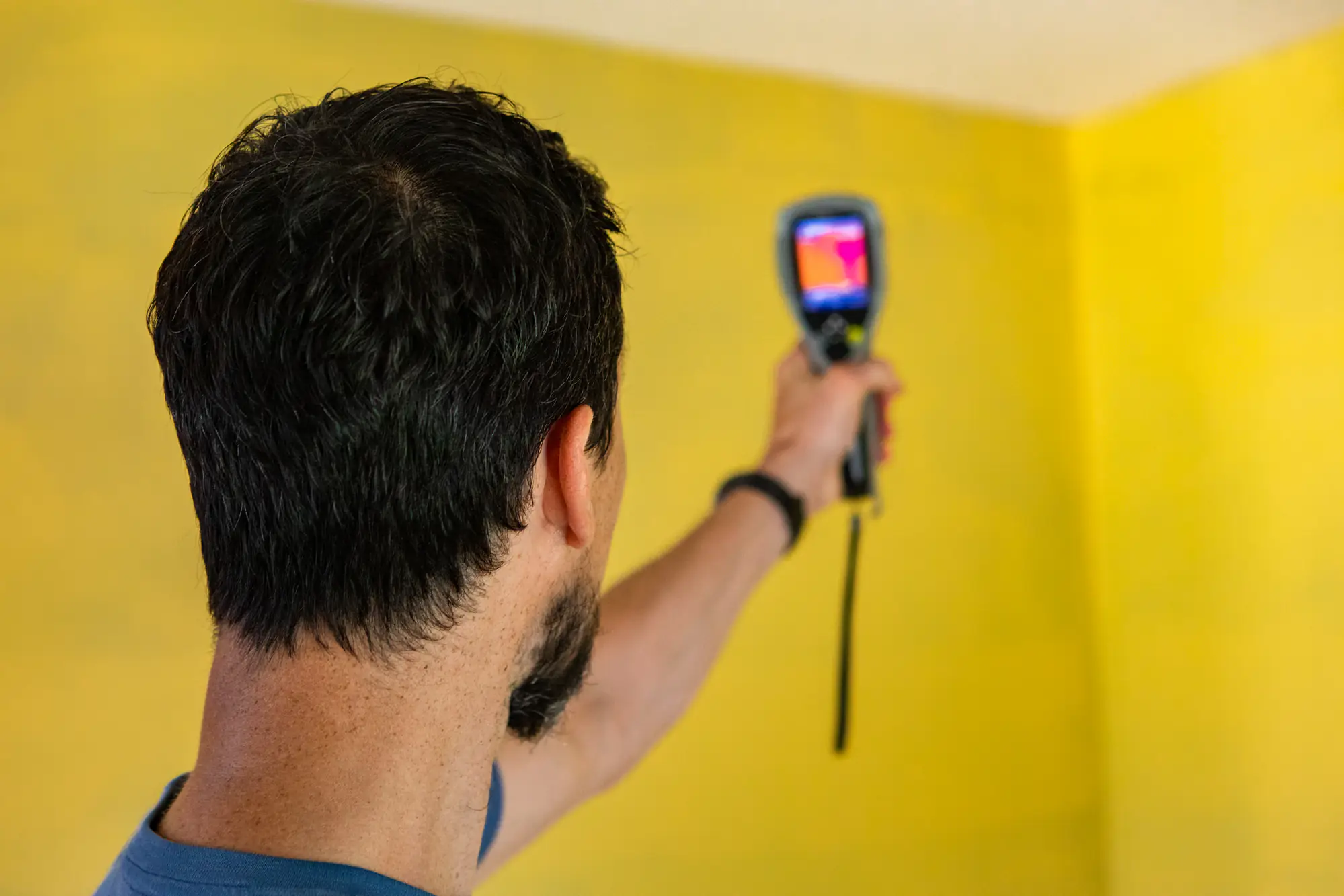
Then we start testing. We use moisture meters to check walls, floors, and ceilings for hidden dampness. Thermal imaging cameras show us temperature differences that indicate moisture or poor ventilation. We take air samples to measure mold spore levels in different rooms, and surface samples from any visible growth or suspicious areas.
Those samples go to an independent lab for analysis. You’re not relying on our opinion—you’re getting certified results that identify the exact type and concentration of mold in your home. We typically have results back within 24-48 hours.
Once the lab report comes in, we walk you through what it means in plain language. If there’s mold, we explain where it’s growing, why it’s there, and what it’ll take to remove it. If the levels are normal, you get peace of mind and documentation you can use for insurance or real estate purposes.
Ready to get started?
Our mold testing includes a full visual inspection of your property, moisture mapping with professional-grade meters, and thermal imaging to detect hidden water intrusion. We test the air quality in multiple rooms and take surface samples from any areas of concern.
Every sample is analyzed by a certified third-party lab. You receive a detailed report that breaks down mold types, spore counts, and moisture levels—plus our assessment of what’s causing the problem. We don’t just tell you there’s mold. We show you where the water is coming from.
In Dolington, that often means checking basements for groundwater seepage, inspecting crawl spaces for poor ventilation, and looking at attics for roof leaks or condensation issues. Homes here deal with specific challenges—older foundations, humid summers that push indoor humidity above 60%, and HVAC systems that can spread spores if not maintained.
If we find mold, we provide a clear remediation plan with realistic costs. If we don’t find mold but detect conditions that could lead to growth, we tell you how to prevent it. Either way, you’re not left guessing what to do next.
Most residential mold testing in Dolington runs between $300 and $600, depending on your home’s size and how many samples we need to take. A small condo with one area of concern costs less than a 3,000 square foot home where we’re testing multiple rooms.
That price includes the on-site inspection, moisture detection, thermal imaging, sample collection, and certified lab analysis. You’re paying for accuracy—not a visual guess or a moisture reading that leaves you wondering if there’s actually mold present.
Some companies offer cheaper testing, but they skip the lab work or use less reliable methods. Others charge more because they’re hoping you’ll hire them for remediation. We keep our testing independent so you get honest results, whether or not you need our removal services.
The on-site inspection usually takes 1-2 hours, depending on your home’s size and how many areas we’re checking. We’re thorough, but we’re not going to waste your afternoon.
After we collect samples, the lab analysis takes 24-48 hours. You’ll have results and a full report within two business days in most cases. If you’re dealing with a real estate transaction or insurance claim that needs faster turnaround, let us know—we can often expedite lab processing.
Once results are in, we schedule a follow-up call or meeting to review findings and discuss next steps. The whole process from your first call to having a clear action plan typically takes less than a week. If you’re dealing with active water damage or a health emergency, we can start testing the same day you call.
You can buy DIY mold test kits at hardware stores for $10-$50, but they’re not reliable enough to base decisions on. Most of them just tell you that mold spores are present—which is true in basically every home. They don’t tell you what type of mold, how much is there, or whether the levels are actually dangerous.
Professional testing uses calibrated equipment and certified lab analysis to give you accurate spore counts and identify specific mold species. That matters because not all mold is the same. Some types are relatively harmless. Others—like black mold—can cause serious health problems and require immediate remediation.
If you’re trying to document mold for insurance, satisfy a real estate inspection, or make a decision about whether to invest in remediation, you need professional testing. DIY kits won’t hold up with insurance companies or buyers, and they won’t tell you where the moisture is coming from. You’ll end up paying for professional testing anyway after wasting time and money on a kit that raises more questions than it answers.
In Bucks County, we most often find Cladosporium, Penicillium, Aspergillus, and Stachybotrys—which is the black mold everyone worries about. Each grows in slightly different conditions, but they all need moisture and organic material to thrive.
Cladosporium shows up on wood surfaces, drywall, and fabrics. It’s one of the most common indoor molds and usually appears as black or green spots. Penicillium grows on water-damaged materials and often causes that musty smell you notice in basements. Aspergillus likes warm, humid environments and can grow in HVAC systems or on damp walls.
Stachybotrys—black mold—grows on materials with high cellulose content like drywall, wood, and paper after prolonged water exposure. It’s less common than the others, but it’s the one that causes the most health concerns. If you’ve had a leak, flood, or persistent dampness in your Dolington home, there’s a real chance it’s growing somewhere hidden. That’s why testing matters—you need to know exactly what you’re dealing with before you start tearing into walls or ignoring a problem that could be serious.
Yes. Our lab reports show spore counts for each type of mold detected, and we compare those numbers to normal outdoor levels and EPA guidelines. If your indoor levels are significantly higher than outdoor levels, or if we find toxic mold species in concerning concentrations, you need remediation.
We also look at where the mold is growing and what’s causing it. Sometimes you have elevated spore counts but no active growth—meaning the problem was in the past and just needs cleaning. Other times we find active colonies that are spreading and require professional removal to prevent health issues and property damage.
The report gives you facts. We give you context. If you need remediation, we explain what that involves and what it’ll cost. If you don’t need it, we tell you that too—and explain what you should do to prevent mold from becoming a problem later. You’re not pressured into services you don’t need. You get honest answers based on what the testing actually shows.
Mold can start growing within 24-48 hours after water exposure. If your basement floods, your roof leaks, or a pipe bursts, the clock starts immediately. By the third day, you’ve likely got active mold growth—even if you can’t see it yet.
That’s why water damage needs fast attention. The longer materials stay wet, the deeper moisture penetrates and the more mold spreads. What starts as a small leak in your Dolington home can turn into a full remediation job if it’s ignored for a week or two.
If you’ve had recent water damage—even if you cleaned it up—mold testing is worth it. We can detect hidden moisture and early-stage growth before it becomes visible or starts affecting your health. Catching it early saves you money and prevents the kind of damage that tanks property values and scares off buyers. Most homeowners wait too long. Don’t be one of them.
Other Services we provide in Dolington