

Hear from Our Customers
You stop wondering if that cough is from something in your house. The musty smell that hits you when you walk downstairs disappears. Your kids’ allergies calm down, and you’re not constantly opening windows trying to air out rooms that never seem to get better.
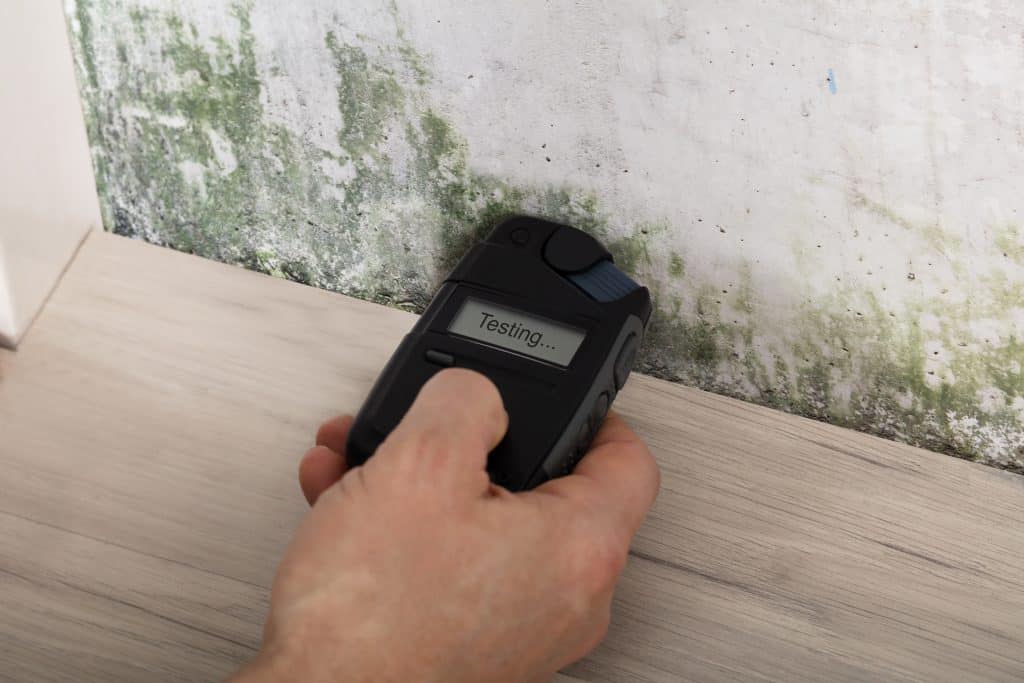
When mold removal is done right, it’s not just about scrubbing visible spots off a wall. It’s about finding every trace using thermal imaging and moisture meters, then addressing why it grew there in the first place. Because if the leak in your foundation or the condensation in your HVAC system isn’t fixed, you’re just buying yourself a few months before it comes back.
Most homeowners in Parkland, PA deal with mold because of Bucks County’s humid summers and damp winters. Older basements, poor ventilation, and homes built in the 80s and 90s create perfect conditions. Professional mold removal means you get containment that stops spores from spreading during the job, extraction that removes contaminated materials safely, and documentation that actually helps if you’re filing an insurance claim.
We work with homeowners throughout Parkland, PA who are dealing with black mold in basements, mold in crawl spaces, and contamination in HVAC systems. We’re IICRC-certified, which means our team follows established guidelines for containment, removal, and disinfection.
We know how Bucks County homes are built. We know which decades had the worst construction methods for moisture control. We know that your 1987 split-level probably has mold in the basement near the sump pump, and your 1990s colonial likely has it around the bathroom exhaust fan that vents into the attic instead of outside.
You’re not getting a national franchise that sends different crews every time. You’re getting local mold cleaning services from people who’ve seen your exact problem in hundreds of Parkland homes and know how to fix it permanently.

First, we do a free inspection. We’re not just looking at the visible mold on your basement wall. We’re using moisture meters to find elevated readings behind drywall, thermal imaging to spot temperature differences that indicate water intrusion, and air quality testing if needed. You get a clear answer about what’s growing, where it’s coming from, and what it’ll take to fix it.
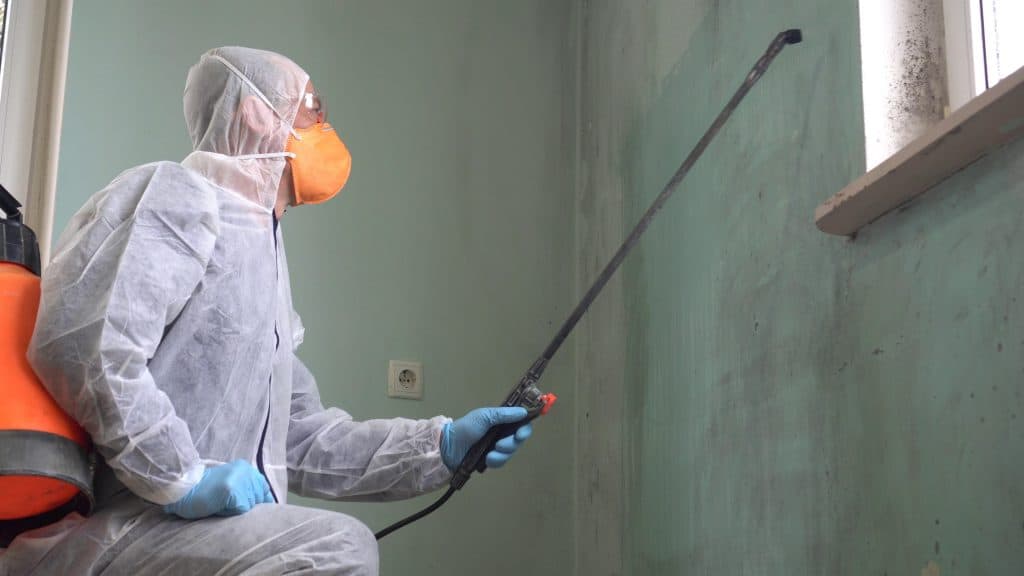
Next, we contain the area. This isn’t optional. If mold spores spread to clean areas during removal, you’ve just made the problem worse. We set up physical barriers and negative air pressure systems with HEPA filters to keep contamination isolated.
Then we remove it. Porous materials that are contaminated—drywall, insulation, carpet—get pulled out and disposed of properly. Hard surfaces get treated with professional-grade antimicrobial solutions. We don’t just clean what you can see. We’re treating studs, subfloors, and ductwork.
Finally, we fix the moisture source. Maybe it’s a foundation crack. Maybe it’s a bathroom fan venting into your attic. Maybe it’s condensation on cold water pipes. Whatever caused the mold gets addressed, or you’ll be calling someone again in six months. We give you documentation, photos, and moisture readings for your records and insurance company.
Ready to get started?
You get a thorough inspection with actual equipment—not just someone eyeballing your basement. Moisture meters, thermal cameras, and years of experience finding mold in places homeowners don’t think to look. You get containment setup that prevents cross-contamination. You get safe removal of affected materials and treatment of surfaces that can be saved.
In Parkland, PA, most mold problems we see are in basements and crawl spaces where Bucks County’s high water table and clay soil create constant moisture pressure against foundations. Homes built before modern waterproofing standards are especially vulnerable. We also see a lot of mold in HVAC systems where humid summer air condenses on cold ductwork, then circulates spores throughout the entire house.
You also get help with insurance claims. Most homeowners insurance covers mold removal when it’s related to a covered water damage event—like a burst pipe or roof leak. We provide the documentation, photos, and detailed reports that insurance companies require. We’ve helped hundreds of families get their mold remediation covered, and we’ll work directly with your insurance company to streamline the process.
After the job, your indoor air quality improves. Allergies calm down. That persistent musty smell is gone. And your property value stays protected, because untreated mold can derail a real estate deal faster than almost anything else.
Most homeowners in Parkland, PA pay between $1,100 and $3,200 for professional mold removal, but the actual cost depends on how much mold you have, where it’s located, and what caused it. A small area of mold on a bathroom ceiling costs less than black mold throughout a finished basement.
Here’s what affects price: the square footage of contaminated area, whether we’re removing drywall and insulation or just treating hard surfaces, how difficult the mold is to access, and what moisture problem needs to be fixed. If you’ve got mold in a crawl space that requires someone to belly-crawl through tight spaces, that’s more labor-intensive than mold on an open basement wall.
We give you an upfront estimate after the free inspection. You’ll know exactly what you’re paying before any work starts. And if your mold is related to a covered water damage event, your homeowners insurance may cover most or all of the cost. We help with the claims process and provide all the documentation your insurance company needs.
Mold comes back if the moisture source isn’t fixed. Period. You can scrub every visible spot off your walls, but if water is still leaking through your foundation or condensation is still forming in your HVAC ducts, mold will grow again.
That’s why professional mold removal includes identifying and addressing the root cause. We don’t just clean up what’s already there. We find out why it grew in the first place. Maybe it’s a grading issue where water pools against your foundation. Maybe it’s a bathroom exhaust fan that vents into your attic instead of outside. Maybe it’s a slow leak from a pipe you didn’t know about.
When we finish a job, we’ve eliminated the existing mold and fixed the conditions that allowed it to grow. That’s the difference between a temporary fix and actual remediation. Bucks County’s humid climate means you need to stay on top of moisture control—dehumidifiers in basements, proper ventilation, gutters that direct water away from your foundation—but the mold itself shouldn’t return if the job was done right.
Small areas of mold on non-porous surfaces—like a little mold on bathroom tile grout—you can usually handle yourself with proper cleaning products and ventilation. But if you’re dealing with black mold, mold covering more than 10 square feet, mold in your HVAC system, or mold caused by contaminated water, you need a professional mold removal company.
Here’s why: mold spreads through spores. If you start scrubbing or tearing out moldy drywall without proper containment, you’re launching millions of spores into the air that settle in clean areas of your home. Professional remediation includes containment barriers, negative air pressure, and HEPA filtration to prevent cross-contamination.
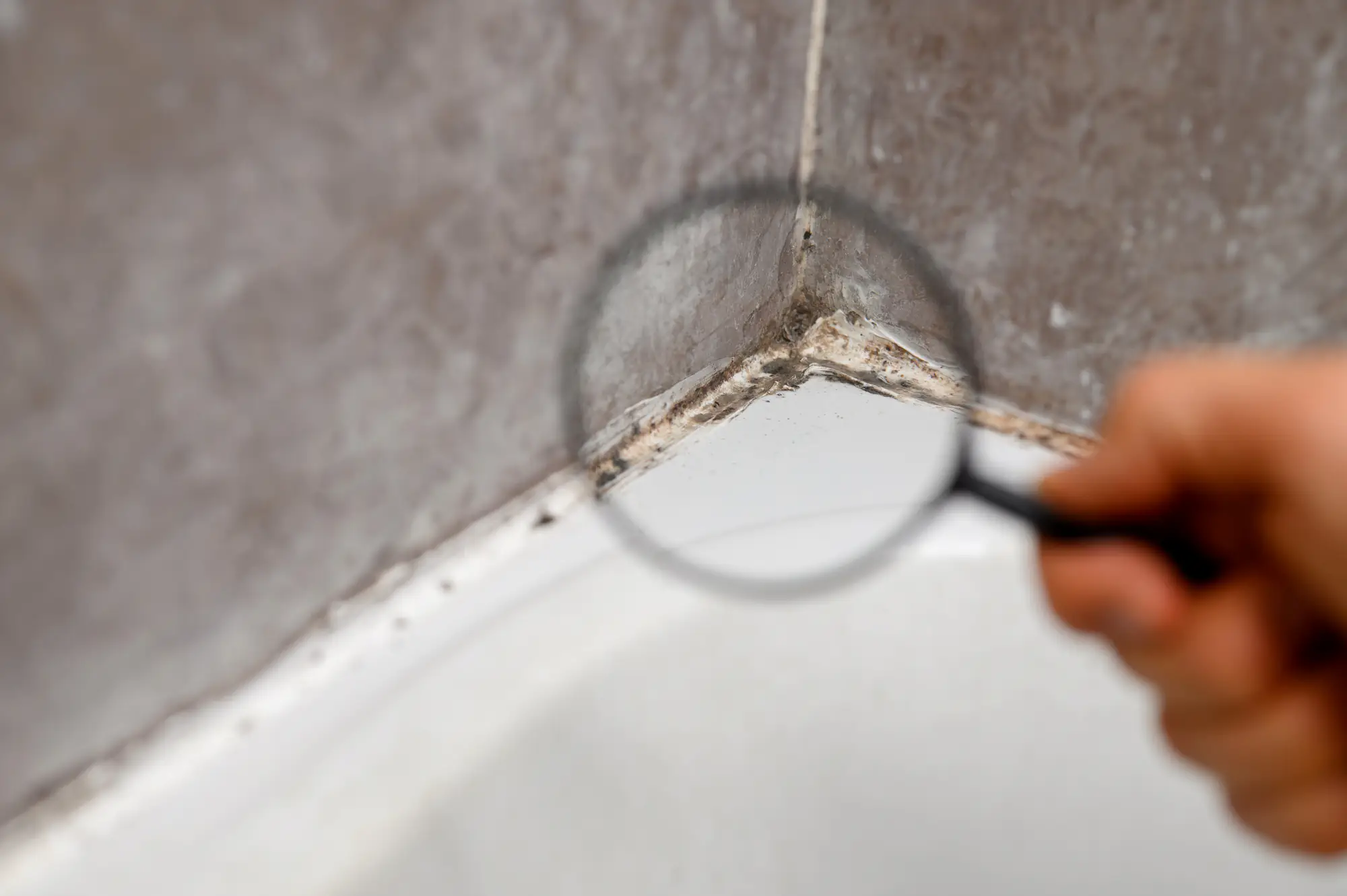
Also, you probably can’t see all the mold. It grows inside walls, under flooring, in ductwork, and in crawl spaces. We use thermal imaging and moisture meters to find hidden mold that you’d miss. And if you don’t address the moisture source, you’re just going to have mold again in a few months. Most DIY mold removal fails because homeowners treat the symptom but not the cause.
Most residential mold removal jobs in Parkland, PA take between one and three days, depending on the size of the affected area and how much material needs to be removed. A small mold problem in one bathroom might be done in a day. Extensive black mold throughout a basement could take three to five days.
Here’s the typical timeline: Day one is usually inspection, containment setup, and starting removal of contaminated materials. Day two is finishing removal, treating surfaces, and addressing the moisture source. Day three, if needed, is final cleaning, air quality verification, and documentation.
The job takes as long as it takes to do it right. We’re not rushing through containment or skipping steps to finish faster. You want this done once, done completely, and done in a way that prevents it from coming back. Some companies will give you a faster timeline, but they’re probably not using proper containment or they’re not addressing the underlying moisture problem. We’ll give you a realistic timeframe during the free inspection based on what we actually find.
Most homeowners insurance policies in Pennsylvania cover mold removal when the mold is caused by a covered water damage event—like a burst pipe, roof leak from storm damage, or water heater failure. They typically don’t cover mold caused by long-term neglect, poor maintenance, or flooding.
The key is documentation. Insurance companies want to see proof that the mold resulted from a sudden, accidental water event. They want photos, moisture readings, a detailed scope of work, and a clear timeline. We provide all of that. We’ve worked with insurance companies on hundreds of mold claims in Bucks County, and we know exactly what they require.
If you’re filing a claim, call us before you start tearing anything out. We’ll document everything, work directly with your adjuster, and provide the detailed estimates and reports they need. Many homeowners don’t realize their mold is covered because they assume insurance won’t pay. But if a pipe burst in your wall six months ago and you’re just now discovering the mold, that’s usually a covered claim. We help you navigate the process and maximize your coverage.
Mold removal and mold remediation mean the same thing in practice—getting rid of mold in your home. Some companies use “remediation” because it sounds more technical, but both terms refer to the process of eliminating mold contamination and preventing it from returning.
What matters isn’t the terminology. What matters is whether the company is actually addressing the moisture source. A lot of mold cleaning services will scrub visible mold off surfaces, spray some antimicrobial solution, and call it done. That’s not remediation. That’s just temporary cleanup.
Real mold remediation includes finding all the mold (including hidden growth), containing the work area to prevent spore spread, safely removing contaminated materials, treating affected surfaces, fixing the moisture problem that caused the mold, and documenting everything for your records. Whether you call it removal or remediation, that’s what needs to happen. When you’re comparing mold specialists in Parkland, PA, ask them specifically what they do about the moisture source. If they don’t have a clear answer, keep looking.
Other Services we provide in Parkland