

Hear from Our Customers
You’re not looking for a temporary fix. You want the mold gone, the source identified, and confidence that it won’t come back next season.
That’s what professional mold removal actually does. We contain the affected area so spores don’t spread during removal. We use HEPA filtration to clean the air while we work. And we don’t just scrub surfaces—we remove contaminated materials, treat the area with EPA-compliant solutions, and help you understand what caused it so you can prevent it.
Most mold problems in Newportville Terrace come from the same handful of issues: basement moisture from being near Neshaminy Creek, poor attic ventilation during humid summers, or slow leaks that go unnoticed for months. Once you know the source, you can actually address it. That’s the difference between removing mold and solving a mold problem.
We serve Newportville Terrace and the surrounding Bucks County area. We know the building types here, the moisture patterns, and the common trouble spots that come with living this close to water sources.
You’re hiring certified mold remediation specialists who follow a process, not a crew with a spray bottle. We offer free inspections because we’d rather show you what’s happening than guess over the phone.
Our work is straightforward: we assess the situation, explain what needs to happen, and handle the removal using methods that meet EPA guidelines. No upselling. No scare tactics. Just clear communication and thorough work.

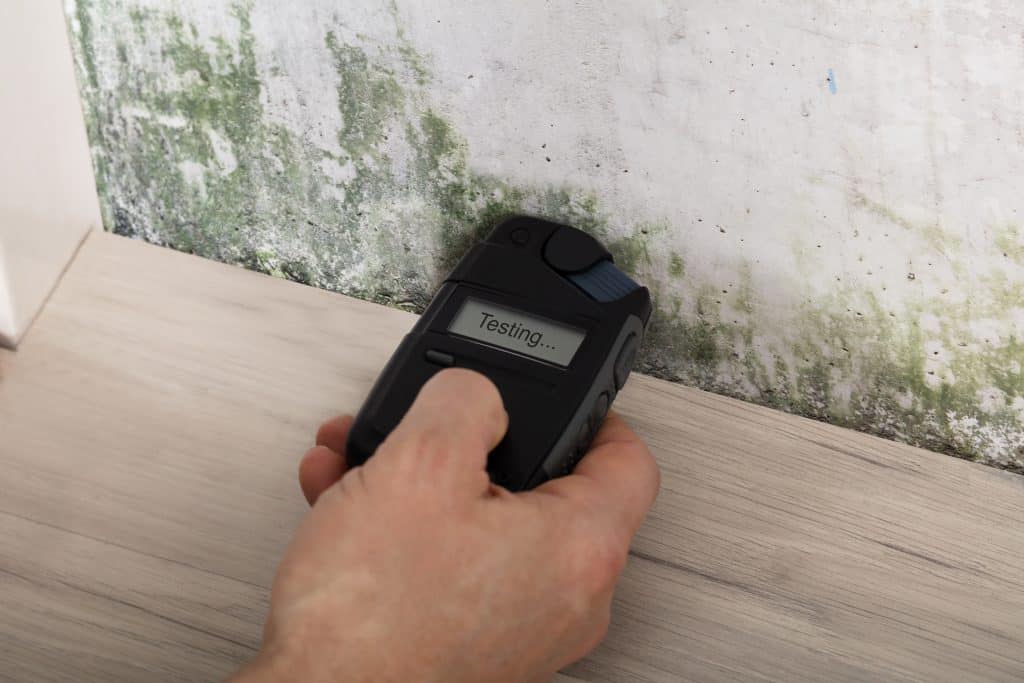
First, we inspect your property to locate all affected areas—including spots you might not see, like behind drywall or under flooring. We use moisture meters and thermal imaging when needed because mold doesn’t always grow where you can see it.
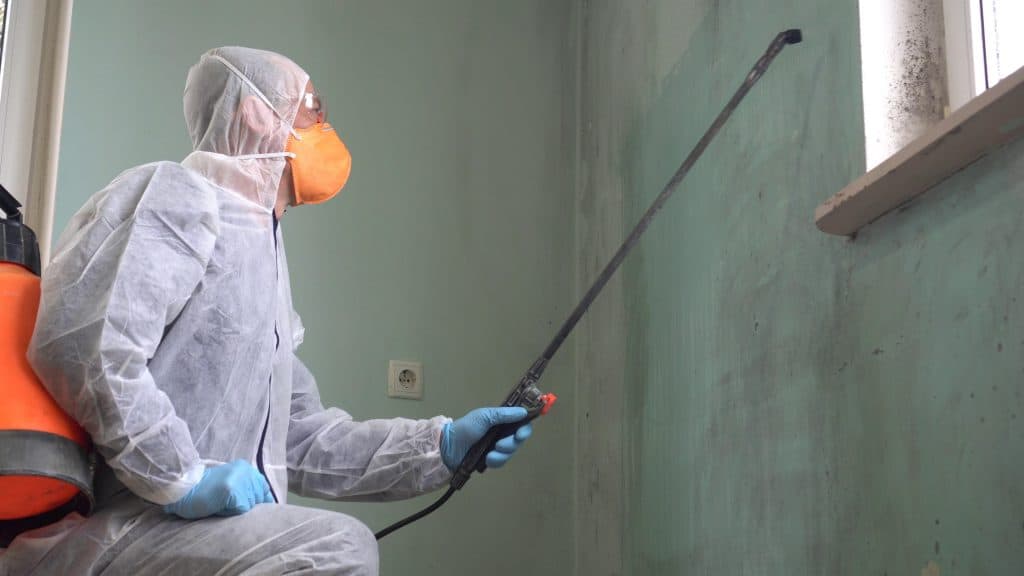
Next, we contain the work area with physical barriers and negative air pressure. This keeps mold spores from spreading to clean areas of your home during removal. We run HEPA air scrubbers throughout the process to filter airborne particles.
Then we remove the mold. Porous materials that are heavily contaminated—like drywall or insulation—get removed and disposed of properly. Hard surfaces get treated and cleaned. We don’t just make it look better. We remove the contamination.
After removal, we clean the entire area and all contents that were exposed. Finally, we walk you through what we found, what we did, and what you should watch for going forward. If there’s a moisture issue that needs addressing, we’ll tell you exactly what it is.
Ready to get started?
You get a full inspection that identifies the type of mold, the extent of growth, and the moisture source. We test when necessary, but often we can identify the problem visually and with moisture readings.
Our mold removal process includes containment setup, HEPA air filtration, safe removal of contaminated materials, antimicrobial treatment, thorough cleaning, and disposal of all affected materials. We document everything for insurance purposes if you’re filing a claim.
In Bucks County, we see a lot of basement mold from foundation moisture and attic mold from ventilation issues. Both are common here because of humidity levels and the age of many homes in Newportville Terrace. The good news is both are fixable when you address the source.
We also handle black mold removal, which gets a lot of attention but isn’t always more dangerous than other types. What matters is removing it properly and fixing whatever allowed it to grow. That’s true whether it’s black mold under your sink or green mold in your crawl space.
Most mold removal jobs in our area run between $1,500 and $4,000, but it depends entirely on how much mold there is and where it’s growing. A small bathroom issue might cost $500. A finished basement with mold behind drywall could run $6,000 or more.
Pricing typically breaks down to $10-25 per square foot, but that’s not the whole story. If we need to remove drywall, pull up flooring, or treat an entire crawl space, the scope changes. We give you a clear estimate after the inspection so you know exactly what you’re paying for.
Some homeowners insurance policies cover mold removal if it resulted from a covered event like a burst pipe. We help with documentation and can work directly with your adjuster if needed.
Small jobs—like a moldy bathroom or closet—usually take one day. Larger projects, like a basement or multiple rooms, can take three to five days depending on the extent of contamination and drying time needed.
The actual removal is often the quickest part. Setup, containment, air filtration, and proper drying take time because we’re making sure spores don’t spread and moisture levels drop enough to prevent regrowth.
We’ll give you a timeline during the estimate. If something changes once we open up a wall or pull back flooring, we’ll let you know immediately. You won’t be surprised by delays or extra days without explanation.
It depends on the size and location of the job. For small, contained areas like a bathroom or single bedroom, most families stay in the home without issue. We seal off the work area and run negative air pressure so nothing spreads.
For larger jobs—especially if mold is in your HVAC system or spread across multiple rooms—we usually recommend staying elsewhere during active removal. It’s not always necessary, but it’s the safer choice if you have young kids, anyone with asthma, or immune-compromised family members.
We’ll be straight with you during the inspection. If it’s fine to stay, we’ll say so. If we think you should leave for a few days, we’ll explain why. You’ll have enough information to make the call yourself.
Moisture. That’s it. Mold needs water to grow, and in Newportville Terrace, that moisture usually comes from basements, attics, or plumbing leaks.
Basements here are prone to dampness because of the water table and proximity to Neshaminy Creek. Even without active flooding, humidity and condensation create perfect conditions for mold. Attics are another common spot, especially in older homes with poor ventilation. Summer heat and humidity get trapped, and mold grows on wood sheathing and insulation.
Leaks are the third big cause—slow drips under sinks, around windows, or from old supply lines. You might not notice the leak for months, but mold will find it. If you’ve had any water damage in the last year, even if it seemed minor, it’s worth getting checked.
If you can see mold, you don’t usually need testing. You need removal. Testing tells you what type of mold is present, but the removal process is the same regardless of type. We’re taking it out either way.
Testing makes sense in a few situations: if you smell mold but can’t find it, if you’ve had unexplained respiratory issues and suspect hidden mold, or if you’re buying a home and want to know what you’re dealing with before closing.
We offer testing when it’s useful, but we won’t push it if it’s not necessary. Most of the time, a thorough inspection with moisture readings tells us everything we need to know. We’d rather spend your money on actually fixing the problem than running tests that don’t change the plan.
Not if you fix the moisture problem. Mold removal gets rid of the growth, but if the conditions that caused it are still there, it’ll come back. That’s why identifying the source matters just as much as the removal itself.
We don’t just clean up mold and leave. We explain what caused it—whether that’s a leaky pipe, poor ventilation, foundation moisture, or something else—and what you need to do to prevent it. Sometimes that’s a simple fix like improving airflow. Other times it means waterproofing your basement or repairing a roof leak.
Our job is to remove the mold and give you a clear picture of why it happened. What you do with that information is up to you, but at least you’ll know exactly what needs to happen to keep it from coming back.
Other Services we provide in Newportville Terrace