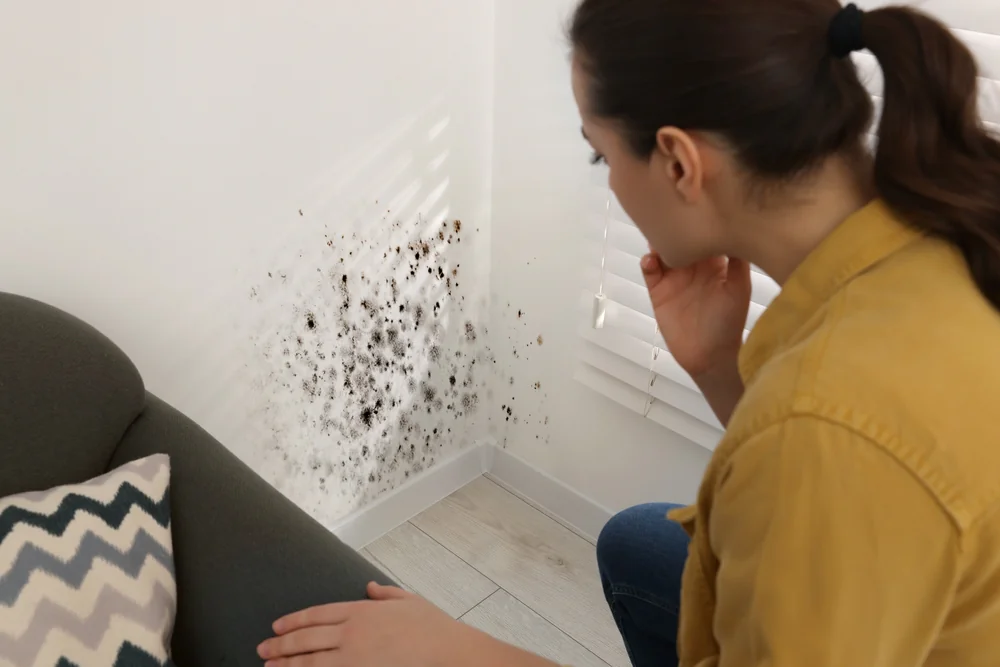
You spot something dark growing near your shower. Maybe it’s on the basement wall. Could be creeping along the bathroom grout. Your first question isn’t what it is—it’s whether you should be worried.
Here’s what matters: not all fungal growth is the same. Mildew wipes off with vinegar and elbow grease. Black mold penetrates drywall, releases spores into your air, and keeps coming back until someone fixes what’s feeding it. Knowing which one you’re dealing with determines whether you spend an afternoon cleaning or whether you need certified help before the problem spreads behind your walls.
This guide walks you through the differences that actually matter, when you can handle removal yourself, and exactly when Bucks County’s humidity and moisture patterns mean it’s time to call specialists who know how to stop it for good.
What’s the Real Difference Between Mildew and Black Mold
Mildew grows on surfaces. It’s flat, powdery, usually gray or white. You’ll find it on shower curtains, tile grout, window sills—anywhere moisture sits without good airflow. It doesn’t dig in. A spray bottle of vinegar and a scrub brush will take care of most mildew in one go.
Black mold is a different problem. Stachybotrys chartarum, the technical name, appears greenish-black and slimy or fuzzy depending on moisture levels. It doesn’t just sit on top of surfaces—it sends roots into porous materials like drywall, wood, and insulation. You can wipe the surface clean and still have an active colony growing inside the wall.
The health risks separate them too. Mildew might trigger mild allergic reactions—sneezing, watery eyes, minor respiratory irritation. Black mold produces mycotoxins that can cause serious respiratory problems, chronic fatigue, neurological symptoms, and worse outcomes for kids, elderly family members, or anyone with a compromised immune system.
Why Bucks County Homes Face Both Problems Year-Round
Bucks County gets about 49 inches of rain each year compared to the national average of 38 inches. That extra moisture doesn’t just disappear. It soaks into soil that already retains water, especially in areas like Levittown where groundwater patterns shift seasonally.
Your basement walls wick up moisture from the ground. Your HVAC system struggles with humidity control during those thick summer months when the air feels like you’re breathing through a wet towel. Older homes with aging foundations let water seep in through cracks you can’t see from inside.
All of that creates perfect conditions for both mildew and mold. Mildew shows up first on bathroom tiles and shower walls where condensation builds up daily. If you ignore the moisture problem feeding it, mold moves in behind the scenes—growing in wall cavities, under flooring, inside ductwork.
The pattern is predictable. You see mildew in visible spots. You clean it. It comes back. You clean it again. Meanwhile, mold is establishing itself in the damp spaces you can’t reach with a spray bottle. By the time you smell that musty odor that won’t go away no matter how much you clean, the problem has usually spread beyond what surface cleaning can fix.
That’s why we focus on understanding Bucks County’s specific challenges—the rainfall patterns, the soil composition, the groundwater issues. We know where to look for hidden growth. We’ve seen how moisture moves through homes in Doylestown versus Bensalem. We know which basements flood during spring thaw and which HVAC systems can’t handle July humidity.
When Surface Cleaning Works and When It Doesn’t
The EPA gives you a clear guideline: if the affected area is less than 10 square feet and it’s on a non-porous surface, you can handle mildew removal yourself. That’s roughly a three-by-three-foot patch on tile, glass, or metal. Mix equal parts white vinegar and water, spray it on, let it sit for an hour, scrub with a brush, and rinse clean.
But that only works if you’re actually dealing with surface mildew and not mold that’s penetrated the material. Here’s how to tell: if you spray cleaner on it and it wipes away easily, leaving the surface underneath intact and dry, you probably had mildew. If the surface underneath feels soft, crumbles, or stays damp even after cleaning, you’re looking at mold that’s eaten into the material.
Porous surfaces change everything. Drywall, wood, carpet, fabric, insulation—once mold gets into these materials, surface cleaning doesn’t reach the roots. You might remove the visible discoloration, but the colony keeps growing underneath. That’s why we often have to remove and replace contaminated drywall or insulation rather than just cleaning it.
The location matters too. Mold in your HVAC system spreads spores throughout your entire house every time the system runs. Mold after a flood or major leak usually means you’re dealing with widespread contamination that needs containment to prevent cross-contamination during removal. Mold that keeps coming back despite repeated cleaning tells you there’s a moisture source you haven’t identified or fixed.
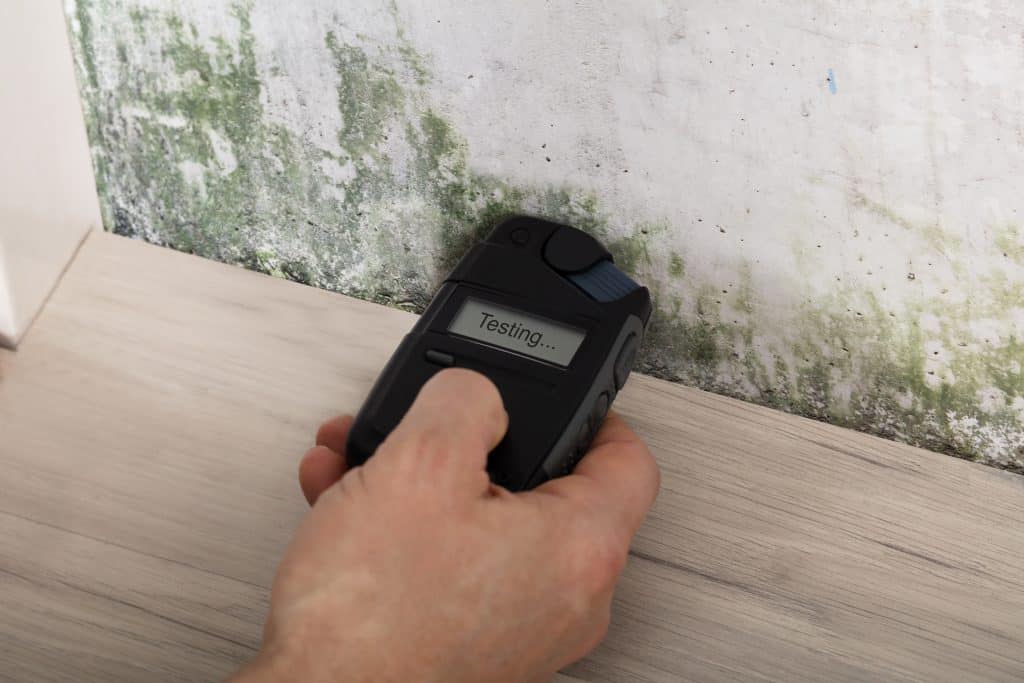
If you’re dealing with any of those situations, DIY cleaning just postpones the real solution. You need someone with moisture meters to find hidden leaks, thermal imaging to spot temperature differentials that indicate water intrusion, and containment equipment to prevent spreading spores while we work. You need testing to identify what species you’re dealing with so we can choose the right removal method. You need someone who knows how to fix the source problem, not just remove the visible growth.
Why Black Mold Specialists Use Different Methods Than DIY
Certified mold specialists don’t just clean better than you can with store-bought products. We follow protocols designed to contain the problem while we eliminate it. That distinction matters when you’re dealing with toxic mold that releases harmful spores into the air the moment you disturb it.
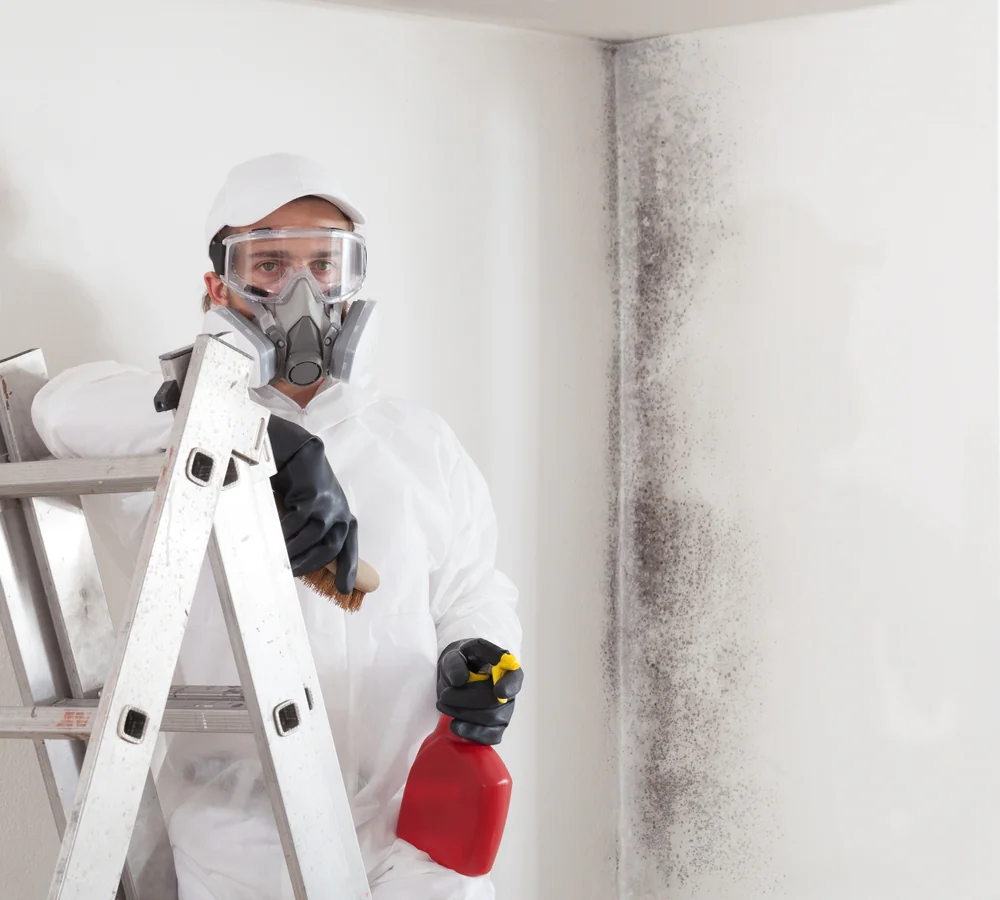
Containment comes first. We seal off the affected area with plastic sheeting and negative air pressure systems that prevent spores from escaping into other parts of your home. We wear respirators, protective suits, and gloves—not because we’re being overly cautious, but because disturbing mold colonies without protection exposes you to concentrated levels of mycotoxins that cause the health problems you’re trying to avoid.
We remove contaminated materials that can’t be salvaged. If mold has penetrated drywall or insulation, those materials come out and get disposed of properly. If it’s growing on wood framing, we treat it with antimicrobial solutions or remove and replace the affected sections. The goal isn’t just killing the mold—it’s removing it from your environment entirely, because dead mold can still trigger allergic reactions and respiratory issues.
How Roof Mold Removal Requires Specialized Equipment and Access
Roof mold presents challenges that bathroom mildew doesn’t. You’re working at heights, on sloped surfaces, with materials that can be damaged by aggressive cleaning methods. Most homeowners don’t have the safety equipment, access tools, or knowledge of roofing materials to handle this without creating bigger problems.
Different roofing materials require different approaches. Asphalt shingles can lose their protective granules if you use too much pressure or harsh chemicals. Tile roofs crack under improper weight distribution. Metal roofing needs specific cleaners that won’t cause corrosion. What works on one roof type damages another.
The bigger issue is what’s causing the roof mold in the first place. Usually it’s a combination of poor ventilation, debris accumulation, and tree coverage that keeps sections of the roof damp and shaded. Cleaning the visible growth without addressing those underlying conditions means you’re paying for the same service again in six months.
Professional roof mold removal includes identifying and fixing the moisture intrusion sources. That might mean improving attic ventilation, clearing gutters that overflow and create constant dampness, trimming back tree branches that drop debris and block sunlight, or repairing flashing around chimneys and vents where water seeps in. It also means using the right cleaning solutions at the correct dilution, applied with appropriate pressure that removes mold without damaging shingles.
The safety factor can’t be ignored either. Falls from roofs cause serious injuries. Working on a wet, algae-covered surface while handling cleaning chemicals and equipment creates risks that professional crews mitigate with proper training, safety harnesses, and insurance coverage. When you’re evaluating whether to handle roof mold yourself or call specialists, factor in not just the cost but the liability if something goes wrong.
What Black Mold Removal Contractors Actually Do During Remediation
Professional Mold remediation follows a specific sequence designed to eliminate the current problem and prevent recurrence. It starts with inspection and testing. We check every area where mold typically grows in Bucks County homes—basements, crawl spaces, HVAC systems, wall cavities near plumbing, attics with ventilation issues. We use moisture meters to measure water content in materials, thermal imaging to spot temperature differences that indicate hidden moisture, and air sampling to identify mold species and spore concentrations.
Once we know what we’re dealing with, we set up containment. The affected area gets sealed with plastic sheeting. Negative air pressure machines pull air out of the contaminated zone and filter it through HEPA filters before exhausting it outside. This prevents spores from spreading to clean areas during removal. We turn off HVAC systems so they don’t circulate contaminated air throughout your home.
The actual removal depends on what’s contaminated. Non-porous surfaces get cleaned with antimicrobial solutions and HEPA-vacuumed. Porous materials that can’t be salvaged—drywall with mold growing inside it, insulation that’s been saturated, carpet with mold in the backing—get removed and bagged for proper disposal. Wood framing gets treated if the mold hasn’t penetrated too deeply, or replaced if it has.
After removal, we address the moisture source. That’s the part DIY cleaning never covers. If a slow pipe leak has been feeding mold growth for months, we fix the leak. If poor grading is directing rainwater toward your foundation, we identify that as the problem. If your bathroom exhaust fan vents into the attic instead of outside, we correct it. Without fixing what’s feeding the mold, you’re just creating conditions for it to come back.
The final step is verification. Post-remediation testing confirms that mold levels have returned to normal background levels. We check moisture content in materials to ensure everything has dried properly. We inspect the work to make sure containment barriers are removed, surfaces are clean, and the area is safe to reoccupy. Only then is the job considered complete.
Choosing the Right Mildew Removal or Mold Remediation Response
Small patches of mildew on shower tile don’t require professional intervention. A spray bottle and some scrubbing will handle it. But if you’re seeing recurring growth, smelling musty odors that won’t go away, dealing with mold after water damage, or finding growth on porous materials like drywall, you’re past the point where DIY solutions work.
The difference between mildew and black mold isn’t just academic—it determines whether you’re dealing with a surface nuisance or a health hazard that requires proper containment and removal. In Bucks County’s humid climate with its heavy rainfall and moisture-retaining soil, the conditions that create these problems aren’t going away. What matters is addressing them correctly when they appear.
If you’re uncertain about what you’re dealing with or whether you can handle it safely, that uncertainty itself is a signal to call specialists. We provide free inspections that identify exactly what’s growing, where it’s located, and what’s feeding it. From there, you get a clear picture of what needs to happen and what it will cost—no surprises, no pressure, just information that helps you make the right decision for your home.