
Hear from Our Customers
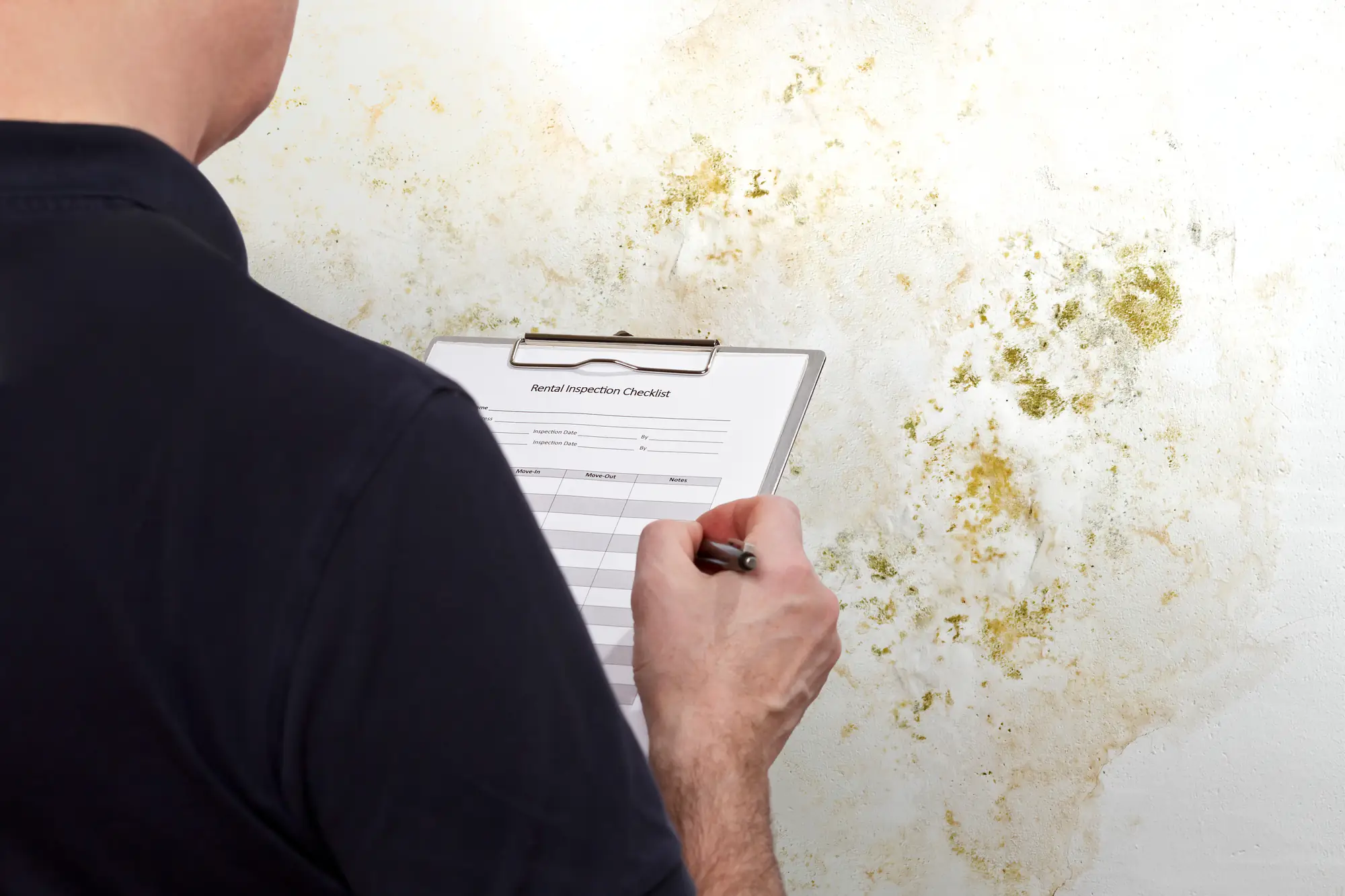
You’ve noticed the musty smell in your basement. Or maybe your allergies get worse the moment you walk through the front door, then clear up when you leave for work.
That’s not normal. And a quick visual check isn’t going to tell you what type of mold you’re dealing with, where it’s actually growing, or how serious the problem is.
A real mold inspection gives you lab-confirmed data. Not guesses. Not assumptions. You’ll know exactly what’s in your air, at what concentration, and where the moisture is coming from. That’s what lets you make an informed decision about what happens next—whether that’s a full remediation or a simple fix you can handle yourself.
Most Frankford homeowners spend between $300 and $670 for a thorough inspection. That’s a fraction of what you’d pay if hidden mold spreads into your HVAC system or behind your drywall for another six months.
We’ve been serving Frankford and Bucks County since the late ’90s. We’ve seen what happens when spring flooding hits older basements, when July humidity spikes above 60%, and when homes built in the ’80s and ’90s start showing their age because they were built without modern moisture barriers.
We’re Certified Mold Inspectors trained in EPA-approved detection methods. Every sample we collect goes to a nationally recognized lab for analysis. We don’t sell you remediation on the spot—we give you the facts first, then help you understand what they mean.
If it’s minor and you can handle it, we’ll tell you. If it’s serious and needs professional work, we’ll explain why. No pressure. No upselling. Just honest assessment from people who’ve been doing this locally for nearly three decades.
We start with a free consultation to understand what you’re seeing, smelling, or experiencing. Then we schedule a full property walkthrough—usually within a few days.
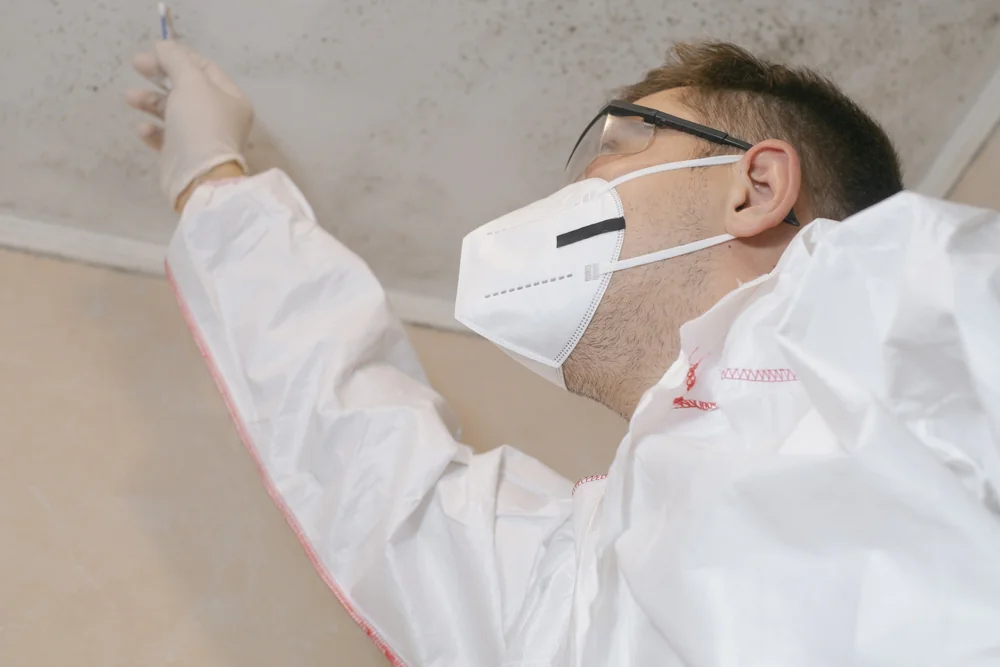
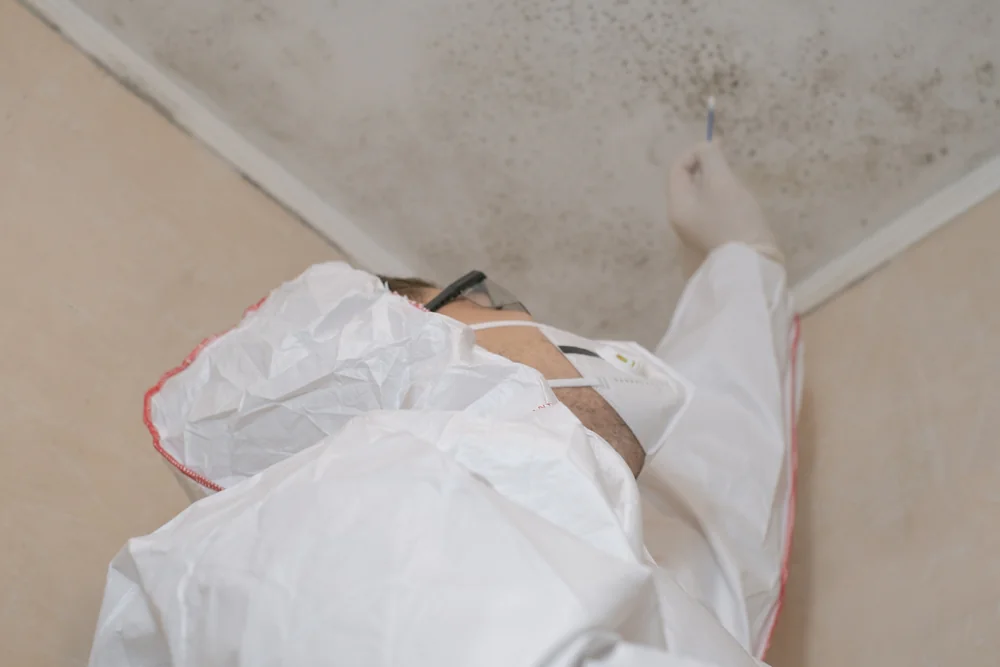
During the inspection, we check everywhere moisture accumulates. Basements, crawl spaces, attics, bathrooms, around windows, and inside your HVAC system. We use thermal imaging to spot temperature differences behind walls and moisture meters to measure humidity levels in materials you can’t see.
We collect air samples and surface samples from suspected areas. Those go to the lab for analysis. Within a few days, you’ll get a detailed report that tells you what type of mold was found, where it was found, and at what concentration.
Then we walk you through it. We’ll explain what’s causing the moisture, what needs to happen to fix it, and whether you need professional remediation or if it’s something manageable on your own. You’ll also get a cost estimate if remediation is recommended, so there are no surprises.

Ready to get started?
Every mold inspection we do includes a visual examination of your entire property, moisture detection using professional-grade meters, thermal imaging to find hidden water intrusion, and air quality sampling to measure what’s actually in the air you’re breathing.
We also take surface samples from any visible growth or suspected areas. All samples are analyzed by independent, accredited labs—not an in-house team with a sales quota.
You’ll receive a written report that breaks down exactly what was found, the type of mold, the spore count, and where the moisture is coming from. We also include photos, moisture readings, and our recommendations for next steps.
In Frankford, we see a lot of basement moisture from poor drainage around older rowhomes, window seal failures, and HVAC condensation issues. Knowing your home was likely built in an era before modern moisture control standards helps us know where to look first. That local knowledge saves you time and gets you answers faster.

Most homeowners in Frankford pay between $300 and $670 for a complete mold inspection. The price depends on the size of your home and how many samples we need to collect.
A basic inspection for a smaller home with one or two suspected areas will run closer to $300. Larger homes, or properties where we’re testing multiple rooms and air zones, can reach $670 or more.
That cost includes the visual inspection, moisture detection, thermal imaging, lab analysis of air and surface samples, and a detailed written report. You’re not just paying for someone to look around—you’re paying for certified training, professional equipment, and lab-confirmed results that actually tell you what you’re dealing with.
A mold inspection is the full process—visual examination, moisture mapping, thermal imaging, and identifying the source of the problem. Mold testing refers specifically to collecting samples and sending them to a lab for analysis.
You need both. The inspection tells you where the mold is and why it’s growing. The testing tells you what type of mold it is and how much of it is in your air or on your surfaces.
Some companies will offer “free mold testing” but skip the actual inspection work. That’s a problem because you might get a lab report that says you have mold, but no idea where it’s coming from or how to stop it. We do the full inspection because that’s the only way to give you a real answer and a real solution.
You can buy a DIY mold test kit, but it won’t tell you much. Most kits only confirm that mold is present—which isn’t useful, because mold spores exist in every home. What matters is the type of mold and the concentration.
DIY kits also can’t tell you where the moisture is coming from, whether the mold is hidden behind walls, or if your HVAC system is spreading spores throughout your house. You’re basically paying $40 to confirm something you already suspected.
A professional mold inspection uses calibrated equipment, controlled sampling methods, and accredited lab analysis. You’ll know what species of mold you’re dealing with, whether it’s a health risk, and what’s causing it to grow. That’s the information you actually need to make a decision.
Most mold inspections take between one and three hours, depending on the size of your home and how many areas we’re testing. We’re not rushing through it—we’re checking basements, attics, crawl spaces, bathrooms, and anywhere else moisture tends to hide.
After the inspection, samples go to the lab. You’ll usually have results within three to five business days. Once the lab report comes back, we’ll schedule a time to walk you through the findings and discuss next steps.
If you’re buying or selling a home and need results faster, let us know. We can often expedite lab processing for time-sensitive situations, though that may come with an additional fee.
If you’re buying an older home in Frankford—especially one built in the ’80s or ’90s—a mold inspection is worth it. Many homes from that era were built without proper moisture barriers, and basements in this area are notorious for taking on water every spring.
A standard home inspection doesn’t usually include mold testing. The inspector might note visible water stains or musty odors, but they won’t tell you what’s growing behind the walls or whether the air quality is safe.
A pre-purchase mold inspection gives you leverage. If the lab finds elevated mold levels or hidden growth, you can negotiate repairs with the seller or walk away before you’re locked in. Spending $300 to $670 now could save you thousands in remediation costs later—or help you avoid buying a problem you didn’t sign up for.
If we find black mold—or more accurately, Stachybotrys chartarum—the lab report will confirm it. Black mold gets a lot of attention because it can produce mycotoxins, but the health risk depends on the concentration and your exposure level.
We’ll walk you through what the lab found, where it’s growing, and what’s feeding it. In most cases, black mold grows in areas with chronic moisture—leaking pipes, roof leaks, or long-term humidity problems.
You’ll need professional remediation to remove it safely. We’ll give you a clear estimate and explain the process. The good news is that once the source of moisture is fixed and the mold is properly removed, it doesn’t come back. You’re not stuck with it forever—you just need to handle it the right way.
Other Services we provide in Frankford