

Hear from Our Customers
You can’t fix what you can’t see. And mold doesn’t announce itself until it’s already a problem—growing behind walls, under floors, or in your HVAC system where you’d never think to look.
That’s where professional mold testing comes in. It’s not about confirming what you already suspect. It’s about finding what you don’t know is there, identifying the exact type of mold, and understanding how far it’s spread before you waste time or money guessing.
When you get accurate results from an independent lab, you’re not just checking a box. You’re protecting your family’s health, avoiding bigger repairs down the road, and making decisions based on facts instead of fear. In Solebury’s humid climate—especially in older homes with basements or crawl spaces—that clarity matters more than you think.
We’ve been testing homes in Solebury since 1995. Every inspector on our team is certified through MICRO, the largest mold training organization in the country, and we stay current with ongoing education because the science doesn’t stand still.
We’re licensed, fully insured with environmental-specific coverage, and we’ve seen just about every mold scenario Bucks County can throw at a homeowner. Historic stone homes with moisture issues. New construction with ventilation problems. Basements that flood every spring. We know what to look for because we’ve been looking at it for 30 years.
You’re not getting a generalist who does water damage on Mondays and mold on Tuesdays. You’re working with people who do this full-time, in your area, and understand how Pennsylvania’s climate and housing stock create the conditions mold loves.
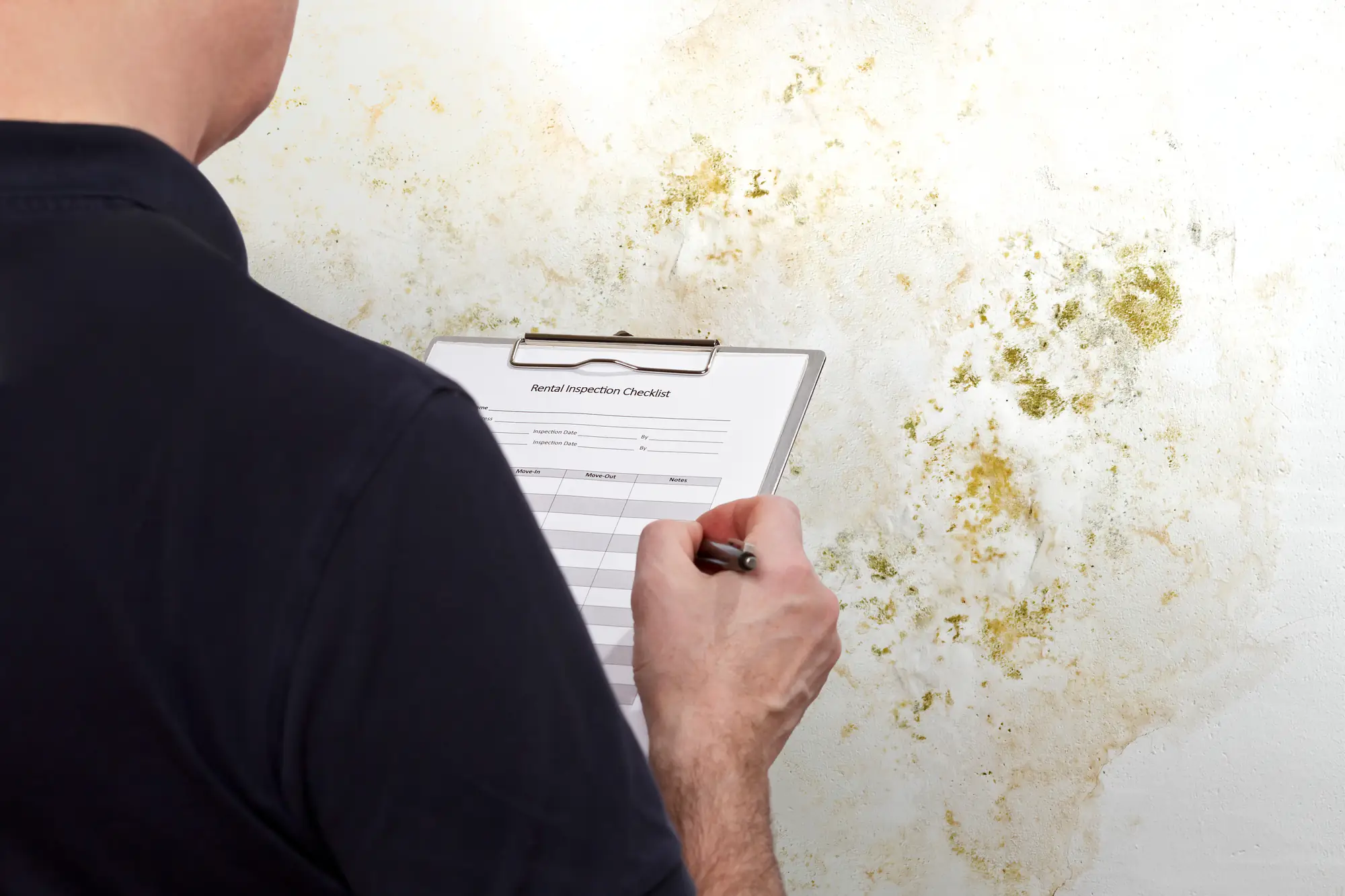
First, we show up—usually the same day you call. We’re not squeezing you in two weeks from now while mold keeps spreading.
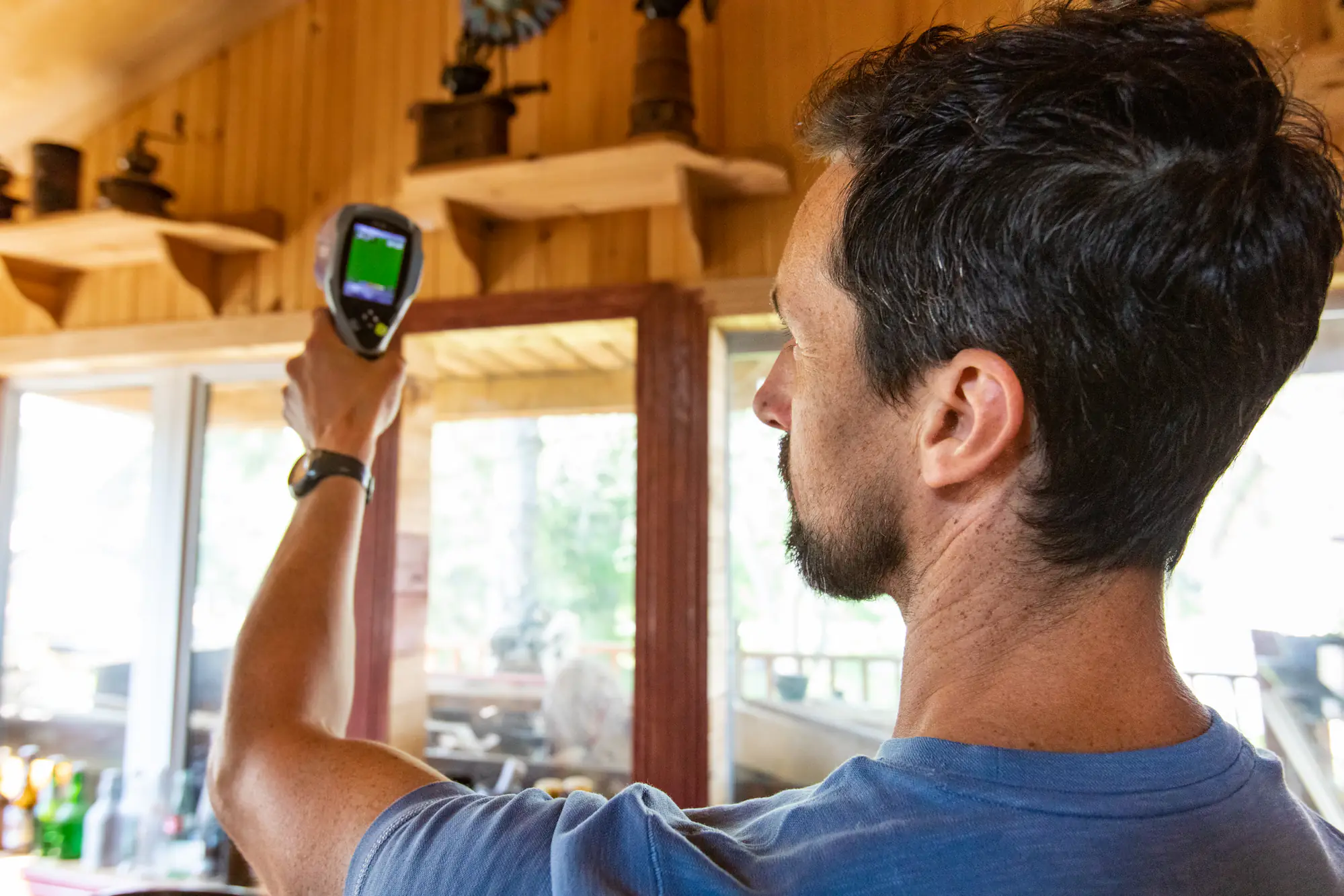
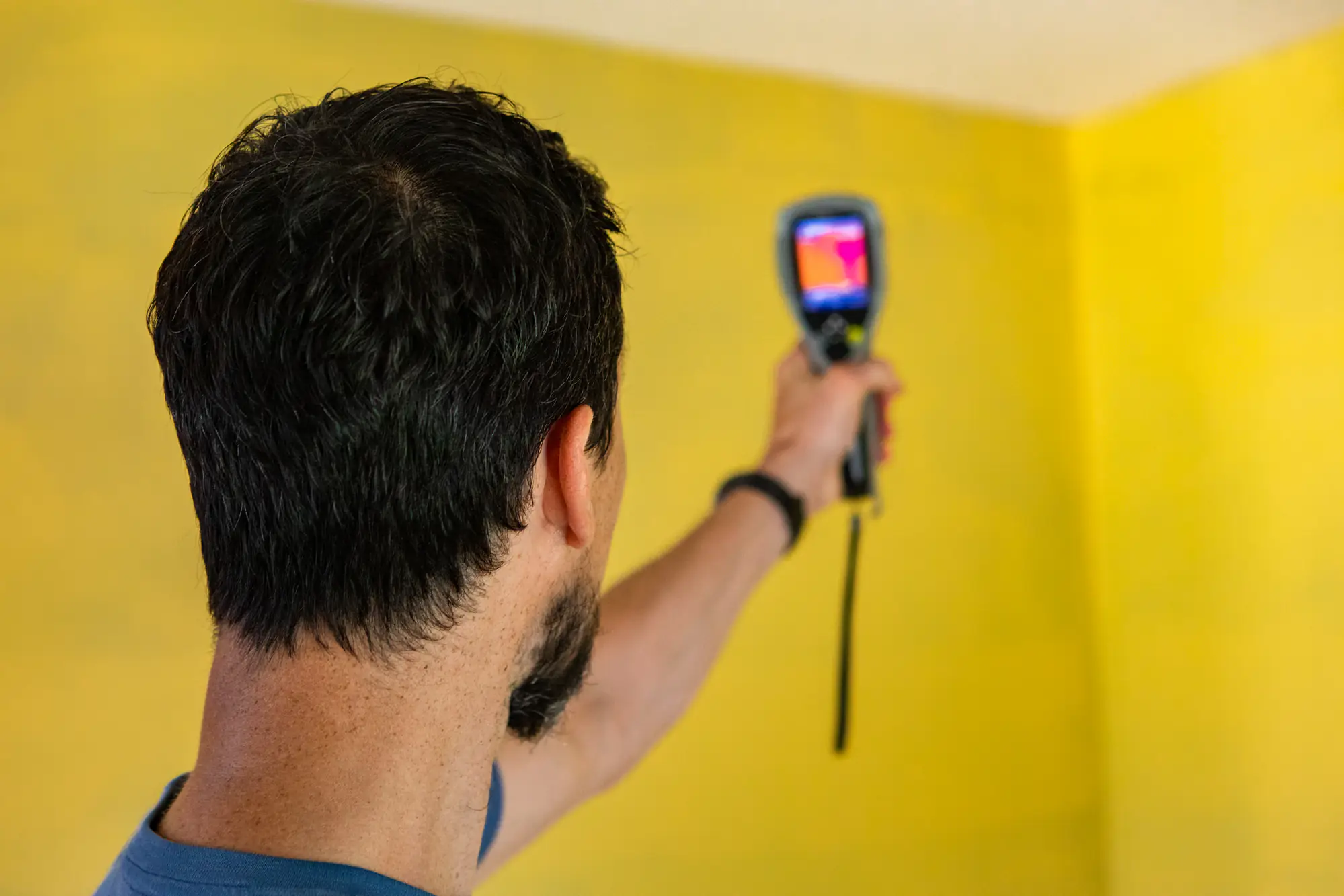
During the inspection, we’re checking the obvious spots and the hidden ones. Attics, basements, crawl spaces, behind appliances, inside HVAC systems. We use moisture meters and thermal imaging to find areas where conditions are right for growth, even if you can’t see it yet. Then we collect air and surface samples from those areas.
Those samples go to an independent certified lab. Not our lab. Not our cousin’s lab. A third-party facility that has no reason to exaggerate or downplay what’s there. When the results come back, we walk you through them in plain language—what type of mold, how much, where it’s concentrated, and whether it’s a health risk or just a nuisance.
From there, we identify the source. Leaky pipe? Poor ventilation? Water intrusion? You can’t remediate mold successfully if you don’t fix what caused it. So we tell you what needs to happen before any removal work begins, and we put it all in writing so there’s no confusion about next steps.
Ready to get started?
A real mold inspection isn’t a guy with a flashlight poking around for 20 minutes. It’s a systematic assessment using tools that detect what your eyes can’t.
You get a full visual inspection of your property, moisture mapping to identify problem zones, air quality sampling to catch airborne spores, and surface testing in areas where growth is visible or suspected. We’re also checking humidity levels throughout the house, because if your indoor humidity is above 60%, you’re creating a mold factory whether you see it yet or not.
In Solebury, that’s especially common in older homes with stone foundations or poor crawl space ventilation. Bucks County’s warm, humid summers don’t help either. Homes built before modern moisture barriers were standard often trap dampness in places you’d never notice until the damage is done.
After testing, you get a detailed report with lab results, photos, moisture readings, and a written assessment. If there’s mold, we tell you what it is—black mold, aspergillus, penicillium, whatever the lab identifies—and whether it’s something that needs immediate attention or just monitoring. No upselling. No scare tactics. Just information you can actually use.
Most residential mold testing in Solebury runs between $300 and $600, depending on the size of your home and how many samples we need to collect. If you’ve got a 1,200-square-foot ranch with one suspicious area, that’s different than a 3,000-square-foot colonial with a finished basement and attic concerns.
We offer free inspections, so you’re not paying just for someone to show up and look around. The testing cost covers lab analysis, which is where the real expense is—those samples don’t analyze themselves. But that’s also what gives you accurate, defensible results if you need them for insurance, real estate transactions, or peace of mind.
If mold is confirmed and you move forward with remediation, we’ll credit the testing fee toward the removal work. We’re transparent about pricing upfront, so you know what you’re spending and why.
You can, but you probably won’t get useful information. Most over-the-counter kits only tell you that mold is present—which isn’t helpful, because mold is present in almost every home to some degree. What matters is the type, the concentration, and whether it’s at levels that pose a health risk.
DIY kits also can’t tell you where the mold is coming from or how far it’s spread. You might test one room and miss the real problem growing in your crawl space or behind a wall. Professional testing uses multiple sample points, moisture detection, and lab analysis to give you a complete picture, not just a yes-or-no answer.
If you’re dealing with a potential black mold situation, respiratory symptoms in your family, or preparing for a real estate transaction, a $15 kit from the hardware store isn’t going to cut it. You need certified results that actually mean something.
The on-site inspection usually takes one to two hours, depending on the size of your home and how many areas we’re testing. We’re thorough, but we’re not wasting your time poking around for half a day.
Lab results typically come back within three to five business days. If it’s an urgent situation—like you’re closing on a house or someone in your family is having serious health issues—we can request expedited analysis, which can get you results in 24 to 48 hours for an additional fee.
Once we have the results, we’ll schedule a follow-up call or meeting to review everything. That conversation usually takes 20 to 30 minutes, and we’ll answer any questions you have about what the lab found and what your options are moving forward.
In Bucks County, we see a lot of aspergillus, penicillium, and cladosporium—all pretty common in homes with humidity issues or water intrusion. Aspergillus loves damp basements and crawl spaces. Penicillium shows up on water-damaged materials like drywall or carpet. Cladosporium tends to grow on wood surfaces and in HVAC systems.
Black mold—stachybotrys chartarum—is less common but definitely present in homes that have had significant water damage or long-term leaks. It’s the one that gets the most attention because it produces mycotoxins that can cause serious respiratory problems, especially in kids, elderly people, or anyone with compromised immune systems.
The specific type matters because it tells us how aggressive the remediation needs to be and whether there’s an immediate health concern. That’s why lab testing is critical—you can’t identify mold species just by looking at it, no matter what anyone tells you.
If you can see mold, you know you have a problem—but you don’t know how big it is or what’s causing it. Visible mold is often just the tip of the iceberg. There’s usually more growing in places you can’t see, and if you only address what’s visible, you’re going to be dealing with it again in six months.
Testing tells you whether the mold has spread to other areas, what type it is, and whether airborne spore levels are elevated throughout your home. That information shapes the remediation plan and helps us figure out the moisture source so we can actually fix the problem instead of just cleaning up the surface.
It’s also important for documentation. If you’re filing an insurance claim, dealing with a landlord-tenant dispute, or selling a home, you need lab results that prove what was there and what was done about it. Visible mold is obvious, but professional testing gives you the full story.
Not really. You’ll need to be home during the inspection so we can access all areas of the house, but you don’t need to clear out or move furniture unless there’s something blocking a suspected problem area. Most people just go about their day while we work.
We’re not tearing into walls or making a mess. The testing process is non-invasive—we’re taking air samples, swabbing surfaces, and using meters to check moisture levels. If we need to move a washer or dryer to check behind it, we’ll put it back. If we’re accessing your attic or crawl space, we’ll clean up after ourselves.
The whole thing is pretty low-key. You can stay, you can leave, you can work from home in another room—whatever works for you. We just need access and maybe 10 minutes of your time at the end to walk through what we found and what happens next.
Other Services we provide in Solebury