You smell something musty in the basement. Or maybe you spotted a dark patch behind the bathroom sink. Now you’re trying to figure out if you need to spend hundreds on professional mold testing or if a $30 kit from the hardware store will do the job.
It’s a fair question. Nobody wants to throw money at a problem they could handle themselves. But here’s what most people don’t realize until it’s too late: the accuracy gap between DIY mold tests and professional testing isn’t small. It’s massive. And that gap could mean the difference between finding a problem early and discovering it after it’s spread through your walls.
Let’s talk about what each method actually tells you, what it misses, and when spending more upfront saves you thousands down the road.
Mold Test Kit Accuracy: What You Need to Know
Walk into any Home Depot or Lowe’s and you’ll find mold test kits promising to tell you if your home has a problem. They’re cheap, they’re easy, and they seem like the obvious first step.
The problem? Most of them don’t actually work the way you think they do.
Those petri dish kits you see for $10 to $50 are designed to grow mold spores. You leave the dish out for a set period, seal it up, wait a few days, and see what grows. If mold appears, you’ve got mold in your home, right? Well, yes. But here’s the catch: every home has mold spores. They’re floating around in your air right now, whether you have a mold problem or not.
What these kits can’t tell you is whether the amount of mold in your home is normal or dangerous. They can’t tell you what type of mold it is. They can’t show you where it’s coming from. And they definitely can’t detect mold that’s hidden behind your walls or growing in your HVAC system.
Home Mold Test Reliability Limitations
The fundamental problem with DIY mold test kits is that they’re answering a question nobody’s actually asking. You don’t need to know if mold exists in your home. It does. The real question is whether the levels are elevated compared to what’s normal for your area, and whether those levels pose a health risk.
Cheap petri dish kits fail up to 80% of the time at giving you useful information. They use what’s called a “settling plate” method. Basically, they catch whatever spores happen to fall onto the dish during the exposure period. That’s a tiny fraction of what’s actually in your air. Think of it like trying to measure rainfall by leaving out a shot glass. You’ll catch some water, but you have no idea if it rained an inch or a foot.
Even the slightly better DIY kits that include lab analysis have serious limitations. They can’t detect non-viable mold spores, which are common in water-damaged areas and can still cause health problems even though they’re dead. The labs associated with most DIY kits aren’t certified by recognized agencies, and there’s often no proper chain of custody for your samples. That means if you ever need to use those results for insurance or legal purposes, they won’t hold up.
Here’s the part that really frustrates homeowners: false negatives are more common than false positives with DIY tests. That means you’re more likely to get a result that says “everything’s fine” when you actually have a problem than you are to get a false alarm. You might test one room, get low results, and assume you’re in the clear while mold is actively growing in your crawl space or inside your walls.
And if you do get a positive result? The kit doesn’t tell you what to do about it. You still need to figure out where the mold is coming from, what type it is, and whether professional remediation is necessary. Most people who start with a DIY kit end up calling a professional anyway, after they’ve already spent $50 to $200 on tests that didn’t give them actionable information.
Why DIY Kits Miss What Matters Most
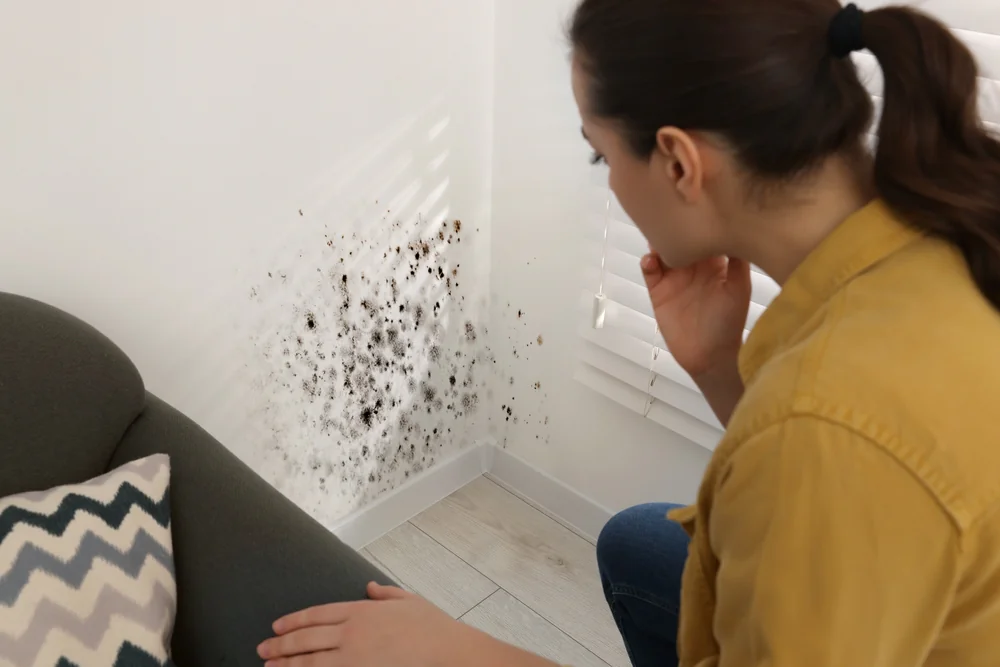
Mold doesn’t grow in the middle of your living room where a test kit can easily detect it. It grows in the places you can’t see: behind drywall, under carpets, in wall cavities, inside HVAC ducts, in crawl spaces, and attics.
DIY test kits only sample the air or surfaces in open, accessible areas. If you have mold growing inside your walls from a slow leak you don’t know about, a settling plate sitting on your kitchen counter isn’t going to catch it. The spores might not even be making it into the room you’re testing, especially if the mold is well-sealed behind a barrier.
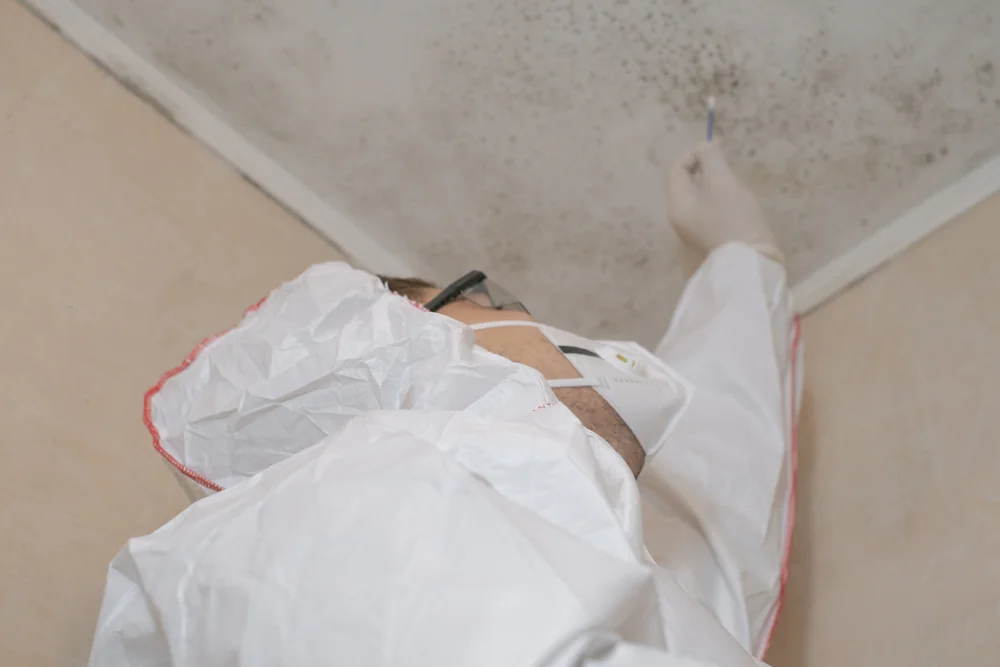
Professional mold inspectors don’t just test the air. We use thermal imaging cameras to detect temperature variations that indicate moisture behind walls. We use moisture meters to measure dampness in building materials. We take samples from wall cavities, not just from the middle of the room. This is especially important in places like Bucks County, where heavy rainfall and humid summers create perfect conditions for hidden moisture problems.
The other thing DIY kits can’t do is give you context. Let’s say your test shows 500 spores per cubic meter. Is that high? Low? Dangerous? You have no idea, because you don’t have anything to compare it to. Professional testing always includes an outdoor control sample. That baseline tells you what’s normal for your area on that particular day. If your indoor levels match the outdoor levels, you probably don’t have an indoor mold source. If they’re significantly higher, or if you’re seeing mold types indoors that aren’t present outside, that’s a red flag.
Without that comparison, you’re flying blind. And in Pennsylvania, where there are no state regulations setting acceptable mold levels, interpretation requires real expertise. A number on a page doesn’t tell you if you need to act or if you’re looking at normal background levels that exist in every home.
This is why homeowners often end up spending money twice. First on a DIY kit that raises more questions than it answers, then on professional testing to get the information they actually needed in the first place.
Professional vs DIY Mold Testing Methods
Professional mold testing uses completely different equipment and methodology than what you’ll find in a consumer kit. The difference isn’t just in quality. It’s in what the test is actually measuring.
When we test your home, we use calibrated air pumps that draw a specific, measured volume of air through a collection device. These pumps pull 15 liters of air per minute through a spore trap cassette. That cassette has a sticky surface inside that captures mold spores and other particles. The lab then counts and identifies every spore under a microscope, giving you quantifiable data measured in spores per cubic meter.
Compare that to a petri dish that passively waits for spores to land on it. There’s no measurement of air volume, no controlled collection, and no way to calculate actual spore concentrations. It’s the difference between a blood test that measures exact levels of everything in your system and just looking at a drop of blood to see if it’s red.
What Professional Mold Testing Actually Includes
A real mold inspection isn’t just about testing. It’s about investigation. The testing is one tool in a larger process designed to find the source of the problem, not just confirm that mold exists.
We start with a visual assessment of your entire property. We’re looking for water stains, discoloration, peeling paint, musty odors, and any signs of moisture intrusion. We check areas most homeowners never think to look: inside closets, under sinks, around windows and doors, in attics, in crawl spaces, and around your HVAC system.
We use moisture meters to measure the water content in your walls, floors, and ceilings. High moisture readings tell us where to focus our testing even if there’s no visible mold yet. Infrared cameras reveal temperature differences that indicate moisture behind surfaces you can’t see through. These tools help us find problems before they become visible disasters.
Then comes the sampling. Air samples are collected from multiple locations: rooms where you have concerns, unaffected areas for comparison, and always at least one outdoor sample to establish the baseline. Surface samples might be taken from suspicious areas using tape lifts or swabs. If there’s a concern about mold inside walls, we might take a wall cavity sample by drilling a small hole and collecting air from inside the wall space.
All of these samples go to an AIHA-accredited laboratory where trained mycologists examine them under microscopes. The lab identifies the types of mold present, counts the spore concentrations, and provides a detailed report. That report doesn’t just give you numbers. It tells you which types of mold were found, whether any of them are associated with water damage or health concerns, and how your indoor levels compare to the outdoor baseline.
You get a written report with photos, findings, lab results, and specific recommendations. If remediation is needed, the report outlines what should be done. If levels are normal, you get documentation proving that. Either way, you have information you can act on, share with insurance companies, or use in real estate transactions.
When to Hire Mold Professional Assessment
Some situations are clear-cut. If you can see mold covering more than 10 square feet, you don’t need testing. You need remediation. The EPA is pretty direct about this: visible mold should be cleaned up regardless of what type it is.
But most homeowners aren’t dealing with obvious, widespread growth. They’re dealing with uncertainty. A smell they can’t locate. A water leak that got fixed, but now they’re wondering what damage it left behind. Health symptoms that might be mold-related or might be something else entirely.
Here’s when professional testing is worth the investment. If you’ve had any water damage, flooding, or persistent leaks, professional testing can tell you whether that moisture created a mold problem even if you can’t see anything. Water doesn’t always leave visible signs, especially if it’s wicking up inside walls or soaking into subfloors.
If anyone in your household is experiencing respiratory symptoms, allergies, or other health issues that seem worse at home, you need accurate testing. You can’t make health decisions based on a petri dish that may or may not have captured representative spores. You need to know actual concentrations and species.
If you’re buying or selling a home in Bucks County, professional mold testing provides documentation that DIY kits can’t match. Real estate transactions require credible reports. A professional inspection can identify problems before they derail a sale, or confirm that a home is clear so buyers can proceed with confidence.
If you’ve tried DIY testing and got confusing results, or if you tested and found mold but don’t know what to do next, we can interpret what you’re seeing and create an action plan. We can tell you if remediation is necessary or if you’re looking at normal levels that don’t require intervention.
And if you have mold that keeps coming back no matter how many times you clean it, you need someone who can find the moisture source. Recurring mold means water is getting in somewhere. We don’t just test for mold. We investigate why it’s there and what needs to change to prevent it from returning. That’s something no DIY kit can do.
The cost difference isn’t as dramatic as it first appears. Professional testing in Bucks County typically runs $300 to $600 for a standard home. DIY kits cost $10 to $50 upfront, but if you want lab analysis, you’re adding another $30 to $150. By the time you buy multiple kits to test different areas, pay for lab fees, and still end up without actionable answers, you’ve spent $100 to $200 on data you can’t use. Then you call a professional anyway.
Most homeowners who go the DIY route first end up wishing they’d just started with professional testing. They would have saved time, avoided the stress of unclear results, and had a complete answer from the beginning instead of piecemeal information that didn’t add up to a solution.
Making the Right Choice for Your Home
DIY mold test kits have a place. If you’re just curious and have zero signs of moisture problems, a cheap kit might satisfy that curiosity. But if you’re trying to make a real decision about your home’s safety, your family’s health, or whether you need to invest in remediation, DIY kits won’t get you there.
The accuracy gap is real. Professional testing uses calibrated equipment, accredited labs, and trained experts who can interpret results in context. DIY kits use passive collection methods that miss hidden mold, can’t measure concentrations, and leave you guessing about what the results actually mean.
If you’re in Bucks County dealing with our humid summers, heavy rainfall, and older homes with moisture challenges, professional testing gives you the complete picture. You’ll know exactly what you’re dealing with, where it’s coming from, and what needs to happen next.
At Mack’s Mold Removal, we provide professional mold testing that goes beyond just confirming mold exists. We use EPA-approved methods, advanced equipment, and local expertise to find problems other approaches miss and address the root causes so they don’t come back.