You’ve spotted mold. Or maybe you smell it but can’t find it. Either way, you need answers—real ones, not a sales pitch disguised as an inspection.
Here’s the problem: when the company testing your home also profits from the cleanup, their financial interest doesn’t align with yours. They make more money if the problem is worse. You save money if it’s accurately assessed.
Independent mold inspection fixes that misalignment. You’ll learn exactly why separation between testing and remediation matters, what to look for in qualified inspectors, when you actually need industrial hygienist involvement, and what this should cost in Bucks County, PA.
What Makes Mold Inspection Truly Independent
Independent means the person assessing your property has zero financial stake in the remediation work. They don’t own a remediation company. They don’t get referral fees. They’re not a “sister company” of the crew that’ll do the cleanup.
Their only job is telling you what’s actually there. When someone profits from both finding the problem and fixing it, the temptation to exaggerate is built into the business model. Some companies resist that temptation. Many don’t.
An independent inspector gets paid the same whether your home needs a $200 cleaning or a $20,000 gut job. That’s the point.
How Conflict of Interest Inflates Mold Removal Costs
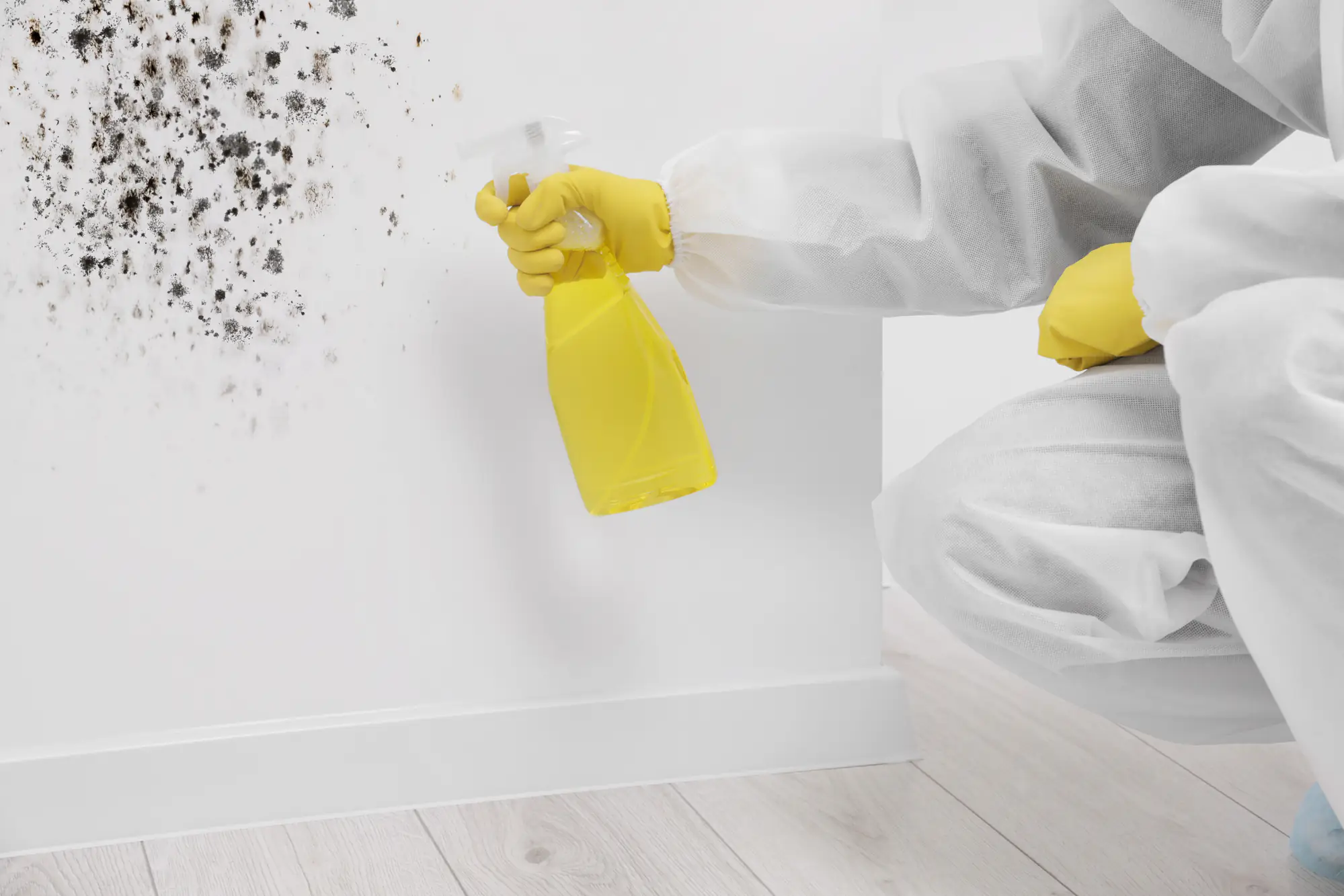
The worst mold scams follow a predictable pattern. A company offers a free inspection—seems helpful, right? They show up, wave some equipment around, and suddenly you’re looking at a quote to rip out half your basement.
Here’s what actually happened: they needed to justify their visit and secure a remediation contract. The “free” inspection was never free. It was a sales call.
Some will use legitimate testing but interpret results in the worst possible light. A slightly elevated spore count becomes “dangerous levels requiring immediate action.” Surface mold that could be cleaned gets classified as “deep contamination requiring removal of building materials.”
Others skip proper testing entirely. They’ll take samples but won’t send them to accredited labs. Or they’ll create conditions that guarantee high readings—disturbing mold before air sampling, for instance, which artificially inflates spore counts.
The financial incentive is enormous. Remediation contracts in Bucks County average between $1,150 and $3,400 for typical jobs, but can reach $20,000 for extensive work. When the inspector controls that decision, you’re trusting them to leave money on the table by being honest.
Independent inspections often reveal problems are less severe than homeowners feared. That assessment might cost you $400 to $800, but it could save you thousands by preventing unnecessary work. You get an honest scope of the problem, then you can shop that scope to multiple remediation companies for competitive bids.
The documentation also protects you. An independent report gives you leverage with contractors, insurance companies, and in real estate transactions. It’s proof of what’s actually wrong, not what someone hoped to sell you.
Why Third-Party Clearance Testing Matters After Remediation
The conflict doesn’t end when remediation starts. It gets worse when it’s time to verify the work is complete.
Companies that do their own post-remediation testing are essentially grading their own homework. They collect the final air samples, send them to a lab they choose, and tell you whether they passed. If they fail, they have to come back and redo work—unpaid. If they pass, they get their final payment and move on.
Guess which outcome they’re incentivized to report?
Third-party clearance testing means an independent inspector—someone with no connection to the remediation company—comes in after the work is supposedly complete. They conduct a visual inspection, take air and surface samples, and send those to an accredited lab. Only when those results come back showing acceptable mold levels does the remediation company get their final payment.
This structure protects you in several ways. The remediation company knows their work will be independently verified, so they’re more careful during the job. If problems remain, you find out before you pay, not six months later when mold returns. And you have documentation that the work was done properly, which matters for insurance, resale value, and your family’s health.
In Pennsylvania, there’s no state law requiring this separation, though Philadelphia has specific mold inspection licensing requirements. But the industry standard—set by organizations like the IICRC and recommended by the EPA—is clear: the company doing the work shouldn’t be the one verifying it was done correctly.
Reputable remediation companies actually prefer this arrangement. It protects them too. When an independent third party confirms their work passed, it’s credible proof they did the job right. When they verify their own work, customers are left wondering if they’re just being told what they want to hear.
The cost of independent clearance testing—typically $250 to $500—is minor compared to the risk of paying for incomplete work or dealing with recurring mold because the job wasn’t done properly the first time.
Companies That Check for Mold in House: What to Look For
Not all mold inspection companies are created equal, and in Pennsylvania’s unregulated market, anyone can claim to be an expert.
Start with credentials. Look for certifications from recognized organizations: ACAC (American Council for Accredited Certification), IICRC (Institute of Inspection Cleaning and Restoration Certification), MICRO, or NAMP (National Association of Mold Professionals). These aren’t just weekend courses—they require demonstrated field experience and passing rigorous exams.
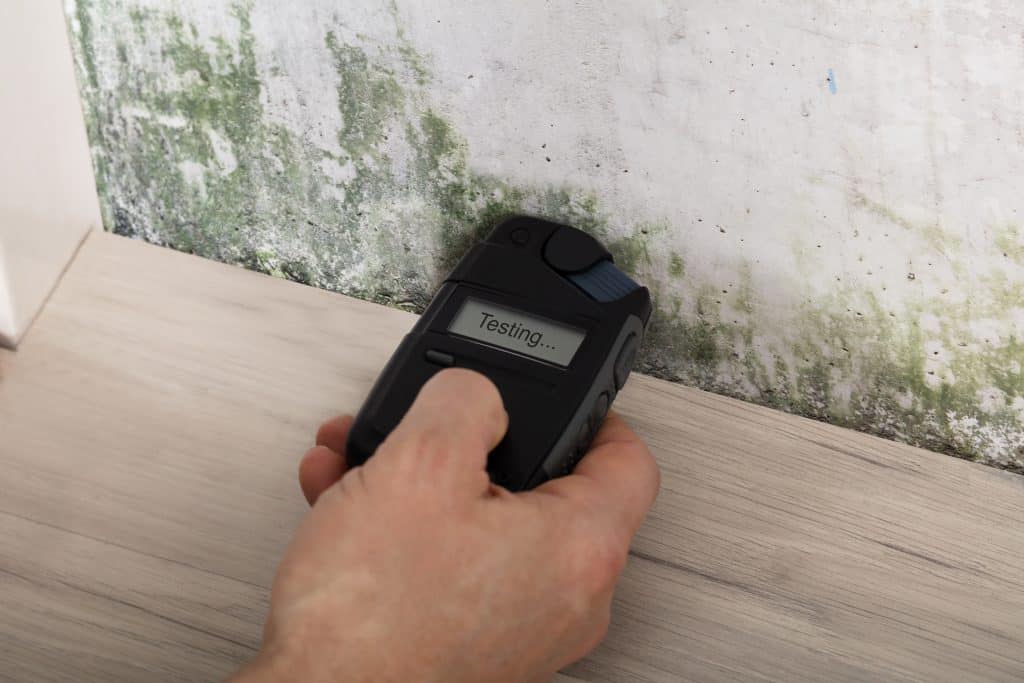
Ask about their testing process. A legitimate inspector will explain their methodology: visual inspection with moisture mapping, air sampling, surface sampling when needed, and analysis by an independent accredited laboratory. They should use professional equipment—thermal imaging cameras, moisture meters, air pumps, and sampling cassettes.
They should also be able to explain when testing is necessary and when it isn’t. If you have visible mold on a small area, you might not need extensive air sampling—you need cleaning and moisture control. A good inspector will tell you that, even though it means less revenue for them.
What a Mold Investigator Actually Does During Inspection
A qualified mold investigator starts by listening. They’ll ask about your concerns, any health symptoms, visible mold you’ve noticed, and your home’s history with water damage, leaks, or flooding.
Then comes the visual assessment. They’re looking at obvious problem areas—bathrooms, basements, attics, crawl spaces—but also checking less obvious spots. Around windows and doors. Behind appliances. Inside HVAC systems. Anywhere moisture could accumulate.
They’re using tools throughout this process. Moisture meters detect elevated moisture levels in walls, floors, and ceilings, even when surfaces feel dry. Thermal imaging cameras reveal temperature differences that indicate water intrusion or poor ventilation. These aren’t toys for impressing customers—they’re diagnostic tools that find problems you can’t see.
When they identify suspect areas, they’ll develop a testing plan. Air samples measure spore concentrations in different rooms and compare them to outdoor baseline levels. Surface samples identify specific mold species on visible growth. Cavity samples test inside walls or other enclosed spaces showing signs of moisture damage.
All samples go to an accredited independent laboratory. The lab identifies mold species, counts spore concentrations, and provides a detailed analysis. This typically takes 2-5 business days.
The inspector then interprets these results in context. Elevated spore counts might indicate a problem, or they might be normal for your area and season. Certain species are more concerning than others. The inspector’s job is translating lab data into actionable information: what’s wrong, how serious it is, what caused it, and what needs to happen next.
You should receive a written report documenting all findings, including photos, moisture readings, lab results, and recommendations. This report should be detailed enough that any remediation company can bid on the work, and any insurance adjuster or real estate professional can understand the scope of the problem.
A good mold investigator will also identify the moisture source. Removing mold without fixing what caused it is pointless—it’ll just come back. Whether it’s a leaky pipe, poor ventilation, condensation, or water intrusion through the foundation, solving the underlying moisture problem is essential.
Red Flags That Signal Biased Mold Testing
Some warning signs are obvious. Others are subtle. Here’s what should make you pause.
Free inspections are the biggest red flag. Professional mold assessment takes time, equipment, and expertise. When someone offers it for free, they’re planning to make money elsewhere—specifically, by selling you remediation work you may or may not need.
Companies that do both inspection and remediation on the same job create an inherent conflict. Even if they’re honest, the structure puts their financial interest at odds with accurate assessment. Some states have actually outlawed this practice. Pennsylvania hasn’t, but that doesn’t make it ethical.
Scare tactics around “toxic black mold” should trigger skepticism. Yes, Stachybotrys chartarum produces mycotoxins. But most black-colored mold isn’t Stachybotrys, and even when it is, the health risks are often overstated to justify expensive remediation. Any inspector diagnosing “dangerous black mold” without lab confirmation is either incompetent or dishonest.
Pressure to sign contracts immediately is another warning sign. Legitimate inspectors give you time to review their findings, get second opinions, and make informed decisions. High-pressure sales tactics—”this needs to be handled today or it’ll spread”—are designed to bypass your critical thinking.
Watch for inspectors who recommend unnecessary testing. If you have visible mold that clearly needs remediation, surface testing to identify the species usually doesn’t change the action plan. Proposing expensive ERMI testing when simpler methods would work, or suggesting ongoing monthly sampling programs, indicates they’re more interested in billing than helping.
No proper equipment is a deal-breaker. If someone shows up without moisture meters, sampling equipment, or a clear testing protocol, they’re not conducting a real inspection. And if they can’t explain which accredited lab they use or provide documentation of their certifications, walk away.
Finally, be wary of anyone who won’t address the moisture source. Mold is a symptom. Moisture is the cause. An inspector focused only on mold removal without identifying and fixing what’s feeding it is either inexperienced or deliberately setting you up for recurring problems and additional billing.
When Industrial Hygienist Mold Testing Makes Sense
Industrial hygienists bring a different level of expertise to mold assessment. These are certified professionals—often with advanced degrees in environmental science, chemistry, or engineering—who specialize in identifying and controlling workplace and environmental hazards.
For most residential mold issues in Bucks County, a certified mold inspector is sufficient. But certain situations warrant bringing in an industrial hygienist.
Complex or extensive contamination is one. If mold has spread throughout multiple rooms, penetrated HVAC systems, or affected structural components, an industrial hygienist’s advanced training in remediation protocol design becomes valuable. They can develop detailed specifications for contractors to follow.
Health concerns elevate the need. If family members are experiencing persistent respiratory issues, allergies, or other symptoms potentially linked to mold exposure, an industrial hygienist can conduct more sophisticated air quality testing and provide medical professionals with detailed exposure assessments.
Industrial Hygienist vs Standard Mold Inspector Qualifications
A certified mold inspector typically has training through organizations like MICRO, NAMP, or IICRC. These programs focus specifically on mold: identification, sampling techniques, moisture assessment, and remediation protocols. The training is practical and focused, usually 15-24 hours of coursework plus field experience.
Industrial hygienists hold certifications like CIH (Certified Industrial Hygienist) through organizations like AIHA (American Industrial Hygiene Association). Getting certified requires a bachelor’s degree in a related field, years of professional experience, and passing comprehensive exams covering chemistry, biology, physics, toxicology, and environmental controls.
The scope is different too. Mold inspectors specialize in fungal contamination. Industrial hygienists assess a broader range of environmental hazards—mold, asbestos, lead, VOCs, indoor air quality, and more. They’re trained in risk assessment, exposure science, and regulatory compliance.
For straightforward residential mold inspection in Pennsylvania homes, this additional expertise usually isn’t necessary. A well-trained mold inspector can accurately assess the situation, collect proper samples, and recommend appropriate remediation.
But when you’re dealing with unusual mold species, contamination in sensitive areas like hospitals or schools, legal disputes requiring expert testimony, or situations where multiple environmental hazards might be present, an industrial hygienist’s broader training and credentials become relevant.
Cost reflects this difference. Standard mold inspections in Bucks County typically run $400 to $800. Industrial hygienist assessments often start at $800 and can exceed $2,000 for complex investigations. You’re paying for advanced credentials, deeper analysis, and more detailed reporting.
The key is matching the expertise to the problem. Don’t overpay for credentials you don’t need, but don’t cut corners when the situation warrants professional-level assessment.
Cost Comparison: Independent Testing vs Company-Provided Inspection
The numbers tell an interesting story. Independent mold inspection in Bucks County averages $670, with most homeowners paying between $300 and $1,000 depending on home size and testing complexity.
Company-provided “free” inspections cost nothing upfront. But here’s what you’re actually paying: you’re locked into using that company for remediation, you can’t get competitive bids, and you have no way to verify their assessment is accurate rather than inflated.
Let’s say the real problem is $1,500 worth of work. An independent inspector charges you $500 for assessment. You get three remediation quotes: $1,400, $1,600, and $1,800. You choose the $1,400 bid. Total cost: $1,900.
Now the “free” inspection scenario. The company assesses the same problem but has incentive to inflate it. They quote $3,500 because they’re including work that isn’t necessary, using premium pricing because you can’t compare, or both. You pay $3,500.
You “saved” $500 on the inspection and spent $1,600 more overall. That’s how free inspections make money.
The protection gets even more valuable with post-remediation clearance testing. Independent verification costs $250 to $500. That seems like an extra expense until you consider what it’s buying: proof the work was actually completed, leverage to demand corrections if it wasn’t, and documentation for insurance or resale.
When companies verify their own work, you’re trusting them to admit failure and redo work without additional payment. Some will. Some won’t. You won’t know which you’re dealing with until it’s too late.
Factor in potential savings too. Independent inspections frequently reveal problems are less severe than feared. Maybe you don’t need to remove drywall—cleaning and sealing is sufficient. Maybe the “widespread contamination” is actually limited to one area. Those findings can save thousands.
For Bucks County homeowners, the math is straightforward. Spending $400 to $800 on independent assessment protects you from overpaying by thousands, gives you competitive bidding power, and provides documentation that holds value beyond the immediate project.
Making the Right Choice for Your Bucks County Home
Independent mold inspection isn’t about distrusting everyone in the industry. It’s about aligning financial incentives with accurate results.
When assessment and remediation are separate, the inspector’s job is telling you the truth. When they’re combined, the inspector’s job includes selling you services. Those are fundamentally different roles.
You deserve to know what’s actually wrong with your home, what it’ll realistically cost to fix, and whether the work was done properly. Independent inspection, third-party clearance testing, and competitive bidding give you that transparency.
At Mack’s Mold Removal, we understand this. Our comprehensive mold services include proper third-party verification and accountability throughout the process, ensuring you get honest assessment and quality remediation without conflicts of interest compromising either one.