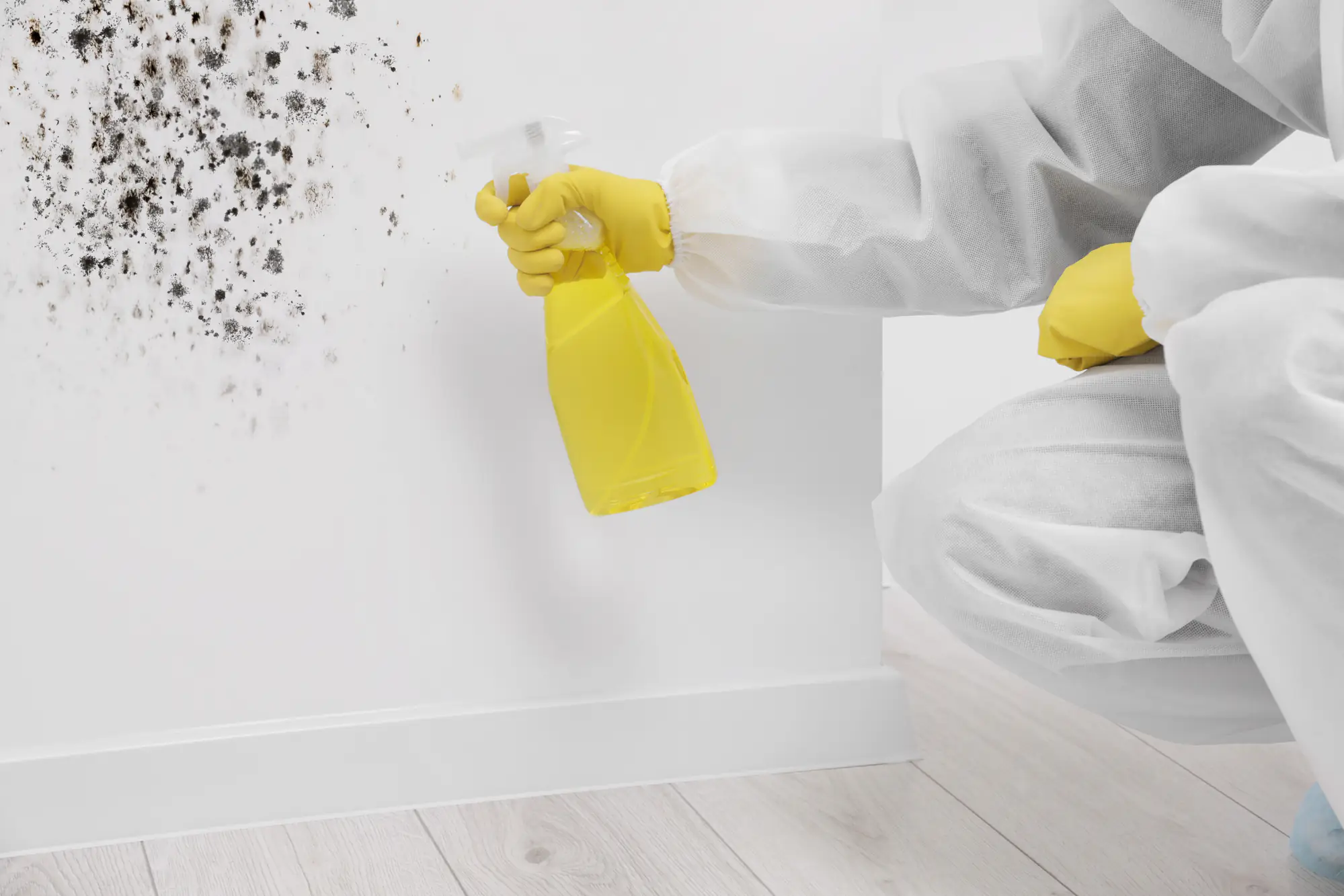
You found a dark patch in your Bucks County basement. Maybe you smell something musty when you walk into certain rooms. Or your family’s been dealing with unexplained allergies that seem worse at home than anywhere else.
Now you’re trying to figure out if you actually have a mold problem—and whether those $20 DIY test kits from the hardware store will give you real answers or just create more confusion.
Here’s what you need to know about environmental mold testing versus DIY approaches, including what each method actually measures, where they fall short, and when professional assessment protects your family and your investment.
Environmental Mold Testing: Professional Methods That Measure What Matters
Professional environmental mold testing doesn’t just confirm that mold exists somewhere in your house. It measures how much contamination is in your air, identifies specific species, and compares your indoor levels to what’s normal outside.
The process uses calibrated air pumps that draw a precise volume of air—typically 75 liters over five minutes—through specialized collection cassettes. These samples get sent to accredited laboratories where trained mycologists examine them under microscopes, count spore concentrations per cubic meter, and identify species.
What makes this fundamentally different from DIY mold test kits is the outdoor control sample. Every home in Bucks County, PA has some mold spores floating around. The real question isn’t whether mold exists—it’s whether your indoor levels are elevated compared to normal environmental conditions for your area and season.
How Professional Air Quality Testing for Mold Actually Works
When we perform air quality testing for mold in your Bucks County, PA home, we’re looking for problems you can’t see with your eyes. Mold growing behind walls, in HVAC ductwork, or under flooring releases spores into the air long before you notice visible growth on surfaces.
We start with a detailed visual examination of your property. We check obvious problem areas like bathrooms and basements, but also hidden spaces where Pennsylvania’s humid climate creates perfect conditions for mold. Crawl spaces. Wall cavities. Attic insulation. Areas around plumbing penetrations and HVAC systems.
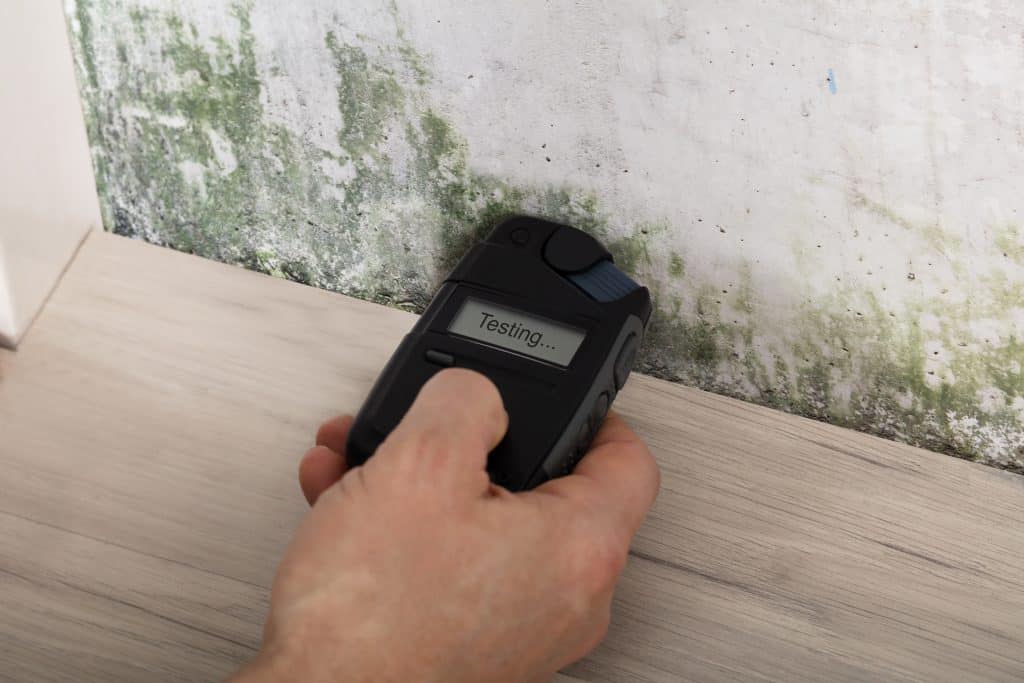
We use thermal imaging cameras to detect temperature variations that indicate moisture trapped behind surfaces. Moisture meters measure water content in building materials with precision. These tools find the conditions that support mold growth before it becomes visible or widespread.
Then comes the air sampling. We place collection devices in areas of concern and outdoor locations for baseline comparison. The samples capture airborne spores and particles, which get analyzed to determine concentration levels measured in spores per cubic meter—real quantifiable data, not guesswork.
Within three to seven days, you receive a lab report showing exactly what types of mold were found, how much is present, and whether your indoor levels exceed outdoor baseline measurements. The report includes specific recommendations for addressing any problems the testing identified.
This level of detail matters because different mold species require different approaches. Some molds indicate serious moisture problems that will keep causing issues until the source is fixed. Others are common environmental fungi that don’t require remediation at all. Professional testing tells you which situation you’re actually dealing with.
What Professional Mold Testing Cost Actually Includes in Pennsylvania
Professional mold testing cost in Pennsylvania typically starts around $300 to $350 for a standard residential inspection with two air samples—one indoor, one outdoor for comparison. Additional samples run about $75 each. Larger homes or more complex situations in Bucks County, PA can reach $600 to $800 depending on square footage and the number of areas requiring assessment.
That price includes the comprehensive visual inspection, professional-grade equipment use, sample collection following proper protocols, laboratory analysis by accredited facilities, and a detailed written report with remediation recommendations specific to your property. You’re not just paying for someone to collect samples—you’re paying for expertise in building science, moisture assessment, and proper sampling methods that produce reliable results.
Compare that to DIY mold test kits at $10 to $50. The low price seems attractive until you realize what’s missing. No visual inspection by trained professionals who know where mold hides in Pennsylvania homes. No moisture assessment to identify the source of the problem. No outdoor control samples for meaningful comparison. No expertise in interpreting results or identifying underlying causes specific to Bucks County’s climate challenges.
Professional testing costs more upfront, but it prevents expensive mistakes down the road. Missing hidden mold means the problem spreads and remediation costs multiply. Getting false positives from unreliable DIY kits leads to unnecessary remediation expenses. Improper DIY removal attempts can spread spores throughout your home, making contamination worse than it was before you started.
In Bucks County’s humid climate—where we get 49 inches of rainfall annually compared to the 38-inch national average, and where moisture problems are common year-round—accurate assessment the first time saves significant money in the long run. You get actionable information that tells you exactly what needs to be fixed, why it needs fixing, and how to prevent recurrence.
The investment makes sense when you consider what’s at stake. Your family’s respiratory health. Your property value. The cost of major remediation if problems aren’t caught early when they’re still manageable. Professional environmental mold testing provides the information you need to make smart decisions about all of those things.
Free Mold Testing and DIY Kits: Understanding What They Actually Detect
DIY mold test kits and free mold testing offers sound appealing when you’re trying to get answers without spending hundreds of dollars. Quick results. No appointment scheduling. Immediate action.
But understanding what these methods actually measure—and more importantly, what critical information they miss—is crucial before you rely on them for decisions about your Bucks County, PA home.
The most common DIY mold test kits use petri dishes or settling plates. You expose the dish to air in your home for a set period, seal it, and wait for mold colonies to grow. Some kits let you send samples to a lab for species identification. The fundamental problem is that these kits only capture spores that happen to land on the dish by gravity. They can’t measure airborne concentration levels. They can’t tell you if your indoor mold levels are elevated compared to normal outdoor levels. They just confirm that mold spores exist—which they always do in every home, everywhere.
Why DIY Mold Test Kits Miss the Information You Actually Need
DIY mold test kits fail to provide the context that makes test results meaningful for decision-making. Every home in Bucks County, PA contains some mold spores. They’re part of the normal environment, floating in from outdoors every time you open a door or window. A positive DIY test result doesn’t tell you whether you have a contamination problem that requires professional remediation or just normal background mold that exists everywhere.
The kits can’t detect hidden mold growing behind walls, under flooring, in wall cavities, or in HVAC systems—exactly where serious problems typically develop in Pennsylvania’s humid climate. They only test the air or surface where you place them. If mold is growing in your crawl space but you test your living room, you’ll miss the actual problem entirely.
Accuracy is another major issue that makes DIY testing unreliable. Research shows these kits can fail up to 80% of the time, producing both false positives and false negatives. They produce false positives when the testing medium gets contaminated during storage or shipping—and most kits don’t have clear expiration dates, so you have no way to know if contamination has occurred. They produce false negatives when sampling methods don’t capture representative spore levels or when environmental conditions during testing don’t match typical conditions in your home.
Without outdoor control samples, you have no baseline for comparison. Mold spore levels vary dramatically by season, weather conditions, and geographic location. What seems like a high count on your DIY test might actually be lower than outdoor levels, indicating your indoor environment is healthier than outside air. Or seemingly low counts could represent a serious problem when outdoor levels that day were even lower.
DIY kits also can’t identify moisture sources causing mold growth. Finding mold is only half the battle—actually, it’s less than half. If you don’t fix the underlying moisture problem, mold will keep coming back no matter how many times you clean it. We identify leaks, humidity issues, drainage problems, and ventilation deficiencies specific to Bucks County’s soil conditions and seasonal groundwater patterns. DIY kits just tell you mold spores are present, which you already knew.
The results from DIY testing rarely provide actionable guidance for fixing your situation. You learn that mold exists, but not how much, whether it’s problematic compared to normal levels, what’s causing it, or what specific steps to take. For most homeowners, DIY testing creates more questions and anxiety than answers.
The Reality Behind Free Mold Testing Offers
Companies offering free mold testing in Bucks County, PA usually make their money from remediation services. That creates an inherent conflict of interest. Their income depends on finding problems that require expensive fixes, which influences what they report and recommend.
Free inspections typically involve only a basic visual assessment. The inspector looks for visible mold and obvious moisture issues. But without laboratory testing of air samples, they can’t confirm species types or measure concentration levels. They can’t provide the documentation needed for insurance claims or legal matters. They can’t tell you if your indoor air quality is actually problematic or within normal ranges.
More concerning is the incentive structure built into this business model. A company that offers free testing but charges thousands for remediation has clear financial motivation to exaggerate problems. They might claim you need extensive work throughout your home when the situation is actually a minor issue requiring simple fixes. Or they might recommend unnecessary services to increase their profit margin.
Some states have addressed this conflict by requiring complete separation between testing companies and remediation companies. Pennsylvania doesn’t prohibit the same company from doing both, but the potential for biased assessments exists whenever profit depends on finding problems.
The better approach is working with independent environmental mold testing companies that don’t perform remediation work. They have no financial stake in the results beyond providing accurate assessment. If they find a problem, you can get competitive bids from multiple remediation companies. If testing shows your Bucks County, PA home is fine, you have confidence in that assessment because it wasn’t influenced by profit motives.
Free consultations from reputable companies can be valuable for initial assessment and education about your situation. But comprehensive testing with laboratory analysis and proper sampling protocols requires investment in equipment, expertise, and lab fees. When companies offer truly free testing, ask yourself how they’re making money. The answer usually involves selling you remediation services afterward, which may or may not be necessary based on unbiased analysis.
In Bucks County’s humid environment—where mold problems are genuinely common due to our climate and older housing stock—getting accurate unbiased information is worth paying for upfront. The cost of professional environmental mold testing is minimal compared to the expense of unnecessary remediation work or the health and property consequences of missing serious contamination because free testing didn’t look in the right places.
Choosing the Right Mold Testing Approach for Your Property
DIY mold test kits have extremely limited usefulness for homeowners making real decisions. They might work for regular monitoring of previously treated areas or satisfying curiosity about what mold types exist in your home. But they can’t provide the accurate assessment you need when health symptoms are present, water damage has occurred, or you’re trying to determine whether professional mold remediation is necessary.
Professional environmental mold testing gives you actionable information that actually solves problems. Precise measurements of airborne spore concentrations. Species identification by accredited laboratories. Comparison to outdoor baseline levels for your area. Moisture source identification specific to Bucks County, PA’s climate and soil conditions. Clear guidance on whether remediation is necessary and exactly what it should address to prevent recurrence.
The investment makes sense when you consider what’s at risk in our humid climate where mold problems don’t stay small—they spread, affect your family’s respiratory health, and damage your property value. Getting accurate information early prevents all of those consequences.
If you’re dealing with musty odors, unexplained health symptoms, visible moisture issues, or concerns after water damage in your Bucks County, PA home, we provide the answers you need to move forward with confidence. We understand our area’s specific challenges and use EPA-approved methods with state-of-the-art equipment to deliver comprehensive assessments that actually identify and solve problems instead of just confirming mold exists.