
Mold Testing in Society Hill, PA

Know What's Growing Before It Costs You

Professional mold testing that finds hidden problems in your historic Society Hill home before they turn into expensive remediation projects.

Hear from Our Customers

Professional Mold Testing Society Hill

You Get Real Answers, Not Sales Pitches

You’re not looking for someone to sell you mold removal. You’re looking for someone to tell you if you actually have a problem worth worrying about.

That’s where independent mold testing matters. We don’t do remediation, so we have zero incentive to exaggerate what’s happening in your home. We test, we analyze, we report what the lab finds. If there’s mold, you’ll know what type, where it’s concentrated, and what levels we’re seeing compared to outdoor baselines.

If you’re buying a historic rowhouse in Society Hill, dealing with mystery health symptoms that improve when you leave home, or just came through a water leak and want to know if it left anything behind, testing gives you facts. Not guesses. Not worst-case scenarios designed to upsell you. Just data you can use to make an informed decision about what happens next.

Mold Testing Company Society Hill

We Know These Homes Because We Work Them

We’ve been testing and inspecting properties across Society Hill and greater Philadelphia for years. We understand how brick foundations behave in humid summers. We know where condensation hides in older rowhouses with shared walls and limited airflow.

Most of the homes we test weren’t built with modern HVAC or vapor barriers. That doesn’t mean they all have mold problems, but it does mean you need someone who knows where to look and what’s normal for a building this age. We’re not a national franchise following a one-size-fits-all checklist. We’re local, we’re independent, and we’ve seen what happens when moisture sits unnoticed in plaster, brick, and century-old wood framing.

You’re not hiring us to fix anything. You’re hiring us to find out if there’s anything that needs fixing.

How Mold Testing Works Society Hill

Here's Exactly What Happens During Your Inspection

We start with a visual walkthrough of your property, looking for active water intrusion, staining, visible growth, and conditions that promote mold. We’re checking basements, crawlspaces, attics, bathrooms, kitchens, and anywhere moisture tends to accumulate in older construction.

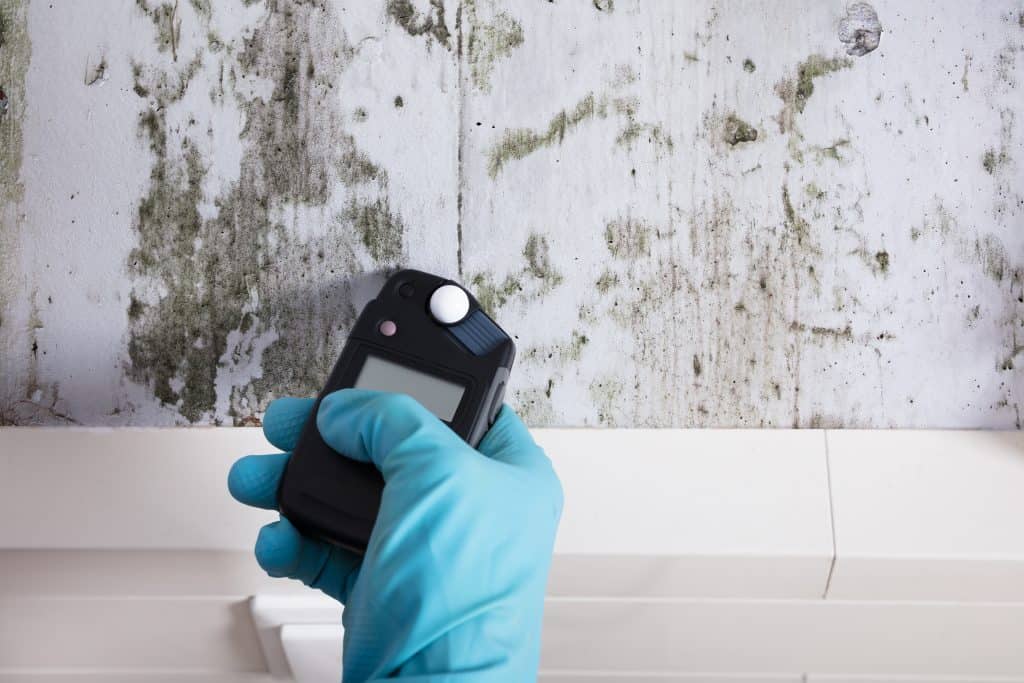
Then we take air samples. At minimum, that’s two indoor samples from different areas of concern and one outdoor sample as a control baseline. If we see visible growth or suspect contamination behind walls, we’ll also take surface samples using lifts or swabs. We use moisture meters and thermal imaging to map out where humidity is elevated or where temperatures suggest poor insulation and condensation risk.

All samples go to an independent lab for analysis. You’ll get a full report that identifies mold types, spore counts, and whether indoor levels are elevated compared to what’s normal outside. We’ll walk you through what it means in plain language. If remediation is needed, you’ll have documentation that contractors and insurance companies actually respect. If levels are normal, you’ll have peace of mind and a baseline for future reference.

Ready to get started?

Explore More Services

About Mack's Mold Removal

Residential Mold Testing Society Hill

What You Actually Get With Our Testing

Every residential mold testing appointment includes a complete visual inspection of accessible areas, moisture mapping with calibrated meters, thermal imaging to detect hidden water issues, and a minimum of three air samples analyzed by a certified lab. You’re not paying for a guy with a flashlight. You’re paying for diagnostic tools and third-party lab work that actually tells you what’s in your air.

In Society Hill, that matters more than most places. The neighborhood’s historic architecture means brick basements with minimal waterproofing, older windows that leak air and moisture, and plaster walls that can hide problems for months before you see staining. Humidity during Philadelphia summers regularly pushes past 60%, and when that warm, wet air hits cool basement walls or attic surfaces, condensation forms fast. Mold can start growing within 24 to 48 hours.

We’re also looking at HVAC systems, which in older homes are often afterthoughts installed decades after the building went up. Poor ventilation means moisture lingers. Our testing identifies whether your air quality is compromised and whether the source is localized or spread through ductwork. If you’re preparing to buy, sell, or file an insurance claim, this documentation is what adjusters and attorneys actually accept.

How much does professional mold testing cost in Society Hill?

Most residential mold inspections in Society Hill run between $300 and $600, depending on the size of your home and how many samples we need to take. That includes the visual inspection, moisture mapping, thermal imaging, air sampling, lab analysis, and a written report you can share with contractors or insurance.

If you’re seeing visible growth in multiple areas or you’ve had significant water damage, the scope might be larger and require additional surface samples. But for a typical rowhome or condo where you’re just trying to confirm whether there’s a hidden problem, expect to be in that range.

Testing costs less than remediation, and it’s the only way to know if remediation is even necessary. A lot of homeowners assume they have mold because they smell something musty or see a small stain. Sometimes that’s accurate. Sometimes it’s just old building smell or a minor cosmetic issue. Testing tells you which one you’re dealing with before you spend thousands on a problem that might not exist.

You can, but you probably won’t get useful information. Most over-the-counter kits detect mold presence, which isn’t helpful because mold spores exist in every building. What matters is the type of mold and the concentration. A kit that just tells you “mold detected” doesn’t tell you if it’s a problem or if levels are normal.

Professional mold testing uses calibrated air pumps that pull a measured volume of air through a collection device, then sends that sample to a lab where analysts identify species and count spores. We’re comparing indoor levels to outdoor baselines to see if your home has elevated contamination. That’s the data you need to make decisions.

The other issue with DIY kits is that they don’t come with an inspection. Mold growth isn’t always visible, and it’s not always where you think it is. We use moisture meters and thermal cameras to find hidden problems behind walls, under floors, and in areas you’d never think to test. If you’re trying to protect your investment or your health, a $30 kit from the hardware store isn’t going to give you the answers you need.

In older Philadelphia properties, we see a lot of Aspergillus, Penicillium, and Cladosporium. These are common indoor molds that thrive in damp, poorly ventilated spaces. They’re not always dangerous, but they can trigger allergies, asthma, and respiratory irritation, especially in kids or anyone with compromised immune systems.

Stachybotrys, the black mold everyone worries about, shows up less often but it does appear in homes with chronic water damage or long-term leaks. It grows on cellulose materials like drywall, wood, and paper when those materials stay wet for extended periods. If you’ve had a roof leak, plumbing failure, or flooding that wasn’t dried out quickly, that’s when Stachybotrys becomes a real risk.

The key is that you can’t identify mold by color or appearance. Black mold isn’t always Stachybotrys, and Stachybotrys isn’t always black. Lab analysis is the only way to know what you’re dealing with. Once we know the species and the concentration, we can tell you whether it’s something that needs immediate remediation or just improved ventilation and humidity control.

The on-site inspection usually takes one to two hours, depending on the size of your home and how many areas we’re testing. We’re doing a full walkthrough, taking measurements, running thermal scans, and collecting air and surface samples. We don’t rush it because missing a problem area defeats the purpose.

Once samples are collected, they go to the lab for analysis. Turnaround time is typically 24 to 48 hours. You’ll receive a detailed report that breaks down what was found, where it was found, and what the spore counts mean compared to outdoor levels. We’ll schedule a follow-up call to walk through the results and answer any questions.

If you need faster results for a real estate closing or insurance claim, some labs offer expedited processing for an additional fee. But in most cases, two days is standard and gives you enough time to plan next steps without delaying decisions that actually matter.

If you’ve had a significant water event like a pipe burst, roof leak, or flooding, testing before remediation is smart for a few reasons. First, it documents the extent of contamination, which matters if you’re filing an insurance claim. Adjusters want proof that mold growth occurred as a result of the covered loss, and lab results provide that proof.

Second, testing identifies what type of mold you’re dealing with, which affects how remediation should be handled. Some molds require more aggressive containment and removal protocols than others. Knowing what’s growing helps the remediation company do the job right the first time.

Third, testing after remediation confirms the work was done correctly. A lot of homeowners skip post-remediation testing and assume everything’s fine because they don’t see mold anymore. But if spore counts are still elevated or moisture issues weren’t fully addressed, the problem will come back. Clearance testing gives you verification that your home is actually safe to occupy and that you’re not going to be dealing with this again in six months.

Testing will tell you if mold is present in your home and at what levels, but it can’t definitively prove that mold is causing your symptoms. That’s a medical question that requires a doctor’s evaluation. What testing can do is rule mold in or out as a likely contributor.

If you’re experiencing sneezing, coughing, congestion, eye irritation, or respiratory issues that get better when you leave your home and worse when you return, that pattern suggests an indoor air quality problem. Mold is one possible cause. Testing gives you data to share with your doctor so they can make a more informed diagnosis.

If lab results show elevated mold levels and you’re symptomatic, remediation usually leads to improvement. If results come back normal and symptoms persist, you’re looking at something else—maybe dust mites, pet dander, VOCs from building materials, or poor ventilation. Either way, testing moves you closer to an answer instead of guessing and spending money on fixes that don’t address the actual problem.

Other Services we provide in Society Hill