

Hear from Our Customers
You can’t fix what you can’t see. And guessing costs more than testing ever will.
Professional mold testing gives you the actual data. Lab results tell you which species of mold is present, how much of it there is, and whether it’s the kind that causes respiratory problems or just looks ugly. That matters when you’re deciding whether to rip out drywall or just clean a surface.
Pennsylvania’s humid summers create perfect conditions for mold growth. Overbrook homes—especially older ones—deal with moisture issues that most homeowners don’t notice until someone gets sick or a musty smell won’t go away. By then, the problem’s usually bigger than it needed to be.
Testing catches it early. You get documentation for insurance claims if you need it. You know whether that basement smell is harmless mildew or black mold that needs immediate attention. And you stop wondering whether your kid’s cough is allergies or something growing behind the walls.
We work throughout Philadelphia County, and we’ve been inside enough Overbrook homes to know what typically goes wrong. Basement moisture from spring rains. Bathroom exhaust fans that don’t actually vent outside. Attics with poor ventilation that trap humidity all summer.
We’re licensed to conduct mold assessments in Pennsylvania, which isn’t optional—it’s required by state law. Our testing process uses calibrated air quality pumps and lab analysis, not guesswork. You get a report that tells you what’s there and what it means for your home.
We’re not a franchise. We’re local, and we show up when we say we will. Most calls get a response within 24 to 48 hours.
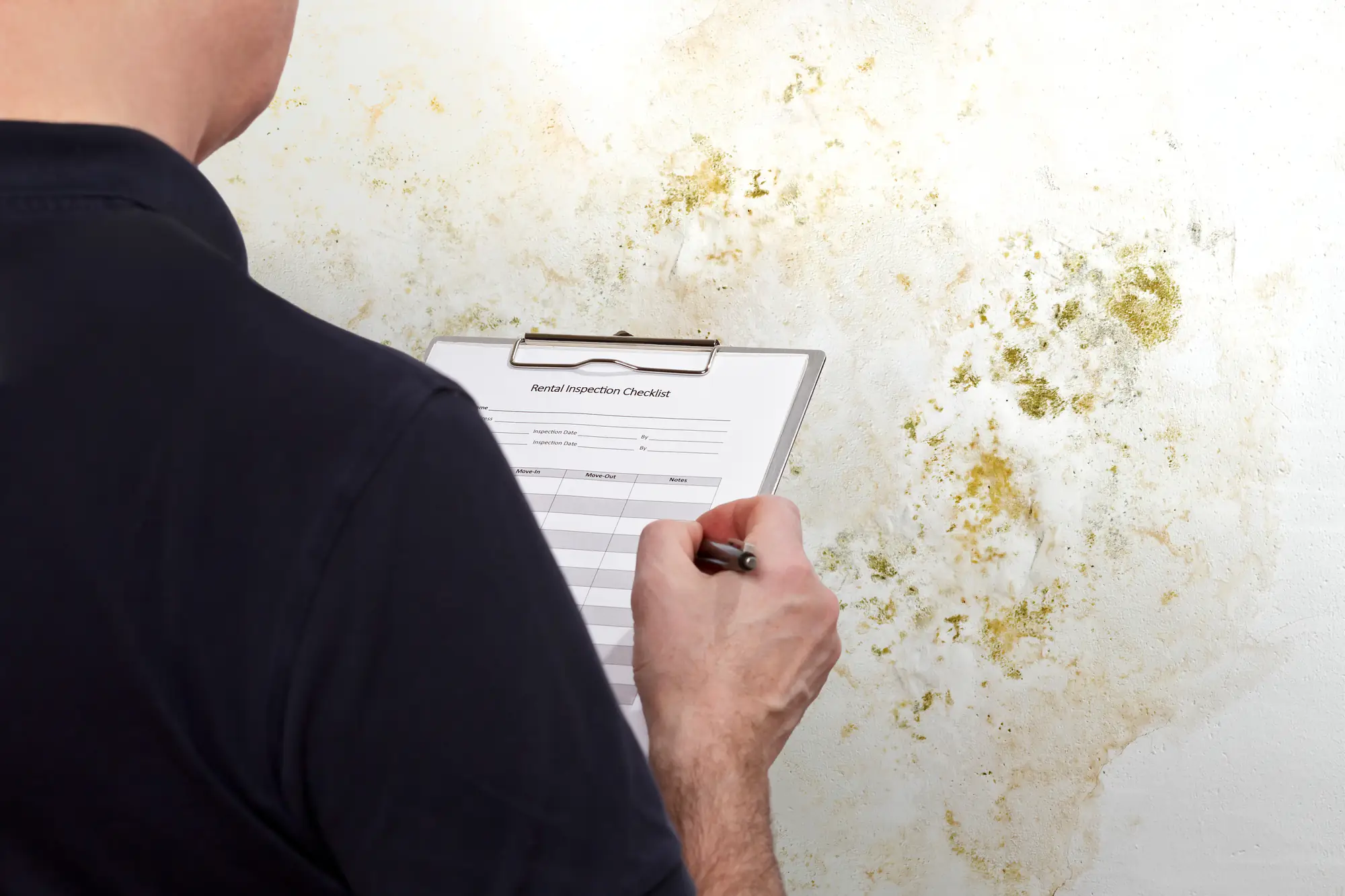
First, we talk. You tell us what you’ve noticed—smells, stains, health symptoms, water damage history. That conversation shapes where we look and what we test.
Then we inspect. We check the obvious spots and the hidden ones. Behind baseboards, inside HVAC systems, under sinks, in crawl spaces. Mold grows where moisture sits, and moisture hides in places you don’t check every day.
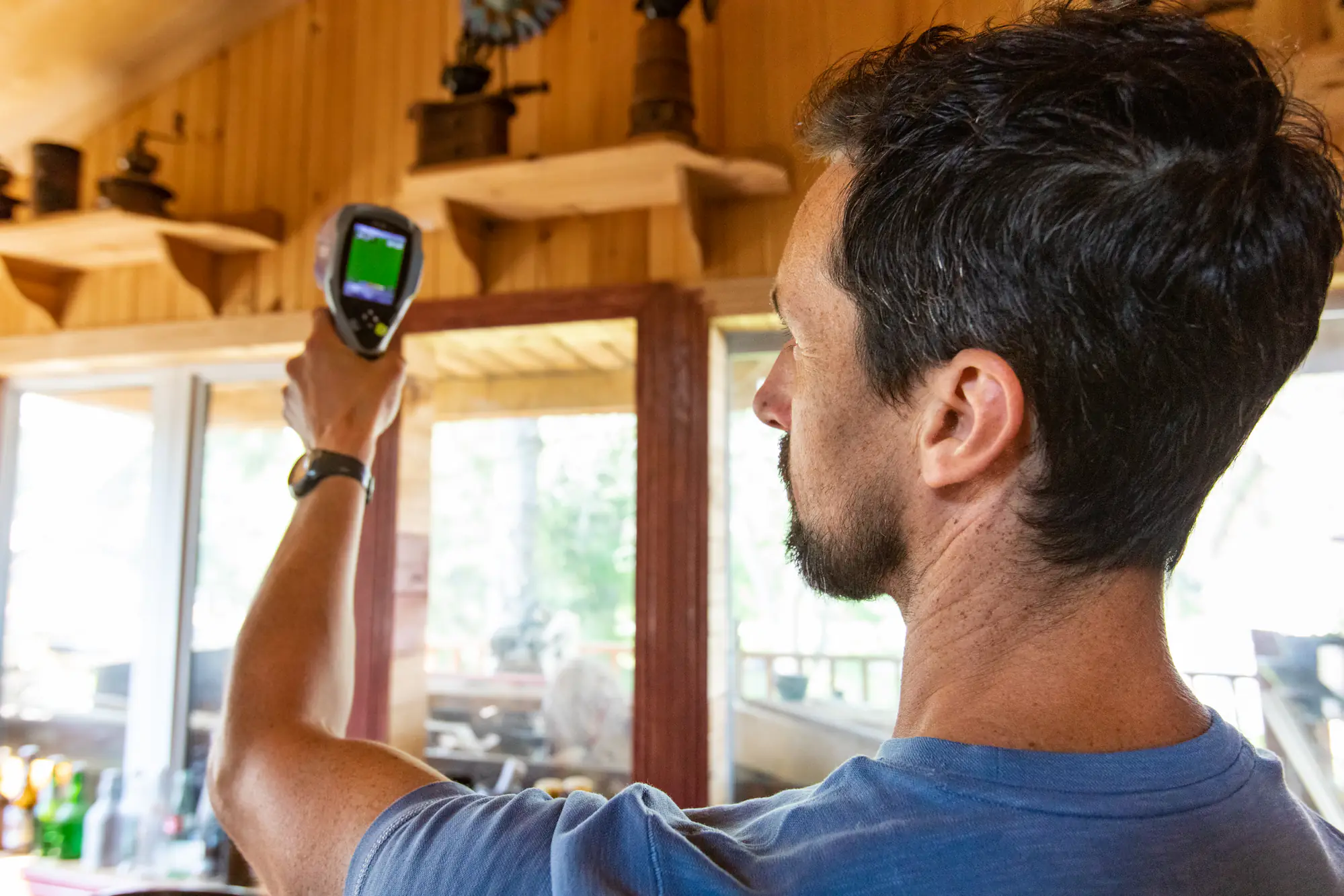
We take samples using a specialized pump that pulls air through a filter. Those samples go to a lab that identifies the mold species and measures spore concentration. Surface samples get taken too if there’s visible growth we need to analyze.
You get a report within a few days. It breaks down what we found, where we found it, and what the lab results mean in plain language. If remediation is needed, we’ll walk you through what that looks like—scope, timeline, cost. If it’s minor, we’ll tell you that too.
No upselling. No scare tactics. Just the information you need to make a decision.
Ready to get started?
A mold check isn’t just someone walking through your house with a flashlight. It’s a documented process that gives you defensible data.
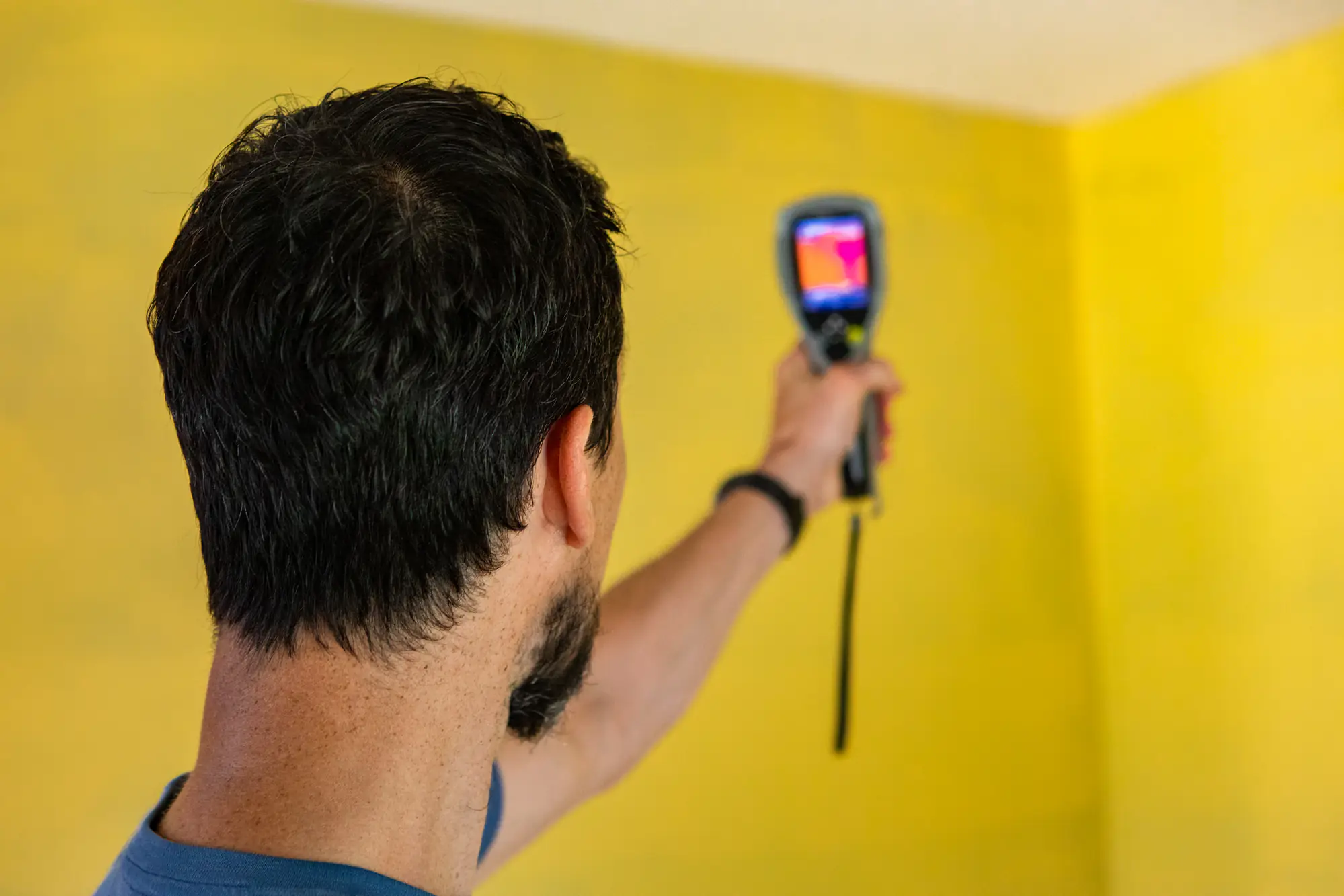
You get a visual inspection of your entire property—not just the room where you saw something. We’re looking for moisture sources, ventilation problems, and conditions that support mold growth. That includes areas you might not access regularly.
Air sampling captures what’s floating around that you can’t see. Pennsylvania homes deal with elevated humidity from May through September, and that indoor air can carry mold spores even when there’s no visible growth. The lab analysis identifies genus and species, which tells us whether you’re dealing with common environmental molds or toxigenic varieties like Stachybotrys.
Surface sampling confirms what’s growing on walls, ceilings, or materials. If there’s discoloration or a suspected colony, we take a sample for lab identification.
You also get a written report with findings, lab results, photos, and recommendations. If remediation is necessary, that report becomes your roadmap. If you’re buying or selling a home in Overbrook, it’s documentation that protects everyone involved.
Most residential mold testing in Overbrook runs between $300 and $600 depending on the size of your home and how many samples need to go to the lab. A basic inspection with air sampling for a small home costs less than a full assessment of a multi-level property with suspected contamination in multiple areas.
Lab fees are part of that cost. Each sample sent for analysis adds to the total, but that’s also what gives you accurate results instead of guesses. Some companies charge separately for the inspection and the lab work—make sure you’re clear on what’s included before someone shows up.
If you’re dealing with an insurance claim after water damage, your policy may cover testing costs. If you’re buying a home and the inspection flagged potential mold, sometimes that gets negotiated into the sale terms. Either way, testing costs a fraction of what remediation does if the problem gets worse.
The on-site inspection and sampling usually take one to two hours depending on your home’s size and how many areas need attention. We’re not rushing through it, but we’re also not wasting your time.
Lab results come back in three to five business days in most cases. The lab is identifying mold species and counting spore concentrations, which takes time to do correctly. Rush processing is available if you’re in a time-sensitive situation like a real estate closing, but standard turnaround is usually fine for most homeowners.
Once we have results, we’ll schedule a follow-up call or meeting to review findings and discuss next steps. That conversation takes as long as it needs to—some people have a lot of questions, and that’s expected. From the day we inspect to the day you have a full report and action plan, you’re usually looking at about a week.
You can buy a mold test kit at a hardware store for $40, but you’re going to get limited information and no context for what it means. Those kits usually just tell you “mold is present,” which isn’t helpful because mold spores exist in every home. What matters is the type and concentration.
Professional testing uses calibrated equipment and follows protocols that ensure accurate sampling. We know where to look, how to collect samples without contaminating them, and how to interpret lab results in the context of your specific property. A DIY kit can’t tell you whether that mold is toxic, whether the spore count is abnormal, or what’s causing it to grow.
Pennsylvania also requires a license to conduct professional mold assessments. That’s not just bureaucracy—it’s because improper testing leads to bad decisions. If you’re trying to document a problem for insurance, for a real estate transaction, or before starting remediation, you need a licensed professional. The DIY route might save you money upfront, but it usually costs more when you have to call someone like us anyway because the kit didn’t answer your actual questions.
A mold inspection is the visual assessment—walking through your home, checking for visible growth, identifying moisture problems, and looking at conditions that support mold. It’s the detective work that tells us where issues are or might develop.
Mold testing is the lab work. We take air samples or surface samples and send them to a laboratory that identifies exactly what’s growing and how much of it is present. Testing gives you data. Inspection gives you context.
Most people need both. The inspection finds the problem areas, and the testing confirms what’s there. If you’ve got visible mold covering a wall, sometimes testing isn’t necessary—we already know remediation is required. But if you’re smelling something, experiencing health symptoms, or dealing with a hidden moisture issue, testing tells us what we’re actually dealing with before we start tearing things apart. You don’t want to assume it’s black mold and spend thousands on remediation if it’s just surface mildew that wipes off.
Cladosporium and Penicillium are the most common molds we find in Overbrook homes. They’re environmental molds that grow on damp surfaces and don’t usually cause serious health problems for most people, though they can trigger allergies and asthma.
Aspergillus shows up frequently too, especially in areas with poor ventilation like bathrooms and basements. Some species of Aspergillus produce mycotoxins, so identification matters.
Stachybotrys—what people call black mold—is less common but gets the most attention because it produces toxins that cause respiratory issues and other health problems. It grows on materials that stay wet for extended periods, like drywall after a leak or flooding. Pennsylvania’s wet springs and humid summers create conditions where Stachybotrys can develop if water damage isn’t dried out quickly.
The only way to know which mold you’re dealing with is lab testing. Visual identification isn’t reliable because different species look similar, and the health risks vary significantly depending on what’s actually growing in your home.
Mold testing tells you what’s present and at what concentration. Whether that makes your home “safe” depends on the species, the levels, and who’s living there.
There’s no federal or state standard for acceptable mold levels in homes, which frustrates people. But the lab results combined with a professional assessment give you a clear picture of risk. If we find elevated levels of toxigenic mold like Stachybotrys or certain Aspergillus species, that’s a problem that needs remediation. If we find normal background levels of environmental molds, that’s typically not a health concern unless someone in your home is immunocompromised or has severe mold allergies.
Testing also identifies the moisture sources and conditions causing growth. Removing the mold without fixing the moisture problem means it comes back. So safety isn’t just about what the lab finds—it’s about addressing why it’s there in the first place. That’s what the full assessment covers, and that’s what gives you a home that’s actually safe instead of just temporarily cleaned up.
Other Services we provide in Overbrook