

Hear from Our Customers
You’ve noticed the musty smell in the basement. Your allergies flare up at home but improve when you leave. Maybe you’ve spotted discoloration on a wall, or you’re dealing with persistent sinus issues that won’t quit.
DIY test kits from the hardware store don’t tell you much. They can’t identify what species you’re dealing with, where it’s actually growing, or what’s causing it. Most importantly, they can’t tell you if what you’re seeing is a surface issue you can handle yourself or something that needs professional attention.
Professional mold testing uses calibrated equipment—thermal cameras, moisture meters, and precision air sampling—to find mold where it actually lives. Behind walls. Under floors. In your HVAC system. The samples go to an independent lab where trained mycologists identify the exact species, measure concentration levels, and determine if you’re looking at a health risk.
You get a detailed report that shows what’s there, how much, and what to do about it. Not a sales pitch. Just facts that help you make an informed decision about your home and your family’s health.
We’ve been testing and treating mold in Lower Makefield homes since the mid-1990s. We know the older homes near the Delaware River. We understand how the area’s increased precipitation—up 5-10% in recent years—affects basements and crawl spaces in this part of Bucks County.
Our inspectors are certified, experienced, and equipped with technology that most companies don’t invest in. We send every sample to AIHA-accredited labs because we don’t want there to be any question about accuracy. You’re not getting a biased result from someone who profits from finding a problem.
We’ve built our reputation on transparent evaluations and honest recommendations. Sometimes that means telling a homeowner they can handle the cleanup themselves. We’re okay with that. What matters is that you have accurate information about what’s happening in your home.
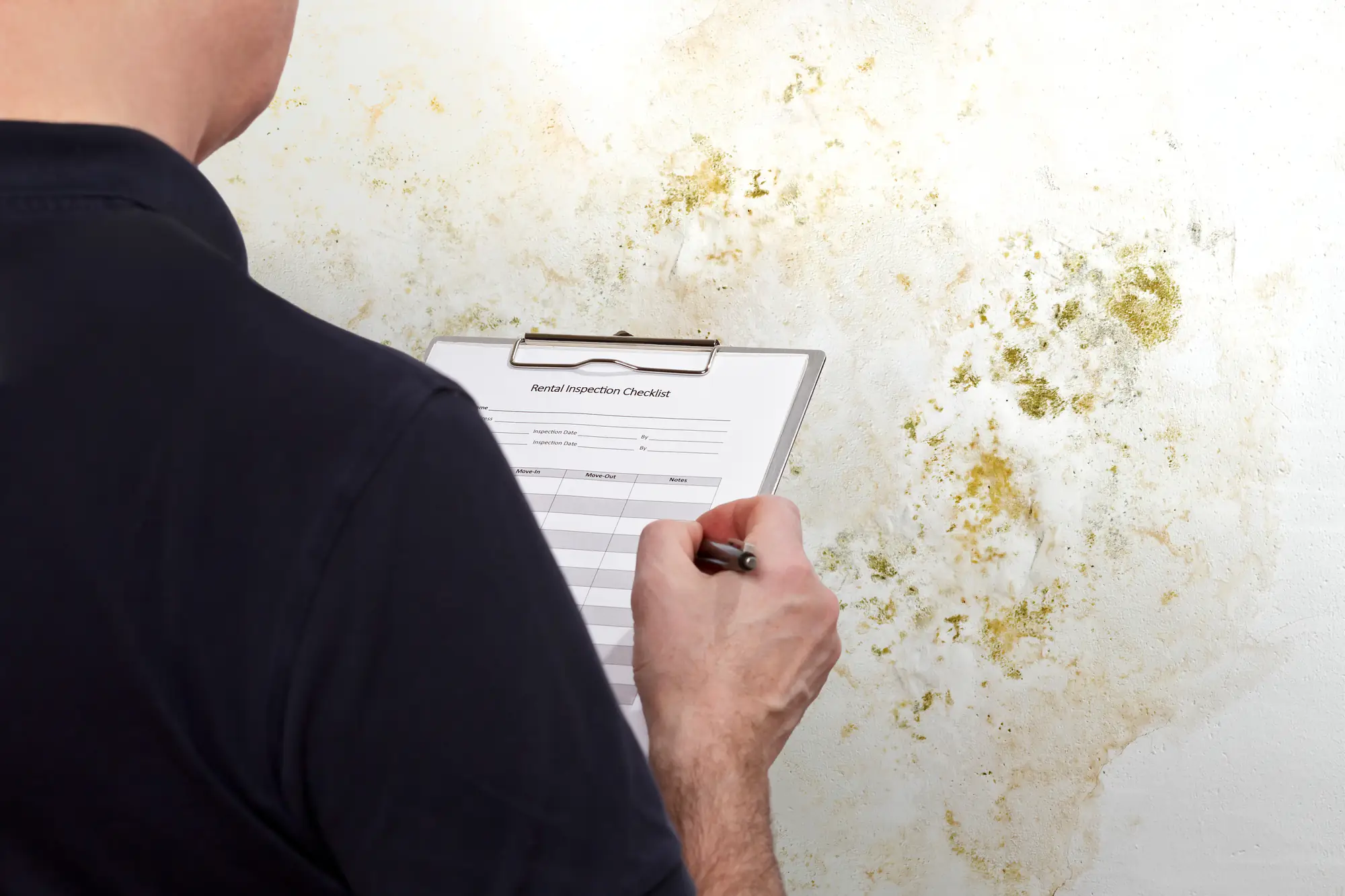
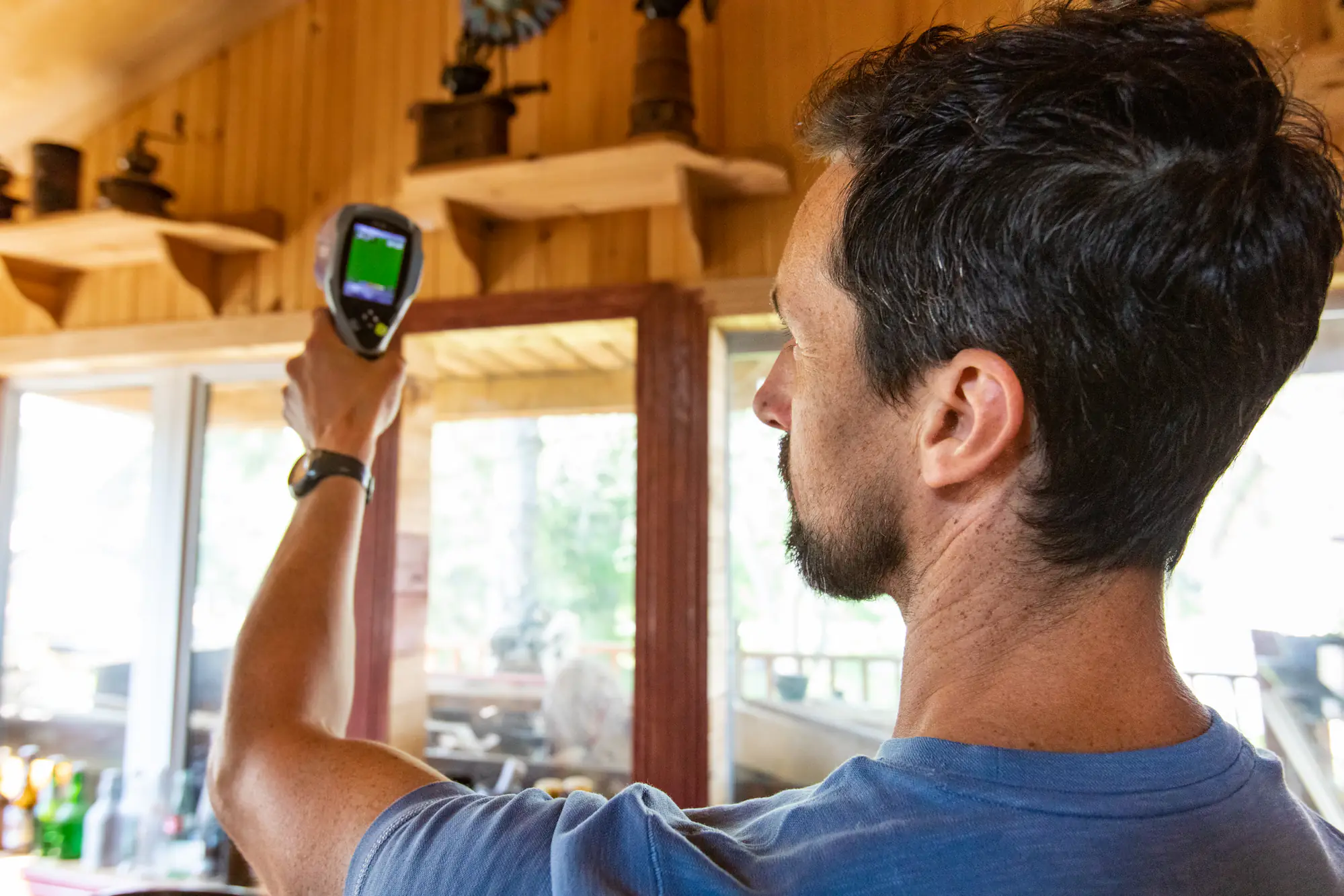
The inspection starts with a visual assessment of your home. We’re looking for visible mold, water stains, condensation patterns, and any signs of moisture intrusion. We use thermal imaging cameras to detect temperature variations that indicate hidden moisture behind walls or under floors.
Next comes moisture mapping. We measure moisture levels in building materials using calibrated meters. High moisture content doesn’t always mean mold, but it tells us where conditions are right for growth.
Then we collect samples. Air samples capture airborne spore counts in different areas of your home. Surface samples test visible growth to identify species. Sometimes we take samples from inside walls or HVAC systems if our equipment indicates a problem in those areas.
The entire on-site process typically takes one to three hours depending on your home’s size and the extent of the inspection. Samples go to an independent third-party lab for analysis. You’ll have results within three to five business days.
Your report includes lab findings, species identification, concentration levels, and specific recommendations. If remediation is needed, we explain what that involves. If it’s something you can address yourself, we’ll tell you that too.
Ready to get started?
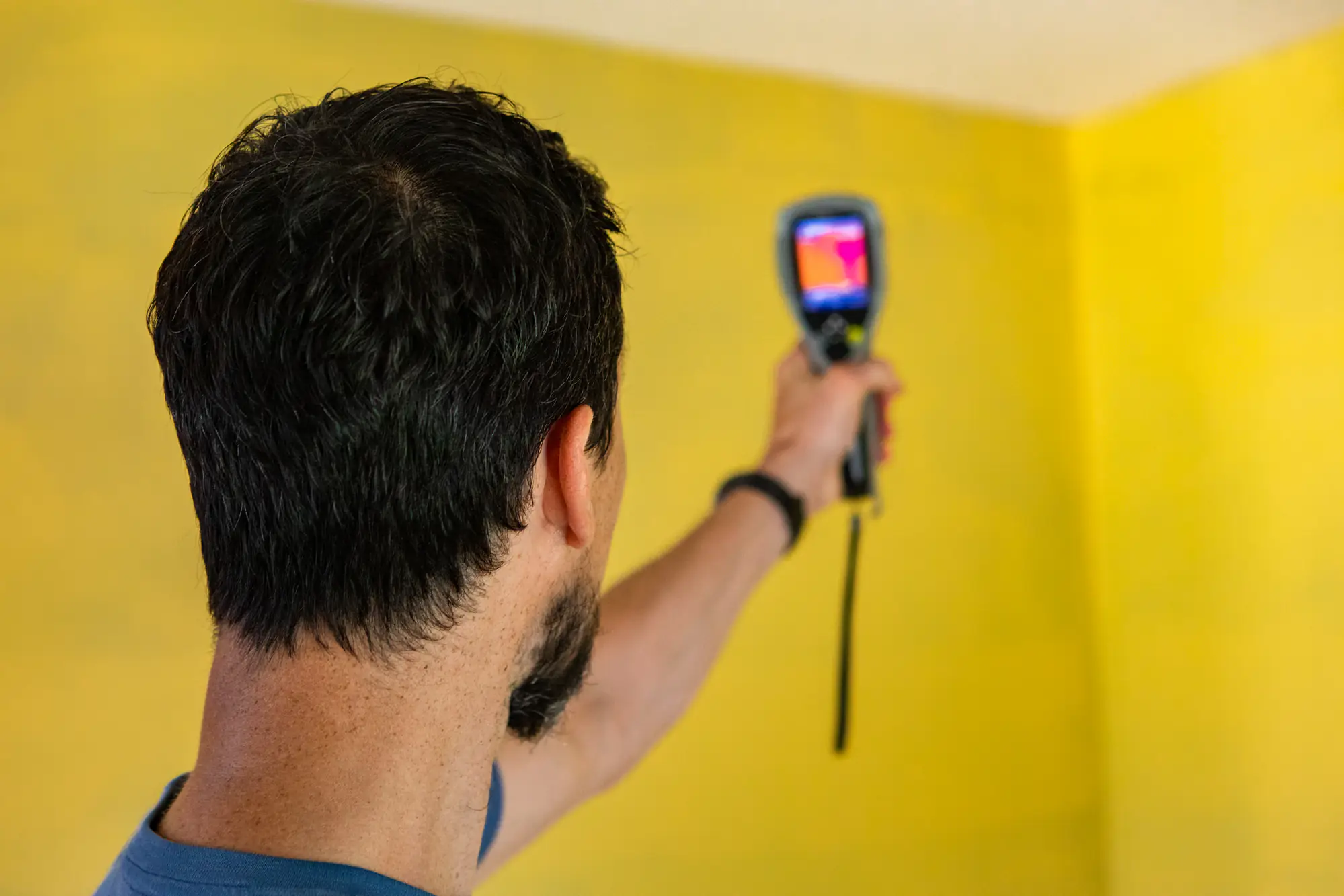
Professional mold testing includes a comprehensive visual inspection using thermal imaging and moisture detection equipment. We’re not just looking at what’s visible—we’re identifying conditions and hidden areas where mold typically develops in Lower Makefield homes.
You get multiple sample types. Air sampling measures spore counts in your indoor environment compared to outdoor baseline levels. Surface sampling identifies species from visible growth. We also check your HVAC system since that’s often how mold spreads throughout a home.
Every sample is analyzed by an AIHA-accredited laboratory. Trained mycologists examine samples under microscopes to identify specific mold species and measure concentration levels. This matters because not all mold presents the same health risk, and some species indicate serious moisture problems that need immediate attention.
Your detailed report includes lab results, sketches and measurements of affected areas, moisture readings, and clear recommendations. If you need remediation, you’ll know exactly what needs to be done and why. If the issue is minor, we’ll explain your options for handling it yourself.
The testing process also identifies the moisture source causing mold growth. That’s critical because removing mold without fixing the underlying moisture problem means it’s coming back. In Lower Makefield, common sources include foundation issues, poor drainage around older homes, inadequate ventilation in bathrooms and basements, and HVAC condensation problems.
Professional mold testing in Lower Makefield typically starts around $300 for a standard inspection with visual examination, moisture detection, and two air samples. Most homeowners pay between $650 and $670 for comprehensive testing that includes multiple sample types and detailed lab analysis.
Larger homes or properties with multiple areas of concern can run between $700 and $1,000. The cost depends on your home’s size, how many samples we need to collect, and the complexity of the inspection.
That price includes the on-site inspection with thermal imaging and moisture mapping, sample collection, independent lab analysis by AIHA-accredited mycologists, and a detailed report with specific recommendations. You’re not paying for a sales pitch—you’re paying for accurate information about what’s actually happening in your home.
DIY mold test kits from hardware stores rarely provide useful information. They can’t tell you what species you’re dealing with, how much is present, or whether concentration levels pose a health risk. Most importantly, they can’t identify where mold is actually growing or what’s causing it.
Professional mold testing uses calibrated equipment to detect hidden mold behind walls, under floors, and in ventilation systems—places DIY kits never reach. Thermal imaging cameras and moisture meters identify problem areas that aren’t visible to the naked eye.
The samples we collect go to independent laboratories where trained mycologists identify specific species and measure concentration levels. That analysis tells you if you’re dealing with common mold that’s easily addressed or toxic species that require professional remediation. It also provides documentation that’s legally valid for insurance claims, real estate transactions, and remediation verification. DIY kits can’t offer any of that.
The on-site inspection and sample collection typically takes one to three hours depending on your home’s size and the areas we need to assess. We’re thorough but efficient—we understand you have other things to do.
Laboratory analysis takes three to five business days. The lab needs time to culture samples, examine them under microscopes, and prepare detailed findings. Rushing that process compromises accuracy, and accuracy is the entire point of professional testing.
You’ll receive a comprehensive report that includes lab results, species identification, concentration levels, sketches and measurements of affected areas, and specific recommendations for next steps. We’ll walk you through the findings and answer any questions you have. If remediation is needed, we’ll explain what that involves and provide a clear timeline and cost estimate.
Professional mold testing identifies what species are present, measures concentration levels, and compares your indoor air quality to outdoor baseline levels. That information tells you if you’re dealing with a health risk that needs immediate attention or a minor issue that’s easily resolved.
Some mold species cause allergic reactions, respiratory irritation, and aggravate asthma. Others produce mycotoxins that can lead to more serious health effects with prolonged exposure. The lab analysis identifies specific species so you know exactly what you’re dealing with.
The report also identifies moisture sources and conditions that allow mold to grow. Addressing those underlying issues is essential for protecting your family long-term. Mold doesn’t just appear—it grows where moisture and organic materials meet. Professional testing shows you where that’s happening in your home and what needs to change to prevent future growth.
Most mold testing is completely non-invasive. Air sampling, surface sampling, and thermal imaging don’t require cutting into walls or disturbing your home’s structure. We collect samples using swabs, tape lifts, and air pumps—nothing that causes damage.
In some cases, we may recommend taking a sample from inside a wall or ceiling if our equipment indicates hidden mold in that area. When that’s necessary, we make a small inspection hole that’s easily patched. We only do this when it’s essential for accurate assessment, and we always discuss it with you first.
The goal is to give you complete information about what’s happening in your home with minimal disruption. Our equipment—thermal cameras and moisture meters—allows us to detect problems without tearing into walls unnecessarily. You get accurate results without the mess and expense of exploratory demolition.
If testing confirms mold growth, your report will specify what species are present, concentration levels, and the extent of contamination. Based on those findings, we provide clear recommendations for remediation.
Minor surface mold in small areas—less than 10 square feet—can often be cleaned by homeowners using proper techniques and safety precautions. We’ll explain how to do that correctly if it’s appropriate for your situation.
Larger areas, hidden mold, or toxic species like Stachybotrys require professional remediation. We’ll create a customized plan that addresses the contamination and fixes the underlying moisture problem. That might involve removing affected materials, treating surfaces, improving ventilation, or addressing drainage issues around your foundation—common problems in older Lower Makefield homes.
The remediation process follows strict EPA and IICRC standards. After work is complete, we conduct post-remediation testing to verify that spore counts have returned to normal levels. You get documentation showing your home is safe—important for your peace of mind and valuable if you ever sell the property.
Other Services we provide in Lower Makefield