
Hear from Our Customers
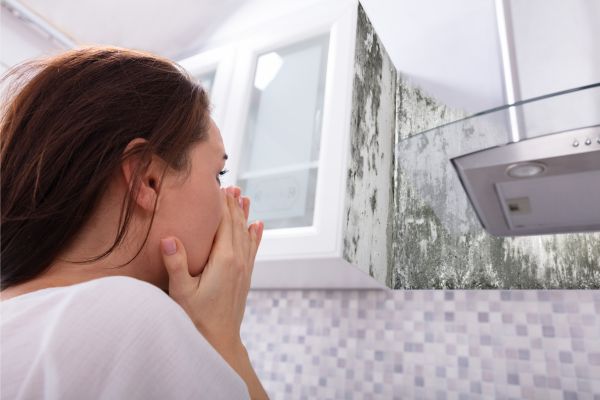
You’re dealing with musty smells that won’t go away. Maybe unexplained coughing or allergies that get worse at home. Or you’re buying a house and need to know what you’re actually getting into before closing.
Mold doesn’t always show itself. It grows behind walls, under floors, in attic spaces where humidity sits heavy during Pennsylvania’s thick summer months. You can’t see it, but your body knows something’s wrong.
Our mold testing process identifies what’s there, where it’s growing, and whether the levels in your home are elevated compared to normal outdoor baselines. We use moisture meters, thermal imaging, and lab-grade air sampling to find problems you can’t see. Then we give you a clear report that explains what we found and what it means for your next steps.
This isn’t about scaring you into unnecessary work. It’s about giving you actual information so you can make decisions based on facts, not guesses.
Mack’s Mold Removal works throughout Bucks, Montgomery, Delaware, Chester, and Philadelphia County. We’ve tested hundreds of homes in southeastern Pennsylvania, where humidity and older construction create perfect conditions for hidden mold growth.
Logan sits in an area where summer air gets heavy and still. Homes near the Delaware River or in low-lying areas hold moisture longer than you’d think. We know what to look for because we’ve seen how mold behaves in this climate.
When you call us, you’re getting someone who understands Pennsylvania homes and the specific moisture problems that come with them. We’re not running a sales pitch. We’re running tests, collecting samples, and giving you results you can actually use.
We start with a visual inspection of your property. That means checking areas where moisture tends to collect: basements, crawl spaces, attics, bathrooms, around windows, and anywhere you’ve had water issues before.
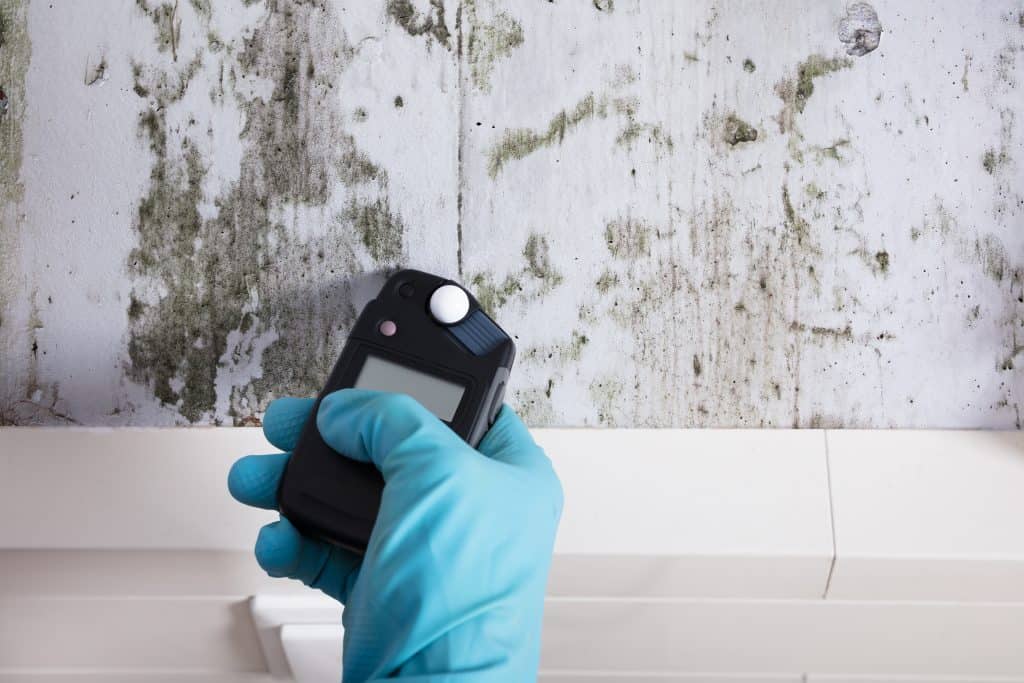
We use moisture meters to measure humidity levels in walls, ceilings, and floors. Thermal imaging helps us spot temperature differences that indicate hidden moisture or poor ventilation. These tools show us where mold is likely growing even when it’s not visible.
Then we collect air samples from multiple rooms and send them to an independent lab for analysis. The lab identifies mold spore types and measures concentration levels. We compare your indoor results to outdoor baseline samples to determine if levels are elevated.
You get a full report with photos, moisture readings, thermal images, and lab results. We walk you through what we found, explain which areas need attention, and outline what remediation would look like if it’s needed. If levels are normal, we tell you that too.
The whole process typically takes a few hours on-site. Lab results come back within a few days. Then we schedule a follow-up call or meeting to review everything and answer your questions.
Ready to get started?
Our residential mold testing covers the full scope of what you need to understand your indoor air quality. We conduct moisture assessments using calibrated meters that measure humidity levels in building materials. Thermal imaging scans identify cold spots, insulation gaps, and areas where moisture is trapped behind surfaces.
Air sampling captures spore counts from multiple locations in your home. We take outdoor samples as a control baseline, then compare indoor levels to see if concentrations are elevated. The lab analysis identifies specific mold species, including Stachybotrys (black mold), Aspergillus, Penicillium, and other common types found in Pennsylvania homes.
In Logan and throughout Bucks County, we see patterns tied to local climate. Summer humidity in southeastern PA regularly pushes into ranges where mold thrives, especially in homes with limited airflow or older ventilation systems. Attics stay damp longer than most homeowners realize. Basements near the Delaware River or Neshaminy Creek deal with groundwater pressure that creates chronic moisture problems.
We document everything with photos, notes, and readings. You get a written report that explains findings in plain language, not technical jargon. If remediation is recommended, we outline priorities and give you a realistic sense of what’s urgent versus what can wait. If testing shows normal levels, we confirm that and help you understand why you might still be experiencing symptoms.
You need testing if you’re experiencing health symptoms that get worse at home, like persistent coughing, sinus congestion, headaches, or respiratory irritation. You need it if you smell musty odors but can’t find the source. You need it after water damage, even if everything looks dry, because mold can start growing within 24 to 48 hours in hidden spaces.
If you’re buying a home in Logan or anywhere in Bucks County, testing before closing protects you from inheriting someone else’s mold problem. Sellers aren’t required to disclose mold in Pennsylvania, so you’re on your own to find it. A few hundred dollars in testing can save you thousands in surprise remediation costs.
Testing also makes sense if you’ve had mold removed before and want confirmation that it hasn’t come back. Post-remediation verification ensures the cleanup was done correctly and that spore levels have returned to normal.
DIY mold test kits don’t give you useful information. They’re designed to detect mold presence, which isn’t helpful because mold spores exist in every home. What matters is the type of mold and the concentration levels, and DIY kits can’t measure that accurately.
Professional mold testing uses calibrated equipment and third-party lab analysis. We collect air samples from multiple locations, take outdoor baseline samples for comparison, and send everything to a certified lab that identifies specific mold species and measures spore counts. That data tells you whether levels are elevated and whether the mold types present are potentially harmful.
We also use moisture meters and thermal imaging to locate hidden problems. DIY kits can’t do that. They give you a yes/no answer to a question that requires detailed analysis. If you’re making decisions about remediation or trying to document a problem for insurance, you need professional testing with lab results that hold up under scrutiny.
Mold testing typically costs between a few hundred to several hundred dollars depending on the size of your home and how many samples we need to collect. A standard residential inspection with air sampling and lab analysis usually falls in a predictable range that we can quote after a brief conversation about your property.
The cost covers the on-site inspection, moisture assessment, thermal imaging, sample collection, lab fees, and a detailed report with findings and recommendations. If you’re testing a larger home or need additional samples from specific areas, that affects pricing.
Some companies offer free testing if you hire them for remediation, but that creates a conflict of interest. We keep testing separate so you get unbiased results. You’re paying for accurate information, not a sales pitch. Once you know what you’re dealing with, you can make informed decisions about next steps without pressure.
In Logan and throughout Bucks County, we regularly find Aspergillus, Penicillium, Cladosporium, and Stachybotrys. Aspergillus and Penicillium grow in damp indoor environments and are common in basements, bathrooms, and areas with poor ventilation. Cladosporium often appears on wood surfaces, insulation, and fabrics.
Stachybotrys, commonly called black mold, grows on materials with high cellulose content like drywall, wood, and paper when they stay wet for extended periods. It produces mycotoxins that can cause more severe health reactions, especially in children, elderly residents, and anyone with compromised immune systems.
Pennsylvania’s humid summers create ideal conditions for all of these. When relative humidity stays above 60% for extended periods, mold doesn’t need a leak to grow. It just needs damp air and poor circulation. Homes in low-lying areas near water or with older HVAC systems that don’t control humidity well are particularly vulnerable. Testing identifies which species are present and whether concentrations are elevated beyond normal outdoor levels.
The on-site inspection usually takes two to four hours depending on your home’s size and the areas we need to assess. We’re thorough because missing a problem area defeats the purpose of testing.
After we collect samples, the lab analysis takes three to five business days. We can’t rush that part because accurate identification and spore counting takes time. Once results come back, we schedule a follow-up within a day or two to review findings and answer questions.
From your initial call to getting final results and recommendations, the full process typically takes about a week. If you’re working against a deadline, like a home purchase closing date, let us know upfront. We can often accommodate tighter timelines by coordinating with the lab for expedited analysis.
No. Mold testing is non-invasive and doesn’t create any health risks or disruption that would require you to leave. We’re collecting air samples, taking moisture readings, and using thermal imaging. None of that involves chemicals, demolition, or anything that affects your indoor air quality.
You’re welcome to stay and follow along during the inspection. Many homeowners prefer to be present so they can point out areas of concern, ask questions in real time, and see firsthand what we’re finding. If you need to leave for work or other commitments, that’s fine too. We’ll document everything and walk you through it later.
The only thing we ask is that you close windows and doors for a few hours before we arrive. That gives us more accurate air sampling results by preventing outdoor air from diluting indoor spore concentrations. Other than that, your daily routine doesn’t need to change.
Other Services we provide in Logan