
Hear from Our Customers
You’re not looking for someone to guess. You need accurate answers about whether mold is in your home, where it’s growing, and what type it is.
That’s what our mold inspection gives you. We use moisture meters and infrared cameras to find problems behind walls, under floors, and in crawl spaces. Then we collect air samples and send them to a certified lab that identifies the species and measures concentration levels against outdoor baselines.
You get a detailed report with photos, moisture readings, and lab results—usually within three to five business days. If you’re dealing with insurance, we know what adjusters need to see. If you’re buying or selling, we provide documentation that protects the deal. And if you just want to know if that musty smell is actually a problem, we’ll tell you straight.
Mack’s Mold Removal has been inspecting homes across Bucks County for years. We know the area—the older brick foundations in Logan, the humidity issues that come with Pennsylvania’s climate, and the basements that stay damp no matter what you try.
We’re certified, we use professional-grade equipment, and we work with nationally recognized labs. But what matters more is that we’re not here to upsell you on remediation you don’t need. We inspect, we test, we report. What you do next is your call.
If you’ve been putting off getting your home checked because you’re worried about cost or pressure, we get it. Our inspections start at a fair price, and we’ll walk you through everything we find without the sales pitch.
First, we schedule a time that works for you. No pressure, no rush. When we arrive, we do a full visual inspection of your property—checking basements, crawl spaces, attics, bathrooms, and anywhere moisture tends to collect.
We use thermal imaging to spot temperature differences that indicate hidden moisture. We use moisture meters to measure humidity levels in drywall, wood, and other materials. If we find visible mold or suspect hidden growth, we collect air samples and surface samples to send to the lab.
The lab analyzes the samples to identify mold species and measure spore concentration. Results come back in three to five business days. Then we send you a full report with our findings, photos, moisture data, and lab results. If remediation is needed, we’ll explain what that looks like. If your air quality is fine, we’ll tell you that too.
You also get documentation you can share with insurance companies, real estate agents, or buyers. We’ve handled enough claims to know what adjusters look for, so our reports are thorough and clear.
Ready to get started?
Every inspection includes a complete visual assessment of your property. We check the obvious spots and the ones most people miss—behind appliances, around windows, inside HVAC systems, and under sinks.
You get thermal imaging to detect hidden moisture and moisture meter readings throughout the home. We collect air samples to measure airborne mold spore levels and compare them to outdoor air. If we see visible growth, we take surface samples for lab identification.
In Logan and across Bucks County, we pay close attention to basements and crawl spaces. Pennsylvania’s humidity and older home construction create perfect conditions for mold, especially in areas with poor ventilation or past water damage. We’ve seen it enough times to know where to look.
After the lab processes your samples, you receive a written report that includes laboratory analysis, photos of problem areas, moisture readings, and our recommendations. If you’re filing an insurance claim, this documentation is critical. If you’re buying a home, it gives you leverage. And if you just need to know whether your family is safe, it gives you clarity.
Most professional mold inspections in the Logan area run between $300 and $650, depending on the size of your home and how many samples we need to collect. Our inspections start at $350 for a full visual check with moisture detection tools and two air samples.
That might sound like a lot upfront, but it’s a fraction of what you’ll pay if mold spreads undetected. Remediation can cost anywhere from $3,000 to $20,000 depending on the extent of the problem. And if you’re selling your home, undetected mold can drop your property value by 20 to 37 percent—or kill the sale entirely.
We give you upfront pricing before we start any work. No surprises, no hidden fees. You’ll know exactly what you’re paying for and why.
You can, but it won’t give you the information you actually need. DIY kits can tell you if mold spores are present—but mold spores are everywhere. They’re in every home, all the time. What matters is the type of mold and the concentration level.
DIY kits also can’t find hidden mold. If mold is growing behind a wall or under flooring, a test kit sitting on your counter isn’t going to detect it. And they don’t come with professional documentation, which means insurance companies and real estate agents won’t accept them.
Our inspections use air sampling to capture spores from hidden colonies, thermal imaging to detect moisture you can’t see, and certified lab analysis to identify species and measure concentration. You get a full report that actually tells you what’s happening in your home—not just that mold exists somewhere.
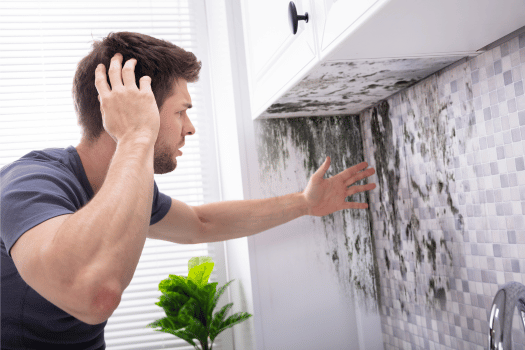
The most obvious sign is visible mold growth—dark spots on walls, ceilings, or around windows. But you don’t always see it before it becomes a problem.
A musty smell is a red flag, especially in basements, bathrooms, or closets. If you or your family are experiencing unexplained allergy symptoms—sneezing, runny nose, itchy eyes, throat irritation—that could be mold exposure. Some people also report chronic fatigue or brain fog with long-term exposure.
Other signs include water damage from leaks or flooding, condensation on windows, peeling paint, or warped walls. If you’ve had any kind of water issue in the past year, it’s worth getting an inspection. Mold can start growing within 24 to 48 hours after water exposure, and it’s not always visible right away.
The inspection itself usually takes one to two hours, depending on the size of your home and how many areas we need to check. We’re thorough, but we’re not going to waste your time.
After we collect samples, the lab typically processes them within three to five business days. Once we get the results back, we’ll send you a full report with our findings and recommendations.
If you’re dealing with an urgent situation—like a recent flood or a real estate closing deadline—let us know. We can prioritize your inspection and work with the lab to get faster results when needed.
It depends on your policy and what caused the mold. Most homeowners insurance policies cover mold if it resulted from a covered event—like a burst pipe or storm damage. But if the mold developed because of long-term neglect or maintenance issues, they probably won’t cover it.
Insurance companies want proof that the mold was caused by a covered event and that you took reasonable steps to address it. That’s where our inspection reports come in. We’ve handled plenty of insurance claims over the years, and we know what documentation adjusters are looking for.
We provide detailed reports with lab analysis, photos, and moisture readings that meet insurance standards. Even if your claim gets denied, you’ll have the information you need to make decisions about remediation and protect your home’s value.
If we find mold, we’ll tell you exactly what type it is, where it’s growing, and how severe the problem is. Not all mold requires expensive remediation. Sometimes improved ventilation or a dehumidifier is enough to solve the issue.
If remediation is necessary, we’ll explain what that process looks like and give you a clear estimate. We don’t pressure you into anything. You’ll get all the information you need to make the right decision for your home and your budget.
You’ll also receive documentation you can use for insurance claims, real estate transactions, or future reference. And if you decide to move forward with remediation, we can handle that too—but only if it makes sense for your situation.
Other Services we provide in Logan