

Hear from Our Customers
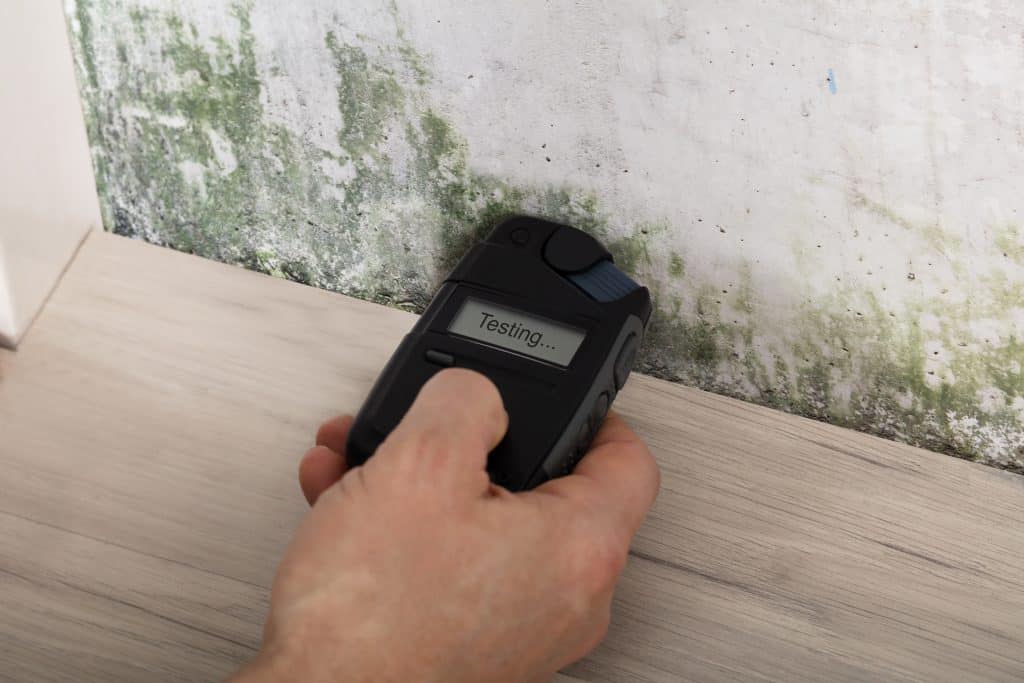
Most mold cleaning services scrub what you can see and call it done. That’s why it comes back in three months.
We’re a mold removal company that digs deeper. You get an inspection that finds hidden growth in crawl spaces, behind drywall, and inside ductwork. We identify the moisture source feeding it—whether that’s a leaky basement, poor attic ventilation, or a slow pipe drip you didn’t know existed.
Then we remove the mold completely using containment barriers and HEPA filtration so spores don’t spread during cleanup. After that, we fix the conditions that let it grow in the first place. Better airflow. Proper waterproofing. Humidity control.
What you’re left with is air that doesn’t trigger allergies, walls that aren’t rotting from the inside, and the confidence that this problem is actually solved. Not just covered up until next spring.
We work with homeowners across Woodhill, PA and the surrounding Bucks County area. We know what Pennsylvania’s humid summers and aging home construction do to basements, attics, and crawl spaces.
Our mold specialists are certified in remediation and trained to handle everything from small bathroom mold to full-scale black mold contamination. We’ve seen what happens when moisture sits too long in older homes—and we know how to reverse it.
You’re not getting a national franchise that sends different crews every time. You’re working with a local team that shows up when we say we will, explains what we find, and gives you a clear plan before we start tearing into anything.

First, we inspect your property for free. We’re looking for visible mold, moisture readings, and airflow issues. We check basements, attics, bathrooms, kitchens—anywhere water tends to hide. You get a full report of what we find and what’s causing it.
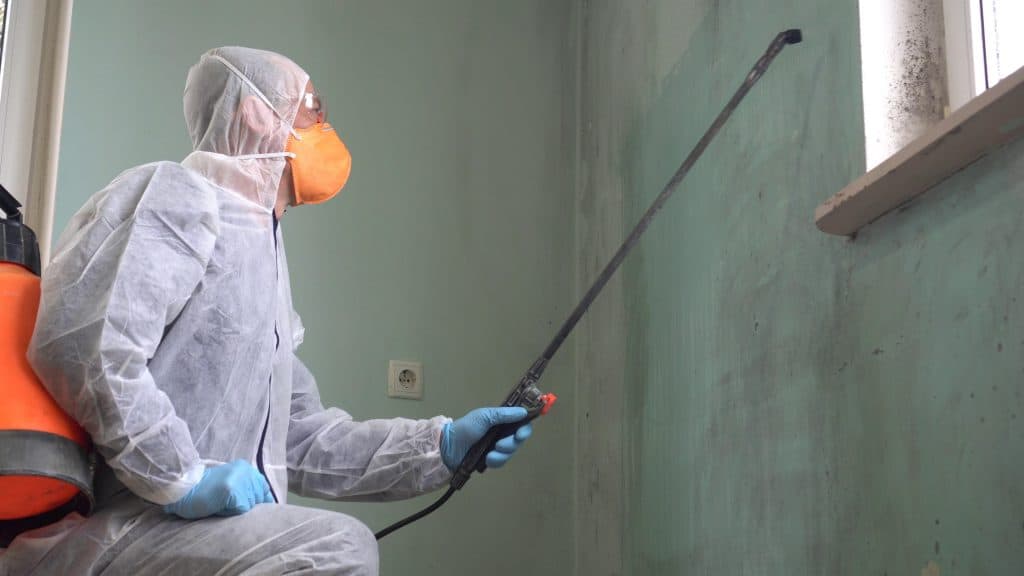
Next, we contain the affected area so mold spores don’t travel to clean parts of your home during removal. We use plastic barriers and negative air pressure to keep everything isolated. Then we remove contaminated materials—drywall, insulation, flooring—whatever can’t be saved.
We clean and treat all surfaces with antimicrobial solutions. HEPA vacuums and air scrubbers pull spores out of the air. If the source was a leak or ventilation problem, we address that too so the environment doesn’t just grow mold again in six months.
Finally, we verify the air quality and make sure humidity levels are where they need to be. You get documentation of the work and recommendations for keeping your home dry going forward.
Ready to get started?
You get a certified inspection with moisture mapping and mold testing if needed. We identify the type of mold, how far it’s spread, and what’s feeding it.
Containment and removal follow industry protocols. We’re not just spraying bleach and hoping for the best. You get proper containment, safe material removal, HEPA filtration, and antimicrobial treatment of all affected surfaces.
We also handle the root cause. Woodhill homes deal with basement seepage, attic condensation, and poor crawl space ventilation—all common in Bucks County’s climate. If your mold is coming from a structural moisture issue, we’ll tell you what needs to be fixed and help coordinate that work.
You also get insurance assistance if your policy covers mold damage. We document everything, work with adjusters, and provide the paperwork you need to file a claim. And if you need financing, we offer payment options so you’re not stuck choosing between your health and your budget.
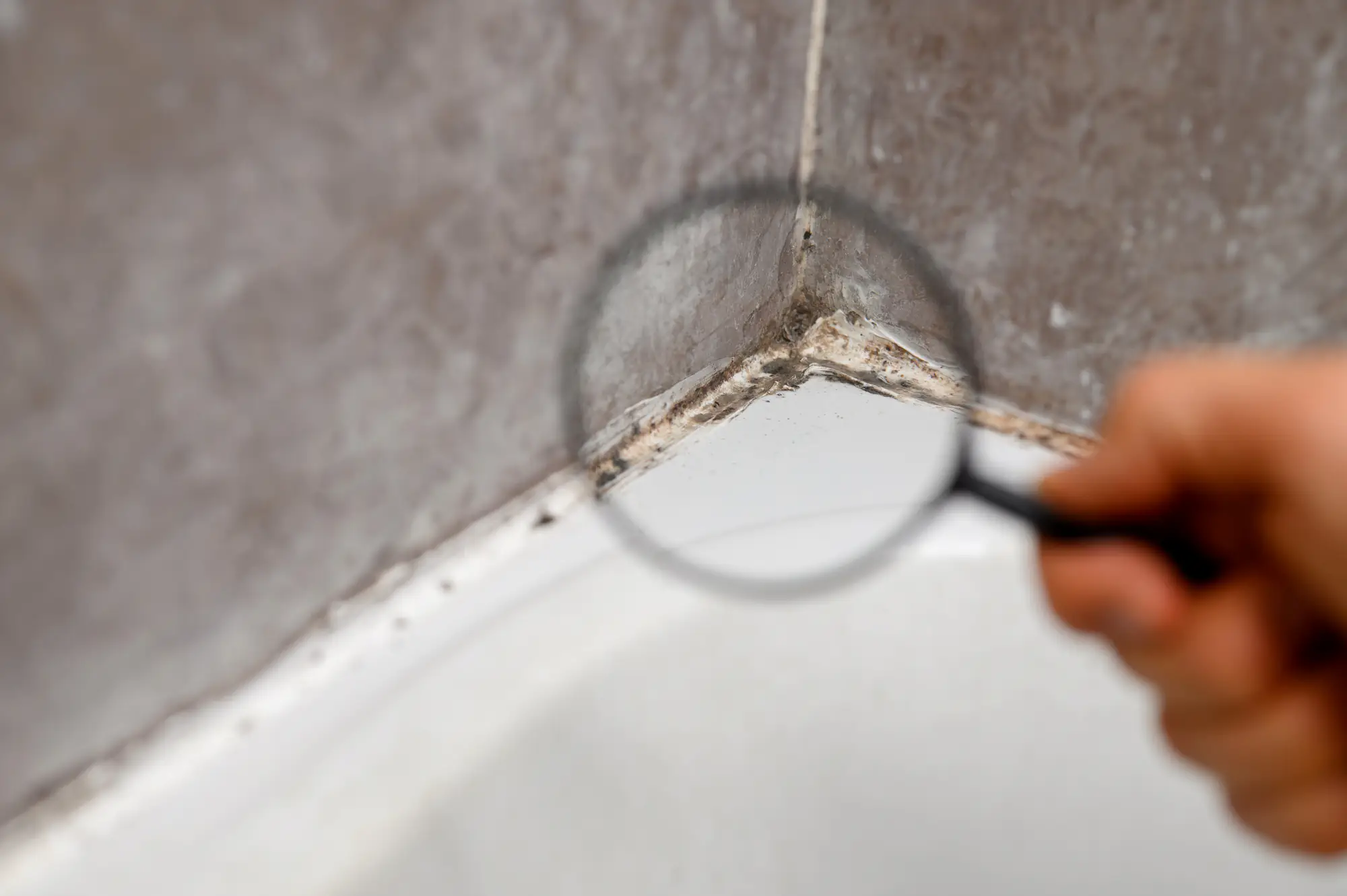
Most mold removal projects in the Bucks County area run between $1,300 and $3,700, with the average landing around $2,400. But that’s a wide range because every situation is different.
A small patch of mold in a bathroom might cost $500 to clean and treat. A full basement with hidden growth behind finished walls could run $5,000 or more if we’re removing drywall, treating studs, and addressing a drainage issue. Black mold in an attic with compromised insulation falls somewhere in between.
The size of the affected area matters. So does the type of mold, what materials are contaminated, and whether we need to remove structural components. If there’s a leak or ventilation problem causing it, that adds to the scope. We give you an upfront estimate after the inspection so there’s no guessing. And we work with your insurance if your policy covers mold damage, which many do if it’s tied to a sudden water event like a pipe burst.
A straightforward mold cleaning job in one room usually takes one to two days. Larger projects with multiple areas or serious contamination can take a week or more.
It depends on how much mold we’re dealing with and what caused it. If we’re just treating surface mold in a bathroom, we can contain it, remove it, and treat the area in a day. If we’re pulling out drywall in a basement, treating the studs, letting everything dry, and then verifying air quality, that’s a multi-day process.
Drying time matters too. We can’t close up walls or reinstall materials until moisture levels drop to safe ranges. Rushing that step is how mold comes back. We use dehumidifiers and air movers to speed up drying, but we won’t call a job done until the environment is actually dry. You’ll know the timeline after we inspect and see what we’re working with.
If it’s a tiny spot on a windowsill or a small patch on grout, you can probably handle it with cleaner and a scrub brush. Anything bigger than a few square feet, you should call a mold specialist.
Here’s why. Mold spreads through spores, and disturbing it without proper containment sends those spores into your air. You breathe them in, they settle in other rooms, and now you’ve got mold in places that were clean before. Professional mold removal uses containment barriers, negative air pressure, and HEPA filtration to prevent that.
Black mold and toxic mold varieties are especially risky to handle without training. Exposure during DIY removal can cause respiratory issues, skin irritation, and worse if you’re dealing with high concentrations. Plus, if you don’t fix the moisture source, it just grows back. We find what’s causing it—leaks, condensation, poor airflow—and address that so you’re not cleaning the same spot every few months. If you’re seeing recurring mold or growth in multiple areas, that’s a sign the problem is bigger than surface cleaning can fix.
Moisture and poor ventilation. That’s it. Mold needs water and a place to grow, and Pennsylvania’s humid climate gives it both.
Basements are the most common problem area in Bucks County. Groundwater seeps through foundation cracks, sump pumps fail, or humidity just sits in unfinished spaces with no airflow. Attics are next—poor ventilation traps warm, moist air against roof decking, especially in summer. Bathrooms and kitchens create moisture every day through showers, cooking, and laundry, and if exhaust fans aren’t venting properly, that moisture condenses on walls and ceilings.
Leaky pipes are another big one. A slow drip inside a wall can go unnoticed for months while mold spreads through insulation and drywall. Same with roof leaks—water gets in during a storm, soaks into the attic, and by the time you see a stain on your ceiling, mold’s already growing in the structure. Older homes in Woodhill are especially vulnerable because building materials and ventilation standards weren’t designed to handle modern humidity levels. If your home was built before 1980, chances are it’s got airflow issues that create perfect conditions for mold.
Not if the moisture problem gets fixed. Mold removal without addressing the source is just temporary.
We’ve seen plenty of homes where someone cleaned visible mold but ignored the leaky pipe, the condensation issue, or the basement humidity. Three months later, it’s back. That’s because mold spores are everywhere—in the air, on surfaces, floating around outside. They only become a problem when they land somewhere wet and start growing.
Our process includes finding and fixing what caused the mold in the first place. If it’s a ventilation issue, we’ll tell you where airflow needs to improve. If it’s a water intrusion problem, we’ll identify the entry point. If it’s humidity, we’ll recommend dehumidification or vapor barriers. Once the environment is dry and stays dry, mold can’t regrow. We also treat surfaces with antimicrobial solutions that inhibit future growth, but that’s a backup—not a substitute for controlling moisture. If you keep your home dry and well-ventilated after we’re done, the mold won’t come back.
Yes, especially if you’re exposed to it over time. Mold releases spores and mycotoxins into the air, and breathing those in causes real health problems.
Short-term exposure leads to coughing, sneezing, itchy eyes, skin rashes, and headaches. If you’ve noticed allergy symptoms that won’t go away or get worse when you’re home, mold could be the reason. Long-term exposure is more serious—chronic respiratory issues, asthma attacks, lung infections, and persistent fatigue. Black mold is particularly concerning because it produces mycotoxins that affect the nervous system and immune function.
Kids and elderly family members are most at risk. Their immune systems are either still developing or weakened by age, so they react more severely to mold exposure. If anyone in your home has asthma or existing respiratory conditions, mold makes those worse. Even healthy adults can develop sensitivity over time. The longer mold stays in your home, the more spores accumulate in your air and the greater the health risk becomes. If you’re seeing visible mold or smelling that musty odor, your indoor air quality is already compromised.
Other Services we provide in Woodhill