

Hear from Our Customers
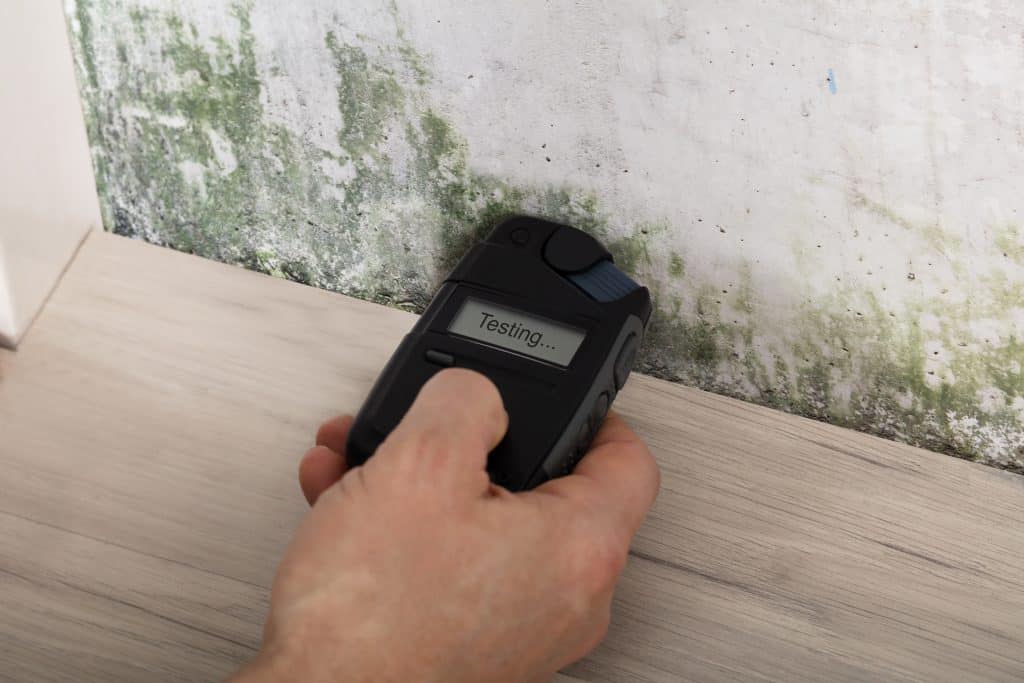
You’ve probably noticed the musty smell in your basement. Maybe you’ve seen dark spots spreading in the bathroom corner, or your kids can’t stop coughing at night. That’s not normal, and you shouldn’t have to live with it.
When mold gets handled the right way, your home feels different. The air smells clean again. Your family stops dealing with mystery allergies and respiratory issues. You’re not wondering what’s growing behind your walls or whether it’s making everyone sick.
Here’s what actually happens when the mold problem gets solved—not just covered up. You stop worrying about your property value tanking when it’s time to sell. You’re not embarrassed to have people over. Your HVAC system isn’t spreading spores to every room in the house. And you’re not throwing money at a problem that keeps coming back because nobody bothered to find out why it started in the first place.
We’ve been working in Plumsteadville and throughout Bucks County long enough to know exactly what causes mold in homes around here. It’s not a mystery. Humid summers, damp basements, older homes with moisture problems—we’ve seen it all.
Most homes in this area were built in the second half of the 20th century, and a lot of them have the same issues: poor ventilation in bathrooms, groundwater seeping into basements, attics that trap humidity. We’re not guessing at what’s wrong. We know what to look for because we’ve been in hundreds of homes just like yours.
You’re not getting a national franchise that sends different crews every time. You’re working with a local mold removal company that understands how Plumsteadville homes are built, what goes wrong, and how to fix it so it doesn’t happen again.

First, we come out and do a free inspection. We’re not just looking at the mold you can see—we’re finding out where else it’s growing and what’s causing it. That means checking moisture levels, looking behind walls if we need to, and figuring out if it’s a leaky pipe, condensation, or groundwater coming up through your foundation.
Once we know what we’re dealing with, we give you a clear estimate. No surprises, no upselling. If your situation qualifies for insurance coverage, we’ll help you with that process too.
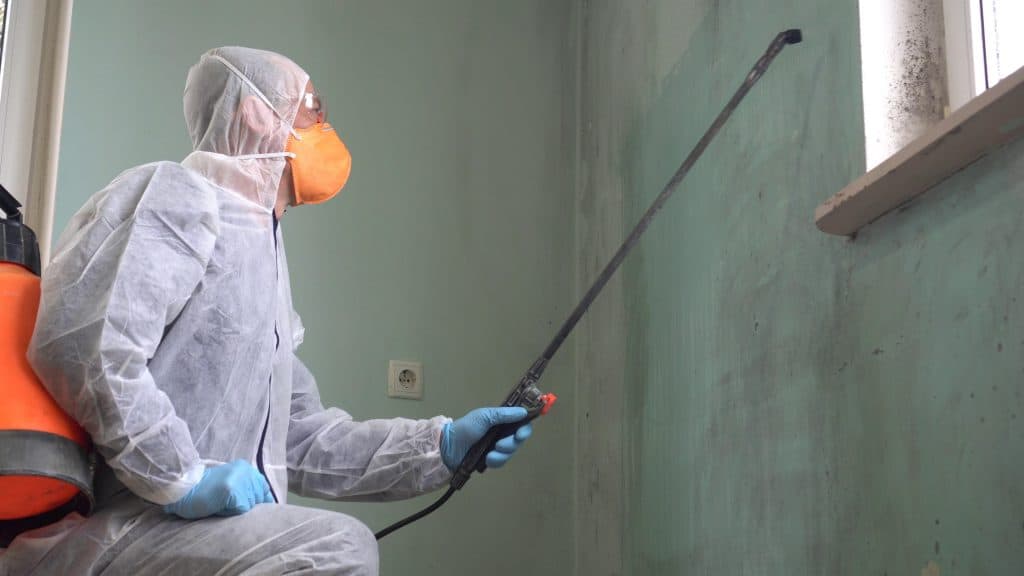
Then we contain the area so mold spores don’t spread to the rest of your house while we work. We remove the mold using EPA-compliant methods—the kind that actually get rid of it instead of just wiping it down and hoping for the best. If drywall or insulation is damaged, we handle that too.
After the mold is gone, we fix the source. That’s the part most companies skip, and it’s why people end up with the same problem six months later. We dry out the area, improve ventilation, seal cracks, reroute drainage—whatever it takes. You’re not paying us to come back next year.
Ready to get started?
Every job starts with mold testing and a thorough inspection, so you know exactly what type of mold you’re dealing with and how far it’s spread. Some mold is just ugly. Black mold is a health risk. We test it so you’re not guessing.
You get full containment and safe removal that follows EPA standards. That means we’re not spreading spores into your living room or your HVAC system while we work. We use advanced equipment to detect hidden moisture and mold growth in places you’d never think to check—inside walls, under flooring, in crawl spaces.
Once the mold is out, we don’t just pack up and leave. We address the moisture problem that caused it. In Plumsteadville, that usually means dealing with basement humidity, fixing ventilation in bathrooms, or sealing up cracks where groundwater gets in. Homes here sit in an area where the climate loves mold—warm, wet, and humid from spring through summer. If you don’t fix the cause, you’re just buying time.
We also handle any necessary repairs or restoration after mold removal, so you’re not coordinating with three different contractors. And if you’re working with your insurance company, we’ll help you navigate that process and provide the documentation they need.
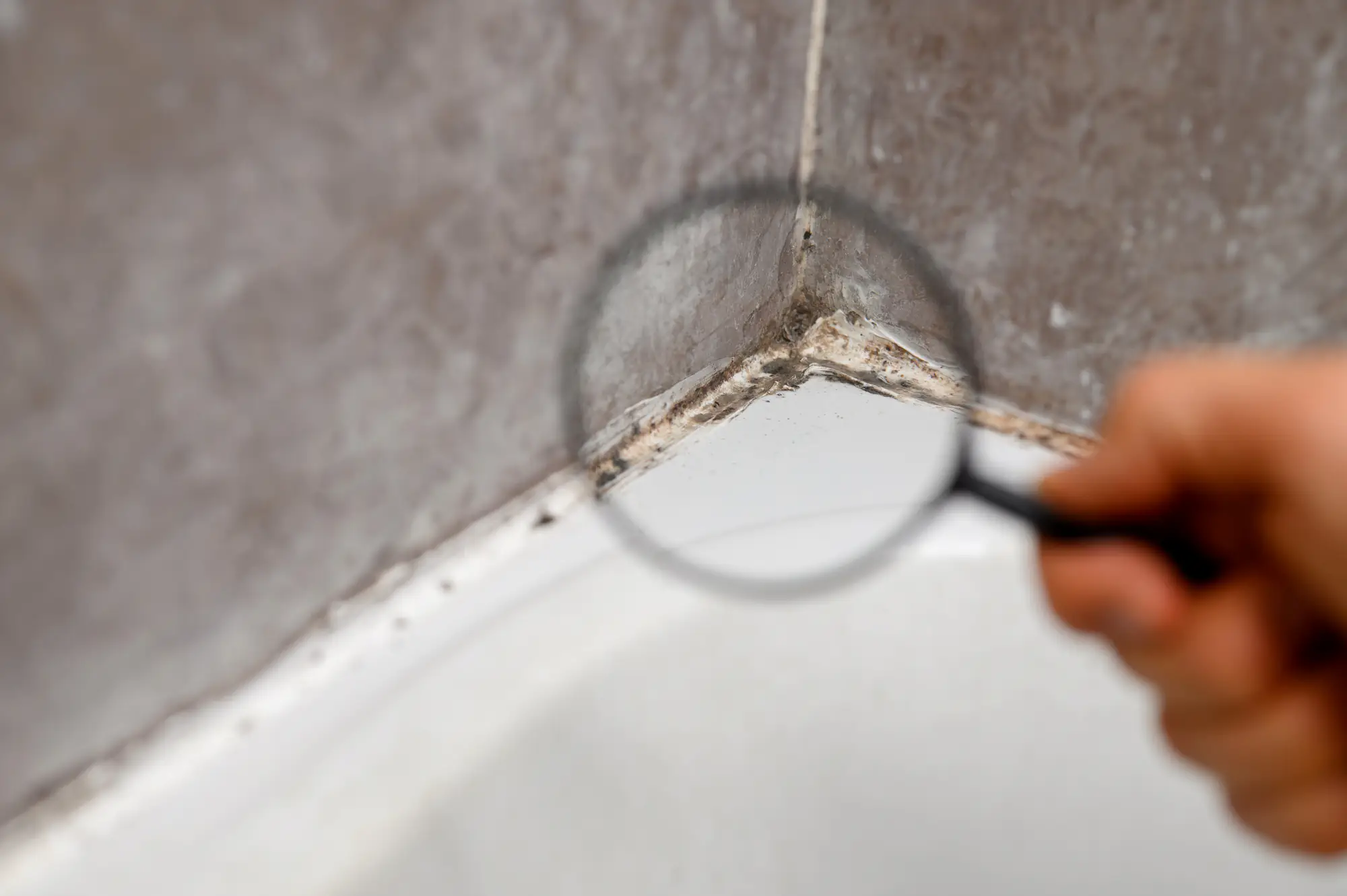
If you can see mold growing on walls, ceilings, or floors, or if you smell that musty, damp odor that won’t go away, you’ve got a problem that needs professional attention. A lot of people try to handle small patches themselves, and that’s fine for surface mold on a bathroom tile. But if it keeps coming back, or if it’s spreading, or if you’re seeing it in multiple places, that’s a sign there’s a bigger issue.
Mold grows where there’s moisture, and if you’ve got mold, you’ve got a moisture problem somewhere. Maybe it’s a slow leak you don’t know about, or condensation building up in your attic, or groundwater seeping into your basement. You can scrub the mold off, but it’ll come right back unless you find the source and fix it.
You also need a professional if the mold covers more than about 10 square feet, if it’s in your HVAC system, or if anyone in your house is dealing with unexplained respiratory issues, allergies, or asthma that’s getting worse. Mold releases spores into the air, and when you start scrubbing or tearing things apart without proper containment, you’re spreading those spores all over your home. That’s when a small problem becomes a big one.
Mold removal is getting rid of the mold you can see. Mold remediation is fixing the whole problem—removing the mold, finding out why it’s there, and making sure it doesn’t come back. That’s what you actually need.
Here’s the thing: mold spores are everywhere. They’re in the air outside, they’re in your house right now, and there’s no way to get rid of every single spore. That’s not the goal. The goal is to get mold levels back to normal, remove the growth, and eliminate the conditions that let it thrive in the first place.
Real mold remediation means we’re testing to see what type of mold you have and how far it’s spread. We’re containing the area so we don’t make things worse while we work. We’re removing contaminated materials if we need to—drywall, insulation, whatever’s too far gone. And then we’re addressing the moisture issue, whether that’s fixing a leak, improving airflow, or waterproofing your basement. If we don’t do that last part, you’re going to have mold again, and you’ll be paying someone else to do the same job in six months.
It depends on how much mold there is, where it’s growing, and what’s causing it. A small bathroom mold issue might cost a few hundred dollars. A basement full of mold from a flooding problem could run several thousand. We can’t give you an accurate number without seeing the situation, and anyone who does is guessing.
What drives the cost is the scope of the work. If mold is only on the surface and the moisture source is obvious and easy to fix, that’s a straightforward job. But if mold has spread behind walls, into insulation, or throughout your HVAC system, that takes more time, more equipment, and more labor. If we need to remove drywall, replace insulation, or do waterproofing work to stop groundwater from coming in, that adds to the cost—but it also means you’re actually solving the problem instead of putting a band-aid on it.
We do free inspections, and we give you a clear, written estimate before any work starts. No hidden fees, no surprises. And if your mold problem is related to a covered event like a burst pipe or storm damage, your homeowners insurance might cover part or all of the cost. We’ll work with your insurance company and provide the documentation they need to process your claim.
Most residential mold removal jobs take anywhere from one to five days, depending on the size of the affected area and what needs to be done. A single-room job with surface mold might be done in a day. A whole basement with structural damage and a moisture problem that needs fixing could take a week.
The inspection and testing happen first, and that usually takes a few hours. Once we know what we’re dealing with, we’ll give you a timeline along with the estimate. The actual mold removal involves setting up containment barriers, removing the mold and any damaged materials, cleaning and disinfecting the area, and then addressing the moisture source. Each of those steps takes time, and we’re not going to rush through it just to say we’re done.
After the mold is removed, we sometimes need to run air scrubbers or dehumidifiers for a day or two to make sure the air quality is back to normal and the area is completely dry. If there’s reconstruction involved—replacing drywall, repainting, that kind of thing—that adds time too. But we’ll walk you through the whole process upfront so you know what to expect and when you’ll have your space back.
If it’s a very small area—less than 10 square feet—and it’s just surface mold on something non-porous like tile or glass, you can probably handle it yourself with the right cleaner and some basic precautions. But if it’s bigger than that, if it keeps coming back, or if it’s growing on porous materials like drywall or wood, you need a professional.
The problem with DIY mold removal is that most people don’t have the equipment or knowledge to do it safely. When you start scrubbing or tearing out moldy materials without proper containment, you’re releasing thousands of mold spores into the air. Those spores spread to other parts of your house, land on damp surfaces, and start new colonies. You think you’re fixing the problem, but you’re actually making it worse.
You also can’t see mold that’s growing inside your walls, under your flooring, or in your HVAC ducts. If you’re only treating what’s visible, you’re missing the bigger issue. And if you’re not addressing the moisture problem that caused the mold in the first place, it’s going to come right back. Professional mold removal means proper containment, thorough removal, moisture control, and verification that the job is actually done. That’s not something you can do with a bottle of bleach and a sponge.
Mold needs three things to grow: moisture, organic material to feed on, and the right temperature. Plumsteadville homes have all three in abundance, especially during the spring and summer when humidity levels spike and temperatures stay warm. Add in the fact that most homes here were built decades ago, and you’ve got a perfect recipe for mold problems.
Basements are the biggest issue. A lot of homes in this area have groundwater problems—water seeps in through foundation cracks, or condensation builds up because there’s no proper ventilation. Once that moisture is there, mold starts growing on drywall, wood framing, insulation, even stored boxes and furniture. Bathrooms are another common spot, especially if the exhaust fan isn’t working or if there’s a slow leak under the sink that nobody notices for months.
Attics get hit too, usually from humidity that rises up from the rest of the house and gets trapped because there’s not enough airflow. And if you’ve had any kind of water damage—a roof leak, a burst pipe, an overflowing washing machine—mold can start growing within 24 to 48 hours if the area doesn’t get dried out properly. The climate here just makes it worse. Humid summers mean mold has plenty of moisture to work with, and older homes weren’t built with the kind of moisture barriers and ventilation systems that newer construction has.
Other Services we provide in Plumsteadville