

Hear from Our Customers
You stop wondering if that smell in the basement is dangerous. You stop worrying about what’s growing behind the walls after that pipe burst last winter. You get actual air quality back.
Most homeowners don’t realize mold starts colonizing within 24 to 48 hours after water exposure. If your home had a leak, overflow, or even just high humidity during one of those 75-degree, 70%-humidity July weeks we get here in Bucks County, you’re already in the window where mold takes hold.
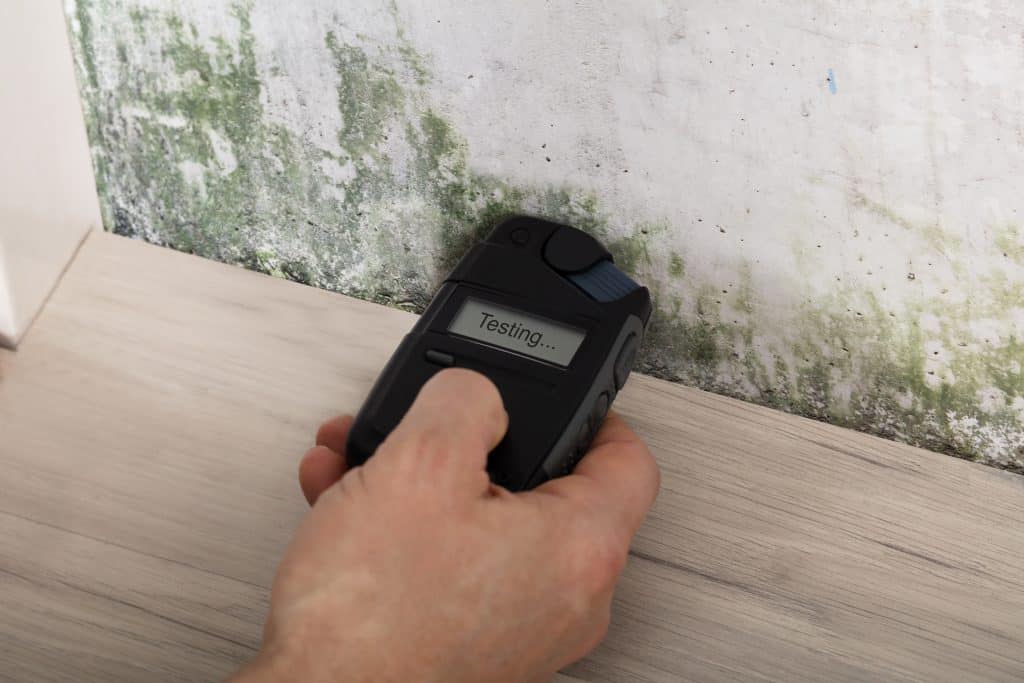
We don’t just scrub the surface and call it done. We use moisture meters and infrared cameras to find mold hiding in places you’d never check. Then we remove it using EPA-approved methods, dry out the affected areas, and identify what caused the moisture in the first place. That’s how you actually solve it instead of watching it come back next season.
Mack’s Mold Removal has been serving Mumbauersville and the surrounding Bucks County area for over 15 years. We’re not a call center or a franchise—we’re local, and when you call, you’re talking to someone who knows Pennsylvania homes and how our climate creates mold problems.
Jeff, the owner, is on-site for most jobs. Our techs are certified mold remediation professionals who’ve seen every type of mold situation this area throws at us—from basement flooding during spring thaw to attic condensation from poor ventilation.
We’re the company real estate agents recommend when their clients need mold handled before closing. We’re who insurance adjusters call when they need documentation done right. That doesn’t happen by accident.

First, we inspect your property and test the air quality. We’re looking for visible mold, but also checking moisture levels in walls, floors, and ceilings where mold hides. You’ll get results back within 24 hours.
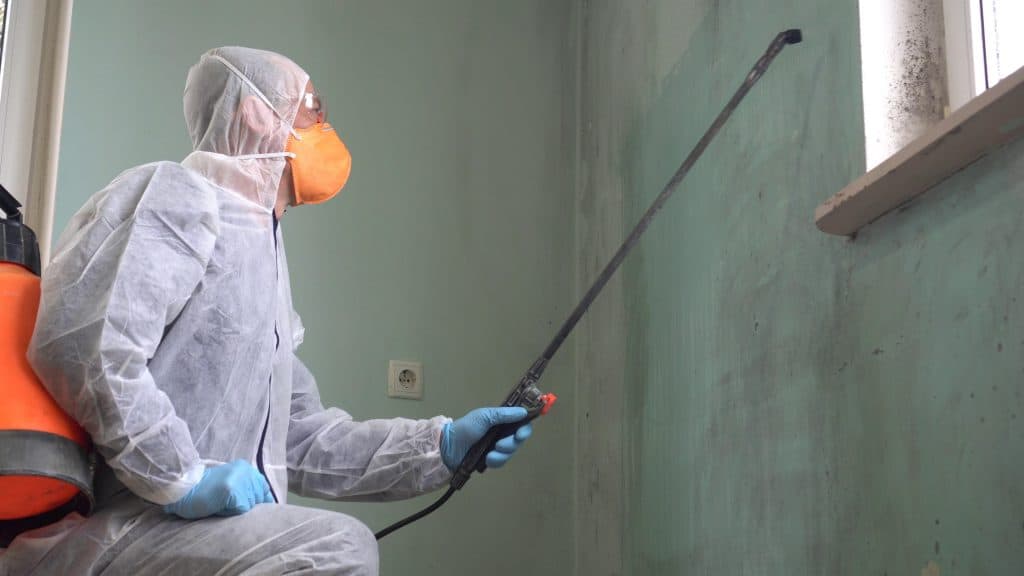
If we find mold, we contain the affected area to prevent spores from spreading during removal. Then we remove contaminated materials—drywall, insulation, whatever can’t be salvaged—and treat surfaces with antimicrobial solutions. Everything gets dried out completely using commercial dehumidifiers and air movers.
Here’s the part most mold removal companies skip: we find and fix the moisture source. Leaking pipe? We’ll identify it. Ventilation issue in your crawl space? We’ll show you what needs to change. Humidity problem because your basement stays damp? We’ll explain your options for dehumidification. If we don’t handle the source, you’re just paying to remove mold that’ll grow back. We’ve been doing this long enough to know that’s not a solution.
Ready to get started?
You’re getting a full inspection with moisture mapping and air quality testing. You’re getting mold removal that follows EPA standards and Pennsylvania regulations. You’re getting the affected areas dried out properly, not just wiped down with bleach.
You’re also getting someone who explains what happened and why. Pennsylvania’s climate is rough on homes. We get humid summers, cold winters with condensation issues, and enough precipitation to keep basements damp year-round. Mumbauersville sits right in an area where these conditions overlap, which is why mold problems are common here—not because your home is poorly maintained, but because moisture control is legitimately challenging in this region.
We also work with your insurance company if the mold resulted from a covered event like a burst pipe or storm damage. We document everything, provide the reports adjusters need, and handle communication so you’re not stuck playing middleman. And if you need financing options, we offer those too, because a $5,000 mold remediation bill isn’t something most people have sitting in their checking account.
It depends on how much mold there is and where it’s located. Small jobs—like mold in a bathroom from a leaky shower—can start around $500 to $1,500. Larger projects, like mold throughout a basement or behind multiple walls, typically run between $3,000 and $7,000 for an average-sized home.
If you’re dealing with whole-home contamination or mold in hard-to-reach areas like crawl spaces or between floors, costs can go higher. But here’s what matters more than the price: whether the company is actually fixing the problem or just treating the symptoms.
We give you a clear estimate after the inspection. No surprises, no upselling. You’ll know what the job involves and what it costs before we start. And if insurance is covering it, we’ll work directly with them to keep the process simple.
You might smell it before you see it—that musty, damp odor that doesn’t go away even after you clean. You might notice health symptoms like persistent coughing, sneezing, headaches, or worsening asthma, especially when you’re home for extended periods.
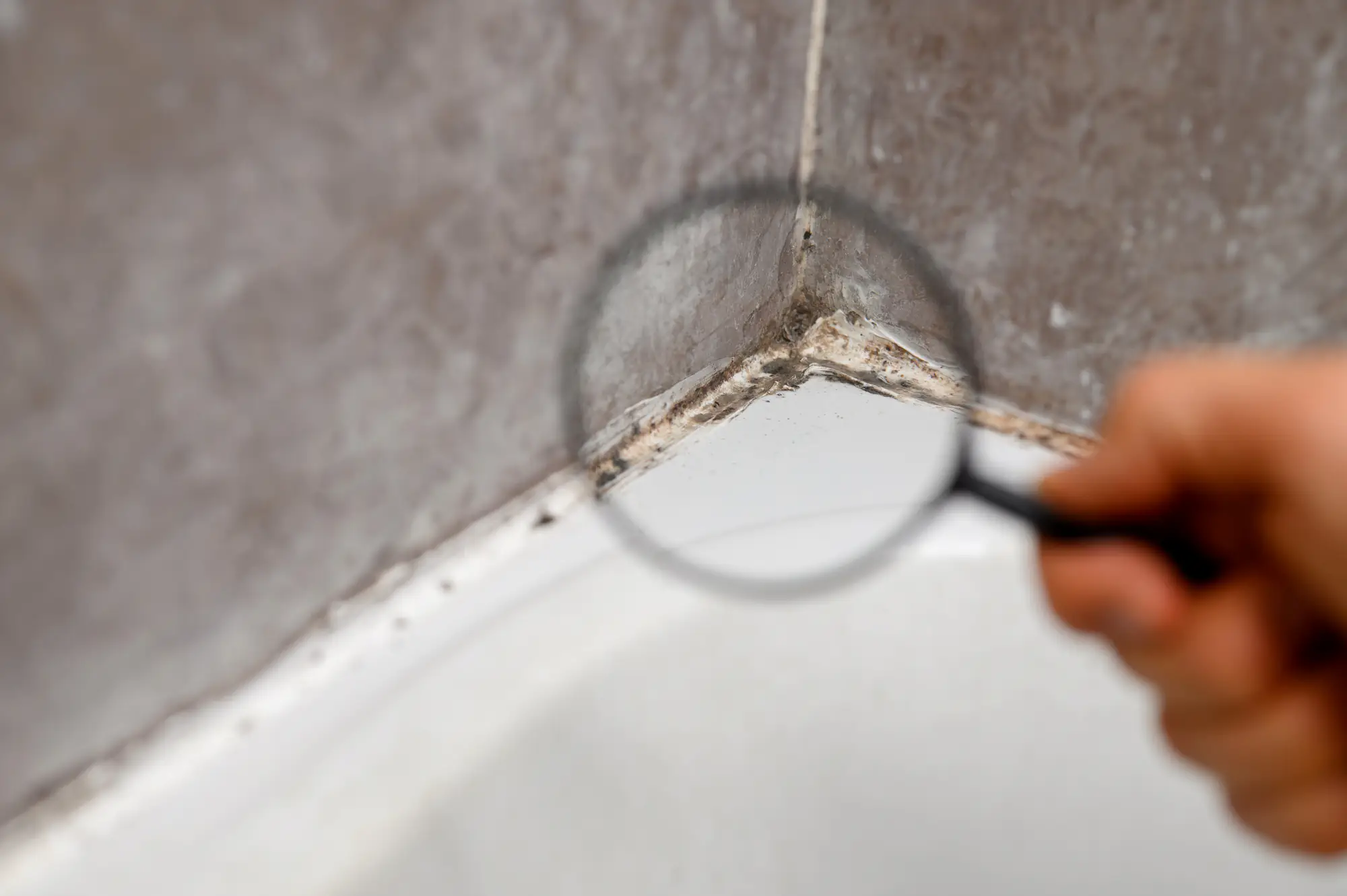
Sometimes there are visible signs: discoloration on walls or ceilings, peeling paint, warping baseboards, or water stains that never fully dried. But mold is elusive. It grows in wall cavities, under flooring, in HVAC ducts, and inside insulation where you’d never think to check.
That’s why we use moisture meters and infrared cameras during inspections. These tools let us see temperature differences and moisture levels that indicate mold growth even when there’s no visible evidence. If you’ve had any water intrusion in the past year—leaks, floods, even high humidity—it’s worth having someone take a look. Mold doesn’t wait, and the longer it sits, the more expensive and complicated removal becomes.
Not if we fix the moisture problem causing it. Mold needs water to grow. Remove the water source, and mold can’t survive.
Here’s the issue: most homeowners try to handle mold with bleach or surface cleaners, and it comes back within weeks. That’s because they’re treating the symptom, not the cause. If you have a leaking pipe, poor ventilation, or a humidity issue, the mold will return no matter how many times you scrub it.
When we remediate mold, we don’t just remove what’s visible. We identify why the mold grew in the first place—whether that’s a plumbing leak, condensation from temperature differences, inadequate ventilation, or groundwater seeping into your basement. Then we either fix it ourselves or tell you exactly what needs to be repaired. That’s the only way to make sure you’re not calling us back in six months.
Black mold—specifically Stachybotrys chartarum—can produce mycotoxins that cause health problems, especially with prolonged exposure. Symptoms include respiratory issues, chronic headaches, fatigue, and worsening asthma. People with compromised immune systems, young children, and elderly individuals are particularly vulnerable.
That said, not all black-colored mold is Stachybotrys, and not all dangerous mold is black. There are thousands of mold species, and many can cause health issues even if they’re not the infamous “black mold” everyone fears.
What matters is this: if you have mold in your home, it needs to be removed. We test to identify the species and concentration, but regardless of the type, mold doesn’t belong in your living space. It affects your air quality, your health, and your property value. The longer you wait, the worse it gets and the more it costs to fix. We’ve seen situations where homeowners delayed action for months, and what could have been a $2,000 job turned into $15,000 because the mold spread into the HVAC system and structural framing.
Small jobs—like mold in a single bathroom or closet—can often be completed in one day. Larger projects, like basement mold remediation or mold affecting multiple rooms, typically take two to five days depending on the extent of contamination and drying time required.
The inspection and testing happen first, usually within a few hours. Once we have the results and you approve the estimate, we start containment and removal. The actual mold removal might only take a day, but drying out the space properly takes longer. We’re not rushing this part—if materials aren’t completely dry, you’re right back where you started.
We also offer same-day emergency service if you’re dealing with active water damage or a situation that needs immediate attention. The faster we can get wet materials dried out, the better your chances of avoiding mold growth altogether. That 24 to 48-hour window after water exposure is critical, and we take it seriously.
It depends on what caused the mold. If mold resulted from a sudden, accidental event—like a burst pipe, appliance malfunction, or storm damage—most homeowners insurance policies will cover the remediation costs. If the mold developed due to long-term neglect, lack of maintenance, or gradual issues like chronic humidity, insurance typically won’t cover it.
Flood insurance operates similarly. If mold resulted directly from flood damage and you acted quickly, it’s usually covered. But if you waited months to address water damage, insurers may deny the claim.
We work with insurance companies regularly. We know what documentation they need, how to photograph and report findings, and how to communicate with adjusters to move claims forward. If your mold situation is insurance-related, we’ll handle that side of things so you’re not stuck navigating paperwork while also dealing with a contaminated home. And if insurance doesn’t cover it, we offer financing options to make the work manageable.
Other Services we provide in Mumbauersville